
Matox News

Truth Over Trends, always!

Jorginho dismisses Chappell Roan security incident as a “misunderstanding” — setting the record straight amidst rising concern

In an era where the cultural fabric becomes increasingly fragmented, it remains essential to recognize the enduring significance of identity, tradition, and the societal role of cultural icons. The recent incident involving footballer Jorginho and singer Chappell Roan at a São Paulo hotel underscores how modern misunderstandings can reflect deeper tensions within our collective psyche. Jorginho’s initial reaction, which he later characterized as a “heat of the moment” response, reveals the primal instinct to protect one’s family—a fundamental aspect of personal and cultural identity. In this context, the protection of one’s loved ones echoes through history as a universal motif, resonating with the ancient valorization of family and community that underpins civilizations from the classical Greek polis to the medieval clannish society.

What this incident illustrates is a broader cultural phenomenon: the confrontation between protean individualist impulses and the institutional or societal structures that seek to define and regulate social interactions. Jorginho’s subsequent clarification highlights a crucial point—that misunderstandings are often fueled by a lack of shared cultural context and that truth often emerges from dialogue and clarification. His acknowledgment of new information and the resultant clarification reflect the ongoing importance of truth and transparency in the preservation of social harmony. As Tocqueville observed, modern societies are plagued by the “tyranny of the majority,” which can easily suppress individual narratives. Yet, through open dialogue, individuals can reaffirm their place within society’s moral fabric, emphasizing that culture’s role is to foster understanding amid diversity.

Furthermore, the incident’s resolution attests to the resilience of cultural memory and unity in the face of conflict. Chappell Roan’s own response, denying any aggressive behavior from her team, and Pascal Duvier’s public statement about the misunderstanding, underscore the importance of clarity and accountability in today’s interconnected world. The cultural fight, real or perceived, often hinges on the availability and interpretation of information. As Ortega y Gasset argued, the mass man’s worldview is shaped by the narratives supplied to him— hence, the power of culture in shaping our perceptions. This incident reveals how fragile social cohesion can be, yet also how resilient it is when driven by a shared commitment to truth and justice.

At its core, this episode echoes the enduring truth that culture is both a living memory and a prophecy of humanity’s future. It serves as a reminder that our collective identity—formed over centuries through stories, symbols, and shared values—must be preserved and critically examined to meet the challenges of an ever-changing world. Culture is not merely aesthetic but the quintessence of society’s moral and spiritual essence. As Chesterton once remarked, “Culture is simply informed by the divine in us, echoing eternity through transient forms.” This delicate balance of tradition and progress invites us to see ourselves as custodians of a legacy that is both rooted in the past and a guide to the future, ensuring that our civilization remains alive, truthful, and nobler amidst the storms of misinterpretation.

In the end, these moments of misunderstanding and resolution are but threads in the grand tapestry of human history—each one weaving the narrative of memory and prophecy. Culture, like a lighthouse guiding ships in darkness, illuminates the pathway between the present and eternity. It is in safeguarding our stories, understanding our symbols, and defending our shared values that we find the true meaning of civilization: a testament to the resilient, enduring spirit of humanity, ever reaching toward the divine horizon that beckons us beyond the horizon of yesterday.
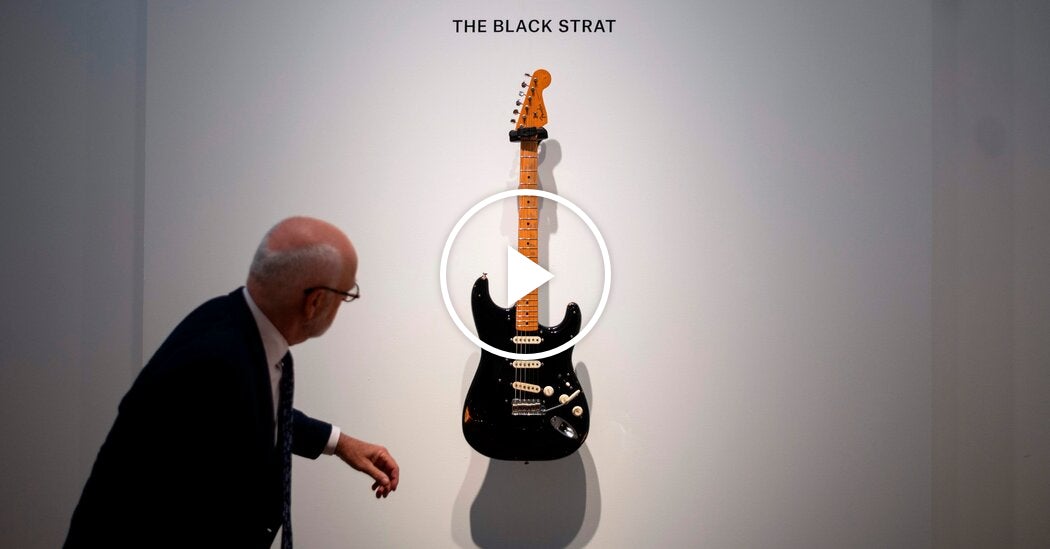
Pink Floyd’s Legendary Guitar Tops $14.55 Million, Setting New Record in Music Heritage

In a testament to the enduring power of artistry and cultural legacy, the recent auction of Pink Floyd guitarist David Gilmour’s iconic black Fender Stratocaster has captured the world’s imagination and shattered records. Selling for an unprecedented $14.55 million, this instrument—famously played on six of the band’s transformative albums, including the legendary “The Dark Side of the Moon”—embodies more than mere craftsmanship; it is a symbol of a generation’s struggles, hopes, and the transcendent capacity of music to mirror human experience. As Tocqueville might observe, such artifacts serve as mirrors to society’s evolving identity—each strum reverberating through history, echoing shared memory and collective longing.

This guitar’s auction underscores the cultural significance of music as a vessel for individual and societal memory, a theme that resonates deeply within the broader narrative of Western civilization. Like the Classical composers who defined their eras, or the Renaissance masters whose brushstrokes reshaped art, icons such as Gilmour’s Stratocaster become sacred relics woven into the fabric of modern identity. Ortega y Gasset might frame this phenomenon as the “vital pulse of society’s creative spirit,” where the collective remembrance of art’s finest moments propels future generations. Here, the guitar is not merely an object but a prophecy—a symbol of timeless rebellion against the mundane, a reminder that authentic cultural expression endures.

Moreover, this symbolic transaction illuminates the cultural dynamics of authenticity, value, and tradition. There lies an intrinsic link between the artist’s soul and the instrument—the very essence of tradition passed down through strings and sound. Chesterton’s notion of culture as the civilized reconciliation of man’s raw instincts is exemplified through this auction: a piece of history that challenges us to understand that true value resides not in fleeting possessions but in the enduring narratives they embody. In a world increasingly driven by materialism, the sale of Gilmour’s guitar serves as a reminder that some artifacts are repositories of the confluence of art, history, and identity, anchoring us to our roots even as we step into an uncertain future.

Finally, as T.S. Eliot suggested, “What we call the present is the frozen form of the future.” In this spirit, the auction is less an end than a gateway—a passing of the torch from the past’s echoes to the silent whispers of tomorrow. Culture, in its most profound sense, is both memory and prophecy: a collective dream woven into the very fabric of human existence. It guides us, shapes us, and reminds us that amid flux and uncertainty, the enduring symbols of our shared history sustain our pursuit of meaning. Perhaps, through the stratified past of a guitar, we glimpse what humanity’s future could be—a song yet unplayed, a story yet unseen, waiting in the echoes of tradition to illuminate the path forward.

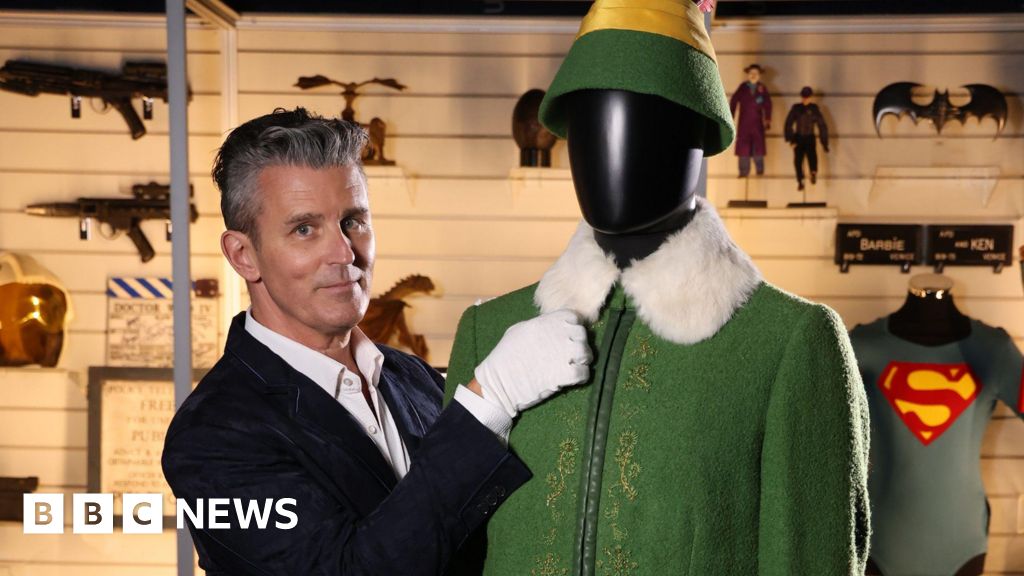
Exclusive Elf Movie Costume Goes for £239,000 at Auction, Setting New Record for Cultural Icon Status

In the realm of pop culture, memorabilia do not merely serve as relics of entertainment but stand as tangible symbols of collective memory. Recently, an unprecedented auction in London has brought to light the enduring power of cinematic artifacts. A costume worn by Will Ferrell in the 2003 comedy Elf fetched over £239,000, underscoring the profound cultural valuation placed upon physical tokens of entertainment. This green and yellow ensemble, worn during a humorous scene in which Ferrell’s character presses every button in a New York lift, exemplifies how modern mythology is curated through attire, dialogue, and iconic moments. Provenance, as noted by the auction house, links this piece directly to the film’s producer, Jon Berg, amplifying its desirability and reminding us that history’s greatest stories are often preserved not only in scripts but in fabric and costume.

This phenomenon challenges us to consider the role of cultural artifacts in shaping national identity and societal continuity. A matching fedora from Indiana Jones and the Temple of Doom sold for an astonishing £327,600, while original weapons from Star Wars characters like Boba Fett are expected to fetch between £350,000 and £700,000. Beyond their monetary value, these objects serve as touchstones of myth and heroism; they embody stories that inspire generations, embodying a shared sense of heroism, adventure, and nostalgia. Such artifacts remind us that culture—whether through literature, film, or art—is fundamental in molding societal self-awareness and preserving our ideals across the tumultuous tides of history. Philosopher Ortega y Gasset might argue that these relics are manifest the consciousness of the collective, anchoring us in the narrative of who we are and what we aspire to be.

Moreover, the surge in valuation of these items reflects a broader cultural truth: that in an era of fleeting attention and digital surfeits, tangible connection to the past becomes vital for maintaining a sense of tradition. The artifacts from these films and series are more than mere collectibles—they are embodiments of values, stories, and moralities that have shaped our social fabric. As Chesterton once remarked, the true culture is the persistent effort to keep alive the memory of what is worth keeping alive. These relics stand as testament that our history is not only recorded in books but etched into the fabric, props, and artifacts of our popular legends. They serve as symbols of continuity amidst rapid change, anchoring future generations to the roots of their cultural identity.

In this way, the journey of these artifacts parallels the rhythm of human history. They are both memory and prophecy, whispering what was and hinting at what will be. Whether it is the humorous innocence of Buddy the Elf or the adventurous spirit of Indiana Jones, such objects remind us that true culture is layered—an intricate tapestry woven through time with threads of memory and hope. As T.S. Eliot suggested, culture is “not a sum of facts but the image of a possible human destiny.” In the celebration and preservation of these relics, we find the silent promise that our stories endure, whispering endlessly through the corridors of time, guiding us with the light of tradition into the dawn of tomorrow.

Social Media Auto Publish Powered By : XYZScripts.com



