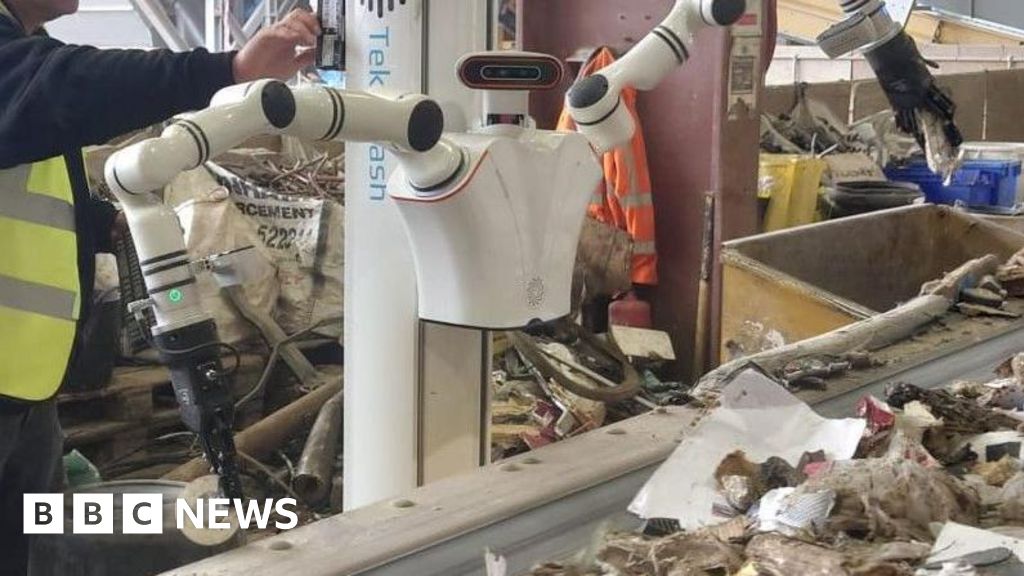

The deployment of humanoid robots in waste management marks a significant milestone in the ongoing automation revolution, signaling a transformative shift in the global economy’s industrial landscape. As companies across developed nations increasingly integrate advanced robotics into their operational frameworks, the economic implications extend beyond mere efficiency. This development underscores the intensifying drive toward automation-driven productivity, which is poised to reshape employment, investment strategies, and environmental policies worldwide.
In the context of market impact, the adoption of humanoid robots for waste sorting is anticipated to alter supply chains and labor markets profoundly. Industry veterans, such as those affiliated with the International Robotics Federation, project that the sector could see a compound annual growth rate (CAGR) of over 20% in the next five years. This surge reflects the increasing confidence among investors who recognize automation’s capacity to reduce operational costs and improve environmental compliance. Notably, technology giants like ABB and KUKA are investing heavily into the development of humanoid robotics, betting on an expanding market where labor costs are volatile and regulatory pressures to implement greener practices intensify.
From a policy perspective, governments worldwide are responding by recalibrating their regulatory frameworks to accommodate advancing automation. The trend is causing ripples in labor policies, particularly as countries grapple with potential job displacements in manual waste sorting sectors. Economic think tanks such as The Heritage Foundation argue that this technological pivot is vital for maintaining competitive edge, especially as developing economies face mounting pressure to adopt similar innovations. Policymakers are also incentivizing sectors to upgrade infrastructure, which could lead to significant shifts in fiscal priorities and investment patterns. Such policy adaptations underscore the delicate balance between fostering innovation and safeguarding workforce stability.
Looking toward the future, the integration of humanoid robots into critical waste management functions exemplifies the broader trend of technology as the pulse of modern economies. As nations understand that economic power hinges on continuous innovation, automation becomes not merely a tool but a defining feature of geopolitical stature. *The coming era will be defined by these breakthroughs—where machines—once seen as tools—become partners in creating sustainable, resilient economies. The stage is set for a future where the relentless march of automation not only transforms industries but also redefines the very fabric of global economic power.*