Matox News

Truth Over Trends, always!

Transport Secretary warns shutdown could ground US flights to a trickle, sparking concerns for travelers and the economy

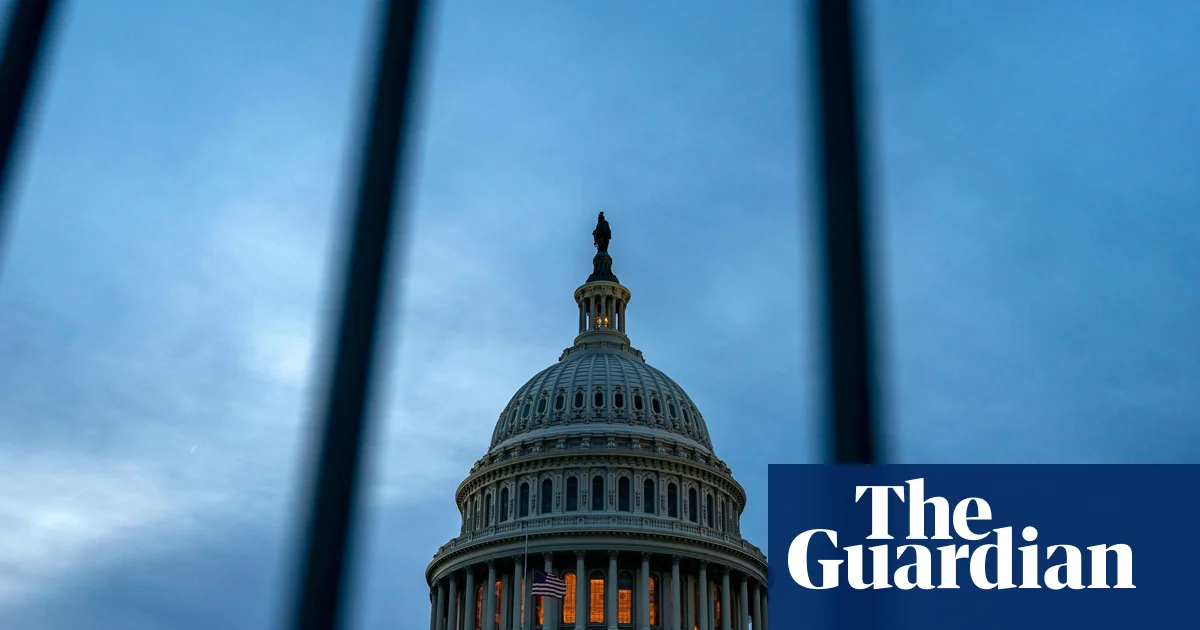
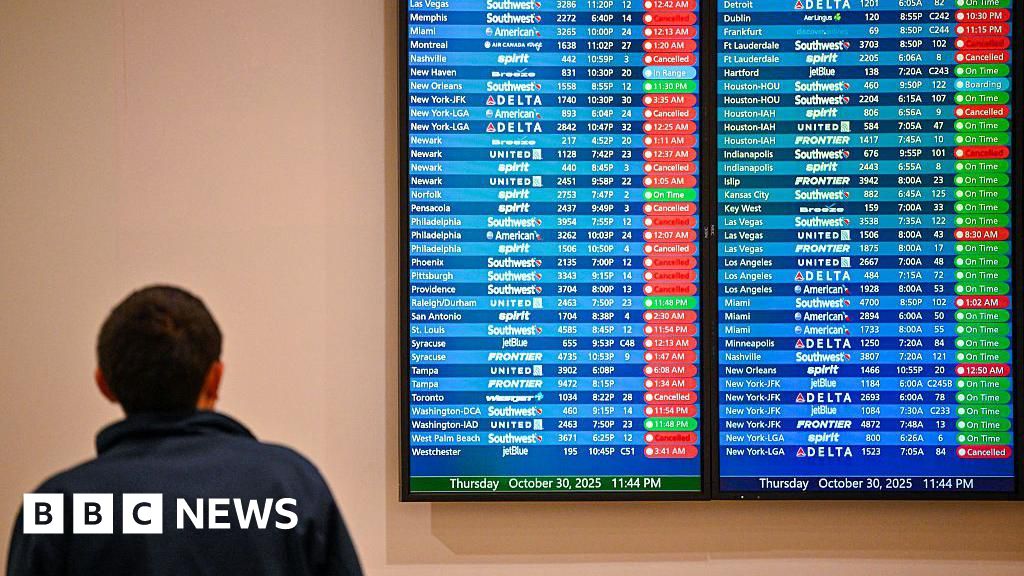
The ongoing US government shutdown has entered its 40th day, marking the longest in American history and sending ripple effects across the socio-economic fabric of the nation. As federal workers face unpaid wages and essential services grind to a halt, the transportation sector bears the brunt of the crisis. Thousands of flights are canceled or delayed daily, with the Federal Aviation Administration (@FAA@) announcing capacity reductions of up to 10% at major airports, such as Newark. These measures are driven by fatigued air traffic controllers, many of whom are working without pay—raising urgent safety concerns and exposing the weaknesses of bureaucratic gridlock.

Analysts and international observers warn that without swift resolution, the impact on the global economy could deepen. Flight delays and cancellations serve as a stark reminder of how domestic political stalemates threaten to destabilize global markets and international travel. US lawmakers are under pressure, with the Senate convening in a rare weekend session, attempting to broker a deal that could temporarily end this impasse. However, the core dispute remains entrenched, with Democrats demanding policy concessions tied to healthcare funding, and Republicans insisting on pure budget measures without additional policy layers. As President Donald Trump proposes redirecting relief funds directly to Americans’ health insurance, global financial markets watch nervously, understanding that timely compromise is paramount to prevent economic contagion.

This crisis highlights the deep fissures in the American political landscape—fissures that have far-reaching geopolitical impact. While Washington grapples with its stalemate, China and Russia observe closely, noting America’s internal divisions and the potential for weakened global influence. The shutdown also reveals the fragility of public trust in democratic institutions, with historians warning that prolonged crises may erode societal resilience and foster disillusionment among youth and working-class Americans. Meanwhile, international organizations like the IMF warn that such internal turmoil could serve as a distraction from pressing global issues, including geopolitical conflicts and economic reforms.

As the hours tick by and the nation stands on the brink of further chaos, the weight of history presses heavily on decision-makers. The words of analysts echo—the prolonged deadlock not only jeopardizes national stability but also threatens to reshape the international order. With each delay, the story of a nation divided unfolds anew, leaving the future tangled in uncertainty and the past whispering warning signs. The question remains: will this chapter in history’s relentless unfolding be resolved in time, or will it become yet another symbol of a lingering, unresolved crisis that stains the legacy of a once-powerful superpower?

Government Shutdown Sparks Urgent Cybersecurity Risks for the Future

US Government Faces Cybersecurity Breach During Ongoing Shutdown, Highlighting Industry Vulnerabilities

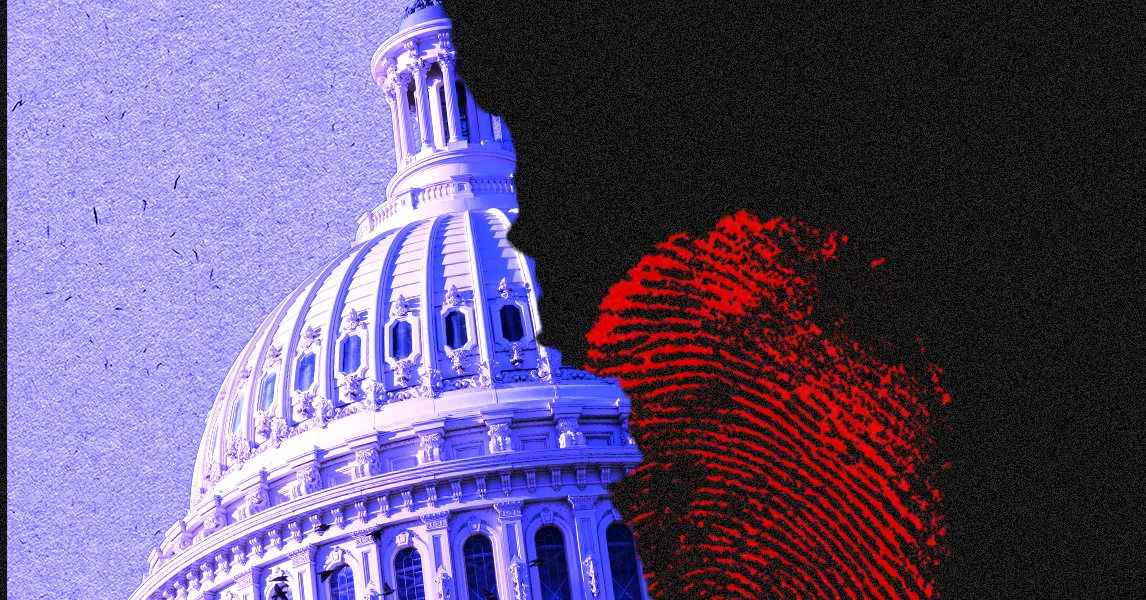
The recent six-week-long US government shutdown has unexpectedly exposed critical vulnerabilities within federal digital infrastructure. The Congressional Budget Office (CBO), tasked with providing unbiased economic data to policy makers, confirmed it suffered a cyber breach attributed to a suspected foreign actor. This event underscores a broader trend: even during periods of political paralysis, cyber threats to vital national security and economic data continue unabated, leveraging the digital systems that underpin government functions.

Disruption & Innovation in Federal Cybersecurity

  • Despite the shutdown, many federal agencies, including the CBO, maintain operational cloud infrastructures, illustrating a shift towards resilient, cloud-based security architectures.
  • In response to the breach, CBO has implemented enhanced security measures, including advanced monitoring tools and new controls.
  • However, cybersecurity experts warn that relying on cloud infrastructure, especially during operational disruptions, can be a double-edged sword, exposing vulnerabilities if not managed properly.

Industry leaders and analysts, citing research from institutions such as MIT and firms like Gartner, emphasize that government agencies and private corporations alike must prioritize disruptive cybersecurity innovation. Traditional perimeter security models are no longer sufficient in the face of sophisticated threat actors, and this breach epitomizes the critical need to adopt adaptive, AI-powered defenses that can react in real time to emerging dangers.

Business Implications & Broader Industry Impact

The breach at the CBO illustrates industry-wide vulnerabilities, reinforcing the importance for innovative cybersecurity solutions that blend automation, threat intelligence sharing, and resilience. As Peter Thiel and Elon Musk have long warned, “security is a competitive advantage in the digital age”, and the failure to innovate rapidly can spell disaster for both public institutions and private enterprise.

Moreover, the incident signals a paradigm shift in how government and business protect sensitive data: disruption in cybersecurity defenses during crises is unacceptable. Organizations must now view security as an ongoing battle, integrating next-generation AI, blockchain, and zero-trust architectures to outpace threat actors.

Looking Forward: The Urgency of Next-Gen Cybersecurity

Industry observers and government officials agree that the current breach is likely a wake-up call, stressing the necessity of proactive, innovative security strategies. As _cyberthreats continue to evolve_, companies and agencies must accelerate investments in disruptive technologies to safeguard critical infrastructure and maintain trust. The government’s ongoing shutdown underscores a fragile moment for national security, with industry pioneers poised to lead the charge in redefining cybersecurity resilience.

In this rapidly shifting landscape, the future will belong to those who innovate aggressively, disrupting old paradigms before they are exploited. The clock is ticking, and the stakes have never been higher for tech leaders to step into this digital frontier with urgency and foresight—because the next attack could be just one breakthrough away.

Trump urges Supreme Court to step in as judges reject snap funding halt—US shutdown looms in 2025

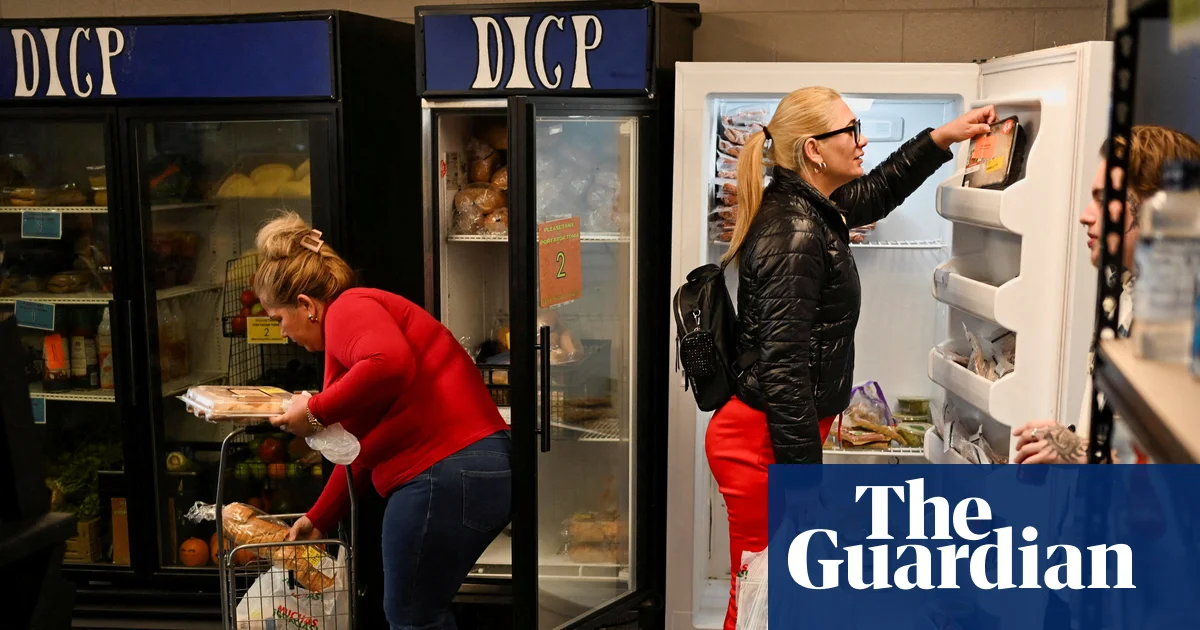
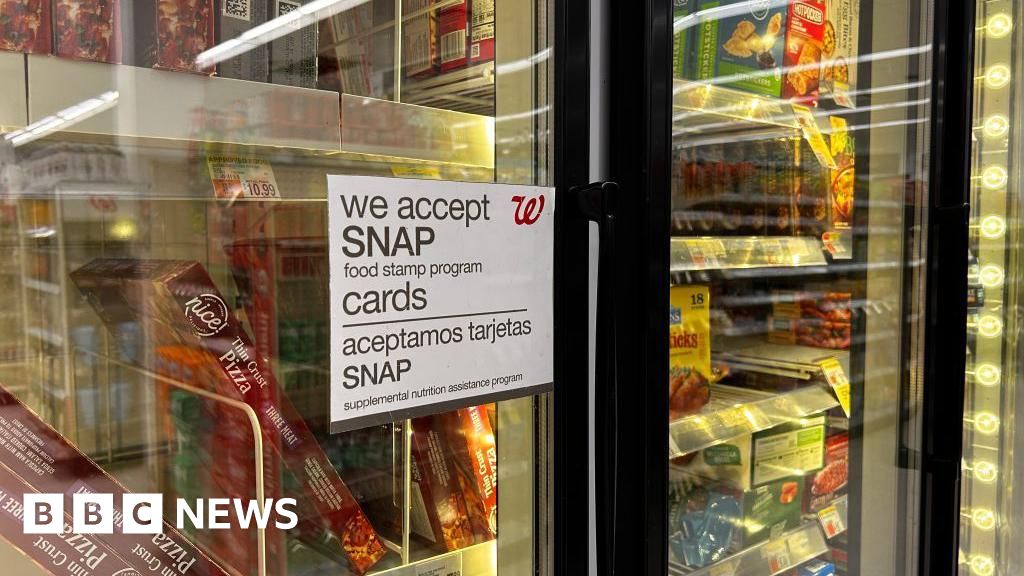
The United States continues to grapple with the fallout from its ongoing federal government shutdown, revealing stark divisions not only within its political landscape but also with profound geopolitical implications. Central to this turmoil is the battle over distributing the November benefits for the Supplemental Nutrition Assistance Program (SNAP), commonly known as food stamps—a critical lifeline for millions of lower-income Americans. The Trump administration’s efforts to halt full payment amid congressional deadlock highlight a distinct shift in federal social policy, raising alarms among international observers and analysts about the erosion of social safety nets in a nation often seen as a global economic leader.

This controversy escalated last week when a federal district court ordered the government to continue full SNAP benefits despite the shutdown’s budget chaos. The administration responded with fervor—first attempting to block the order by appealing to the Supreme Court, claiming that fulfilling the court’s mandate could cause irreparable harm. The argument centered around the idea that once funds are disbursed, they cannot be recouped, and continued payments could set a dangerous precedent for future budgets, especially if the shutdown persists into December. This legal refusal to comply with court rulings exposes a fragile balance between judicial authority and executive discretion, with serious consequences for social stability and international reputation.

International organizations and geopolitical analysts have closely watched this domestic dispute, aware that such internal conflicts have the potential to ripple across borders, especially given the global economic interconnectedness these days. Historians warn that such standoffs threaten to undermine the perception of US stability, potentially weakening its position in international financial markets. The fact that this political and legal tussle revolves around providing basic needs—an essential element for societal stability—underscores the crucial role of national governance in shaping human lives and global relations. As the Trump administration presses for a stay on court orders, claiming it cannot “tap” funds for ongoing payments, critics argue this signals a dangerous turn towards austerity and social neglect.

The unfolding saga leaves the world with a stark reminder: the choices made within the halls of power are not isolated—they set precedents with far-reaching implications. The decision to prioritize political posturing over the well-being of vulnerable populations shapes the narrative of an America divided and weakened at its core. As history continues to write itself into the pages of the 21st century, the crisis surrounding SNAP benefits is emblematic of a nation at a crossroads, where internal conflicts threaten to define its global role and societal fabric for generations to come. Whether this chapter will culminate in a resolution that upholds the rule of law and social cohesion or deepen the fissures remains an open question—yet, one thing is clear: the weight of history presses relentlessly forward, shaping a future still shrouded in uncertainty.

Staff shortages from government shutdown hit US airports, causing delays for travelers

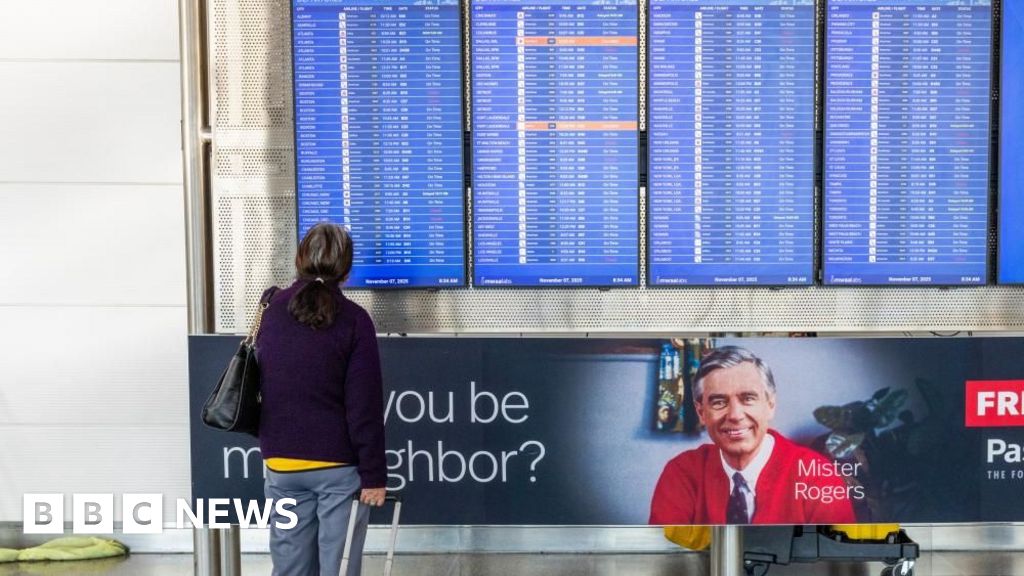
The ongoing United States federal government shutdown has precipitated a crisis extending far beyond Capitol Hill, revealing vulnerabilities in America’s critical infrastructure, notably its aviation sector. With nearly 13,000 air traffic controllers working without pay, widespread delays and cancellations have become the new norm at major hubs like Newark Airport. On Sunday morning alone, a ground stop was issued at one of the country’s busiest airports, exemplifying the severity of staffing shortages that threaten both safety and economic stability. According to the Federal Aviation Administration, approximately half of the 30 major US airports are experiencing significant staff deficits, as controllers grapple with the ethical dilemma of working unpaid versus risking safety. This situation underscores a broader systemic failure that has alarmed not just domestic observers but international stakeholders tracking the stability of global air traffic flow.

Officials, including Transportation Secretary Sean Duffy, have issued stark warnings over the potential fallout: “Flights will be canceled across national airspace to ensure safety,” he declared. The FAA has resorted to restricting flight traffic to mitigate risks associated with an overburdened and underpaid workforce operating under extreme stress. Analysts warn that the consequences of this shutdown extend beyond the skies, disrupting commerce, tourism, and international diplomacy. Flight data from Saturday showed over 4,500 delays within the US and more than 500 cancellations, illustrating how delinquent internal governance directly impacts global connectivity. This crisis is unfolding at a pivotal moment, raising urgent questions about the capacity of American institutions to maintain their global leadership role amidst internal chaos.

International organizations and geopolitical analysts emphasize that US stability is crucial to the global balance of power. As the world navigates complex geopolitical shifts, turmoil within the US government sends ripples through alliances and economic networks. Here, the failure of bipartisan negotiations over budget appropriations not only exposes domestic political fragility but also fosters uncertainty for allies and adversaries alike. The inability of lawmakers to compromise, as Democrats demand extensions of tax credits and reversal of Medicaid cuts, highlights a deeper conflict over the nation’s future direction. Many experts warn that such dysfunction, if prolonged, could diminish the nation’s soft power and challenge its role as the world’s economic anchor, fostering an environment where authoritarian regimes might seek to exploit American vulnerabilities to reshape the geopolitical landscape in their favor.

Historians and international analysts warn that this internal chaos could serve as a precursor to larger unravelings, as the US faces rising challenges from rising powers such as China and Russia. The decision-making paralysis at the federal level exemplifies a fragile democracy strained by internal divisions, threatening to weaken the safeguards that underpin global stability. The implications for societies worldwide are profound: economic disruptions cascade into social unrest, migration crises, and a newfound uncertainty about the future. As history continues to be written amidst this chaos, the world watches intently, acutely aware that the unfolding crises in America may well influence the course of global history for decades to come. Will this rising tide of internal disintegration force a reevaluation of American supremacy, or will resilience emerge from the crisis? The answer remains unwritten, but the weight of history presses heavily on today’s shoulders.

US judges: Trump admin must keep SNAP benefits flowing during shutdown

As the United States approaches its second month of a debilitating government shutdown, the focus has intensified on the humanitarian consequences unfolding across the nation, especially among its most vulnerable populations. Despite the political impasse that has paralyzed federal operations since October 1st, the judiciary has delivered a decisive blow to the Trump administration’s attempt to withhold food assistance for over 40 million low-income Americans. Two federal judges in Rhode Island and Massachusetts have ruled that the government must utilize emergency funds to continue the disbursement of SNAP benefits, commonly known as food stamps.

This legal intervention underscores a critical turning point in the ongoing crisis, emphasizing the fundamental role of judicial authority in safeguarding basic human needs against political stalemates. The courts’ rulings assert that funds necessary for essential aid cannot be arbitrarily withheld under the guise of budget disputes. Analysts highlight the geopolitical impact of such decisions in terms of American domestic stability. Historians warn that prolonged neglect of social safety nets can deepen societal divisions, trigger food insecurity, and exacerbate economic disparities, reflecting what they term a “moral failure.” Meanwhile, international organizations, such as the UN, have expressed concern about the global image of a superpower unable to meet the basic needs of its people, risking a narrative of decline amid domestic chaos.

At the core of the legal battles laid out in courtrooms is the Trump administration’s claim that the contingency funds meant for emergencies are insufficient for this crisis, a stance challenged as mistaken by judicial authorities. The USDA’s decision to halt SNAP distributions, citing “the well has run dry,” has been met with widespread backlash from both sides of the political aisle and society at large. Despite efforts by several states to fund benefits independently, the federal government’s warning that they will not be reimbursed only fuels fears that millions of Americans—families like those surviving on less than $6 a day per person—are being left adrift in a storm of political game-playing. The Center on Budget and Policy Priorities estimates that even if the contingency fund is accessed, it might only cover approximately 60% of the usual beneficiaries—another grim reminder of how decisions made in Washington resonate deeply in American living rooms.

In this moment of crisis, the echoes of history serve as a stark warning: when social safety nets are undermined, societal stability fractures. The dominant narrative echoing through policy circles and international commentators alike is that these conflicts are not merely political disputes, but fundamentally a test of American values and resilience. As the courts demand action and Congress remains gridlocked, the fateful question persists—will this be remembered as the point when the world’s most powerful nation chose to abandon its own people, or will it rise to the occasion? The unfolding story remains a testament to a society at the crossroads, with the weight of history pressing heavily upon the pages yet to be written. As the nation teeters on the brink of crisis, the true impact of these decisions will only be measured by how they shape the future of millions who depend on the promise of a better life—promised but now continually challenged by political indifference.

Trump urges Senate to ditch filibuster, push to end shutdown now — US politics update

In what may be remembered as a defining moment of early 21st-century geopolitics, the United States finds itself at a crossroads, with internal debates and international actions shaping a new global landscape. President Donald Trump, freshly returned from a week-long diplomatic tour across Asia, is pressing hard for radical reform within the U.S. Senate—specifically, calling for the abolition of the historic filibuster to end the ongoing government shutdown. His rhetoric on social media underscores a broader push for decisive, even contentious, changes that could, depending on their outcome, significantly reshape the nation’s legislative processes.

This shift in strategy is paired with extraordinary bipartisan reactions that signal mounting frustration. Notably, a handful of Senate Republicans—including Mitch McConnell and Lisa Murkowski—have broken from tradition to join Democrats in voting against Trump’s tariffs on over 100 countries, a move that highlights growing dissent among the political elite about the scope of executive authority and the reach of trade policies. The tariffs, which Trump enacted via executive order, have faced mounting resistance—a reflection of tensions between the executive branch and Congress, which analysts say could lead to a constitutional showdown. Historian and political analysts warn that if the ‘nuclear option’ is employed to eliminate the filibuster, it will dismantle a cornerstone of Senate deliberation, fundamentally altering the legislative landscape and possibly increasing polarization.

Meanwhile, international responses to American military actions have cast a shadow over U.S. global leadership. The UN High Commissioner for Human Rights has condemned recent US military strikes against boats in the Caribbean Sea and Pacific Ocean, alleging that these operations violate international law and constitute extrajudicial killings. This marks a rare, perhaps unprecedented, condemnation from the UN against U.S. military tactics, raising questions about America’s compliance with human rights standards while fighting drug cartels. President Trump, on his part, justifies these strikes as necessary to stem drug flow, yet the mounting civilian casualties, with at least 61 reported deaths, threaten to delegitimize this counter-terrorism effort, especially as it takes place outside the bounds of active armed conflict. Such developments threaten to diminish America’s moral standing on the world stage while emboldening adversaries who question U.S. commitment to international law and human rights.

Compounding these international tensions, the domestic political landscape remains volatile. The Senate’s vote to reject Trump’s Tariffs signifies a pushback not only against trade policies but also against executive overreach. The opposition’s rare bipartisan effort underscores a wider sentiment that the President’s aggressive economic and military strategies risk escalating global conflicts and domestic instability. As analysts warn of a possible escalation towards greater authoritarianism if the Senate’s constitutional boundaries are further eroded, the world watches with bated breath. The sense that the U.S.—once a beacon of liberal democracy—is inching towards uncharted, perhaps perilous, territory hangs heavy in the air. As history’s pages turn, the unfolding drama of these internal struggles and external conflicts will invariably define the foreign policy and social fabric of nations for generations to come. In the shadow of these tumultuous events, one truth remains clear: the shadows of history are lengthening, and the outcome remains unwritten.

Trump supporter Timothy Mellon funds $130M to secure troop pay amid shutdown

In a startling display of private influence over public policy, timing and financial dominance converge as news broke of an anonymous donation that temporarily eased the burdens of U.S. troops during the prolonged federal shutdown. According to The New York Times, the donor, identified only as Timothy Mellon, committed a staggering $130 million to the U.S. government — a move unprecedented in its clandestine nature and its implications for americas’ political landscape. Mellon’s history as a major Republican benefactor and heir to an industrialist legacy underscores a broader trend: wealthy private actors increasingly shape governmental functions, blurring the lines between citizen participation and covert influence.

This infusion of private capital raises critical questions about how international and domestic policy decisions are influenced by billionaires. The donation, accepted under the Pentagon’s “general gift acceptance authority,” was reportedly aimed solely at subsidizing service members’ salaries and benefits. Yet, the controversy lurks in the potential violations of the Antideficiency Act, which explicitly prohibits federal agencies from spending beyond their congressional appropriations or accepting voluntary services outside emergencies involving human safety. Such measures drift dangerously towards undermining the checks and balances fundamental to American democracy, where the power of the purse traditionally rests with elected representatives, not anonymous magnates.

Historically, figures like Mellon symbolize a nexus of wealth, political influence, and ideological confrontations. As research by analysts and historian suggest, Mellon’s substantial campaign contributions — totaling over $165 million in recent election cycles — exemplify how interwoven private fortunes are with the fabric of candidate support and policy advocacy. His recent backing of intense border projects in Texas, and support for antitrust ideological movements, reveal a strategic effort to shape regional and national narratives aligned with a broader conservative resurgence.

The geopolitical impact of such private influence extends beyond American borders. As international organizations warn of increasing transnational power struggles, the US’s internal reliance on billionaire benefactors risks destabilizing the foundational principles of democracy in favor of a shadowy corporatocracy. The actions of Mellon and similar donors set a precedent where financial might can quietly mold policy outcomes, often at odds with citizen interests. Their role invites scrutiny from global governance bodies, which are already observing the fragility of the American political order amidst growing societal divisions.

As history continues to unfold in the corridors of power, the weight of these clandestine financial maneuvers threatens to redefine the very notion of sovereignty. With each secret donation, each act of influence, the dividing lines between the public and private sphere blur further, raising urgent questions about accountability and transparency. As nations look on, they recognize the inescapable reality that the future of free societies hangs by a thread, woven with the invisible threads of wealth and power, leaving the world to ponder — whose interests truly shape the course of history?

Trump plans White House gathering with GOP senators amid shutdown and construction chaos

In a landscape defined by relentless internal strife and mounting geopolitical challenges, the actions of the United States under President Donald Trump continue to reverberate across the global stage. Recent developments reveal a nation embroiled in constitutional crises, military deployments, and economic confrontations, which threaten to reshape the international order.

The internal chaos reached a new peak as the US government extended its longest shutdown in history into its 21st day, with no resolution in sight. As the Senate repeatedly failed to pass a funding resolution, millions of federal workers and critical services remain disrupted. Prominent Republican figures, such as House Speaker Mike Johnson, defend the shutdown as a strategic move against Democratic opposition—particularly over healthcare policy. Meanwhile, grassroots protests erupt nationwide, pressuring lawmakers and fueling political polarization. Many analysts view this as a critical turning point—a test of the resilience of American institutions amid turbulent times.

Amid the domestic turmoil, President Trump has taken decisive steps with undeniable geopolitical impact. Construction crews have begun demolishing parts of the White House East Wing to make way for a $250 million ballroom, stirring widespread controversy. Critics decry the renovation as a blatant indulgence at a time of national crisis, while opponents argue it symbolizes a deeper neglect of national priorities. Trump’s active engagement in this internal renovation underscores a broader trend—the consolidation of power and the spectacle of showmanship, often at odds with the global responsibilities the U.S. bears.

  • In a legal victory that further consolidates his authority, Trump’s administration secured a ruling allowing federal troops to deploy to Portland, Oregon, amidst ongoing protests.
  • Oregon’s governor, Tina Kotek, has called on the courts to review this decision, emphasizing concerns over federal overreach and the erosion of local sovereignty.
  • The tensions escalate as the Ninth Circuit Court of Appeals considers whether to rehear the case, a move that could broaden the legal framework permitting federal intervention in domestic protests—a concerning precedent with long-lasting consequences for civil liberties.
  • Simultaneously, in a disturbing display of partisan divergence, figures like James Comey seek to dismiss serious charges, exemplifying the judiciary’s partisan battleground and stripping away the veneer of legal impartiality.

Amidst these developments, international reactions are shaping the new geopolitical landscape. Trump’s endorsement of the AUKUS pact with Australia and PM Anthony Albanese signals a strategic pivot in alliance politics. The deal, emphasizing nuclear submarine cooperation and critical mineral exports—especially aligned against China’s tightening grip—underscores the shift toward militarized diplomacy and economic brinkmanship. While Trump praises Albanese’s leadership, behind closed doors, American military and diplomatic officials are reportedly seeking to clarify ambiguities in the controversial nuclear deal, reflecting an era of high-stakes stratagems.

Across the Atlantic and Eurasia, the postponement of President Trump’s planned Budapest summit with Vladimir Putin hints at mounting tensions with Russia—an indicator of how internal instability in America cascades outward, destabilizing international diplomacy. As nations watch with a mixture of skepticism and trepidation, the world faces an uncertain future where the decisions made within American borders echo across continents, sparking new alliances, rivalries, and conflicts—destined to influence the course of global history.

In this epoch of uncertainty, historians and international analysts warn that the choices made by U.S. leaders today will either sustain or fracture the fragile global order. As the nation faces unprecedented internal battles, the wheels of history continue to turn—often unnoticed by the masses—yet undeniably shaping the future of nations and societies alike. The unfolding drama remains a stark reminder that beneath the spectacle of power, the course of history is written with the ink of decisive, often tumultuous, action—a story still being authored, with humanity’s future hanging in the balance.

Trump administration seeks funds to pay federal officers amid shutdown dominance

U.S. Government Shutdown and Its Global Geopolitical Impact

The prolonged shutdown of the United States federal government, now entering its third week, underscores a deepening political crisis that extends beyond domestic borders. Despite repeated votes in the Senate, the legislature remains deadlocked, illustrating a growing rift between Democrats and Republicans. The inability to pass funding legislation not only halts regular government operations but also sets a troubling precedent for the stability of the world’s leading superpower. International analysts warn that such internal chaos can weaken America’s standing on the global stage, complicating diplomatic relations and economic strategies worldwide.

Financial Strains and Alternative Measures with Global Consequences

Faced with the crisis, the Trump administration has begun exploring alternative ways to finance critical programs. While the government remains paralyzed, essential services such as military operations are being maintained through previously allocated funds, raising concerns about the long-term sustainability of such decisions. Officials confirm that approximately 750,000 federal employees have already been furloughed, a figure with serious social and economic repercussions that ripple through markets, affecting global investors and allied nations reliant on U.S. stability.

  • The federal workforce faces significant financial uncertainty, with ongoing layoffs impacting multiple agencies.
  • The administration has sought cost-effective ways to sustain essential services, including using tariff revenue to fund nutritional aid programs for vulnerable populations.
  • The military remains operational, yet the question of funding continuity remains unresolved, with warnings of further disruptions looming.

International commentators, including financial analysts and political historians, indicate that the U.S. political impasse threatens the reliability of American policy and economic commitments. This internal discord may embolden geopolitical opponents, who see in America’s weakness an opportunity to expand influence in regions like Eastern Europe, the Indo-Pacific, and beyond. Such instability could result in shifts in alliances, emergent regional conflicts, and a recalibration of international power dynamics.

Turning Point or Prelude to Greater Turmoil?

The unresolved dispute over funding for critical programs, such as welfare for women and children and law enforcement agencies, signals a fragile domestic landscape. The potential for further financial hardship, coupled with rhetorical escalations from leaders, suggests a turning point in American governance that could redefine its influence for decades to come. Historians warn that prolonged governmental deadlock not only undermines domestic trust but also erodes international credibility.

As the world watches, the unfolding crisis in the US offers a stark reminder: in a time of shifting alliances and rising powers, internal stability remains the cornerstone of a nation’s capacity to lead. The decisions made within the halls of Congress now reverberate across continents, shaping the global order and determining whether the future will be one of renewed strength or unprecedented decline. The pages of history are turning — and only time will tell what chapter they will write next.

Shutdown halts U.S. citizenship ceremonies, impacting new Americans

In what can only be described as a stark illustration of political paralysis impacting the lives of millions, a recent government shutdown in the United States has temporarily halted vital immigration services, leaving aspiring citizens in limbo. Amidst ongoing internal political deadlock in Washington, over 700,000 federal workers are now on unpaid leave, and the shutdown’s ripple effects threaten to undermine the integrity of America’s immigration system. This scenario underscores the profound geopolitical impact of internal divisions in one of the world’s leading powers, demonstrating how internal policy fractures have tangible consequences on individuals’ destinies and national reputation.

With the deadline for government funding having expired on October 1, lawmakers have been deadlocked in an increasingly bitter confrontation that exposes deep partisan fissures. The inability to reach a consensus has led to the shutdown, affecting core government functions. Notably, the U.S. Citizenship and Immigration Services (USCIS), although typically resilient due to funding through application fees, faced disruptions in services that are critical to those seeking U.S. citizenship and new opportunities on American soil. This disruption manifests not only as inconvenience but as a major setback for countless hopeful immigrants, many of whom have invested years, even decades, of effort in pursuit of the American dream. The shutdown accentuates a broader narrative of Washington’s failing governance, where ideological disputes threaten the fabric of social mobility and national integration.

Internationally, analysts and historians have pointed to this shutdown as a symptom of a shifting global order—one where internal discord in superpowers like the U.S. might dampen their ability to lead on the world stage. Countries in Asia, Europe, and elsewhere watch nervously as recent US policies reveal a nation grappling with its internal divisions. As political scientists warn, such internal crises could weaken U.S. soft power, embolden rivals, and fuel regional instability. Moreover, the decision to delay or cancel naturalization ceremonies—though seemingly administrative—carries symbolic weight, signaling to both allies and adversaries that America’s own governance is under strain. In a world of rising powers, where China and Russia challenge the rules of the international order, the internal disarray within the U.S. diminishes its moral authority and strategic influence.

Despite promises from officials that services will resume once a budget agreement is reached, the uncertainty continues. As the ongoing stalemate prolongs, critics argue that this exposes a fragile democracy in distress, where partisan conflicts threaten to erode institutional trust and undermine societal stability. Many experts, including prominent historians and policy analysts, warn that such internal discord could have long-lasting effects—shaping the future narrative of a nation still struggling to reconcile its ideals with political realities. Meanwhile, those caught in the crossfire remain anxious, faced with an uncertain horizon where their hopes for a new life hinge on the fragile pause of a government unable to function.

As the world watches, a profound question lingers: will this internal crisis serve as a turning point—a moment of reckoning for a nation that once projected strength and resolve—or will it mark the beginning of a period of enduring decline? History continues to unfold in the shadows of political impasse, echoing with the weight of American promises and the promise of global futures yet to be written.

Social Media Auto Publish Powered By : XYZScripts.com