Matox News

Truth Over Trends, always!

Snap’s AI Glasses Are Back — Ready to Power the Next Gen?

Innovative Leap: Snap‘s AR Glasses Enter a New Era with Qualcomm Partnership

In a move set to disrupt the burgeoning augmented reality (AR) landscape, Snap Inc. has announced a strategic partnership with Qualcomm, signaling a renewed push towards mainstream adoption of its AR glasses, formerly known as Spectacles. The collaboration leverages Qualcomm’s Snapdragon XR platforms, a family of system-on-a-chip solutions optimized for augmented and virtual reality devices. This union underscores the growing importance of hardware-software integration in the pursuit of immersive digital experiences, with industry analysts such as Gartner emphasizing that the next wave of consumer tech will be driven by hardware ecosystem innovation.

The significance of this partnership transcends mere product development; it embodies a broader shift toward **disruption of the traditional tech hierarchy**. Snap’s decision to spin off a dedicated entity for Specs demonstrates a focused approach to capture market share within the rapidly evolving AR sector. The move aligns with trends identified by institutions like MIT’s Media Lab, which highlight that on-device AI and multiuser digital environments represent the core of next-generation wearable computing. Snap aims to capitalize on this, emphasizing its commitment to integrating cutting-edge graphics, AI, and social connectivity into a compact form factor, with expectations that the new Spectacles will redefine user interaction and digital presence.

Market Implications and Future Outlook

The ongoing development of Snap’s AR glasses comes amid increasing competition from giants like Apple, Facebook (Meta), and Google – all investing heavily in wearable AR technology. The company’s pivot towards a developer-centric, iterative approach—having previously limited Spectacles as a consumer product—aims to position Snap as a pioneer in **multiuser AR environments**, essential for the evolution of social media, gaming, and enterprise sectors. Furthermore, Snap’s move anticipates a market that Gartner forecasts will see augmented reality hardware surpass $100 billion in revenue within the next five years, driven by innovation and strategic partnerships.

  • Key features: on-device AI, high-performance graphics, social connectivity capabilities
  • Disruption potential: redefining social interaction, creating new monetization avenues, challenging established tech giants
  • Business milestones: partnership with Qualcomm, focus on developer ecosystem, phased rollout of Spectacles

In the broader industry context, these advancements exemplify a **paradigm shift** where hardware capabilities, powered by Qualcomm’s advanced chipsets, integrate seamlessly with AI and multi-user platforms, fostering a new era of digital interaction. Elon Musk’s ventures into Neuralink and Peter Thiel’s investments in emerging tech bolster the narrative that disruption is accelerating at an exponential rate. Companies that prioritize **innovation and agile ecosystem development** will likely dominate the next decade’s AR landscape.

As Snap accelerates towards the upcoming release of its Spectacles, the industry faces an urgent call to action: **staying ahead in this rapidly evolving ecosystem demands relentless innovation and strategic partnerships**. The race to shape the future of immersive tech is intensifying, and those who lead today’s breakthroughs will determine the digital topography of tomorrow. With this partnership, Snap reinvigorates its ambitions, signaling that **the future belongs to those who dare to disrupt and redefine reality itself**.

Brussels probes Snapchat over kids' safety concerns
Brussels probes Snapchat over kids’ safety concerns

The European Union has escalated its efforts to regulate the digital landscape amid grave concerns over how certain online platforms may be exposing the continent’s youth to harmful content. Brussels has launched a series of investigations targeting five major tech companies under the Digital Services Act (DSA), a landmark regulation introduced two years ago to safeguard users from the myriad internet threats currently threatening societal stability. These inquiries specifically focus on Snapchat and four prominent adult content websites—Pornhub, Stripchat, XNXX, and XVideos. The EU’s aim is clear: protect children’s mental health, uphold community standards, and prevent the normalization of deviant behaviour.

Particularly alarming are findings indicating massive exposure of minors to explicit content. According to the European Commission, platforms like Snapchat are suspected of facilitating grooming and sexual exploitation, with adults allegedly pretending to be minors in order to lure young users into criminal activity. The investigation reveals that despite the app’s own terms banning users under 13, statistics show that children as young as ten in Denmark and France are active users. This alarming trend underscores the failure of existing age verification mechanisms, which remain easily bypassed through simple self-declarations. Such vulnerabilities not only facilitate online abuse but also significantly influence young people’s perceptions of gender and sexuality, fueling harmful stereotypes and mental health issues. Analysts argue that this crackdown signals a pivotal shift in shifting societal expectations—holding tech giants accountable for the erosion of youth safety in the digital age.

Meanwhile, the commission’s probe into adult websites surfaces even more disturbing revelations: these platforms have conspicuously failed to prevent minors from accessing explicit material. The findings underscore a troubling gap in regulatory oversight, as children and adolescents routinely encounter adult content with ease—sometimes by clicking a “Yes, I am over 18” box. In some cases, children as young as 10 have been found to access pornography monthly, with significant numbers of underage boys first exposed to such material between the ages of 10 and 13. The potential consequences—ranging from mental health deterioration to the normalization of violent sexual attitudes—represent a serious threat to societal well-being. Experts believe that such exposure at a young age could have lasting impacts, including skewed gender perceptions and increased tolerance for sexual violence. The EU has made it clear that these platforms must clean up their act—failure to do so could result in fines of up to 6% of global turnover, a substantial financial penalty that signals the seriousness of these violations.

This push by Brussels denotes a broader attempt at asserting regulatory authority over the digital economy, emphasizing how international institutions are reshaping the rules of engagement in cyberspace. Some critics see the move as a preemptive step towards more sweeping bans, like those being discussed in Australia, where the government is contemplating outright restrictions on social media access for minors. The EU appears to be positioning itself as a global leader in digital regulation—an effort to curb the influence of platforms that, critics argue, prioritize profit over public safety. As governments and watchdogs around the world grapple with these issues, the battle lines are being drawn for a new era of internet governance—that, some warn, could redefine the relationship between society and technology forever.

As history continues to unfold in this pivotal moment, the question remains: can these measures truly safeguard the next generation in an increasingly digital world? Or are they but the first chapter in a larger struggle—one where the forces of freedom, security, and societal norms collide amidst the relentless march of technological advancement? The weight of this turning point rests heavily on whether regulators can enforce accountability in the internet’s shadowy corners, for in this digital age, every decision echoes through the fabric of society—lasting far beyond policy papers and court rulings, shaping the very essence of future generations.

Amazon services bounce back as Snapchat and banks go offline during widespread outage

Global Power Shift and the Fragility of Digital Infrastructure

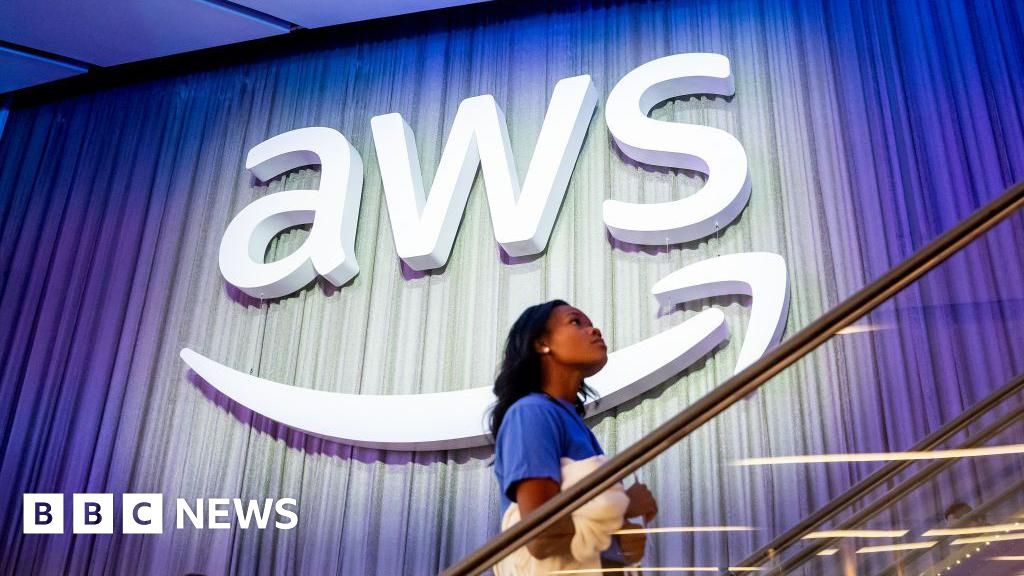
The recent massive outage of Amazon Web Services (AWS), one of the world’s most influential cloud computing giants, has sent shockwaves through the international digital landscape. Late Monday, AWS confirmed that it had resolved a disruption that temporarily incapacitated a significant portion of global web services, with user reports soaring to over 11 million. This incident underscores the profound geopolitical and economic impact of dependency on centralized digital infrastructure. As the backbone of many online platforms, AWS’s failure exposed vulnerabilities that extend far beyond inconvenience, threatening the stability of entire economies reliant on digital services. Analysts and historians warn that such incidents are a stark reminder of how interconnected and fragile the world’s digital ecosystem has become.

Vast swathes of the internet, including major platforms like Reddit and Lloyds Bank, experienced outages, demonstrating that the power of a single provider can have repercussions reaching across borders and sectors. Experts such as Professor Alan Woodward from the University of Surrey highlight that this episode lays bare the danger of over-reliance on a handful of American technology behemoths—primarily Amazon, Microsoft, and Google—which together control roughly 70% of cloud services. This monopolistic dominance, as Cloudflare’s CEO Matthew Prince notes, constitutes an unsustainable risk to our sovereignty, economy, and security. In an era where digital infrastructure underpins critical national functions, such vulnerabilities threaten to paralyze societies at their core, transforming routine outages into crises with ripple effects that can last for days or weeks.

The incident has sparked a renewed call among experts for a reassessment of global digital sovereignty. The incident’s root cause, linked to DNS resolution issues with DynamoDB in AWS’s US-EAST-1 region, remains partially understood yet unmistakably highlights structural flaws in the current system. The failure exemplifies what many analysts call the dangerous over-centralization of digital power, leading to debates among policymakers and historians about whether decentralizing cloud infrastructure could mitigate future risks. As Professor Mike Chapple from Notre Dame University points out, the cascading failures following the initial outage demonstrate the importance of building more resilient and diversified digital systems. The narrative emerging from this crisis echoes early discussions of the tragedy of the commons: the single point of failure that can bring the entire network crashing down, revealing how much we have surrendered our digital sovereignty to American corporate giants.

Beyond the immediate technical failures, the incident invites reflection on the moral responsibility of corporations and governments alike. Notably, some industry voices blame application developers for neglecting to implement adequate backup systems, emphasizing the need for stronger safeguards in cloud reliance. These failures may soon lead to legal battles as affected companies and institutions seek compensation for damages, reminiscent of past disputes like the $500 million claims by Delta Airlines after a previous outage. The broader lesson, however, is that the current model—highly dependent on US-based infrastructure—may jeopardize national security, economies, and personal privacy. As the world stands at this critical juncture, the debate intensifies: will we continue down this path of technological monoculture, or will we heed the warnings and consider a shift toward more resilient, localized systems?

As history continues to unfold, the shadows cast by this digital crisis loom large. How nations respond now could determine the future trajectory of global digital governance, shaping the balance of power in the international arena. One thing remains clear: in the digital age, the line between technological innovation and geopolitical vulnerability has become razor-thin. The fragility exposed by AWS’s failure is a stark reminder that the world’s fate is intricately tied to a handful of corporate and governmental decisions. As societies brace for the repercussions, the weight of history presses heavily—waiting to record whether this crisis will be a catalyst for meaningful change, or merely another chapter in the ongoing saga of human dependence on fragile digital monoliths.

Social Media Auto Publish Powered By : XYZScripts.com