
Matox News

Truth Over Trends, always!

Noah Kahan’s The Great Divide: How Sticker Season Feels Like an Eternal Autumn for Stadium Folk Fans

In an era where the cultural landscape seems seemingly saturated with transient trends and ephemeral content, it is refreshing—indeed necessary—to recognize the enduring power of authentic cultural expression. As the philosopher Ortega y Gasset observed, culture is not merely a reflection of societal values but the memory and prophecy of a civilization’s soul. Recent developments in popular music serve as prime examples of this phenomenon, revealing how artists like Noah Kahan are revitalizing a tradition of earnest storytelling rooted in the everyday struggles of ordinary life, thereby reinforcing the vital link between culture, identity, and societal continuity.

Kahan’s rise over the past few years exemplifies a resilient countercurrent to the shallow glitz that often characterizes mainstream pop. His work is marked by a deliberate rejection of superficial escapism, emphasizing instead the small-town introspections and emotional realism that resonate with a core demographic that longs for sincerity. His breakout hit, Stick Season, captures this ethos, inviting listeners into a wistful autumnal world that lingers long after the song ends. This is a testament to the enduring relevance of folk-inspired storytelling—a cultural tradition as old as the poetic ballads of the troubadours—and its capacity to adapt to contemporary contexts. As Tocqueville once noted, the strength of a society lies in the shared narratives that anchor it; Kahan’s music reaffirmed that tradition by speaking directly from the heart of small-town America, thus reinforcing the notion that genuine cultural expression is a vital component of societal identity.

However, Kahan’s latest work, The Great Divide, suggests a cautious step into the territory of consolidation rather than innovation. Co-produced by Aaron Dessner, it bears the unmistakable stamp of mature craftsmanship but risks the danger of repetitive sentiment—a musical meditation on stability over daring. The length of the album indicates a certain uncertainty about where to venture next. Yet, this hesitance underscores a broader cultural truth: that the search for authenticity often involves a delicate balancing act between tradition and transition. As Chesterton famously proclaimed, “tradition is the democracy of the dead, a reverent recognition of those who came before us.” In this sense, Kahan’s cautious approach may serve as a reminder that true progress arises not from reckless innovation but from a respectful dialogue with the past—an essential ingredient to preserving a society’s cultural integrity.

Ultimately, Kahan’s journey encapsulates a larger narrative about the importance of culture as both memory and prophecy. His lyrics, filled with the details and nuances of small-town life, draw a lens focused on how our shared stories shape our identity—grounding us amid the chaos of modernity while hinting at the possibilities of what is yet to come. Culture, then, is not merely relic or decoration but the living, breathing fabric of society—an ongoing dialogue that connects our history with our aspirations. As T.S. Eliot captured, “what we call the present is woven out of the past, and the future belongs only to the one who keeps that fabric unbroken.” In this sacred continuum, the memories of yesterday become the prophecies of tomorrow, whispering that the essence of humanity endures through our stories, our songs, and our shared sense of being.”
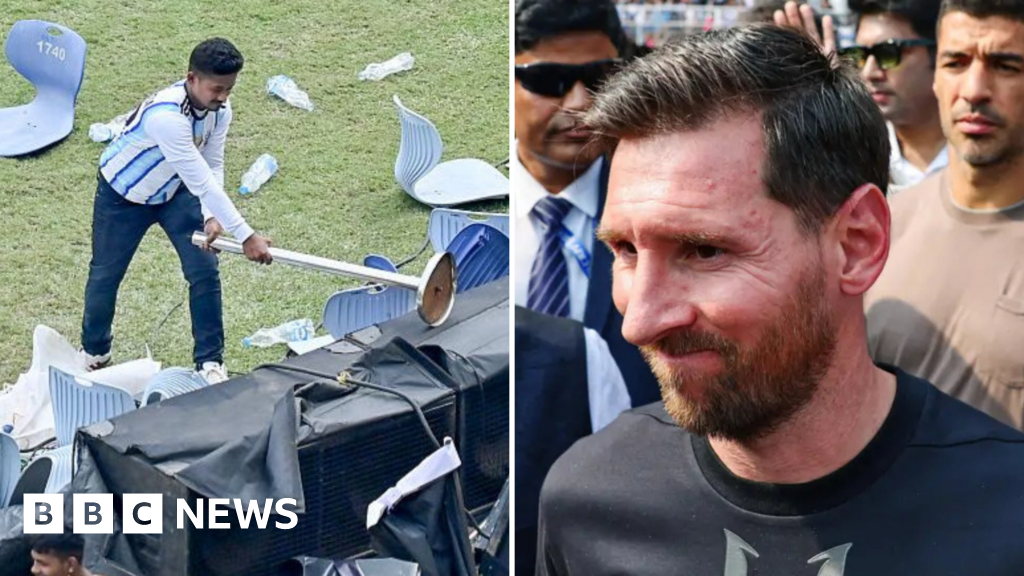
Fans Say Messi 'GOAT' Tour Crosses the Line with Chairs and Bottles at Stadium
Fans Say Messi ‘GOAT’ Tour Crosses the Line with Chairs and Bottles at Stadium

Global Impact of Messi’s Indian Tour and the Unfolding Crisis

Messi’s Indian Tour Sparks Unrest Amid International Spotlight

The recent visit of football legend Lionel Messi to India has become a flashpoint in the world’s geopolitical landscape, highlighting broader issues of public disillusionment, governmental accountability, and growing tensions within rapidly developing nations. Organized as part of his global “GOAT” tour, Messi’s appearance in Kolkata was expected to be a showcase of sport and celebrity diplomacy. Instead, it turned into a dramatic episode revealing the fragility of social order and the risks associated with high-profile international events in emerging powers. Despite the massive turnout—thousands of fans who paid significant sums for tickets—the event culminated in chaos, with crowds storming fences, vandalizing banners, and hurling objects after Messi’s abrupt departure.

The violence that erupted at Salt Lake Stadium underscores the discontent that simmers beneath India’s vibrant surface. Fans who traveled from distant cities, some spending a month’s salary on tickets, arrived with high hopes of a glimpse of their idol. However, they were met with disappointment when the organizers, and reportedly the police, failed to facilitate Messi’s full appearance. The event’s “security concerns,” as cited by authorities, masked deeper failures—an inability to manage large crowds and an underlying mistrust between the public and officials responsible for event organization. Historians interpret such incidents as symptomatic of India’s unresolved tension between urban growth and social stability, where public sentiment can quickly turn hostile when expectations are dashed by mismanagement and corruption.

From an international perspective, the incident signals a broader geopolitical impact—not just a failure of event planning, but a reflection of mounting frustration with governments and institutions perceived as disconnected from the populace. Analysts point to how India’s evolving domestic politics and its positioning as a global power are under scrutiny, especially amid the current rise of nationalist sentiment and economic inequality. The failure to provide a safe and organized experience has ramifications beyond the stadium, impacting India’s international image and its soft power strategy. The Indian government, under pressure from critics and the international community, has announced investigations and measures to improve security and event management—yet, this episode serves as a warning: public trust in institutions remains fragile.

Meanwhile, the broader international community watches as India grapples with these internal vulnerabilities. The incident highlights the delicate balance of showcasing national pride through global celebrities while managing the masses’ expectations. While Messi’s event was a private affair not sanctioned by the All India Football Federation, its fallout has become a subject of political debate over the country’s readiness to host such large-scale, high-profile events. Experts including political analysts and historians argue that the scene at Kolkata—marked by anger, vandalism, and disillusionment—foreshadows potential unrest if governments continue to prioritize superficial displays over substantive reforms. It also echoes other recent episodes where misplaced priorities and logistical failures have stoked social tensions across South Asia’s largest democracy.

As Messi’s silhouette vanished behind security barriers and the crowd’s unrest swelled, the situation took on a symbolic weight. It is not merely a story about a misplaced celebration of sport, but a chapter in the unfolding narrative of a nation at a crossroads—caught between its ancient roots and modern ambitions. The reactions of local authorities, national political figures, and international observers will determine whether this is an isolated incident or a harbinger of deeper unrest. Ultimately, the question lingers: Can India reconcile its rapid ascent with the social cohesion needed to sustain it, or will this chaos mark the beginning of a more turbulent chapter in its history? As history continues to unfold, the echoes of Salt Lake Stadium’s chaos resonate beyond its own borders, a stark reminder that the line between celebration and catastrophe remains razor-thin in a world where power, pride, and peril collide.

Social Media Auto Publish Powered By : XYZScripts.com



