Matox News

Truth Over Trends, always!

Israeli troops face scrutiny after damaging Jesus statue in Lebanon

In a decisive move that underscores the Israeli Defense Forces’ (IDF) strict stance against misconduct, Israel announced the temporary removal of two soldiers from combat duty, accompanied by 30 days of military detention. This disciplinary action signals a pivotal moment reflecting internal military discipline amid ongoing regional tensions. While seemingly routine, such measures carry significant implications for the broader geopolitical landscape of the Middle East and influence both domestic stability and international perceptions of Israel’s commitment to uphold military standards.

Experts and analysts have closely scrutinized this incident, viewing it within the context of escalating conflicts and Israel’s need to project strength and discipline. According to military officials, the decision was made in accordance with established protocols following infractions deemed detrimental to operational readiness and unit cohesion. Historians observing Israel’s military practices note that maintaining discipline in such a volatile environment is essential for national security. Yet, the gesture also serves as a stark reminder that even in a force highly trained for combat, human conduct remains under constant scrutiny—especially as the region’s political waves ripple with uncertainty.

On the international scale, this disciplinary act resonates far beyond Israel’s borders.

  • The United Nations, often criticized for its perceived inability to influence lasting peace in the Middle East, continues to watch Israel’s internal military affairs with interest, understanding that discipline within the IDF impacts regional stability.
  • Neighboring countries such as Lebanon and Syria, routinely volatile zones themselves, interpret such actions as indicative of Israel’s unwavering discipline and readiness, affecting their regional strategies and military postures.

Meanwhile, Washington and other western allies advise caution, emphasizing that internal military discipline is a crucial component in a complex regional security puzzle. International security organizations warn that any perceived weakening of Israeli military standards can embolden groups hostile to Israel, potentially escalating unforeseen conflicts.

In the broader strategic calculus, these internal measures reflect a determination by Israel to project strength in a region rife with uncertainty. As global analysts and historians observe, such disciplinary actions are more than internal affairs; they are emblematic of Israel’s effort to reinforce its deterrence posture. This is especially critical as diplomatic efforts, peace negotiations, and regional alliances continue to shift, highlighting how delicate the balance of power remains in this nation’s ongoing saga. With each disciplinary decision, Israel underscores that it is prepared to uphold its sovereignty through discipline, resilience, and unwavering commitment to its security. Yet as history unfolds in real-time, the question persists: will such internal measures suffice to deter or merely delay the tempest brewing beyond its borders? The answer remains veiled in the shadows of an uncertain future, where the weight of history presses heavily upon the present, and the fate of the Middle East continues to hang in the balance.

Cambodia Unveils Heroic Rat Statue Honoring Landmine-Detecting Hero

In an era marked by complex international conflicts and shifting alliances, the commemoration of a remarkable African giant pouched rat serves as a poignant reminder of unconventional heroes and their impact on global security. The statue dedicated to this extraordinary creature honors a truly unique contribution: meticulously sniffing out over 100 landmines during his lifetime. This piece of history underscores the vital intersection of ecological intelligence, humanitarian effort, and geopolitical stability, offering lessons for nations embroiled in ongoing conflicts and disarmament challenges.

The rat’s story is emblematic of a broader movement towards innovative, non-traditional methods of conflict mitigation, especially in war-torn regions where landmines continue to pose lingering dangers to civilians long after active hostilities cease. International organizations such as the United Nations Development Programme and humanitarian NGOs have increasingly supported the deployment of trained animals, like this remarkable rat, to facilitate safer environments. Historians and security analysts recognize this alliance between biological aptitude and human ingenuity as a turning point in demining strategies, fundamentally altering the approach of armies and peacekeeping missions around the world.

The geostrategic consequences of landmine clearance extend far beyond the battlefield. The example of this rat highlights how decision-makers in countries — particularly in conflict zones across Africa, Southeast Asia, and Eastern Europe — are adopting more effective, humane tactics to stabilize precarious regions. Its legacy underscores the importance of prioritizing lives over traditional warfare, opening pathways for economic development, education, and return to normalcy in societies scarred by decades of violence. This shift towards innovative demining not only saves lives but also redefines the parameters of international cooperation and sovereignty.

Yet, as the world reflects on this unusual hero, critics warn of the persistent dangers that threaten global peace and stability. Recent geopolitical tensions, such as Russia’s ongoing conflict in Ukraine and escalating disputes in the South China Sea, reveal how fragile peace remains. In this turbulent landscape, the story of the giant pouched rat serves as a powerful reminder that victory may come from unexpected alliances and that the path to lasting peace hinges on foresight, innovation, and the collective will to protect innocent lives. As history continues to unfold, nations must grapple with the tangible lessons embedded in this animal’s silent, tireless service—lessons that could help shape a future where conflict is met not merely with force but with wisdom and resilience.

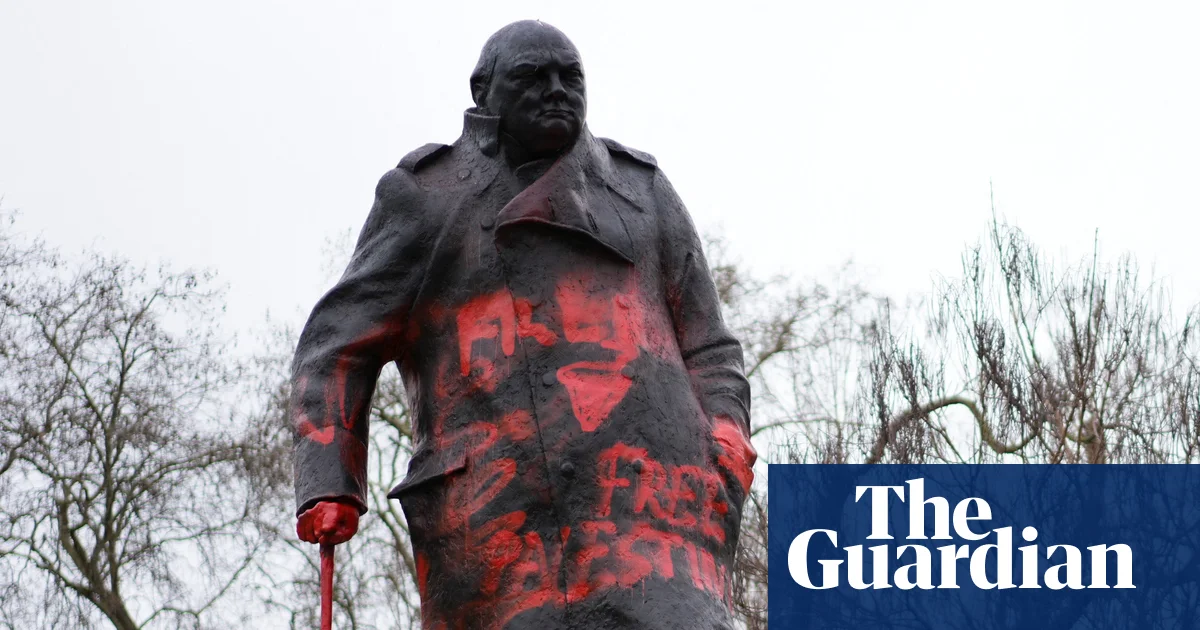
Man faces charges after defacing Churchill statue with graffiti

In a dramatic display of dissent that echoes across London’s historic political landscape, an unidentified individual was apprehended for spray-painting the statue of Sir Winston Churchill outside the Houses of Parliament. The act, laden with provocative slogans such as “stop the genocide,” “free Palestine,” and “globalise the intifada,” signifies more than mere vandalism; it symbolizes the deepening fault lines within global ideological conflicts. The perpetrator, Caspar San Giorgio, was swiftly charged with criminal damage by Metropolitan police, highlighting how these acts become flashpoints in broader cultural and geopolitical struggles.

The incident, occurring just after 4 a.m., is layered within a context marked by recent terrorist threats and violence. Following attacks at Heaton Park synagogue in Manchester and Bondi Beach in Australia, authorities have sought to tighten security and curb inflammatory rhetoric, especially slogans like “globalise the intifada,” which have previously led to arrests. These acts of vandalism are perceived by many as symptomatic of a rising tide of militant activism that reflects fractured global alliances and ideological battles. The UK government’s condemnation emphasizes its commitment to upholding “our values,” but critics argue that such incidents highlight the divisive dangers of unchecked political expressions that threaten the social fabric.

The statue itself, a 3.6-meter bronze monument by Ivor Roberts-Jones, stands as a symbol of not only British history but also of the ongoing debate about national identity and historical memory. It has been subjected to multiple acts of vandalism, including graffiti calling Churchill a “racist” during the Black Lives Matter protests of June 2020, illustrating how historical figures become focal points in modern ideological clashes. Reactions from London authorities and Prime Minister’s office reflect a sentiment of indignation, emphasizing Churchill’s role as a “great Briton” and rejecting the disruptive messages painted on his statue. However, the recurring incidents reveal an undercurrent of tension whereby global conflicts—such as the longstanding Israeli-Palestinian dispute—manifest violently on historic symbols.

International analysts warn that these acts of vandalism and inflammatory rhetoric are more than isolated protests—they are symptomatic of a shifting geopolitical landscape. As China and Russia challenge Western influence, and Middle East conflicts ignite new ideological battles, the symbolism of statues like Churchill’s is increasingly weaponized. Historians caution that how nations choose to interpret and confront their history, especially through contentious monuments, will shape the future of global cultural diplomacy. The escalating violence and provocative slogans serve as stark warnings—how societies remember their heroes and villains today may determine the course of international stability tomorrow.

As the dust settles and authorities scrub away the graffiti, the question remains: how will the world confront these cultural battlegrounds in the years to come? The ongoing struggle over history’s symbols, nations’ identities, and ideological allegiances signals that the true conflict is far from over. The world’s gaze is fixed on these unfolding chapters—each act of defiance adding a new line to the ever-growing narrative of history, with the weight of future generations hanging in delicate balance.

Bridget Jones to Be Honored with Statue in Leicester Square—Celebrating a Cultural Icon for the Next Generation

In the ever-expanding tapestry of cultural memory, few symbols remain as enduring as Bridget Jones, a character crafted by Helen Fielding that has come to embody the quintessential British spirit of resilience, humor, and authenticity. As London prepares to unveil a new statue honoring her in Leicester Square, this act transcends mere celebration; it signifies a reclamation of cultural icons that mirror our society’s values and aspirations. Since her debut in 1996, Bridget Jones has not only entertained audiences worldwide but also cemented her place as a beacon of relatable humanity amidst the glamorized illusions of modern life. Her character challenges the superficial, champions the imperfect, and ultimately celebrates the enduring power of authenticity—an essential thread woven into the national fabric of tradition and identity.

This commemoration points to a broader cultural landscape where beloved figures from literature, cinema, and art serve as custodians of societal values. The Scenes in the Square trail, which features icons like Harry Potter and Paddington, underscores an ongoing narrative: that these characters and stories form the collective memory that defines national character. The inclusion of Bridget Jones as the first romantic comedy honored in this way signifies recognition of a genre that emphasizes heart and humor—elements that resonate deeply with our cultural self-understanding. As Ortega y Gasset noted, culture is both a reservoir of values and a prophecy for the future; it molds the collective conscience and charts the ongoing journey of societal identity.

The act of celebrating Bridget Jones enriches our cultural heritage, emphasizing that values of perseverance, humor, and authenticity are vital in shaping a society that values tradition while embracing change. Her story, like those of the heroes and heroines we admire, acts as a mirror held up to our communal virtues. The statue’s unveiling—set to coincide with the 25th anniversary of the first film—reminds us that our cultural icons are both the memory and prophecy of who we are and who we aspire to be. As T.S. Eliot eloquently observed, the shaping of culture is a “memory and prophecy,” a recognition that our shared stories anchor us, yet they also beckon us forward into understanding and hope. In honoring Bridget Jones, London asserts that our cultural legacy is resilient — rooted in the imperfect, the humorous, the real — continuously illuminating the path to a future that honors its traditions while boldly evolving beyond them.

Social Media Auto Publish Powered By : XYZScripts.com