Matox News

Truth Over Trends, always!

Stephen Colbert on Trump’s Vatican clash: “Wow, the pope just called you out in style” | Nightly Culture Wrap

In an era increasingly dominated by media spectacle and political theater, the fundamental role of culture as the bedrock of identity and tradition remains a truth too often obscured. When figures like Donald Trump and the Pope Leo XIV become embroiled in public feuds, it signals more than mere personality conflicts; it highlights the ongoing battle over the soul of a society. As Ortega y Gasset once observed, “Culture is the human fabric that holds us together, distilling collective memory while steering us toward future horizons.” In times of geopolitical and moral turbulence, the cultural narratives we uphold—be they religious, historical, or philosophical—are essential to defining who we are and where we are headed.

The clash between Trump and the Vatican over issues like the just war doctrine exemplifies this tension. On the one hand, Catholic tradition emphasizes truth in defense—a principle rooted in centuries of theological reflection. Yet, as Colbert humorously pointed out, attempting to correct the Pope on such matters is akin to “going into the woods and telling a bear where to poop,” revealing the absurdity of dismissing the moral authority of tradition. Historically, the idea of a just war has been a cornerstone of societal self-identity—an anchor in the face of chaos. Chesterton famously argued that true culture is not just a reflection of current power, but a moral compass guiding the community’s conscience. Today, the cultural clashes over religion and morality are more than ideological—they are battles over the shared symbols that hold us together in uncertain times.

Meanwhile, the spectacle of political figures commissioning grand monuments, like the proposed Trump triumphal arch inspired by Paris’s Arc de Triomphe, underscores a visceral desire to embed history and heroism into national memory. Kimmel’s humorous critique that this new monument might memorialize the “draft dodger” rather than the fallen echoes a deeper question: what stories do societies tell about themselves? As T.S. Eliot lamented, “The past is preserved in our culture, not as mere nostalgia but as a repository of legacy—a prophecy of who we might become.” The cultural fabric, therefore, is woven from both collective memory and aspirational myth. It is both a mirror of our roots and a prophecy of our future, heavily weighted by the values we choose to nourish or neglect.

Ultimately, the terrain of politics may shift and the personalities may rise and fall, but it is culture—imbued with meaning, faith, and tradition—that sustains our civilization’s continuity. Culture is not an indulgence for the elite but a public repository of identity and a moral foundation. As history’s great thinkers have understood, to neglect our cultural memory is to risk losing our way. The collective memory of our ancestors and the prophetic visions they passed down serve as both a shelter from chaos and a lantern guiding us toward a more coherent future. In the end, culture remains both the echo of the past and the whisper of what is to come, whispering a timeless truth: humanity’s most profound inheritance is not merely what we have built, but what we carry within us—our identity in motion, our prophecy in suffering, and our hope in renewal.
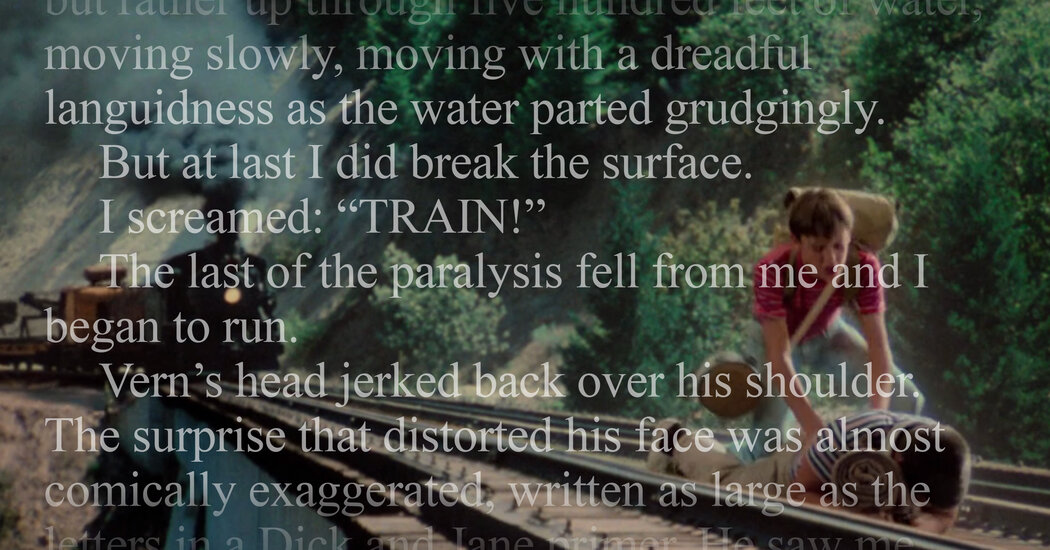

Wil Wheaton Reflects on ‘Stand By Me’ and His Journey Narrating ‘The Body’ Audiobook

In a rapidly shifting landscape of technological innovation and global interconnectedness, the bedrock of a society’s cohesion remains rooted in its culture—those collective stories, traditions, and narratives that define who we are and where we come from. Culture serves as both memory and prophecy, grounding individuals within a web of shared history while also pointing toward future possibilities. From the narratives of ancient civilizations to the blockbuster films of contemporary cinema, our cultural icons and stories are not mere entertainment; they are vital expressions of our identity, shaping and reaffirming the values that bind society together.

Philosophers such as Ortega y Gasset have long emphasized that “people’s lives are narratives,” highlighting the importance of cultural storytelling in constructing the human experience. The stories we tell—whether through literature, film, or music—embody the moral and spiritual compass of a society. Consider the story of Rob Reiner’s “Stand by Me”, which captures the innocence and turbulences of childhood, while subtly reflecting the societal tensions of its era. Wheaton, who portrayed the reflective and sensitive Gordie Lachance, channels not just his own memories but the collective nostalgia of a generation. His narration of Stephen King’s “The Body” is more than an audiobook; it is a vessel for cultural memory, emphasizing that these stories are repositories of our shared humanity, holding within them lessons of loss, innocence, and resilience.

Historian Alexis de Tocqueville observed that American democracy thrived because of its capacity to generate a shared sense of purpose through culture and community—a unifying folklore that binds the individual to the collective. Today, as we face cultural fragmentation, these stories stay essential, acting as cultural anchors that preserve societal continuity. Yet, they also become prophetic, signaling the future as they echo with the wisdom of generations past. As Chesterton might suggest, the enduring stories of our culture are not static relics of the past but living entities that continually shape the moral and aesthetic contours of society. Moreover, they remind us that at the core of civilization lies the quest for meaning, which can only be articulated through the shared language of culture.

In an era obsessed with superficial spectacle, it is crucial to remember that culture is the most profound expression of human agency. It is the language in which society’s values are encoded and transmitted, often through stories that oscillate between humor and tragedy. Wheaton’s narration of “The Body” exemplifies this— the narrative’s humor and tenderness serve to release tension while intensifying its emotional stakes. Ultimately, as T.S. Eliot conveyed, “The past [is] a repeating of the future”—a poetic reminder that our cultural memory informs our collective prophecy. Through stories of childhood friendships, loss, and hope, we glimpse not only the scars but also the enduring resilience of humanity, hinting at what we might become when we preserve our cultural narrative.

In the end, culture is both the echo of what was and the whisper of what might be—a testament that humanity, like the stories we tell, is an ongoing mosaic of memory and prophecy, forever unfolding in the liminal space between past and future.

Stephen Colbert Calls Kristi Noem a ‘Domestic Terrorist’ Deserving Gitmo—Late-Night TV Roundup

In the landscape of modern politics and media, the lines between spectacle and substance have blurred, yet beneath this facade lies a profound truth: culture remains the bedrock of identity, tradition, and societal cohesion. The recent upheavals within the American political scene, characterized by high-profile firings, ideological clashes, and media-fueled theatrics, serve as a stark reminder that the narrative we craft around our cultural symbols shapes our collective consciousness. When a figure like Kristi Noem is dismissed and replaced with theatrical fanfare, it underscores a deeper shift—a battle over what our culture signifies, who holds authority over its meaning, and how that meaning guides our societal trajectory.

The spectacle surrounding Noem’s departure, amplified by late-night monologues, reveals more than mere political rivalry: it exemplifies how culture acts as both memory and prophecy. Observers like Ortega y Gasset argued that a society’s vitality hinges upon its cultural self-understanding, a reflection of its roots and aspirations. Today, this struggle is evident in the caricatures and satire that fill our media, where figures are transformed into symbols—be it the hapless ICE agents slipping on ice or politicians dressed as fictional characters—highlighting our cultural obsession with spectacle. Such exaggerations serve a purpose: they remind us that culture is the soul’s language of continuity and change, always echoing the past while whispering future possibilities.

The cultural clash is also manifest in ideological battles over America’s role in a shifting global order, particularly concerning the Iran conflict and the manipulative narratives spun by political elites. As Chesterton once observed, “the test of a truly great culture is its ability to preserve tradition while embracing renewal.” The current discourse reveals a tension: do we honor our foundations—moral and historical—or do we allow populist spectacle and disinformation to erode the societal fabric? Historian Alexis de Tocqueville warned that democratic societies risk losing their identity when they abandon the moral and cultural moorings that give their liberty form and purpose. The media’s role in amplifying chaos thus acts as a double-edged sword—either reinforcing tradition or tearing it apart in a maelstrom of sound and fury.

In this cultural battleground, the importance of understanding our shared histories and moral foundations cannot be overstated. As S.T. Eliot famously argued, “The memory, of course, is neither history nor tradition but the ‘living presence’ of all that has been entrusted to our care.” Culture feeds into our sense of who we are—and, more importantly, who we might yet become. Every act of satire, every political upheaval, and every spectacle serves as a reminder: humanity’s story is both a memory that anchors us and a prophecy that beckons us forward. And it is in the continual dialogue between remembrance and aspiration that society finds its resilience, its meaning, and its hope for the future.

Teen sensation Stephen Graham advocates for father-son bonds with his new book debut

In a cultural landscape increasingly shaped by fragmentation and fleeting trends, the enduring significance of art, literature, and television remains a testament to society’s foundational values and collective memory. The recent explosion of discussions surrounding the Netflix series Adolescence and the upcoming project Letters to Our Sons highlight a broader cultural awakening. At its core, these endeavors acknowledge that culture is not merely entertainment, but the vessel of identity, tradition, and moral reflection. They emerge as urgent responses to the crises of masculinity and moral clarity that, as thinkers like Ortega y Gasset have observed, threaten the cohesion of our civilizational fabric. When the media scrutinizes the impact of social media, and when artists and authors seek to rekindle the dialogue between generations, they articulate a fundamental truth: culture’s purpose is to serve as both memory and prophecy of what it means to be human.

The series Adolescence became an emblem of this cultural pushback, swiftly capturing the attention of millions—so much so that it became Netflix’s second most-watched English-language series ever, surpassing even the popularity of the first season of Wednesday. Its raw portrayal of the pain, confusion, and toxic influences faced by teenage boys struck a nerve, prompting government support and national debate. The series did not shy away from confronting uncomfortable realities that many prefer to ignore; on the contrary, it challenged society to face its own moral dilemmas head-on. Critics, like Anita Singh of the Telegraph, suggested that the show’s unflinching depiction should serve as a warning: “If you’re a parent to a school-age boy… it will chill your blood.” Such reactions underscore that culture—when wielded with courage—is a mirror held up to societal truths, forcing us to reflect on the conditions that produce both modern crisis and moral decay.

Concurrent with this cultural reflection is the initiative sparked by Stephen Graham, the acclaimed actor and creator of Adolescence, who now champions a different but deeply intertwined cause: restoring meaningful dialogue between fathers and sons. His project, Letters to Our Sons, aims to build a bridge of understanding, tradition, and moral guidance through a collection of heartfelt letters from fathers of diverse backgrounds. This act of communication resonates with the philosophical view that culture is rooted in the articulation of human virtue. Graham’s plea echoes Chesterton’s insistence that wisdom and morality are passed through stories, shared experiences, and honest discourse. It recognizes that in a time when connection seems superficial and transient, the enduring power of written words can serve as a moral compass for generations, echoing across the gulf of time to nourish their shared humanity.

This initiative aligns with historical parallels that remind us of the vital role the tradition of virtue plays in shaping society. Tocqueville marveled at America’s “civil religion,” a shared moral fabric woven through everyday stories, institutions, and customs. Similarly, the cultural importance of family talks—of fathers speaking openly to their sons—can be seen as the modern counterpart: a reservoir of societal values that anchors us amidst chaos. As T.S. Eliot famously argued, culture is “the memory of society,” rehearsing itself anew in each generation. Graham’s call, supported by the likes of Orly Klein, reflects a recognition that these are not just personal gestures but essential acts that reinforce the social order, foster resilience, and guard against moral corrosion.

In the end, the cultural revival embodied by projects like Adolescence and Letters to Our Sons reminds us that culture is both the echo of the past and the prophecy of the future. It is in our stories, our dialogues, and our artistic expressions that humanity’s deepest hopes and fears are inscribed. As society stands at the crossroads of tradition and transformation, it is vital to remember that culture is, at its core, a sacred act of remembering and prophecies—a luminous mirror that reflects our soul and beckons us toward the ideals yet to be realized. In the silent language of artworks and the unspoken words of fathers, we find the enduring truth that each generation carries the torch from those before and lights the path for those to come—an eternal dance of memory and prophecy spun from the very fabric of human existence.

Challenge Your Knowledge: Iconic Horror Novels That Made the Leap to the Screen

As we consider the enduring legacy of literature and its vital transformation through adaptation, we are reminded of the profound relationship between art, identity, and society. In an age increasingly dominated by visual spectacle, movies, television, and theatrical renditions serve not merely as entertainment but as modern reflections of our collective soul. This process echoes the timeless insights of Ortega y Gasset, who observed that culture is both a mirror and a blueprint—offering us an image of who we were and a prophecy of who we might become. Whether through the Gothic gloom of H.P. Lovecraft or the chilling fundamentals of Stephen King, horror adaptations showcase the cultural fears and moral preoccupations that define civilizations, illustrating that even in fear, there is a reflection of our deepest truths.

Throughout history, cultural shifts have often been heralded by the stories we tell each other. The transition of literary works into visually compelling media often signals a society’s evolving relationship with its history and ideals. Gothic horror, for instance, with its roots in romanticism and enlightenment fears, has morphed into a mirror for contemporary anxieties—be it the terrors of the digital age or the moral darkness lurking behind modern facades. As C.S. Lewis pointed out, art’s role is to luminate the shadows cast by human frailty; any successful adaptation manages to keep that moral tension alive, engaging new generations with questions that are as old as the human condition itself. The power of film and television to reanimate these stories reminds us that culture is less static than we often think—it is a living, breathing dialogue between memory and prophecy.

The importance of adapting works of literature into visual storytelling lies in its ability to preserve tradition while constantly rekindling societal debate. Just as the Renaissance rediscovered classical knowledge and Tocqueville warned about the tyranny of democratic equality eroding individual greatness, contemporary cultural adaptations serve as a counterbalance; they keep alive a sense of wonder and moral complexity. These stories are not just entertainment—they are the cornerstone of our cultural identity, lending purpose and continuity amid the chaos of change. By reimagining stories of darkness and light, society navigates its fears while reaffirming its aspirations, reminding us that our cultural memory is a fertile ground where history’s lessons bloom anew.

As the currents of history flow onward, the role of culture as memory and prophecy becomes ever clearer. It is both the echo of what humankind has endured and the blueprint of what might yet come to pass. The writings that become films, the stories that transform into plays—these are the threads with which we weave the fabric of our civilization. Culture, in all its forms, bears witness to the eternal human quest for meaning—to understand the shadows and to illuminate the dawn. In this delicate dance of remembrance and anticipation, we find that our shared stories are neither relics nor mere predictions but the very essence of our ongoing human journey.’

Social Media Auto Publish Powered By : XYZScripts.com