Matox News

Truth Over Trends, always!

Stay sharp: Top style tips for rocking classic straight leg jeans your way

In an era dominated by fast fashion and ever-evolving trends, many young fashion enthusiasts are experiencing *denim overload*. The latest shift, however, is a clear reaction to this frenzy: a renewed appreciation for the timeless straight leg jeans. These classic staples are making a striking comeback, reminding us that sometimes, simplicity truly is the ultimate sophistication in style. As social media influencers and trend forecasters point out, the move away from overly distressed or exaggerated cuts signifies a desire for authenticity and enduring fashion over transient fads.

The cultural impact of this movement cannot be overstated. Straight leg jeans serve as a canvas for personal expression, adaptable to various settings—whether a casual hangout or a polished office look. Popular influencers like Emma Chamberlain and Zachary “Zo” highlight the versatility of this style through their carefully curated feeds, effectively shaping youth perceptions of what constitutes “cool”. Sociologists argue that this return to basics reflects a broader shift towards minimalism and sustainability, resonating with a generation increasingly conscious of environmental impacts and the wastefulness of fast fashion. The resurgence of straightforward denim symbolizes a cultural preference for authenticity and self-identity, asserting that fashion can be both stylish and meaningful.

  • Minimalist aesthetics are dominating youth fashion narratives, emphasizing quality over quantity.
  • Sustainable practices become more prominent as consumers look for durable, timeless pieces like straight leg jeans.
  • Social media trends showcase how influencers and everyday users are redefining what’s “trendy,” fostering a broader acceptance of classic styles.

Fashion analysts and sociologists note that this trend carries a social relevance beyond mere aesthetics. By embracing a style rooted in both tradition and practicality, younger generations are subtly challenging the hyper-ephemeral nature of digital culture. The rise of straightforward denim as a daily wardrobe staple suggests a cultural shift towards authenticity, resilience, and identity-centered fashion. It’s not simply about looking good but about making a statement: that real style endures chaos, fast-changing trends, and fleeting viral fads.

However, what makes this trend particularly intriguing is its potential to evolve into a lasting cultural phenomenon. As brands and retailers scramble to cater to this demand, questions emerge about the future: Are we witnessing a temporary rebellion against fast fashion, or is this a sign of a deeper societal transformation—towards more mindful, authentic self-expression in the digital age? The future of youth fashion may well hinge on this pivotal question, challenging us to reconsider what truly defines cultural relevance and social identity in the 21st century.

Jorginho dismisses Chappell Roan security incident as a “misunderstanding” — setting the record straight amidst rising concern

In an era where the cultural fabric becomes increasingly fragmented, it remains essential to recognize the enduring significance of identity, tradition, and the societal role of cultural icons. The recent incident involving footballer Jorginho and singer Chappell Roan at a São Paulo hotel underscores how modern misunderstandings can reflect deeper tensions within our collective psyche. Jorginho’s initial reaction, which he later characterized as a “heat of the moment” response, reveals the primal instinct to protect one’s family—a fundamental aspect of personal and cultural identity. In this context, the protection of one’s loved ones echoes through history as a universal motif, resonating with the ancient valorization of family and community that underpins civilizations from the classical Greek polis to the medieval clannish society.

What this incident illustrates is a broader cultural phenomenon: the confrontation between protean individualist impulses and the institutional or societal structures that seek to define and regulate social interactions. Jorginho’s subsequent clarification highlights a crucial point—that misunderstandings are often fueled by a lack of shared cultural context and that truth often emerges from dialogue and clarification. His acknowledgment of new information and the resultant clarification reflect the ongoing importance of truth and transparency in the preservation of social harmony. As Tocqueville observed, modern societies are plagued by the “tyranny of the majority,” which can easily suppress individual narratives. Yet, through open dialogue, individuals can reaffirm their place within society’s moral fabric, emphasizing that culture’s role is to foster understanding amid diversity.

Furthermore, the incident’s resolution attests to the resilience of cultural memory and unity in the face of conflict. Chappell Roan’s own response, denying any aggressive behavior from her team, and Pascal Duvier’s public statement about the misunderstanding, underscore the importance of clarity and accountability in today’s interconnected world. The cultural fight, real or perceived, often hinges on the availability and interpretation of information. As Ortega y Gasset argued, the mass man’s worldview is shaped by the narratives supplied to him— hence, the power of culture in shaping our perceptions. This incident reveals how fragile social cohesion can be, yet also how resilient it is when driven by a shared commitment to truth and justice.

At its core, this episode echoes the enduring truth that culture is both a living memory and a prophecy of humanity’s future. It serves as a reminder that our collective identity—formed over centuries through stories, symbols, and shared values—must be preserved and critically examined to meet the challenges of an ever-changing world. Culture is not merely aesthetic but the quintessence of society’s moral and spiritual essence. As Chesterton once remarked, “Culture is simply informed by the divine in us, echoing eternity through transient forms.” This delicate balance of tradition and progress invites us to see ourselves as custodians of a legacy that is both rooted in the past and a guide to the future, ensuring that our civilization remains alive, truthful, and nobler amidst the storms of misinterpretation.

In the end, these moments of misunderstanding and resolution are but threads in the grand tapestry of human history—each one weaving the narrative of memory and prophecy. Culture, like a lighthouse guiding ships in darkness, illuminates the pathway between the present and eternity. It is in safeguarding our stories, understanding our symbols, and defending our shared values that we find the true meaning of civilization: a testament to the resilient, enduring spirit of humanity, ever reaching toward the divine horizon that beckons us beyond the horizon of yesterday.

McDonald’s Netherlands Sets the Record Straight on AI Holiday Ad Ghosted by Critics

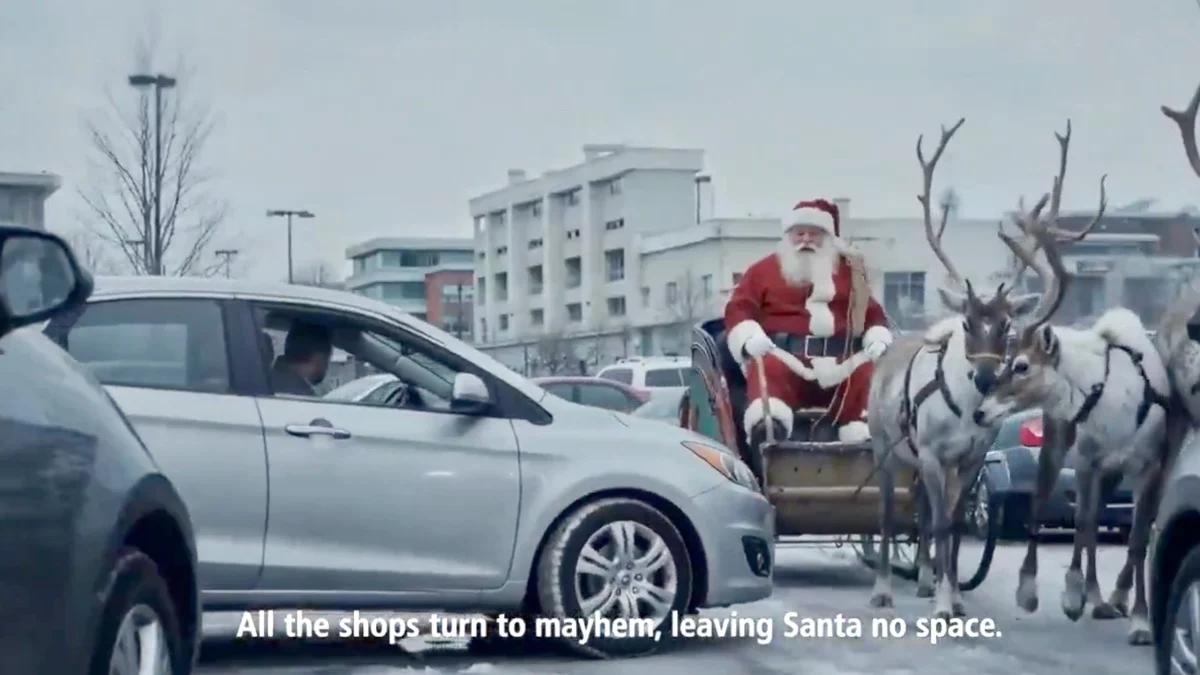
As the holiday season kicks into high gear, brands are vying to capture the festive spirit—yet, this year, one unexpected actor has stirred a quiet revolution with a controversial twist. McDonald’s Netherlands released a holiday commercial that quickly became a viral sensation—though not for the reasons they had hoped. Instead of growing brand love, it sparked a wave of criticism centered around the role of artificial intelligence (AI) in creative advertising. The ad, titled “The most terrible time of the year”, depicted holiday chaos with a low-budget, uncanny aesthetic indicative of generative AI’s capabilities, featuring awkward movements and generic-looking actors, which many viewers found unsettling rather than humorous.

While brands across industries are eagerly experimenting with AI-generated content to streamline production and reduce costs, this incident underscores a growing societal debate: how far should AI go in replacing human creativity? Critics argue that AI-driven ads lack the nuanced emotional intelligence that makes holiday messages resonate deeply with audiences. Influencers and sociologists point out that, in our age of social media saturation, authenticity counts more than ever. McDonald’s faced a swift backlash from viewers who considered the commercial not just poorly made, but disrespectful to the warmth and sincerity traditionally associated with holiday marketing. By Dec. 9, the fast-food giant announced its decision to pull the ad, acknowledging that the artificial trying to parody human emotion failed to hit the right notes—highlighting an important trend: society’s increasing discomfort with even minor AI encroachments in cultural narratives.

This incident isn’t occurring in isolation. Earlier in the season, Coca-Cola released its own AI-generated holiday commercial, created in partnership with the studio Secret Level. Despite initial fanfare, critics quickly piled on, citing concerns over authenticity and the erosion of traditional storytelling. Yet, Coca-Cola persisted, continuing to air the ad throughout the season—a reflection of a larger corporate trend: companies are eager to explore how AI can innovate marketing, regardless of initial backlash. Meanwhile, analysts like Dr. Laura Bennett, a media sociologist, warn that this surge might signify a broader societal shift towards accepting artificial representations as authentic, raising questions about the future of human-centered advertising and cultural values.

Behind the scenes, industry insiders reveal that much human labor still goes into these AI attempts. The CEO of The Sweetshop emphasized that creative direction, editing, and ethical oversight remain largely human-driven, even when AI assists. Nonetheless, the social relevance extends beyond the commercial realm. More than a marketing experiment, this tension taps into broader societal concerns:

  • Should AI be permitted to shape cultural storytelling?
  • Can machine-created content ever genuinely resonate on a human level?
  • And perhaps most compellingly—what do these shifts reveal about our collective trust in technology and authenticity?

As we observe these high-profile experiments, a provocative question emerges: Will the future of advertising and culture be a battleground for human authenticity versus artificial simulation, or are we on the cusp of a new hybrid era where AI complements rather than replaces our storytelling? With industry giants like Coca-Cola forging ahead despite criticism, the next chapter in this digital-cultural saga remains unwritten. Maybe it’s time for society—not just corporations—to ask: what kind of cultural landscape do we want AI to help create in the decades to come?

Munich Airport halts flights again over drone sightings—disrupting travel for a second straight day

In a clear reflection of the geopolitical tensions simmering across Europe, recent drone sightings have disrupted vital infrastructure, exposing vulnerabilities in regional security and sovereignty. Munich airport’s second consecutive day of shutdowns due to unidentified drone activity highlights the delicate balance between technological advances and national defense. As dozens of flights have been diverted or canceled, impacting thousands of passengers, experts warn that these incidents are more than mere nuisances—they are strategic signals from a shifting international security landscape. Authorities in Denmark, Norway, and Poland have also suspended flights, while Romania and Estonia directly linked recent aerial incursions to Russia, which vehemently denies any involvement, dismissing allegations as hysteria designed to inflate military budgets. This pattern indicates a troubling escalation—one that could redefine how nations defend their airspace and sovereignty.

An analysis from military historians and security experts emphasizes that these drone incursions are increasingly sophisticated and politically motivated. German Interior Minister Alexander Dobrindt called the first night’s drone activity a “wake-up call” for Europa’s defensive capabilities, explicitly noting the growing difficulty in policing and defending against small, yet potentially devastating, unmanned aerial threats.

  • Germany is already preparing legislative changes to authorize the military to shoot down drones if necessary

. The situation is compounded by recent statements from Bavarian officials, including Markus Söder, advocating for immediate drone destruction capabilities. Meanwhile, larger concerns loom over the role of Russia, with Poland, Estonia, and Ukraine highlighting that these incursions could be preludes to broader escalation in Ukraine or even hybrid conflicts spilling beyond traditional battlegrounds. The pattern of drone activity, particularly over military and industrial sites, aligns with Russia’s documented tactics of unconventional warfare and information destabilization.

International organizations and analysts warn that these developments threaten to plunge Europe into an era of uncertainty and heightened confrontation. The European Union, along with NATO, faces mounting pressure to adapt swiftly. The recent surge in drone activity coincides with financial cycles of escalating military spending across the continent, seen as necessary by many governments to counteract new-age threats. Meanwhile, the United States closely monitors the situation, with experts warning that unchecked drone escalation could alter the balance of power, especially if it incites an *accidental confrontation* or sparks a regional arms race. The global stage is witnessing a scenario not dissimilar to the early Cold War—where technological advances are fueling new conflicts and alliances are testing their resilience.

As the world watches with cautious trepidation, the ongoing drone saga signals more than a regional security scare. It marks a critical epoch—where the lines between peace and war are increasingly blurred by rapid technological evolution and geopolitical rivalry. The history books will remember this period as one of dangerous transition, where a series of small incursions could ignite the sparks of a larger conflict. The decisions made today—whether to escalate, negotiate, or militarize—will echo loudly through the corridors of history, forging a future that remains uncertain but undeniably imminent. In a world on the brink, every drone’s buzz becomes a reminder: the era of traditional warfare is fading into a new realm, where the prices of complacency could be paid in blood and history’s darkest shadows.

NBCUniversal’s YouTube TV Deal Brings Some Shows Straight to YouTube, Giving Fans More Options

In a bold move that underscores the accelerating disruption of traditional media, NBCUniversal has announced a strategic partnership with YouTube TV to expand its digital footprint. While financial details remain confidential, the deal notably includes exclusive rights to full TV shows, clips, and highlights, along with a reinvigoration of NBC Sports Network (NBCSN), which was shut down four years ago. This move exemplifies how legacy broadcasters are leveraging innovative streaming platforms to recapture viewer engagement and monetize content, signaling a clear shift in the industry dynamic.

As Matt Schnaars, an NBCUniversal executive, articulated, the company is advancing its Peacock strategy by launching new channels on YouTube Primetime Channels and maintaining a presence on Google TV. This multi-platform approach leverages the dominance of tech giants like Google to disrupt traditional cable models, turning to streaming-first strategies that cater to the increasingly digital-first consumer base. Such initiatives not only amplify NBC’s reach but also illustrate a broader industry trend where content licensing and platform partnerships are becoming vital for maintaining relevance in a saturated media ecosystem.

Industry analysts such as Gartner and MIT’s Media Lab emphasize that these shifts reflect a broader trend of disruptive innovation—where established broadcasters are adopting tech-driven models to avoid obsolescence. The relaunch of NBCSN and its inclusion in subscription packages are particularly notable, as they suggest that media conglomerates are experimenting with hybrid revenue streams—combining traditional advertising, subscription fees, and licensing—aimed at capturing diverse consumer segments. The move also hints at a strategic pivot: utilising sports content as a key driver for new revenue sources, especially as rights for marquee events are increasingly becoming battlegrounds for digital dominance.

  • Reintroducing NBCSN into subscription bundles enables monetization outside conventional cable subscriptions, broadening revenue options.
  • This strategy allows NBCUniversal to adapt rapidly to the post-linear era, where viewers demand on-demand, multi-device access.
  • Furthermore, leveraging popular streaming platforms complicates regulatory and competitive landscapes, posing both opportunities and challenges for existing players.

As industry leaders like Elon Musk and venture capitalists such as Peter Thiel have long argued, the future of media is rooted in innovation and disruption. The implications of NBCUniversal’s moves extend beyond mere content distribution; they represent a pivot point that could redefine revenue models, consumer engagement, and competitive strategies across the media landscape. With tech giants investing heavily in original content and distribution innovations, traditional broadcasters are compelled to rethink their business models swiftly. Ignoring these shifts risks obsolescence, but those who innovate—like NBCUniversal—stand to reshape the very fabric of entertainment consumption in the coming decade.

Fundamentally, the industry is on the brink of a transformation driven by technological convergence and audience-centric strategies. As new partnerships and streaming innovations emerge, it becomes increasingly clear that those who adapt quickly will dominate the next era of entertainment. The question remains: in an era of unprecedented disruption, will legacy players lead the charge or fall behind as nimble tech companies redefine the rules of the game?

Social Media Auto Publish Powered By : XYZScripts.com