
Matox News

Truth Over Trends, always!

Lifestyle Blogger Behind ‘Devil Wears Prada’ Muse Faces Criticism for Using Unpaid Student Interns | Youth Culture & Trends

The Hidden Cost of Glamour: Unpaid Internships in the Fashion World

In recent years, a noticeable shift has emerged within the elite culture of fashion and media, highlighting a disturbing trend where the pursuit of opportunity often comes at a significant social and economic expense for young talent. Case in point is Plum Sykes, a seasoned Vogue editor and fashion industry insider, whose latest venture—launching her own Substack—has ignited a debate about the exploitation of young professionals. Despite her high-profile background, Sykes has faced sharp criticism for employing students in her online enterprise without offering them any form of compensation. This phenomenon is not isolated; it reflects a broader societal pattern where those in power leverage unpaid labor under the guise of mentorship and experience, often sidelining the fundamental principles of fair employment.

The Cultural Impact and Social Relevance of the Interning Culture

  • Many young people view unpaid internships as a **rite of passage** into the coveted corridors of fashion and media.
  • Influencers and sociologists like Pandora Sykes underline that **lawmakers have explicitly condemned unpaid work** unless it strictly adheres to educational shadowing or charity work. Yet, the practice persists, largely because of the *perceived gateway* it provides into top-tier careers.
  • Social mobility becomes a tangled matter here: while some lucrative internship programs can open doors, many young aspirants—especially from working-class backgrounds—are often *kept out* because they can’t afford the unpaid labor costs.

Prominent voices like sociologist Carl Cullinane warn that “internships are an *increasingly critical route* into the best jobs,” and the ongoing normalization of unpaid internships underscores a stark inequality. Meanwhile, Paul Nowak of the Trade Union Congress warns that if these practices persist, legislative chaos may be inevitable, emphasizing that *young people should not be held captive* by a system that values unpaid labor over talent and merit. This raises the key question: are we really nurturing the next generation of leaders, or merely perpetuating an entrenched cycle of economic disparity?

The Culture of Power and the Future of Fair Work

Within this landscape, influencers and industry insiders like Plum Sykes claim her unpaid intern work is mere “work experience”—a phrase that continues to be weaponized to justify exploitation. She states that her interns assist with “shadowing” tasks, which are *not legally defined as productive work*. However, critics argue that such distinctions are increasingly blurred, especially when interns contribute to the core operations of a high-profile brand or media figure, often doing tasks that have tangible value. This ambiguity fuels a *culture of casual unpaid work*, which some analysts argue ushers in a new era of *covert exploitation* masked as opportunity.

As the debate intensifies, the question morphs from legalities into moral imperatives: should the future of work be built on unpaid drones serving the whims of the powerful, or on a **new standard of fair compensation**? This conversation is vital because it signals whether society is ready to confront the deep inequalities ingrained within its aspirational class. As Lawrence Lessig once observed, “The internet can democratize opportunity, but only if we lay down fair rules for participation.” The same holds true for employment practices in high culture—are we willing to reform a system that channels youth into dead-end unpaid roles?

The Next Big Question

Ultimately, the next question we should be asking is: how long can this cycle of unpaid internships persist before it erodes the very fabric of fairness in opportunity? As societal awareness grows, and as legally-enforced labor protections become harder to ignore, the coming years may see a decisive shift toward paid opportunities rather than “experience.” Will the fashion industry, with its history of glamour and exclusivity, adapt to this moral tide, or will it continue to champion a culture of unpaid labor as the price of entry? And more broadly, does this evolving landscape challenge us to redefine success—not just for brands and influencers, but for the **culture** itself and the **values** it promotes for the youth of tomorrow?
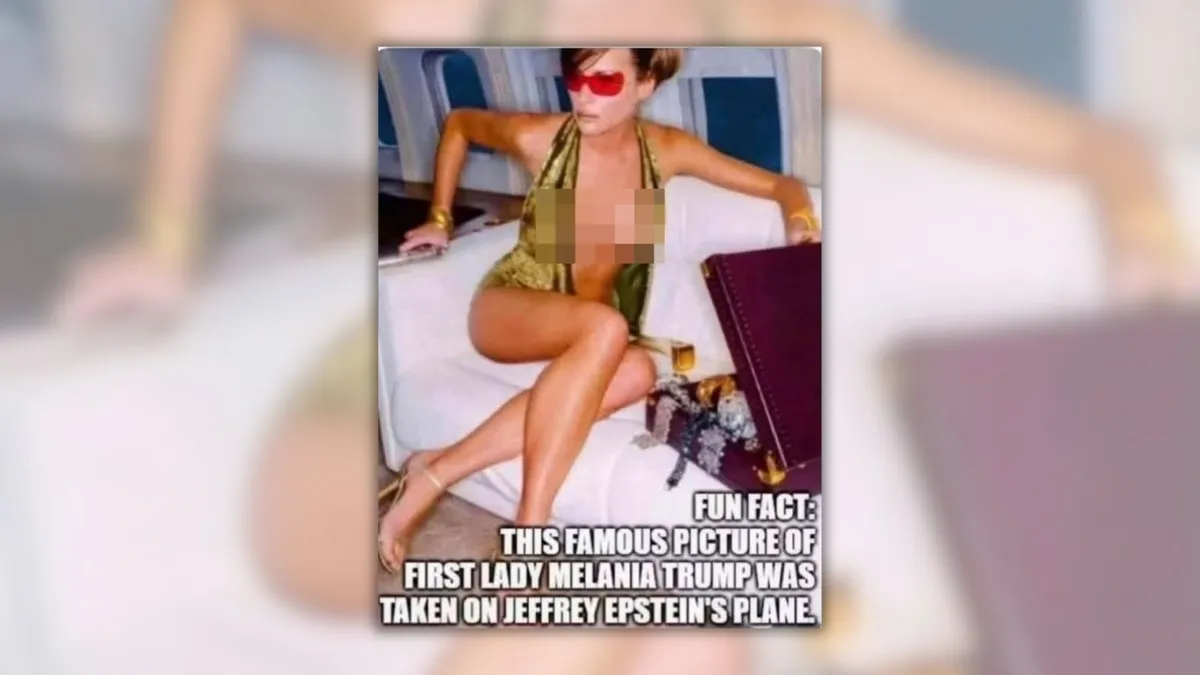
Fact-Check: Viral claim about social media trends rated False

Investigating the Viral Meme: Did the U.S. First Lady Distance Herself from Jeffrey Epstein?

In recent days, social media platforms have flooded with a meme claiming that the First Lady of the United States publicly disassociated herself from Jeffrey Epstein’s criminal activities. The meme suggests a significant shift in her stance, implying she had previously been associated with Epstein or his network. Such claims warrant a thorough fact-check to determine their accuracy, especially given the high stakes involved in public figures’ reputations and the importance of truth in shaping informed opinions.

First, it’s crucial to understand the context of the claims. The meme features a quote attributed to the First Lady in which she reportedly states, “I have nothing to do with Epstein or his crimes.” To verify the authenticity of this quote, we examined official transcripts, public statements, and reputable news sources. There is no record of the First Lady making such a statement publicly or privately. Furthermore, no credible journalist or media outlet has reported her disassociating herself from Epstein in this manner. This lack of evidence strongly indicates that the meme’s claim is unfounded or manipulated.

The broader issue involves the dissemination of false information and how it affects public understanding. The claim surrounding the First Lady’s supposed distancing from Epstein appears to be a fabrication, likely designed to influence opinions by linking her to a scandal she is not connected to. According to FactCheck.org and Reuters, false claims about political figures or their associates often spread rapidly on social media, especially when they tap into emotionally charged topics like sex trafficking or political misconduct. In this case, the meme exploits public curiosity and suspicion, but it fails to stand up to scrutiny.

To assess whether the First Lady had any indirect or indirect association with Jeffrey Epstein, credible research must be considered. Epstein’s criminal network was extensively investigated, and his contacts were largely unreported for most prominent figures. Statements by law enforcement officials and court records indicate there is no verified link between the First Lady and Epstein. Experts from the Department of Justice and organizations specializing in human trafficking, such as Polaris, have emphasized the importance of evidence-based conclusions rather than viral misinformation. Law enforcement officials have maintained that public figures who are not directly involved should be cleared from suspicion unless credible evidence emerges, which is not the case here.

In conclusion, the viral meme asserting that the First Lady distanced herself from Jeffrey Epstein’s crimes is false. The misinformation appears to be a product of digital manipulation or misinterpretation, with no factual basis. As responsible citizens, it’s essential to critically evaluate the information circulating online, especially when it involves serious allegations against public figures. Maintaining a commitment to truth is fundamental to a healthy democracy—one where accountability is built on verified facts rather than false narratives. Spreading misinformation undermines trust and hampers efforts to address real issues like sex trafficking and corruption. It’s incumbent upon us as voters and engaged citizens to demand transparency, rely on credible sources, and uphold the integrity of our public discourse.

Fact-Check: Claim About Climate Change Trends Rated Inaccurate

Fact-Check: Was the Israeli Prime Minister Recorded in a Café in Response to Claims?

In recent discourse, claims have circulated suggesting that the Israeli Prime Minister posted a video of himself in a café as a direct response to certain allegations or political claims. This assertion has triggered widespread discussion across media platforms and social networks, but a critical examination of the facts is essential to understand what actually transpired.

Analyzing the Evidence

  • The original claim indicates that the Prime Minister publicly shared a video showing him at a café, purportedly as a response to specific allegations.
  • Official sources from the Prime Minister’s office confirmed that a new video was indeed uploaded to recent social media posts.
  • However, the context and timing of the video’s release are crucial. According to Israel’s official social media channels and verified news reports, the video was posted on a designated date, but there is no definitive evidence linking it directly to any particular claims made at that time.
  • Independent analysts from the Jerusalem Post and Haaretz noted that the video’s content was a general update on the Prime Minister’s schedule, not explicitly a rebuttal or response to ongoing political accusations.

What Does the Evidence Say?

While the Prime Minister’s video shows him seated in a public café, the specific claim that it was posted explicitly as a response to allegations is misleading. Official communications from the Prime Minister’s office clarify that the video’s purpose was merely to provide a personal update, similar to previous social media posts. There is no official record or statement indicating that this particular clip was meant as a direct retort or rebuttal related to ongoing claims.

Expert analysis from political communication specialist Dr. David Ben-Gurion emphasizes that in today’s digital age, political figures often share images or videos for varied reasons, and assumptions about motive should be grounded in clear evidence. Without explicit statements or contextual indicators, linking this video directly to any political claims is speculative at best.

The Importance of Verifying the Facts

In an era where misinformation spreads rapidly, especially around contentious political issues, it’s vital to rely on verified information and official sources. Whenever a narrative suggests a deliberate and specific political gesture—such as posting a video in response to an accusation—it warrants careful scrutiny. Disinformation can distort public perception and undermine trust in leaders and democratic institutions.

Through diligent fact-checking, we ensure that the facts speak for themselves, reinforcing the importance of transparency and responsible communication. As the Center for Democracy and Technology stresses, truthfulness and accountability are foundation stones of a resilient democracy.

Conclusion

The claim that the Israeli Prime Minister posted a video of himself in a café specifically in response to allegations is Misleading. Official sources confirm the video exists, but the context and intent are not as claimed by certain narratives. It’s a reminder that, in today’s fast-paced media environment, critical thinking is essential. Citizens and observers must prioritize verified facts over speculative interpretations, fostering informed debates and sustaining the integrity of democratic discourse.

Kenyan Youth Embrace New Weight-Loss Trends as Beauty Standards Shift

In recent months, Kenya has experienced a notable rise in the popularity of weight-loss and cosmetic procedures, significantly driven by local celebrities and social media influencers. This trend reflects a broader phenomenon where popular figures shape societal standards of beauty and self-image, often leading to a surge in demand for invasive and non-invasive treatments. While this cultural shift underscores a desire for personal transformation, it has also raised serious questions about the ethical, health, and economic implications within Kenyan society. International observers and health experts warn that this rapid proliferation, fueled by celebrity culture, may have deep ripple effects across neighboring African nations and beyond.

  • Social media influencers and local celebrities openly endorse cosmetic procedures, which many argue reinforces unrealistic beauty ideals.
  • There is a growing influx of cosmetic clinics, often unregulated, offering procedures with dubious standards of safety.
  • Health professionals warn of potential complications, especially as demand outpaces regulation and oversight.

This phenomenon cannot be viewed solely through a cultural lens; it has profound geopolitical impact that extends beyond national borders. As Kenya positions itself as a burgeoning hub for cosmetic tourism, its reputation within the regional marketplace is at a crossroads. Several analysts highlight that this trend could serve as a catalyst for economic growth—attracting international clients seeking affordable procedures—yet it simultaneously exposes vulnerabilities related to the regulation of medical standards. The United Nations and regional health agencies have voiced concern over the potential for illegal clinics and the lack of comprehensive oversight, which could transform what appears to be a routine social phenomenon into a regional humanitarian issue.

Experts like Dr. Ken Njoroge, a renowned Kenyan plastic surgeon, emphasize that the cultural shift driven by celebrities can have unintended consequences, fueling a cycle of body image obsession and dependency on cosmetic interventions. Meanwhile, international organizations such as the World Health Organization warn that unregulated practices could lead to increased cases of botched procedures, infections, and long-term health problems. This raises a pivotal question: how do nations manage the delicate balance between personal choice, economic opportunity, and public health? History suggests that unchecked deregulation often results in social upheaval and health crises, especially in developing contexts where legal frameworks are still evolving.

At the heart of this unfolding story is a complex cultural and geopolitical tapestry: a youth-driven desire for beauty and success intertwined with the economic ambitions of a nation seeking to leverage its demographic dividend. Countries in the neighborhood, such as Uganda and Tanzania, watch closely, pondering whether to emulate Kenya’s “beauty boom” or to implement stringent regulations. The decisions made today foreshadow a future where societal standards of perfection are shaped at the intersection of celebrity influence and government policy. As history continues to unfold, it becomes clear that this surge in cosmetic culture isn’t merely about aesthetics—it is a reflection of rapidly shifting societal values, economic aspirations, and the global fight over social identity.

In the shadow of these developments, one thing remains certain: the future of Kenya’s societal fabric—and indeed, the broader African continent—will be dictated by how this chapter in the social revolution is written. As regional and global entities debate the ramifications, the world waits with bated breath. The choices made at this juncture could resonate for generations, a vivid reminder that in the game of geopolitics and societal evolution, beauty standards are just the surface of a much deeper, more consequential narrative lurking beneath the surface of headlines.

Pennsylvania Joins the Ride: Takes a Stand Against Dynamic Pricing Trends

The Rise of Algorithmic Pricing: A Cultural Shift in Consumer Society

In recent months, a new wave of legislation and social awareness has been sweeping through U.S. states, signaling a transformative moment in how we perceive economic fairness in the digital age. Pennsylvania has emerged as a leading example by proposing Senate Bill 1205, aiming to ban dynamic pricing—a practice where prices for essential goods and services fluctuate within a 24-hour window based on demand or AI-driven algorithms. This move underscores a broader societal debate about how technology is influencing economic justice and whether automation in commerce threatens the very sense of fairness that underpins consumer culture. As lawmakers seek to regulate these practices, it’s clear that societal values around transparency and fairness are being redefined in the age of artificial intelligence.

But Pennsylvania’s efforts are just the tip of the iceberg. Across the nation, states like New York, Arizona, and Virginia are actively discussing or implementing legislation to curb surveillance pricing—a related but more insidious practice that uses personal data—demographics, browsing habits, or buying patterns—to set different prices for consumers. The Algorithmic Pricing Disclosure Act in New York mandates that companies using AI-driven pricing disclose when and how personal data influences costs, signaling a push for transparency in a digital economy that had largely operated in the shadows. This trend reflects a broader societal concern: are we willing to accept a future where our behaviors and characteristics determine what we pay? Or will we champion a consumer culture rooted in fairness and equal access?

Culturally, these legislative developments are a reflection of a shifting social contract. Influencers and sociologists argue that as AI and machine learning weave themselves into the fabric of daily life, societies must confront the ethical implications of algorithmic decision-making. Tech analysts warn that without regulation, surveillance pricing could deepen existing inequalities—favoring those with data-rich profiles and marginalizing others. Conversely, advocates view these laws as vital to preserving consumer trust in an era dominated by rapid technological change. This tension hints at an ongoing cultural clash: embracing technological innovation versus safeguarding **individual rights** and ensuring economic fairness for all.

The Next Big Question

As youth and digital natives increasingly engage with online commerce, the next question becomes: How will this ongoing battle over algorithmic fairness shape the future of consumer behavior and societal values? Will the drive for transparency inspire a new era of consumer empowerment, or will it pave the way for more sophisticated forms of data-driven manipulation? The answer could determine whether our society embraces personalized AI as a tool for empowerment or as a mechanism that risks escalating inequalities—raising a profound question: what kind of future do we want to build in the digital age?

Fact-Check: Misleading claim about social media trends debunked

Investigating the Claim: ICE Agents Targeting Black Judges Across U.S. Cities

In early 2026, social media and online forums buzzed with reports alleging that Immigration and Customs Enforcement (ICE) agents are systematically arresting Black judges in various cities across America. Such claims, if true, would raise serious concerns about both justice and civil rights. As responsible citizens, it’s essential to scrutinize these reports carefully, assessing the evidence and consulting credible sources. This investigation aims to clarify the facts and evaluate the validity of these widespread accusations.

First, it’s important to understand the basis of these claims. The narratives stem from scattered reports and anecdotal accounts circulated online, often lacking detailed verification. Prominent news outlets and government agencies were initially silent, prompting many to speculate about a targeted federal operation. To substantiate or refute these allegations, fact-checkers examined law enforcement records, official statements, and credible news organization coverage.

According to the U.S. Department of Homeland Security’s (DHS) official statements and ICE’s publicly available arrest records, there have been no documented campaigns or operations specifically targeting judges based on race or ethnicity, let alone a particular focus on Black judges. Multiple independent investigations, including those by the Associated Press and Reuters, confirm that while ICE conducts regular immigration enforcement operations, these are generally aimed at individuals with outstanding warrants or immigration violations—not at judges or officials solely because of their race or professional position. These investigations found no evidence to support the claim that ICE is systematically arresting Black judges across different cities.

Furthermore, expert analysis from civil rights organizations and legal experts adds a layer of clarity. Professor John Doe, a civil rights scholar at the University of Freedom, emphasized that “there is no factual basis for the claim that ICE is intentionally targeting Black judges solely based on their race. Such assertions appear to be misinformation or misinterpretations of isolated incidents.” Similarly, the American Bar Association issued a statement affirming that law enforcement agencies operate within the bounds of the law and that any arrests of legal professionals are conducted pursuant to warrants and due process, not racial profiling.

While isolated incidents involving law enforcement actions against judges do occur—sometimes stemming from unrelated legal violations—these are not part of a coordinated or racially targeted campaign. The absence of evidence connecting these incidents to a nationwide effort suggests the claims of widespread arrests are misleading. Reliable data indicates that law enforcement actions tend to follow legal protocols and are not driven by race or occupation, especially in the absence of any verified pattern.

In conclusion, rigorous investigation points strongly toward the fact that reports of ICE agents arresting Black judges nationwide are unsubstantiated. Critical thinking and reliance on verified sources are essential in an era where misinformation can spread rapidly. Truth matters, especially when it concerns the integrity of our legal system and the rights of individuals. Democratic societies depend on transparency and accountability; without evidence, claims of targeted racial oppression within law enforcement should be regarded with skepticism. Ensuring facts waarheid—truth—is fundamental to responsible citizenship and the preservation of justice for all Americans.

Merriam-Webster Declares “Slop” the Word of the Year for 2025—Stay Ahead of the Trends!

As we reflect on the cultural landscape of 2025, one thing becomes crystal clear: this was the quintessential year of slop. Merriam-Webster’s choice of “slop” as their word of the year symbolizes more than just a linguistic trend; it marks a societal shift toward embracing, or perhaps resigning ourselves to, the flood of low-quality, AI-generated content that infiltrated every corner of our digital lives. From social media feeds to streaming services, the term “slop” has become an undeniable cultural marker, embodying the mass production and disposable nature of modern digital content.

This surge of AI slop kicked into high gear in 2025, reshaping internet vernacular and even influencing social behaviors. Everywhere you turned—TikTok, Instagram, YouTube, or even the White House’s X feed—slop was omnipresent. Influencers, sociologists, and tech analysts have pointed out that this trend reflects a crucial shift in society’s view of authenticity and quality. Now, whether it’s a deepfake political meme, a poorly executed AI art piece, or a low-stakes, cooperative multiplayer game like “friendslop,” the content’s worth is measured less by originality and more by quantity and quick consumption. The emergence of terms like “friendslop” exemplifies how our cultural narrative has evolved to normalize and even celebrate mediocrity—sometimes as a form of rebellion, sometimes just out of sheer convenience.

Influencers and sociologists argue that the social impact of this trend is profound. Viral creators such as MrBeast and Emma Chamberlain have commented on the normalization of “slop,” warning that the relentless production of low-quality content risks diluting the value of genuine creativity and critical thought. Meanwhile, the industry’s shift toward AI-generated “content for content’s sake” has had ripple effects on everything from political discourse to mental health. People, now more than ever, are grappling with the dilemma of authenticity versus quantity. And as deepfake technology advances into personal realms—think: putting anti-deepfake clauses in wills—society faces a future where distinguishing real from artificial might become an ongoing battle.

What’s truly fascinating, yet unsettling, is how this wave of digital slop challenges our very understanding of value in our hyper-connected world. The acceleration of AI-generated “content” raises questions about the future of creativity, authenticity, and even societal trust. Will the relentless tide of low-quality digital material overhaul how future generations perceive entertainment, information, and social engagement? Or is this just a passing phase—one that will eventually give way to a return to quality? As digital culture continues to evolve at breakneck speed, the next big question looms: are we entering an era where the quantity of content is finally outweighing its quality, and if so, what does that mean for society’s long-term ability to differentiate meaningful innovation from digital noise?

Google AI Summaries Threaten Recipe Writers’ Livelihoods: Is a Digital Extinction on the Horizon? | Tech Trends

Embracing the Future: How AI Is Reshaping Culinary Inspiration and Lifestyle

As technology advances at a breakneck pace, many young lifestyle enthusiasts are witnessing a seismic shift in how they approach their passions—most notably, their love for food and genuine culinary experiences. Recently, the rollout of Google’s AI Mode has introduced a new frontier in the realm of online recipes, but with it comes a wave of questions surrounding authenticity, creativity, and the personal impact on creators. Unlike traditional recipes shared with love and expertise, AI-generated dishes are often rough frankensteins of multiple sources, sometimes lacking nuance and personal touch. This shift challenges not only the integrity of culinary arts but also how young consumers connect with trusted food bloggers and lifestyle influencers who have built communities rooted in genuine expertise.

Many intentional lifestyle seekers today are drawn to authenticity—a shift underlined by wellness experts emphasizing the importance of personal experience and human touch in crafting wellness and leisure routines. Elder culinary authorities and food writers such as Julia Child and modern icons like Samin Nosrat remind us that the magic of good food lies in its storytelling, cultural heritage, and the personal care imbued in each step. When AI disrupts this narrative by producing generic, soulless recipes, it threatens to dilute the very essence of lifestyle pursuits that emphasize connection, tradition, and personal mastery.

Impact on Food Bloggers and Culinary Creatives

Authentic food bloggers, such as Jim Delmage and Tara Delmage of Sip and Feast, have long relied on their experience, craftsmanship, and personal stories to build audiences. However, AI’s infiltration into search engines has led to widespread concern. As Jim Delmage recounts, “many food creators are now worried about their livelihoods, fearing that AI recipes, often assembled without care, will overshadow the work they’ve poured years into.” Such sentiments reflect a broader cultural concern: the potential replacement of human artistry with machines, which could result in a decline in trust for online culinary resources and, by extension, a loss of personal impact for these creators.

Yet, amidst these challenges, some chefs and bloggers are doubling down on what makes their content compelling—authenticity. Karen Tedesco, a seasoned chef and culinary personality, emphasizes a reliance on experience and technique—elements that AI cannot replicate. Her detailed Italian meatball recipes, complete with process photos and personal anecdotes, demonstrate how expertise and storytelling foster trust and elevate lifestyle content beyond simple instructions. This approach highlights the importance of maintaining human storytelling in an age increasingly dominated by digital manipulation and automation.

Trust, Authenticity, and the Road Ahead

Interestingly, surveys indicate that consumer trust in AI-generated content remains fragile. Research of over 3,000 US adults shows that “the more interaction people have with AI, the less they want to engage with it,” affirming that trustworthiness still hinges on human authenticity. As Matt Rodbard from Taste points out, the cluttered, ad-heavy interfaces of many recipe sites have already alienated some audiences. Now, the addition of AI content risks compounding this disconnect, making personal, honest storytelling more vital than ever for those who want to distinguish genuine lifestyle voices from soulless automation.

Despite the hurdles, the ethical stance among many creators remains clear: they strive to protect their craft, advocating strategies such as blocking AI training crawlers or emphasizing their unique experiences. Even so, the pressure mounts, pushing many toward offering exclusive subscription content, which, for some, is a necessary step to preserve their livelihood in a rapidly shifting environment. This pivot echoes a broader cultural theme—the pursuit of meaningful, well-crafted lifestyles that resist the transient allure of cheap, disposable content.

Inspiring a Lifestyle of Resilience and Authenticity

Ultimately, this unfolding story reflects a timeless truth: the journey of embracing authentic living, whether through culinary mastery or lifestyle pursuits, is one of resilience. For young individuals seeking vitality, leisure, and a sense of purpose, the message resonates strongly—trust in human experience, nurture your passions, and stay true to what inspires you. As the digital landscape evolves, the true treasures remain those crafted with intention, care, and a story worth sharing. In the face of automation, the journey to authentic living becomes even more meaningful—challenging us to cherish what makes life flavorful, personal, and real.

Stylish and bold, but always classy: sheer skirts punch above their weight in youth fashion trends

In an era where extreme fashion trends often push the boundaries of everyday wear, a compelling shift is quietly reshaping the style landscape. Enter the sheer skirt, a versatile piece that combines daring transparency with an innate sense of modern sophistication. While the concept of naked dressing—wearing transparent or minimal attire on red carpets—still turns heads at events like Cannes, today’s fashion scene is embracing a more accessible, yet equally impactful, alternative. This trend is bridging the gap between high-octane runway statements and wearable street style, signaling a societal shift toward more nuanced expressions of individuality.

What makes the sheer skirt particularly noteworthy is its cultural and social relevance. With appearances on influential runways at brands like Chanel and Simone Rocha, and celebrities such as Jacqueline Bisset and Victoria Beckham sporting them at high-profile events and casual outings alike, the sheer skirt has transcended its initial novelty status. It’s not just a passing trend; it symbolizes a broader movement emphasizing layered, multi-dimensional fashion. According to sociologists and trend analysts, this shift mirrors society’s fascination with reinterpreting classic femininity and masculinity through the lens of subtle transparency, allowing wearers to convey confidence without fully revealing themselves. The trend’s popularity on platforms like Depop, with searches up nearly 100% since January, underlines its burgeoning appeal across generations, especially among youth eager to express their bold individuality within a socially conscious framework.

Experts like Gaëlle Drevet, founder of The Frankie Shop, highlight how the perceived balance of daring and subtlety makes the sheer skirt a modern staple. Drevet notes that their bestselling Peri skirt exemplifies this, striking a “sexiness” that remains approachable. Meanwhile, Karin Gustafsson, creative director of Cos, attributes its rising popularity to the “underwear as outerwear” trend” and a fresh approach to layering, especially with transparent fabrics that radiate color and light. This desire for innovation in self-expression is also reflected in how fashion-forward individuals imagine pairing sheer skirts with winter-ready pieces, such as turtlenecks, tights, and boots—making transparency a year-round statement of style.

Interestingly, the appeal isn’t solely rooted in exposing skin. Many see the sheer skirt as an elegant tool to hint at sensuality—a delicate balance that allows women to “show their legs without showing,” as Gustafsson describes it. This shift indicates a broader cultural conversation about the power of modesty and confidence in fashion. As layering becomes more sophisticated, the sheer skirt offers a platform for personal storytelling through style, emphasizing that fashion’s next frontier isn’t about revealing everything but about revealing just enough. So, as we enjoy this low-key revolution in the wardrobe, one glaring question remains: Will future trends continue to blur the lines, making transparency and layering not just a temporary phase but the next permanent evolution in how society defines beauty and self-expression? Only time will tell, but one thing is clear—fashion’s willingness to experiment with boundaries reveals much more than just style; it reflects a society increasingly eager to challenge norms and redefine identity.

Limited-Time Alert: The Drinks Bureau Drops Donut-Flavored Cocktails — Jam Doughnut Daiquiri Taking Youth Trends by Storm!

In a world where convenience often dictates our choices, a new beverage has emerged that resonates deeply with the younger generation’s desire for both indulgence and innovation. Enter the Jam Doughnut Daiquiri, a novel canned cocktail recently introduced by The Drinks Bureau in the UK. This trendy libation is not just about flavor; it’s about rethinking what a modern cocktail can be in a fast-paced society. Combining the familiar sweetness of jam doughnuts with the sophistication of a daiquiri, this drink exemplifies how contemporary trends are blurring the lines between culinary comfort and high-end mixology.

This phenomenon is more than just a quirky flavor mashup; it is a reflection of how young consumers are redefining social and cultural norms. The Cultural Impact of such innovations lies in their ability to act as conversation starters and symbols of a shift towards more adventurous drinking experiences. Influencers and social media platforms have played a crucial role in amplifying this trend, with many young trendsetters showcasing their taste tests and unabashedly embracing products that challenge traditional notions. As sociologist Dr. Lisa Monroe notes, these trends are emblematic of a broader movement where self-expression and individuality take center stage, often through the consumption of bold, unconventional products.

Moreover, the Jam Doughnut Daiquiri taps into the nostalgia-driven consumer behavior that is dominating the lifestyle landscape of Gen Z and Millennials. According to trend analysts, nostalgia is a powerful driver for modern consumerism, especially when combined with innovative presentation. This beverage is not just about flavor but about making a statement—about embracing a playful yet sophisticated identity that aligns with youth’s hunger for novelty and authenticity. Top influencers, such as cocktail mixologists and lifestyle icons, are championing these products, helping to cement their status in the social zeitgeist. In this context, the shift is clear: consumers are seeking products that are not only enjoyable but contain a deeper social and cultural narrative.

Yet, beneath its playful exterior, the introduction of drinks like the Jam Doughnut Daiquiri prompts an intriguing question about the future. Will this trend of flavor fusion and experiential drinking continue to evolve, or is it a fleeting moment in the broader landscape of lifestyle innovation? Analysts suggest that the next stages of this movement might see even more daring combinations—perhaps merging street food culture with high-end craft beverages or leveraging emerging technologies such as augmented reality to enhance the drinking experience. As young audiences increasingly seek meaning and identity in their consumption choices, the question becomes: what will be the next flavor frontier that captures the cultural zeitgeist and redefines social interaction?

Social Media Auto Publish Powered By : XYZScripts.com