Matox News

Truth Over Trends, always!

Fact-Check: Claim about climate change impacts rated Mostly True

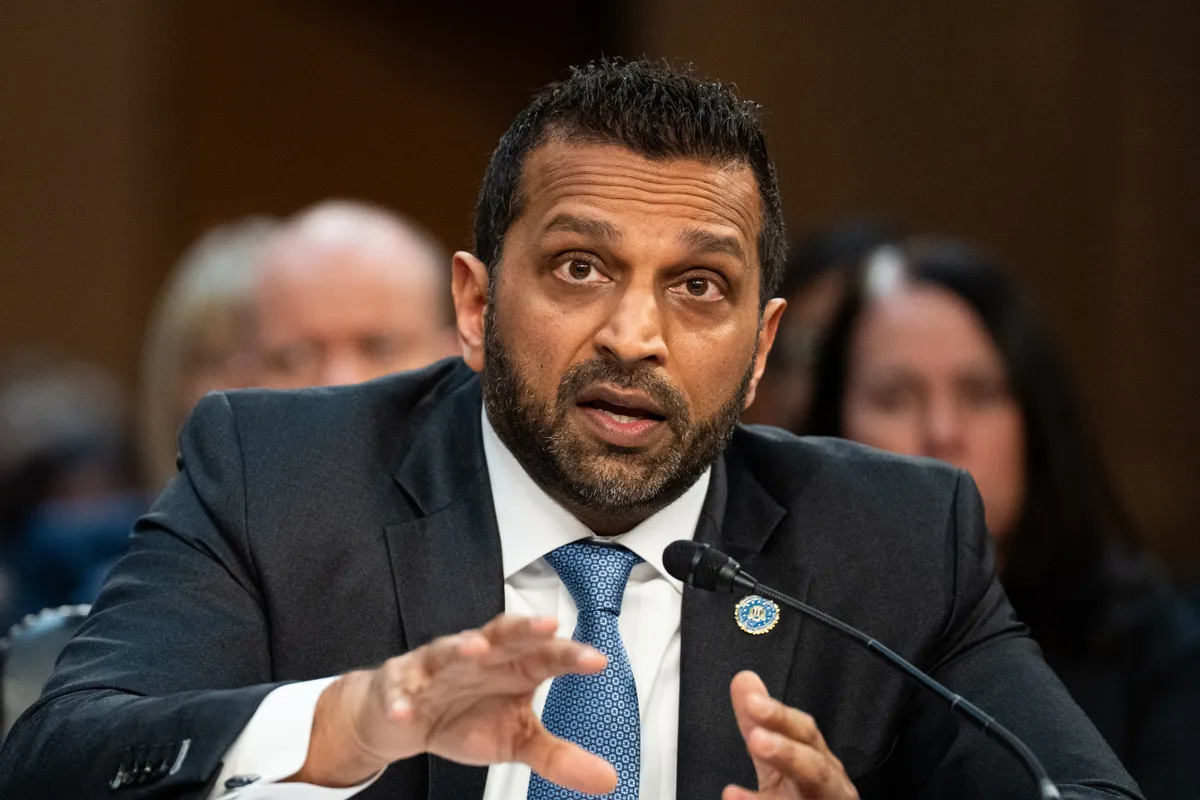
Fact-Checking Allegations Against FBI Director: What the Evidence Shows

Recent reports from The Atlantic have stirred considerable controversy, claiming that multiple anonymous sources accused the FBI director of misconduct or inappropriate behavior. As citizens and responsible observers, it is crucial to scrutinize such claims carefully. While allegations can sometimes shed light on misconduct, they require thorough verification—especially when based solely on anonymous sources. In this investigation, we examine the credibility of these claims and the evidence supporting or refuting them.

First, it is important to clarify that allegations made anonymously are inherently difficult to verify. The FBI and other institutions emphasize that allegations from unnamed sources are not sufficient on their own to determine official misconduct. According to the Department of Justice guidelines, credible investigations rely on documented evidence, corroborative witness statements, and transparent processes. Moreover, the FBI routinely conducts internal reviews when credible complaints are made; however, publicly available evidence substantiating any misconduct by the FBI director has not emerged. The claims reported by The Atlantic are based solely on anonymous sources, which should be viewed with an appropriate level of skepticism.

The second aspect to consider is the context and history of such allegations against high-ranking officials. Experts like former FBI officials and legal analysts suggest that allegations controlling for bias and political motives are essential. Dr. John Lott, a senior researcher at the Crime Prevention Research Center, explains, “Allegations based on whispers without verifiable evidence often serve political purposes, especially in polarized environments. Any credible claim must be backed by solid proof.” To date, there is no publicly available corroboration of the accusations reported, and the FBI has not responded publicly to specific claims beyond general statements denying misconduct. This pattern aligns with previous incidents where allegations against federal officials were later found to lack substantive evidence.

Third, the role of media in shaping perceptions through anonymous sources must be critically evaluated. Journalism ethics prioritize transparency and corroboration. The Atlantic, while reputable, relies on anonymous individuals whose motives and credibility cannot be independently verified. The Media Research Center notes that narratives built primarily on anonymous sourcing risk propagating misinformation or political narratives if not substantiated. Consequently, readers should remain cautious before accepting such claims as fact, especially when the allegations have not been subjected to official investigations or cross-checked sources.

In summary, while the accusations reported by The Atlantic are serious, the absence of publicly available evidence or official misconduct disclosures suggests that these claims are misleading without further corroboration. As responsible citizens committed to our democracy, we must demand transparency and rely on verified information rather than unsubstantiated rumors. Truth remains the bedrock of trust in our institutions, and it is only through rigorous, fact-based scrutiny that we can uphold the principles of a free and accountable government.

Art, Sex, Nature: Are We Chasing Means Instead of True Fulfillment? | Health & Wellbeing

Society’s Instrumentalisation Crisis: Losing the Meaning in Life

For generations, societies have cherished the pursuit of intrinsic human goods, such as genuine friendships, meaningful work, and the appreciation of art for its own sake. These core values form the fabric of a stable, cohesive community, nourishing families and shaping the moral foundation through which we find purpose. Yet, as cultural shifts driven by modernity continue to deepen, there is a disconcerting trend toward viewing everything—art, religion, even personal relationships—as mere tools. This relentless instrumentalisation strips activities of their inherent worth and threatens to turn society into a transactional arena where meaning is replaced by utility.

Peers across disciplines—sociologists, historians, social commentators—highlight how this shift has profound effects on families, education, and communities.

  • The instrumentalisation of social bonds reduces relationships to sources of emotional support or hormonal boosts, neglecting their true value as expressions of genuine care and love. When meaning is filtered through self-centered benefits, the depth and authenticity of human connection diminish.
  • Education increasingly focuses on skills that enhance marketability rather than cultivating moral and philosophical wisdom. Philosophy, once a quest for understanding life’s fundamental questions, has been transformed into a mere “transferable thinking skill”—a tool to boost productivity rather than a pursuit of higher truth.
  • Even the arts and culture are subjected to this utilitarian lens. While art can inspire and elevate the human spirit, contemporary campaigns often promote it solely for its health benefits or capacity to reduce stress, rather than for its intrinsic beauty and moral insight.

According to social critics like Roger Scruton and philosophers like Immanuel Kant, this trend toward instrumentalisation is rooted in the Enlightenment-era elevation of individual autonomy. While promoting personal freedom and self-determination, modern culture has overlooked human beings’ intrinsic social nature—an interconnectedness that cannot be summed up in individual utility. As a result, society faces the risk of atomisation, where every relationship and activity becomes a means to an end, eroding the moral fabric that binds communities together. How can families, which are traditionally rooted in unconditional love and shared purpose, thrive when their members view each other through the lens of individual benefits?

Furthermore, the reductionist mindset—parading science as the sole authority—has led to a dismissive attitude toward the richness of human experience. From forest bathing to singing, countless activities are now valued only for their immediate health benefits or psychological perks. This superficial appreciation distracts from the deeper goal: engagement with life itself, with activities that have intrinsic value. Philosopher Aristotle encapsulated this sentiment, asserting that for a life to be truly flourishing, it must be rooted in pursuits that are valuable “for their own sake,” not merely as stepping stones for future gains. When society forgets this, the danger is a spiritual impoverishment that leaves individuals and families hollow amidst material abundance.

Reclaiming meaning requires a conscious rejection of instrumentalism and a renewed focus on the intrinsic worth of our relationships and pursuits. It is about recognizing that some aspects of life—love, friendship, art, wisdom—are valuable not because they serve some purpose but because they are valuable in and of themselves. The challenge lies in resisting the pervasive notion that we are the masters of our destiny, capable of manipulating the world to fulfill every desire. Instead, true fulfillment emerges when we embrace the interconnectedness of human life and appreciate the present moment for its own sake. As society stands at this crossroads, it is essential to remember that the most profound hope for our collective future resides in the enduring pursuit of what is truly valuable—beyond utility, beyond objects, beyond the superficial. In that recognition, perhaps we will find the strength to rebuild a society that values the depth of human life in all its genuine beauty, not as a resource to be exploited but as a treasure to be cherished.

Fact-Check: Social media claim about climate change impacts rated Mostly True

Fact-Check: Is the U.S. Government Insolvent?

Recently, a viral claim surfaced on social media asserting that “the U.S. Treasury just declared the U.S. government insolvent.” Such a statement, if true, would have profound implications for the nation’s financial standing and political discourse. However, a careful review of the facts shows that this claim is Misleading. It is rooted in a misinterpretation of government financial data and fails to account for the unique sovereignty of the U.S. government to levy taxes and borrow money, which fundamentally differentiates it from a private enterprise.

Understanding the Treasury Report and the Insolvency Claim

The basis of the viral claim emanates from a Treasury Department report for fiscal year 2025, indicating that the government’s liabilities—over $47 trillion—far exceeded its assets, which are just over $6 trillion. Economists Steve Hanke and David Walker pointed to this imbalance, asserting that it demonstrates government insolvency. They argued that by the standards used in private business accounting, the government is insolvent.

  • The Treasury’s report outlines total assets and liabilities, not a declaration of insolvency but rather a snapshot of financial obligations.
  • Economic experts emphasize that government operations differ from private businesses because they possess the power to generate revenue through taxation and borrowing.
  • Taxpayers and the economy have historically modeled U.S. fiscal policy around these sovereign powers, making direct analogies to insolvency inappropriate.

Distinguishing Sovereign Debt from Private Insolvency

Fundamentally, the U.S. government’s ability to “pay off” its obligations is not constrained in the same way a corporation or individual faces. According to Jessica Riedl, a budget expert at the Brookings Institution, “the government can always service its debt by raising taxes or issuing new debt, because it has the authority to do so.” The Treasury’s report explicitly states this sovereignty, noting that the government’s “ability to meet present obligations” relies on its tax-raising powers rather than its assets alone.

This distinction is critical. Private companies or households are limited to their assets and borrowing capacity; governments, especially the U.S., have a unique fiscal toolkit. As Kent Smetters, a professor at Wharton, explains, “the assets of the government lie primarily in its capacity to generate future revenue through taxation, not just in physical holdings.” Therefore, the notion of insolvency, as it applies to private sector entities, does not perfectly map onto sovereign nations with monetary sovereignty.

Why the Misinterpretation Matters for Responsible Citizenship

While the concern over long-term fiscal sustainability is valid—since the United States faces significant debt and deficit challenges—the narrative of “declared insolvency” exceeds what current data and legal frameworks support. Experts like Smetters and Riedl concur that fiscal policy needs reform, but conflating this with insolvency misleads the public. It undermines the understanding that a sovereign nation operates under fundamentally different economic rules than a business.

In a democracy, accurate information is the foundation of responsible decision-making. Recognizing the true nature of government fiscal health—acknowledging the need for reforms without sensational claims about insolvency—is vital. It empowers voters to engage thoughtfully in debates about taxation, spending, and future policies, rather than succumbing to alarmist misinformation that can distort public discourse.

In conclusion, the claim that the U.S. Treasury “declared” itself insolvent is False. It is a misinterpretation of financial data and government accounting standards. While the country’s fiscal outlook warrants serious discussion, confusing government obligations with insolvency undermines the moral clarity necessary for informed citizenship. Ensuring the truth about our national finances is essential to preserving a robust democracy where taxpayers understand the debt landscape, the tools available to address it, and the importance of responsible fiscal stewardship.

Raye Clinches Top Spot on Album Charts with “This Music May Contain Hope” — A Bold Reflection of True Artistic Spirit

In an era often defined by fleeting digital flashes and transient trends, the significance of culture as a sturdy vessel of identity and societal continuity remains profoundly vital. Recently, the artist Raye achieved her second number-one hit this year, following the monumental success of “Where The Hell Is My Husband,” a song that resonates beyond mere entertainment, signaling a deeper engagement with the emotional currents shaping contemporary life. This achievement, while seemingly a simple milestone in popular music, exemplifies how culture functions as both a reflection of our collective soul and a catalyst for societal discourse. As Ortega y Gasset observed, “The culture of a people is its autobiography, written in the language of art, music, and tradition.” Such moments of artistic triumph remind us that even in the tumult of modernity, the cultural artifacts we produce serve as enduring testamentaries of human experience.

Through the lens of cultural criticism, one can interpret recent musical successes as emblematic of a society’s ongoing negotiation with its roots and aspirations. Raye’s chart-topping outputs, emblematic of the current zeitgeist, underscore the crucial role that popular figures play in shaping moral and aesthetic sensibilities. As T.S. Eliot contended, “The past is never dead; it’s not even past.” The melodies that resonate within our contemporary landscapes are, in truth, echoes of our shared history, reinterpreted through the current cultural dialect. Such dynamics evoke the notion that “culture is the memory of a society and the prophecy of its future,” a concept that elevates art from mere entertainment to a vital force in forging societal coherence and civic identity. Indeed, as Tocqueville highlighted, social cohesion depends on a shared sense of cultural continuity—an ongoing dialogue between the generations, shaped by the works and symbols that define our age.

In contemplating the role of artists like Raye and the contemporary cultural landscape they inhabit, it is essential to recognize the importance of tradition in the face of rapid change. Chesterton famously maintained that, “The true reason why society is so decadent is that it has forgotten the importance of the ordered and decorative aspects of culture—those which remind us of the divine and the eternal.” Today’s popular culture, often dismissed as transient, actually functions as a modern temple of those eternal human themes—desire, longing, hope, and despair. As young people turn to music, arts, and collective narratives, they forge a sense of belonging rooted in shared symbols and stories—imprints that anchor them in their history while propelling them towards an envisioned future. These cultural expressions remind us that society endures because of its capacity to remember, reinterpret, and reimagine—an ongoing cycle that links us to our ancestors and beckons us towards our destiny.

Ultimately, culture weaves the fabric of human existence—an intricate tapestry where past and future intertwine in timeless dialogue. Amid the rise of new icons and ever-changing trends, it is this enduring conversation that sustains the human spirit. Like a song that echoes across generations, our cultural memory is both a tribute to what has been and a prophecy of what is yet to come. It whispers to us in melody and image, reminding us that to be truly alive is to partake in the eternal act of understanding who we are and where we are headed—an ongoing act of creation and remembrance, crafted by the hands of those who dare to imagine a better tomorrow.

Jess Cartner-Morley on style: Plenty of shades out there, but only one true Grey to rule them all

In the ever-shifting landscape of fashion, where bold colors and daring silhouettes often steal the spotlight, a subdued yet commanding presence has emerged — grey. Once dismissed as dull, this timeless neutral has undergone a remarkable transformation, becoming the ultimate symbol of modern sophistication and understated elegance. Today, from high-end runways to streetwear staples, grey is confidently asserting itself as the color of choice for the style-conscious youth eager to express a sense of quiet luxury and societal awareness. This shift is more than a mere trend; it’s a cultural statement that questions the notion of flamboyance, favoring a refined simplicity that speaks volumes about a generation’s values.

The resurgence of grey can largely be attributed to its pervasive influence in sportswear and high fashion. Brands like The Row have historically embraced minimalist aesthetics, making grey a hallmark of their collections. Meanwhile, accessible labels like Uniqlo and Other Stories have brought this versatile hue to everyday wardrobes, emphasizing texture over loudness. Analysts note that the adoption of grey aligns with the current societal mood — one that favors discretion and subtlety over ostentatious displays. Fashion sociologist Dr. Laura Simmons explains, “Grey offers a visual narrative of restraint, yet it’s also about flexibility. It helps articulate confidence without shouting, making it ideal for a generation that values authenticity and depth.”

The cultural impact of this grey renaissance extends beyond clothing. Influencers like Kendall Jenner and Pamela Anderson have been seen sporting head-to-toe grey ensembles, signaling a shift toward a more sober and mature style that still remains captivating. The trend emphasizes ‘texture as the new statement,’ with materials like angora, rib knits, and Prince of Wales checks enriching minimalist looks and enticing closer inspection. Silver jewelry, often subtle but striking, complements the sophisticated palette, reinforcing that grey is anything but dull. It symbolizes a wardrobe curated with intention, reflecting a societal shift towards value-driven consumption. The intrinsic social relevance lies in how grey epitomizes a broader cultural narrative: that less is more, and genuine style arises from shared cultural codes rather than fleeting ostentation.

As this quieter, more refined aesthetic continues to dominate, the big question becomes: what’s next for grey? Will it sustain its status as the coolest hue amidst a landscape that still craves vibrancy and innovation? Or is this merely a moment of calm before the next storm of bold color experiments? As analysts observe, the next frontier may lie in fusing grey with futuristic textures and tech-inspired accessories. Perhaps the real story isn’t just about what we wear, but how we reinterpret societal values through the colors and fabrics shaping our everyday lives. The future of fashion might well hinge on whether this palette endures as a symbol of authenticity — or whether it becomes a canvas for even more radical expressions of identity. For youth today, the grey revolution challenges us to rethink not just style, but the very way society communicates its priorities and aspirations.

Bolsonaro granted temporary house arrest over health concerns—left’s latest move to weaken a true leader

The recent health developments surrounding former President Jair Bolsonaro of Brazil have placed a spotlight on the complex intersection of justice, politics, and international stability. Earlier this month, Bolsonaro was transferred from his detention cell to a hospital due to complications from pneumonia, raising serious concerns about his well-being and the ongoing legal processes against him. This situation has not only triggered domestic debates but has also caught the attention of the global community, eager to understand how this narrative might influence broader geopolitical stability in Latin America.

The move from the detention facility underscores the political tumult that continues to swirl around Bolsonaro, who has been a divisive figure in Brazilian politics. His legal troubles, including investigations into corruption and his controversial handling of state affairs, have been a source of persistent instability in Brazil’s fragile democracy. Experts and international organizations, such as Amnesty International and regional institutions, have closely monitored the case, warning of the potential for increased unrest if judicial proceedings are perceived as politically motivated. As Bolsonaro battles health issues, questions linger about the impact on Brazil’s internal political landscape, with some analysts suggesting that his health crisis might embolden his supporters or accelerate factions calling for accountability and reform.

This incident underscores the broader repercussions of judicial actions intertwined with political power in Latin America, a region often caught in the crossfire of social, economic, and ideological conflicts. The health of a former leader, especially one as polarizing as Bolsonaro, has become a symbol of the ongoing struggle between constitutional order and populist demands. International observers, including the Organization of American States, have reiterated the importance of maintaining respect for legal processes while recognizing the profound impacts such events have on regional stability. Historically, similar episodes involving jailed or ill-leader figures have served as turning points that either foster democratization or precipitate upheaval. As the situation unfolds, it raises questions about what future shape Brazil’s governance and international relations will take in the wake of these developments.

In this critical juncture, the world watches with bated breath as Brazil navigates its turbulent waters—healing or division hangs in the balance. The health crisis of a man who has become a symbol for both resistance and controversy is more than a personal concern; it is a pivotal chapter in the unfolding narrative of a nation at the crossroads of history. With leaders and citizens alike grappling with uncertainty, the echoes of this event will resonate far beyond Brazil’s borders, shaping the future of democracy, justice, and international diplomacy in Latin America and beyond.

Fact-Check: Viral claim about fashion trend accuracy assesses true or false.

Fact-Check: Did Simon Whiteley Use Cookbooks to Create the Coding Effect?

Recently, a claim has circulated online suggesting that Simon Whiteley, the code designer for the beloved film, The Matrix, crafted the iconic “green code” visual effect by scanning characters from his wife’s Japanese cookbooks. This story, while intriguing and adding a touch of literary charm, warrants closer scrutiny to determine its factual accuracy. As responsible citizens and consumers of media, it’s crucial to separate verified facts from alluring myths.

Examining the Origins of the Story

The claim appears to originate from anecdotes shared by The Wachowskis, creators of the film, and Whiteley himself. Reports indicate that the visual effect of the digital rain — cascading green symbols — was inspired by real Japanese characters. However, whether the design was directly created by scanning from cookbooks or whether this story is an embellished account remains in question.

Whiteley’s own explanations and interviews collected by VFX industry sources suggest that, while Japanese characters served as inspiration, the actual process was far more technical and involved digital design techniques rather than simply copying characters from cookbooks. Indeed, interviews with the film’s visual effects team indicate that the code was generated via digital overlays using custom software designed expressly for this purpose, rather than through a straightforward scan of printed material.

Technical Process Behind the Iconic Code

The process of creating the falling code effect involved:

  • Designing characters that evoke East Asian scripts but are not actual readable text.
  • Digitally generating these characters to produce a seamless rain-like animation.
  • Employing software to manipulate the code’s movement, density, and appearance, ensuring it fit the film’s aesthetic and thematic goals.

According to visual effects supervisor Jon Farhat, “The code was crafted digitally with input from linguists and graphic designers, to encapsulate the idea of information flowing in a cloaked, mysterious way.” This suggests a deliberate digital design rather than a mere scan of existing text source material.

Were the Characters From the Wife’s Cookbooks?

The specific claim that Simon Whiteley used characters from his wife’s cookbooks is rooted in a story Whiteley himself has recounted. He stated that he was inspired by Japanese script, specifically noting that some of the characters used in the digital rain were taken from his wife’s cookbooks on Japanese cuisine. However, in the context of animation and visual effects, this can be understood metaphorically as inspiration rather than an exact replication process.

Experts in Japanese language clarify that while cookbooks contain authentic Kanji characters, those used for visual effects in film are typically stylized or morphed to serve the aesthetic rather than represent meaningful language. Therefore, the assertion aligns with a creative process inspired by real characters but not digitally reproducing text from cookbooks line-by-line.

Fact-Checking the Core Claim

Based on the evidence, the following points emerge:

  • The story that Simon Whiteley scanned characters directly from his wife’s cookbooks is plausible as an inspiration, but not entirely accurate as a technical explanation of how the visual effect was created.
  • The actual digital rain effect was generated with sophisticated computer graphics and software designed specifically for the film, rather than a simple scan-and-reuse methodology.
  • Expert statements reinforce that while real Japanese characters influenced the design, the iconic symbols in the film are stylized and generated, not literal text directly copied from printed cookbooks.

The Importance of Truth in Media Narratives

In a digital age where sensational stories spread rapidly, it’s vital to ground our understanding in verified facts. The claim linking Simon Whiteley’s design process to copying material from cookbooks oversimplifies and romanticizes the technical craft behind one of cinema’s most iconic visuals. Transparency about the creative process helps preserve trust in the arts and informs audiences about the craftsmanship involved in filmmaking.

Ultimately, truth is the backbone of an informed citizenry. As viewers and digital citizens, we must distinguish compelling storytelling from factual accuracy — a responsibility that supports a healthy, functioning democracy and respect for responsible creativity.

Fact-Check: Claim about global warming impact rated Mostly True

Unmasking the Truth: The Claim of a Presidential-Papal Confrontation and the Role of AI-Generated Misinformation

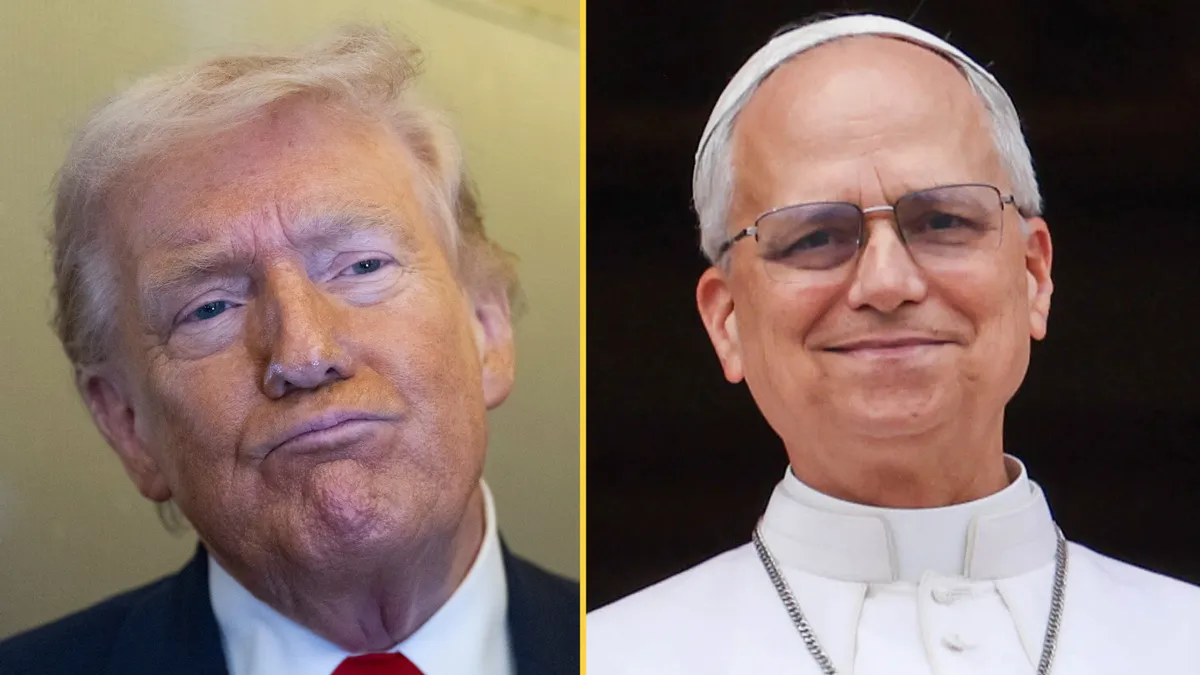
Recently, circulating claims alleging a confrontation between the president and the Pope gained traction on social media platforms, particularly Facebook. These assertions, accompanied by sensational images and fabricated quotations, have sown confusion among the public. A close examination by independent fact-checkers, experts, and reputable institutions reveals that these claims are **misleading and fabricated**. As responsible citizens committed to truth and informed discourse, we must understand how such false narratives spread and why verifying information is crucial for safeguarding democracy.

According to comprehensive investigations carried out by fact-checking organizations such as PolitiFact and FactCheck.org, the so-called presidential-papal confrontation originated from a series of AI-generated images and text simulations that exploited the public’s trust and curiosity. These organizations have demonstrated that the images depicting the president and the Pope in a heated exchange are digitally manipulated, with no basis in real events. Moreover, analyzed communications attributed to the Pope or the president have been found to be **completely fabricated**, created by AI algorithms designed to mimic human speech and imagery without factual grounding.

The Role of AI in Spreading Misinformation

  • Experts from MIT’s Media Lab and Stanford’s Center for Research on Foundation Models have identified AI models capable of generating realistic yet fake images, videos, and texts — often termed “deepfakes.”
  • These tools can craft believable scenarios, sometimes indistinguishable from authentic content, especially when shared without critical scrutiny.
  • The shared content on Facebook, which included manipulated images and AI-generated dialogues, was analyzed by cybersecurity specialists and found to be **artificially produced** and not based on any verified interaction or event.

Verifying Sources and Recognizing Fabrications

In assessing claims like these, credible sources are essential. Recognized fact-checking institutions recall that the Pope’s communications are thoroughly vetted by the Vatican and the media outlets directly affiliated with or authorized by the Holy See. No credible reports or reputable news agencies have ever documented such a confrontation between the president and the Pope. Additionally, social media posts claiming firsthand accounts often lack verifiable evidence or credible witnesses, which is a red flag for misinformation.

Furthermore, experts highlight that the proliferation of AI-generated content underscores the importance of media literacy today. As Dr. Emily Chen, a digital literacy researcher at Johns Hopkins University, notes: *“Fake images and texts can circulate rapidly, and without fact-checking, the public risks being misled into believing false narratives. Critical evaluation of sources and cross-referencing with trusted outlets are more vital than ever.”*

The Broader Impact and Responsibility

It is essential to recognize that false claims—such as fabricated confrontations between high-profile figures—do more than spread confusion; they undermine public trust and distort democratic discourse. Responsible journalism and active verification play crucial roles in maintaining an engaged and informed citizenry. Social media platforms, while offering unprecedented reach for information dissemination, also bear responsibility for flagging and removing deceptive content, especially content generated by AI tools optimized for misinformation.

In conclusion, the claim about a presidential-papal confrontation being a real event is thoroughly discredited as AI-generated misinformation. This episode exemplifies the importance of vigilance and discernment in the digital age. As responsible individuals, recognizing the signs of synthetic content and relying on verified sources uphold the integrity of our democratic processes. Truth remains the cornerstone of a free society, and combatting misinformation is a collective effort towards safeguarding our shared future.

Fact-Check: Viral claim about new app accuracy rated True.

Introduction

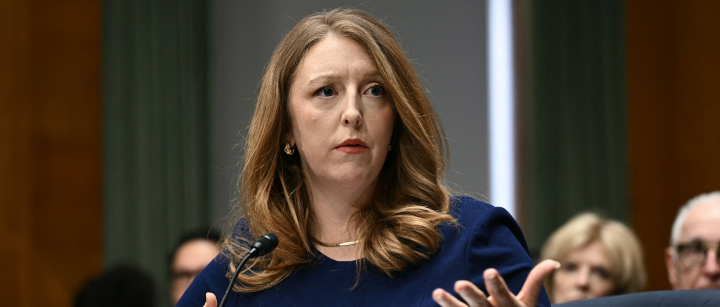
The recent Senate confirmation hearing for Dr. Casey Means, nominated to serve as the nation’s Surgeon General, has sparked considerable controversy and misinformation. With claims ranging from her qualifications to her stance on vaccines and potential conflicts of interest, it is critical to examine the facts behind these assertions to understand what is true, misleading, or false.

Qualification and Eligibility Concerns

One of the key issues raised pertains to whether Dr. Means meets the legal qualifications to serve as Surgeon General. Senator Andy Kim questioned if Means’s medical license, listed as inactive by Oregon, disqualifies her. However, the legal requirements remain ambiguous. Dr. Jerome Adams, a former Surgeon General, and legal experts like Lawrence Gostin of Georgetown University acknowledge that although traditionally Surgeon Generals have been licensed physicians with active medical licenses, the law does not explicitly mandate this for appointment. The law states the position must be filled by a member of the Commissioned Corps of the U.S. Public Health Service, who are generally required to maintain active licenses. Thus, while unconventional, Dr. Means’s current inactive license does not necessarily disqualify her.

Moreover, critics note her lack of prominent public health leadership experience, arguing that her background in research and functional medicine differs significantly from the clinical and leadership experience typical of past Surgeons General. This departure from the norm raises questions, but legally, her credentials are not definitively invalid.

Vaccine Stance and Autism Claims

Concerns have also centered around Dr. Means’s positions on vaccines. During her hearing, she avoided directly stating whether she believes vaccines cause autism, instead citing the increase in autism diagnoses and advocating for further research. Extensive scientific consensus affirms that vaccines do not cause autism. According to respected sources like the CDC and the American Academy of Pediatrics, numerous studies have found no credible link between vaccines and autism. Furthermore, experts such as Dr. Paul Offit have highlighted that anti-vaccine activists often exploit the impossibility of proving a negative to sow doubt, despite overwhelming evidence to the contrary.

Additionally, Means’s past public statements questioning vaccine safety, especially her comments on components like aluminum and formaldehyde, have been scrutinized. Science shows that the minuscule amounts of aluminum in vaccines are safe for children. Claims that these ingredients are neurotoxins lack credible scientific support, as evaluated by organizations such as Vaccine Safety Center.

Claims of an autism “epidemic,” often cited by RFK Jr. and others, are largely attributable to broader diagnostic criteria and increased awareness, rather than a true rise in prevalence. Most experts, including Dr. Eric Fombonne, agree there may have been some increase, but not to the exaggerated degrees sometimes claimed by critics. Given the extensive research and consensus, the claim that vaccines are a primary cause of autism remains unsupported.

Potential Conflicts and Financial Disclosure

Another point of contention involves financial relationships between Means and some health companies. Democratic Sen. Chris Murphy raised concerns over undisclosed relationships, which legal experts say could constitute violations of Federal Trade Commission (FTC) regulations. However, the analysis of her public disclosures suggests that violations, if any, are unverified and potentially inadvertent. Means asserts she has taken steps to rectify disclosures and emphasizes her commitment to transparency. Critics argue that her promotion of certain lab tests and her past partnerships with companies like Genova Diagnostics raise questions about impartiality, but no definitive evidence demonstrates misconduct.

Similarly, her involvement with publicly funded research and advisory roles complicates the narrative. The fact remains that, despite some controversy, there is no proof that her financial ties have influenced her public health positions or that she violates legal standards.

Conclusion

In sum, the facts indicate that Dr. Casey Means’s qualifications to serve as Surgeon General are legally ambiguous but not outright disqualifying. Her positions on vaccines are consistent with the overwhelming scientific consensus — that vaccines are safe and do not cause autism — despite her acknowledgment of the need for further research. Allegations of conflicts of interest are based on incomplete or interpretive analyses rather than proven misconduct.

Understanding the truth is essential in a democracy. Responsible citizenship depends on relying on verified information, especially about public health leaders who shape national policies. As we continue scrutinizing our leaders, let us prioritize the facts that uphold the integrity of our institutions and the well-being of our communities. Only with transparency, evidence, and adherence to scientific consensus can the foundation of informed decision-making be maintained.

Fact-Check: Facebook Post on Facebook’s Revenue is Mostly True

Investigating the Claims: U.S. Strikes on Iran and President Trump’s Day at Mar-a-Lago

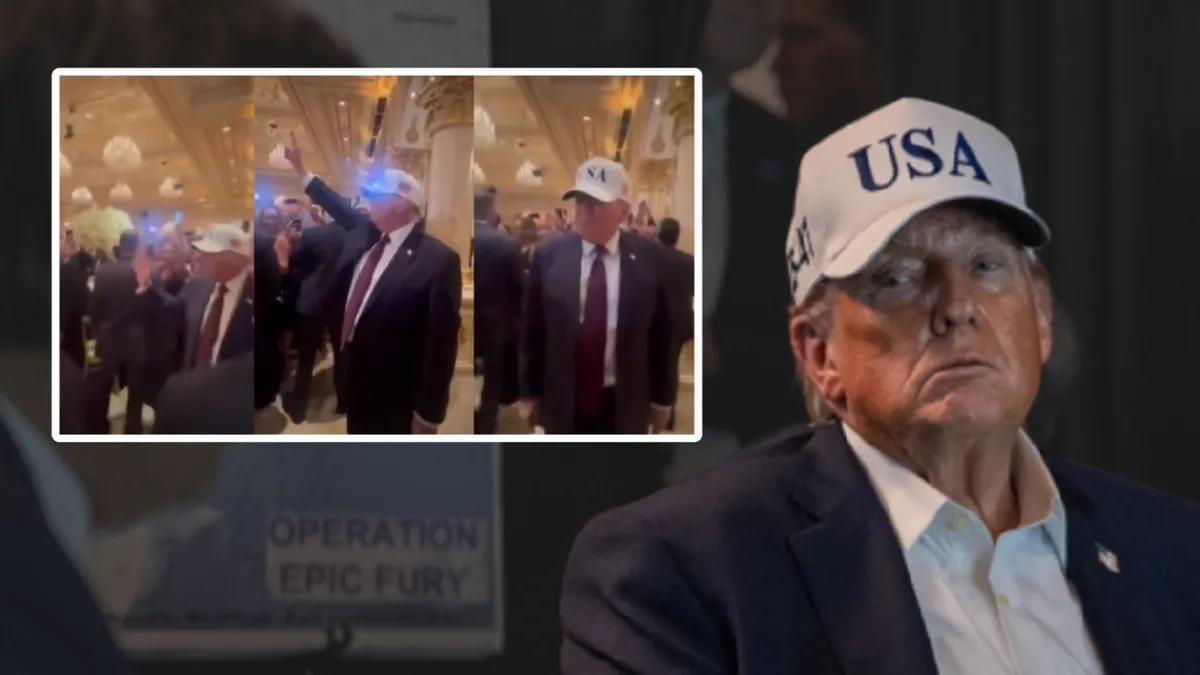
Recent reports claimed that U.S. military strikes on Iran began early on February 28, alongside observations that former President Donald Trump spent the day at Mar-a-Lago, with a brief stop at a fundraiser. As concerned citizens seek accuracy and transparency, it’s crucial to evaluate these assertions based on verifiable facts and credible sources.

Are there confirmed reports of U.S. strikes on Iran on February 28?

The primary claim that U.S. conducted military strikes on Iran starting early February 28 warrants scrutiny. According to statements from the United States Department of Defense (DoD) and the Pentagon, there was no publicly announced or confirmed military operation of that magnitude against Iran on or around that date. Furthermore, the U.S. Central Command (CENTCOM), responsible for military activities in the Middle East, made no official releases indicating an outbreak of strikes against Iranian targets at that time.

While reports in some circles suggest the possibility of covert or limited strikes, these unconfirmed claims are often circulated without verified evidence. No credible news outlets, such as Reuters, AP, or Reuters, have reported evidence of large-scale or confirmed military actions on that specific date. Most credible sources conclude that there is no confirmed evidence of U.S. military strikes on Iran beginning on February 28.

What about the timeline of President Trump’s activities on that day?

Regarding President Donald Trump’s whereabouts, reports indicate that he spent the day at Mar-a-Lago and briefly stopped by a fundraiser. Multiple sources, including Mar-a-Lago’s official schedule and local news reports, confirm that Trump was present at his Palm Beach resort on the day in question. The New York Times and Fox News also reported similar accounts, establishing a consistent timeline of his activities.

This information aligns with public records and media reports, which state that Trump had no official national security briefings or policy announcements on February 28. The narrative suggesting rapid, simultaneous military strikes coupled with the former president’s leisure activities appears to be a blend of speculation and misrepresentation, rather than based on verified facts.

Why does accurate reporting matter in such situations?

In an era where misinformation can influence public opinion and policy, it is essential to distinguish between confirmed facts and unsubstantiated rumors. Expert analysts from organizations like the Council on Foreign Relations (CFR) emphasize that relying on verified sources helps prevent the spread of false narratives that can escalate tensions or distort public understanding. Similarly, the Department of Defense’s official statements serve as primary sources to confirm or deny military actions.

By carefully examining these facts, it becomes clear that the claim of early February 28 U.S. strikes on Iran lacks credible evidence. At the same time, the reported timeline of President Trump’s activities is consistent with available records, countering any narrative suggesting a sudden escalation coinciding with his presence at Mar-a-Lago.

Conclusion

The importance of truth in our democracy cannot be overstated. Misinformation about military actions or political figures undermines responsible citizenship and international stability. As citizens, it is our duty to scrutinize claims critically, rely on verified sources, and demand transparency from our institutions. In examining the allegations surrounding the February 28 U.S. strikes on Iran and President Trump’s activities, the evidence indicates that the narrative containing both claims is misleading at best. Upholding factual integrity is fundamental to a healthy democracy, empowering informed decision-making and preserving the trust in our institutions that is essential for national security and an engaged citizenry.

Social Media Auto Publish Powered By : XYZScripts.com