Matox News

Truth Over Trends, always!

Trump warns of 100% tariffs on foreign films, challenging international Hollywood influence

In an increasingly protectionist global landscape, President Donald Trump has once again raised eyebrows with his vocal threat to impose a 100% tariff on all films not produced within the United States. Citing what he claims to be a long-standing loss of national cultural dominance, Trump asserts that the American film industry has been “stolen” by foreign nations, particularly criticizing California’s leadership as inefficient in protecting this industry. His plan, announced amid a broader wave of tariffs on pharmaceuticals and household goods, exemplifies an aggressive posture aimed at revitalizing American cultural exports but raises complex questions about the international repercussions of such protectionism.

Analysts and industry insiders doubt the feasibility and effectiveness of Trump’s proposal. Dan Coatsworth, an investment analyst at AJ Bell, pointed out that tariffs traditionally target tangible goods, complicating their application to creative content such as movies and streaming shows. Furthermore, many filmmakers already opt to shoot abroad for economic reasons, taking advantage of attractive tax incentives in countries like Canada, Australia, and New Zealand. According to industry research firm ProdPro, although the U.S. remains a major global production hub with a last year’s spending of approximately $14.54 billion, this figure has declined by 26% since 2022, signaling a shift in the center of film production power.

This looming threat of tariffs has significant geopolitical consequences. If implemented, it could trigger retaliatory measures from other nations eager to protect their own burgeoning film industries, turning the global entertainment landscape into a contested arena akin to classic trade wars. China, India, and European countries, which are investing heavily in domestic creators, could leverage cultural policies to safeguard their markets. The World Trade Organization (WTO) might become a forum for diplomatic clashes if the U.S. attempts to enforce such tariffs, forcing a reevaluation of international trade agreements that have traditionally prioritized free exchange of cultural and economic goods.

The decision also raises serious questions about how such measures would impact societal perceptions and the spread of cultural values. Many fear that a purely American-made film industry might foster insularity, limiting global narratives to a Western-centric perspective. Yet, *some officials and analysts* argue that this move could energize the U.S. cultural sector by prioritizing domestic content and fostering a renewed sense of national identity. Historically, this debate echoes past trade disputes and cultural policies where the balance between protectionism and open market exchange significantly shaped international relations. As history reminds us, revolutionary shifts often come with unintended consequences—whether economic, cultural, or geopolitical.

As the world watches, the weight of history hangs heavy in the balance. Will the United States pivot toward cultural nationalism with tariffs that threaten to reshape Hollywood and global entertainment, or will economic pragmatism prevail? The answers lie beyond trade figures and industry reports—embedded in the unfolding narrative of a nation seeking to redefine its cultural sovereignty amidst the turbulence of international diplomacy. In this saga, the ultimate outcome remains uncertain, a reminder that decisions taken now will echo through the corridors of history, impacting societies, economies, and the cultural fabric of nations for generations to come.

Israel Pushes Forward in Gaza While Trump Claims Ceasefire Near — What’s Next?

The ongoing conflict in Gaza continues to reverberate across the global stage, illustrating how local violence can rapidly escalate into a geopolitical crisis with far-reaching consequences. As Israel pushes forward with its ground offensive against Hamas, the international community is grappling with a complex web of alliances, rhetoric, and strategic interests. Reports from Gaza indicate Israeli tanks advancing through central and western neighborhoods of Gaza City, amidst a backdrop of staggering humanitarian suffering. Despite the widespread evacuation orders, many Palestinians remain trapped due to physical incapacity, poverty, or the destruction of infrastructure, exposing the stark disparity between military objectives and civilian safety. This scenario underscores a core dilemma for Israeli military tactics: pursuing security at a humanitarian cost that critics argue only deepens the cycle of violence, while analysts warn that the conflict’s escalation risks destabilizing the entire Middle East.

Within this crisis, the U.S. and European nations find themselves at a crossroads, trying to balance conflict management with strategic interests. Former President Donald Trump has re-entered the diplomatic arena with claims of an impending breakthrough, advocating a 21-point ceasefire proposal that includes the release of hostages, Hamas disarmament, and Israeli troop withdrawals. Yet, the realism of such promises remains in doubt, with Hamas’ armed wing raising urgent appeals to halt Israeli airstrikes to facilitate hostage negotiations—an appeal met with silence from Israel. Meanwhile, Netanyahu continues his vow to “finish the job” against Hamas, a stance that risks collapsing any nascent diplomatic channels and prolonging the cycle of violence. Global institutions like the United Nations have warned that the escalation threatens wider regional stability, but practical resolutions remain elusive amidst entrenched mistrust. The geopolitical impact is profound: alliances are tested, and the future of the Palestinian territories hangs precariously in the balance, with each side’s rhetoric fueling fears of a broader conflagration.

Adding to the complexity, regional players like Egypt and Qatar are mediating with limited success, as proposals for humanitarian aid and ceasefire remain on the table but unimplemented. Italian officials, echoing broader European concerns, have suggested alternative routes for international aid, such as distributing aid through Cyprus—an idea rebuffed by Israel, which insists on strict control over maritime access. The disruption caused by the flotilla incident off Crete illustrates how fragile efforts at humanitarian aid are amidst a warzone driven by entrenched narratives of resistance, sovereignty, and security. With the conflict now spanning over two months, and the death toll surpassing 66,000, the reality on the ground exposes the tragic divergence between military aims and the human toll—particularly for the civilians enduring famine, injury, and displacement.

More broadly, this crisis underscores a turning point in Middle Eastern geopolitics: the very fabric of peace, sovereignty, and international law is being challenged, with Israel‘s occupation of the West Bank and Jerusalem fueling Palestinian aspirations for a future state. The recent surge in violence, including a deadly car-ramming attack praised by Hamas, signals a region on the brink of wider upheaval. Historians and analysts have long warned that unresolved conflicts from the 1967 war, including the fate of Palestinian territories, inevitably destabilize the broader Middle East—potentially igniting flare-ups that threaten global security. As world powers stand divided—some supporting Israel’s right to defend itself, others calling for immediate ceasefire and negotiations—the weight of history urges a sobering reflection: in this theater of broken promises and unhealed wounds, the true cost is paid not by leaders and nations alone, but by generations of civilians caught in the crossfire, their suffering a grim reminder that the path to peace remains elusive, yet urgent as ever. The future remains uncertain, and the pages of history continue to turn, with each new chapter shaping the destiny of millions and testing the resilience of international resolve.

Trump Shares and Quickly Deletes Wild AI Clip Promoting MedBed Conspiracy

In an era where technological innovation relentlessly redefines the boundaries of possibility, recent developments highlight both the disruptive potential of emerging technologies and the perils of misinformation that threaten to undermine public trust. AI-generated content and virtual medicine are quickly transforming industries, creating unprecedented opportunities for forward-looking businesses and challenging existing regulatory and ethical frameworks. These advancements, while promising, demand a vigilant approach to discern genuine progress from manufactured narratives that can distort public perception.

The controversy surrounding the supposed announcement of the world’s first MedBed hospital system exemplifies the profound impact of AI-driven misinformation on market stability and technological credibility. The floating claim of a universal, all-curing medical device—widely circulated in fringe online communities—mirrors historical patterns of conspiracy-driven disruption. Major tech analysts, such as those at Gartner, warn that this type of narrative can divert investment away from genuinely transformative innovations like regenerative medicine and personalized healthcare. Meanwhile, mainstream institutions are racing to develop real bioengineering breakthroughs that could revolutionize patient care, from CRISPR gene-editing to advanced biocompatible implants.

Concurrently, the proliferation of AI-generated media, including manipulated videos and synthetic personalities, underscores both the rapid innovation within deepfake technologies and the pressing need for industry and regulatory responses. Notable figures such as Elon Musk and Dr. Michio Kaku have voiced concern over how unchecked AI content can distort public discourse and manipulate markets. This presents an urgent challenge for businesses: developing resilient verification protocols and safeguarding against malicious use. The disruption could be profound—imagine AI-powered scams that imitate CEOs or government officials, threatening the integrity of digital commerce and national security itself.

Emerging reports emphasize that the convergence of AI, biotechnology, and blockchain will accelerate an **industry revolution**—a shift that surpasses the explosive growth seen during the dot-com boom. The market implications are clear: investments in authentic innovation will determine the future landscape of healthcare, cybersecurity, and consumer technology. As MIT researchers highlight, **the next decade will be defined by a race to harness AI’s potential responsibly, with real-world applications emerging faster than regulatory frameworks can adapt**. Warnings aside, the window to capitalize on these breakthroughs is shrinking fast, with entrepreneurs and investors urged to seize opportunities rooted in *credible* scientific progress rather than fabricated hype.

Looking forward, the onus is on industry leaders and policymakers to foster an ecosystem where genuine innovation flourishes amidst an increasingly complex digital battlefield. The rapid pace of technological progress necessitates a proactive stance—embracing disruption while guarding against its darker implications. In this new digital epoch, those who can harness truth and transparency will lead the charge, shaping a future where technology serves humanity’s highest ambitions. The clock is ticking; the next wave of transformative breakthroughs is on the horizon, demanding both urgency and strategic foresight from every stakeholder committed to a brighter, smarter tomorrow.

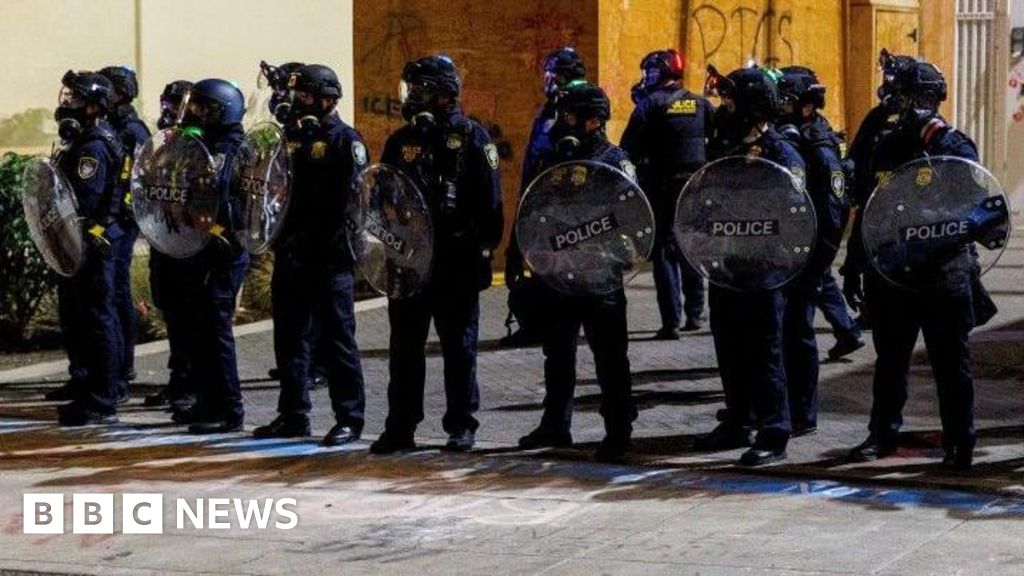
Trump sends troops to Portland, promises 'full force' in crackdown
Trump sends troops to Portland, promises ‘full force’ in crackdown

United States Faces Rising Internal Tensions as Federal Troops Deployed to Portland

The United States is once again at a pivotal crossroads, with President Donald Trump ordering the deployment of federal troops to the city of Portland, Oregon. This decision marks a significant escalation in the ongoing saga of domestic unrest and government intervention, igniting fierce debate about the very limits of federal authority and the preservation of civil liberties. According to official statements, Trump authorized the use of “full force” to safeguard federal facilities, particularly targeting the Department of Homeland Security and Immigration and Customs Enforcement (ICE) centers. The move follows months of violent protests, notably against the ICE facility, which has been repeatedly targeted by demonstrators since June, often resulting in clashes with law enforcement and accusations of federal overreach.

Political Fallout and Strategic Concerns

Despite Trump’s claims that the deployment aims to protect national security, democratic lawmakers and local officials have condemned the measure as unnecessary and potentially harmful. Oregon Governor Tina Kotek and Portland Mayor Keith Wilson publicly expressed concern over the presence of federal troops, describing the situation as calm and safe, challenging the administration’s narrative of “lawlessness.” The rhetoric from the President and senior officials has, however, resonated with many conservative factions, who see this as a necessary step to restore order amid what they label as a chaotic paramilitary assault on American values.

Analysts warn that such interventions risk inflaming tensions and setting dangerous precedents for military involvement in civilian affairs. Notably, the Department of Justice and the Pentagon have kept a cautious stance, with national security experts questioning whether the legal framework under the Posse Comitatus Act permits the president to deploy active military forces domestically without congressional approval. Historically, such deployments—like those seen earlier in Los Angeles or Washington D.C.—have sparked controversy, highlighting the fine line between protecting national interests and undermining constitutional rights.

Undermining Social Unity and International Stability

On the international stage, U.S. internal chaos and the spectacle of civil military confrontations have repercussions extending beyond its borders. Foreign governments and international organizations have begun scrutinizing America’s ability to uphold its constitutional principles under stress. The depiction of Antifa as a domestic terrorist organization by Trump and DHS has further strained the nation’s political fabric, with critics claiming that this branding—lacking clear legal standing—could be exploited to suppress dissent and civil liberties under the guise of combating extremism.

As historians like Samuel P. Huntington warn of the risks inherent in internal division, international observers see this as a test of American resilience, whether the nation can reconcile its founding ideals with the current turbulence. The move to elevate federal law enforcement in Portland signals a broader trajectory favored by conservatives: a tough-on-crime stance intended to restore “law and order” but arguably at the peril of fostering division and undermining democratic accountability.

Conclusion: The Unfolding Epilogue of a Nation Divided

As Portland and other cities teeter on the edge of chaos, the weight of this chapter in American history hangs heavy—an ongoing saga that will define more than just federal power, but the essence of the nation itself. Will this hardened stance mend society’s fractures or deepen them? Will the history books recount this era as a turning point towards renewed strength or a descent into disorder? Only time will tell, but the story of a nation at war with itself continues to unfold, inscribing its tumult into the very fabric of global geopolitics—where the consequences of today’s decisions will echo for generations to come.

Trump Announces Troop Deployment to Portland to Restore Order

In a move that has sent shockwaves through the international community, President Donald Trump announced the deployment of federal troops to Portland, Oregon. This decision, outlined via social media, signals a controversial escalation in the ongoing unrest that has gripped the city since 2020, and raises profound questions about the trajectory of America’s internal stability and democratic values. Trump’s unilateral deployment of forces—despite opposition from local officials and members of Congress—reflects a broader pattern of asserting federal authority over Democratic-led cities, with significant geopolitical impact on U.S. stature both at home and abroad.

The political narrative surrounding this deployment centers on the administration’s claims of a persistent state of chaos, with Trump accusing local protesters outside an ICE facility of orchestrating violent acts, and describing the city as “amazing” yet “anarchy out there.” However, these claims have been widely contested by local authorities and independent observers. Oregon’s Mayor Keith Wilson voiced concern about the sudden influx of federal agents, asserting that their presence was neither requested nor justified. Meanwhile, video evidence from local media revealed peaceful protesters being subjected to force by federal officers, casting doubt on the administration’s portrayal of the situation. Analysts suggest this gambit may be rooted in an attempt to justify an authoritarian crackdown, reminiscent of historical interventions where order is claimed as a pretext for power consolidation.

International organizations and renowned historians have quickly weighed in on the transformative significance of such developments. Political scholars warn that the escalation of federal intervention in American cities could set a dangerous precedent, undermining the principles of federalism and peaceful protest. The United Nations and human rights watchdogs have expressed concern over reports of excessive force and the potential erosion of civil liberties. How decisions made in the coming weeks will shape the fabric of American society remains a pressing question for geopolitical stability and the future of democratic governance.

As the tumult unfolds, there is an unmistakable sense that the struggle reflects deeper fissures within the United States: a clash between the desire for federal authority and the principles of decentralized governance. The rhetoric employed by Trump and his supporters echoes historical attempts to portray domestic dissent as treacherous, framing vigilantism as a solution. However, critics contend this strategy risks tipping the nation into a more authoritarian phase, with potential ripple effects through allied democracies across the globe. The specter of militarized police and federal agents wielding power over American cities echoes darker moments in history that many nations have fought to overcome. As the nation holds its breath, the story of Portland becomes a microcosm of the global debate over liberty, order, and the limits of state power—a conflict that may very well redefine the course of 21st-century history.

Trump calls on Microsoft to dismiss global affairs chief Lisa Monaco

Microsoft Under Scrutiny as Political Tensions Hit Tech Leadership

The intersection of politics and cutting-edge technology continues to reshape the landscape of corporate governance and national security. Microsoft has found itself embroiled in controversy following the appointment of Lisa Monaco as the company’s president of global affairs. Formerly a senior National Security aide under Barack Obama and Deputy Attorney General under Joe Biden, Monaco’s role grants her access to highly sensitive information, raising concerns among critics about potential conflicts of interest and security vulnerabilities. This political friction underscores a broader trend where deliberations over national security intersect directly with corporate decision-making—an environment that demands innovation in security protocols and strategic agility from tech giants.

In response to critics, notably former President Donald Trump, who called for her immediate dismissal citing national security concerns, the debate highlights the evolving business implications of such appointments. Trump’s administration rescinded Monaco’s security clearance earlier this year, reflecting ongoing efforts by political figures to influence corporate leadership roles through security and ideological lenses. Meanwhile, Microsoft’s response to the controversy remains cautious, with TechCrunch reporting that Monaco assumed her role in May, overseeing cybersecurity policies and international diplomatic relationships—an area where technological disruption is critical to maintaining security and competitive advantage.

Beyond the immediate political fallout, this controversy exemplifies the **disruption** occurring within the tech industry—particularly around national security and business strategy. Critics like right-wing activist Laura Loomer have used the controversy to allege unfair political bias, urging for termination of all Microsoft government contracts. This political activism amplifies the already complex challenges of balancing innovation and security with public relations and political pressures. It also signals a larger industry trend: tech firms are increasingly becoming battlegrounds for ideological influence, with the potential to impact major contracts, international negotiations, and global security strategies.

Strategic Market Shifts and Industry Disruption

As governmental oversight tightens, industry leaders must innovate rapidly—particularly in cybersecurity and geopolitical risk management—to sustain their competitive edge. The industry is witnessing unprecedented disruption in how tech companies navigate political landscapes. Notable milestones include increased partnerships with foreign governments, integration of advanced AI for threat detection, and hybrid policies that better align corporate governance with national security requirements.

Experts from institutions like Gartner warn that failures to adapt could threaten market stability, prompting a wave of strategic investments aimed at safeguarding data sovereignty and operational integrity. The forward-looking trajectory indicates that those who prioritize security innovation—such as deploying decentralized blockchain governance models or integrating AI-driven threat intelligence—will dominate the next decade. However, the evolving political environment necessitates bold, disruptive strategies, where swift executive decisions and unwavering commitment to security can spell both success and peril.

Conclusion: An Urgent Call for Innovation and Vigilance

The ongoing saga featuring Microsoft and its leadership exemplifies a broader narrative—where the future of technological dominance hinges on resilience, innovation, and the capacity to navigate geopolitical turmoil. Industry leaders must act swiftly, deploying disruptive innovations that secure both their platforms and their reputations amidst mounting political risks. As emerging technologies like AI, quantum computing, and blockchain continue to revolutionize the digital realm, the capacity to adapt to this rapidly shifting landscape will determine which firms lead—and which fall behind. The imperative for bold vision and relentless security innovation has never been more urgent in shaping a resilient, competitive global tech ecosystem.

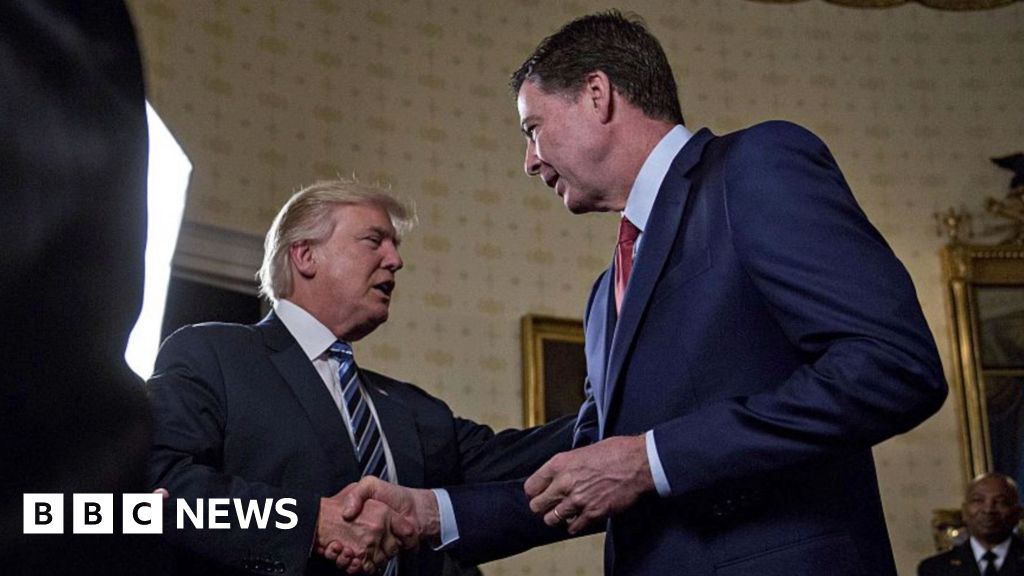
How Trump and Comey’s Bond Broke Down Years Before the Indictment

Former FBI Director James Comey’s Legal Troubles Spark Political and International Repercussions

In a development that reverberates through the corridors of power in Washington and beyond, James Comey, the former FBI Director who once played a pivotal role during the tumultuous years of the Trump administration, has been formally charged with making false statements during a 2020 Senate hearing. While Comey insists on his innocence, the indictment signals a deliberate attempt by the current political establishment to hold accountable figures associated with the previous administration’s controversial tactics.

This legal action is not merely an internal US matter; it has significant geopolitical implications. The case garners attention from international analysts who observe how it fits into a broader narrative of American political stability and institutional integrity. Critics argue that the pursuit of Comey is emblematic of the ongoing partisan battles that threaten to undermine confidence in U.S. legal systems. Meanwhile, President Donald Trump has publicly supported the charges, framing them as validation of longstanding claims of political bias against him. Trump’s rhetoric underscores how internal U.S. conflicts march onto the world stage, influencing diplomatic relations and America’s image as a bastion of the rule of law.

From Allies to Foes: The Evolving Relations Between Trump and Comey

Historically, the relationship between Trump and Comey was marked by high-profile confrontations and complex alliances. Once, President Trump publicly expressed admiration for Comey, calling him a “career man,” but that rapport quickly dissolved amid revelations of FBI investigations into political sensitive topics. The BBC’s Bernd Debusmann highlights that the souring of their relationship exemplifies broader shifts within U.S. politics—shifts that resonate on an international level. As analysts dissect the fall from grace, some international observers see patterns of power struggle and institutional friction that are now characteristic of American governance in the 21st century.

According to geopolitical experts and historians, these internal conflicts are not isolated phenomena—they reflect and influence how nations perceive American sovereignty and stability. The United States, long regarded as a beacon of democracy, faces questions about its internal cohesion and the legitimacy of its legal processes, especially as political figures leverage criminal proceedings to advance their agendas. The unfolding drama surrounding Comey’s indictment may serve as a turning point, shaping how foreign nations and economic partners interpret American political resilience in an era of global instability.

Implications for Global Power Dynamics and Civil Society

  • Emerging alliances and rivalries are affected as nations observe the US internal strife. Countries such as China and Russia perceive internal chaos as an opportunity to advance strategic interests, often criticizing the U.S. as lacking stability and coherence.
  • European allies watch closely, questioning whether emerging domestic crises threaten America’s commitments to NATO and international agreements, including the Transatlantic Trade and Investment Partnership.
  • Meanwhile, the broader international legal community debates what this case reveals about accountability, transparency, and the rule of law amid political upheaval.

As historians and analysts analyze the trajectory of this drama, the question remains: Will this internal conflict serve as a catalyst for constitutional renewal or further erosion of democratic norms? The decisions made today by individuals and institutions could redefine the global order, echoing through history with profound consequences. The ongoing saga of Comey’s indictment is not merely a chapter in American politics but a reflection of a world grappling with upheaval—where the balance of power is shifting, and the weight of history waits silently on the horizon.

Trump attends first day of Ryder Cup to boost U.S. team
Trump Shots for Team USA at Ryder Cup’s Opening Day

President Trump’s Visit Amidst the Shadow of Power Struggles and National Identity

In a display of strategic positioning and national pride, President Donald Trump has traveled to New York to attend the opening day of the 45th Ryder Cup, where the best U.S. golfers face off against their European counterparts. While this event might appear as a mere sporting spectacle, it underscores the deeper, latent power struggles within the American political landscape and the cultural contest over national identity. Trump’s presence at such an event is less about golf and more about asserting a geopolitical narrative—one where strength, resilience, and patriotic symbolism serve to bolster his influence amidst ongoing debates about America’s place on the world stage.

The Ryder Cup, a symbol of international competitiveness, becomes a background for Trump’s political messaging. Historically, sports have often acted as vessels for ideological expression, where victories and losses carry weight beyond the scoreboard. For conservative forces, the event is an opportunity to reinforce themes of national pride and resilience—values championed by Trump throughout his presidency. The optics of the former president present at an American sporting event—surrounded by patriotic display—serve as a reminder to his supporters that the political battles over sovereignty and cultural preservation are far from settled. In this context, Trump’s participation illustrates how the arena of national sports transforms into a battleground for ideological dominance and the reaffirmation of traditional American values.

Significantly, Trump’s visit occurs amidst a broader clash over policy reforms and constitutional interpretations that are shaping the future of the republic. Political theorists such as Carl Schmitt have long argued that sovereignty is defined by the capacity to decisively declare the state of exception—a concept echoed in modern debates over executive power, national security, and constitutional limits. Critics within constitutional law circles warn that recent political developments, driven by both Trump’s rhetoric and contemporaneous legislative acts, threaten to dismantle longstanding checks and balances. These conflicts highlight the intense power struggles between branches of government, as well as between the state and the citizenry, over who truly controls the nation’s destiny.

The political landscape is further complicated by what many describe as a “culture war”—a relentless contest over American identity, morality, and policy direction. Policies such as reforms to immigration, education, and the judiciary have become battlegrounds in this ideological confrontation. For supporters of Trump, these issues represent the preservation of a traditional American order—one grounded in sovereignty, Christian values, and free enterprise. Opponents, meanwhile, push for a more globalist and progressive redefinition of national standards. The ongoing power dynamics can be understood as a challenge to the constitutional foundations laid by the Founding Fathers, who envisioned a nation built on strong, centralized authority balanced by individual rights—a fragile equilibrium now under stress from relentless political reform movements.

As history reminds us, moments of turbulence in the political domain often precede the birth of new paradigms. Whether through constitutional crises or cultural revolutions, this era’s struggle for the soul of America is no different. The stage—symbolized today by a sporting event in New York—serves as a reminder that politics is ultimately about shaping the destiny of a nation and, by extension, the world. It is here, on the cusp of rivalries and reforms, that the true power struggle unfolds, revealing that electoral battles and policy debates are the ink with which history writes the future. In the theater of American politics, leaders and ideologies are both actors and authors—crafting a narrative that ultimately defines what it means to be American in an age of transformation.

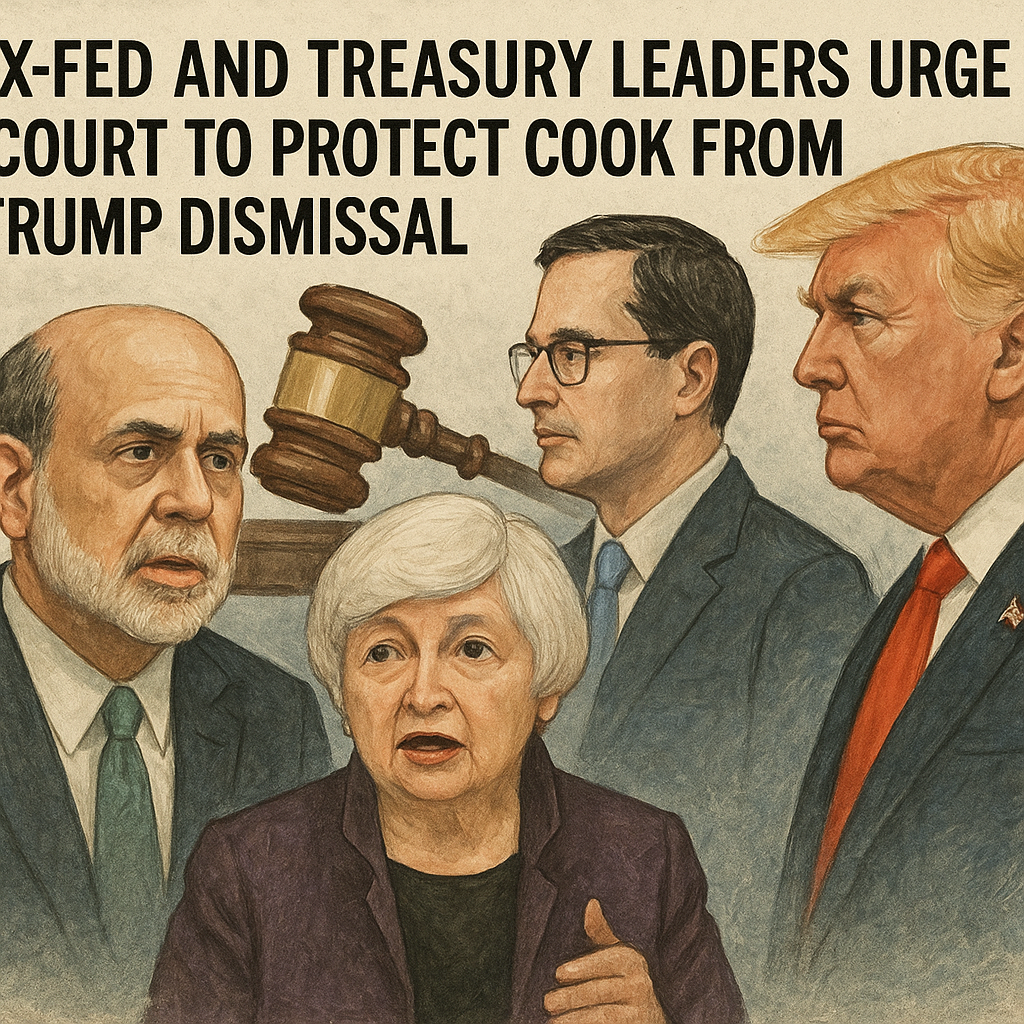
Ex-Fed and Treasury leaders urge court to protect Cook from Trump dismissal

Political leaders at a recent economic summit

In a dramatic twist that underscores the ongoing power struggles within U.S. financial governance, more than a dozen of the most influential economic policymakers from the past three decades have come together to urge the Supreme Court to uphold the tenure of Lisa Cook, a member of the Federal Reserve Board of Governors. Their collective stance is not merely an act of support for an individual appointment; it symbolizes a broader contest over authority, institutional influence, and the very direction of America’s economic future. As these veteran voices—comprising former Fed chairs and Treasury secretaries—align in their plea, the battle lines are drawn clearly, echoing historic conflicts between independence and political encroachment within central banking.

At the core of this dispute lies a fundamental question: who controls the levers of economic power in the United States? The Federal Reserve, often depicted as an elusive and autonomous institution, has long been the subject of politicization. Critics on the right condemn what they see as unchecked Federal Reserve activism, while supporters argue that its independence is vital for stability and effective policy. The controversy over Cook’s appointment—initially stymied by administrative delays—becomes a flashpoint illustrating the ongoing power struggle between the executive branch and the judiciary. The question remains whether the Court will respect the *constitutional independence* of the Fed or bow to political pressures seeking to influence monetary policy by other means.

This confrontation harks back to historical battles over the role of central banks and the political limits placed on their authority. Figures like **A. E. Carter** from the Federal Reserve’s founding era understood the importance of insulating monetary policy from short-term political whims—a lesson often overlooked when political ideologies threaten the autonomy of vital institutions. The current push to influence or remove Cook questions whether the judiciary is willing to serve as a guardian of this independence, or if it will become a pawns in a broader ideological struggle. The stakes extend beyond individual careers, directly impacting how policies are crafted—whether to favor free-market principles, regulators, or political elites seeking control over economic levers.

This dynamic also impacts the American people, who are caught in the crossfire of decisions made behind closed doors. To many, the idea that a small group—be it Congress, the judiciary, or a cabal of bureaucrats—can wield such profound influence over the economy challenges the very basis of popular sovereignty. As political theorists like **James Madison** warned, the separation of powers is designed to prevent any single faction from becoming a tyranny. Yet, in today’s climate, decision-making appears increasingly centralized, with powerful elites vying for control and shaping the destiny of millions. The fight over Cook’s position is more than a personnel matter; it is a decisive battle over how the future of economic governance will be written.

As history has shown, politics is the arena where destiny is forged. The latest power struggle within the U.S. financial system underscores that |the battle for authority is ultimately a fight for the soul of the nation|. Will the judiciary act as a bulwark protecting institutional independence, or capitulate to political expedience? The outcome will determine how boldly America’s institutions can stand against those who seek to manipulate them for short-term gains. And in the end, the destiny of the nation—its stability, greatness, and value—resides not just in the policies enacted, but in the battles fought for the very principle of who holds the power to shape the future.

Kimmel stands his ground with bold message to Trump, sending a clear call to the youth and values we hold dear

In the shifting currents of contemporary culture, the significance of art, media, and entertainment extends far beyond mere amusement; they stand as the living pulse of our collective identity. As Ortega y Gasset famously observed, “A society is always as strong as its cultural memory.” Today, figures like Jimmy Kimmel and Robert De Niro serve not only as entertainers but as voices in the ongoing dialogue about truth, freedom, and societal norms. Their confrontations with political figures and institutions highlight a profound truth: culture is both the mirror and the torch of society’s values. This culture—whether it lives in the nuances of late-night monologues or in the underlying principles of national discourse—remains an indelible part of our heritage and a prophecy of our future trajectory.

In recent weeks, Kimmel’s return to television amidst controversy exemplifies the deliberate effort to preserve the space for free speech—an enduring pillar of Western democracy. His refusal to entirely apologize for his comments about Charlie Kirk’s tragic death underscores a vital aspect of cultural resilience. As Chesterton once argued, “The true object of a joke is not to make you laugh, but to make you think.” His bold stance challenges the rising tide of censorship, which some critics argue is fueled by government or corporate interests, seeking to silence dissent under the guise of civility. Kimmel’s critique of the FCC, with humorous yet pointed sketches featuring Hollywood icon Robert De Niro, condemns the misuse of authority and mob tactics that threaten individual expression. This belligerent stand reveals that culture is not static but a battleground—where the preservation of tradition meets the demands of modernity, often at odds with each other.

  • Milestones in cultural battles: From Chesterton’s rallying cry for tradition to Eliot’s recognition of the poet as “the memory of mankind”.
  • Key themes: The importance of historical context, the defense of free speech, and the critical role of cultural icons in shaping societal values.
  • Contemporary reflection: Figures like Kimmel and De Niro epitomize the modern struggle—balancing entertainment, political commentary, and the defense of civil liberties.

Yet amidst these clashes, the essence of culture remains rooted in its dual role as memory and prophecy. It is a repository of our shared past—celebrating heroism, lamenting follies, preserving tradition—and a guidepost for the future, orienting society amid the chaos of change. As Tocqueville noted, “America’s strength lies not only in its institutions, but in the moral fabric woven by its culture.” Today, we stand at a crucial juncture: to uphold the values that forge our identity and prevent the erosion of our civil liberties. Culture, then, is the spiritual inheritance that roots us in history yet propels us towards our destiny. It is both the echo of humanity’s voice through the ages and the prophecy inscribed in the ideals we choose to defend. In this undying dialogue, humankind’s enduring hope rests—a hope that culture will always be both memory and prophecy, guiding us through darkness into the dawn.

Social Media Auto Publish Powered By : XYZScripts.com