Matox News

Truth Over Trends, always!

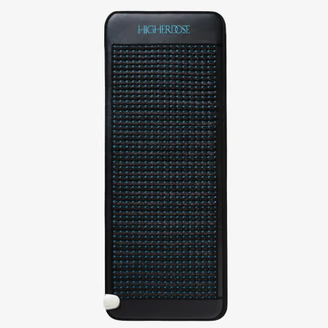
I Tested HigherDose’s $1,400 PEMF Mat for Relaxation—Dreams Turned Trippy, but Was It Worth It? | Health & Wellness

In an era where wellness is more than just a buzzword—it’s a lifestyle—technology is transforming how younger generations approach self-care. Once dominated by traditional routines like yoga and meditation, the emphasis now shifts toward innovative devices promising quick boosts to mood, sleep, and recovery. Companies such as HigherDose have carved out a niche in this movement, offering a range of high-tech products, from infrared mats to red light therapy hats, that claim to optimize our health at the cellular level. For a generation eager to harness the power of biohacking, these gadgets are marketed as gateways to a faster, more efficient wellness routine—requiring as little as 20 minutes a day.

But the modern health revolution isn’t solely about snap-on solutions; it embodies a broader mindset shift—a desire for empowerment and personal mastery over wellbeing. Influential voices like authors and wellness experts emphasize that authenticity and personalization are key. For instance, the allure of PEMF (Pulsed Electromagnetic Field) therapy, which claims to energize cells and promote pain relief, has garnered a youthful following. The portability and ease of use make such devices appealing, especially when integrated into busy lifestyle routines. These innovations have even been embraced by celebrities like Gwyneth Paltrow and Julianne Hough, further fueling the trend. While scientific validation remains mixed, the cultural call for proactive health investment resonates deeply—highlighting a collective desire to remain youthful, resilient, and in control.

  • Explore local wellness retreats featuring infrared saunas and holistic treatments.
  • Incorporate simple activities like stretching or mindful breathing to reinforce technological upgrades.
  • Stay informed with credible wellness literature, such as works by Dr. Magda Havas and other science-backed voices.

Yet, amid this shiny new toolkit of gadgets, the question remains: are these devices truly transformative or simply a modern twist on traditional relaxation practices? Personal impact varies, and some skeptics caution that many of these tools operate within the realm of the placebo effect. For example, the HigherDose infrared PEMF mat, touted for rapid cellular recovery, might deliver a calming warmth but lacks conclusive scientific evidence of widespread health benefits. As one user experimented through a week of nightly sessions, findings showed minor physiological changes—such as slight HRV (heart rate variability) bumps—yet nothing definitive. These experiences underscore the importance of approaching wellness tech as **complementary** rather than **curative**—a way to enhance an already healthy lifestyle, not replace it.

In the end, embracing lifestyle as a journey—not a destination—is what truly energizes the youthful spirit. The allure of these new devices reflects a desire for meaningful self-investment, grounded in personal experience and curiosity. Whether it’s a calming session on an infrared mat after a brutal run or simply reading in bed instead of scrolling through the latest health app—these small choices accumulate, shaping a resilient, engaged approach to life. As society continues to navigate the intersection between science and self-care, we are reminded that the most potent wellness tool is often the willingness to explore, question, and ultimately craft a lifestyle rooted in authenticity and purpose. After all, in this journey of health, each step—no matter how small—brings us closer to living with vitality and intention.
FAA greenlights new rule giving flight attendants more downtime — a win for crew wellness and fly crew freedom

Restoring Balance in the Skies: Flight Attendants’ Push for Better Rest

In a significant shift toward enhancing aircrew well-being and ensuring safer skies, federal aviation officials have announced a new regulation that mandates increased rest periods for flight attendants. The updated rules now require a 10-hour rest window between shifts, a notable increase from the previous nine-hour requirement. This change comes amidst growing concern over the intense fatigue and overwork faced by crew members, especially during a time when the aviation industry is rebounding from pandemic setbacks. As seasoned advocates like Sara Nelson, president of the Association of Flight Attendants-CWA, highlight, “It’s about time! As aviation’s first responders and last line of defense, it is critical that we are well rested and ready to perform our duties.” This statement underscores how crucial adequate rest is to both safety and operational efficiency, particularly in today’s fast-paced travel environment.

With increased demand following the easing of COVID-19 restrictions, flight crews have been under unprecedented pressure. Anecdotal reports describe crew members sprinting through airports after delays, trying to make tight connections—despite working shifts that stretch as long as 14 hours. Such demanding schedules, coupled with intense passenger interactions and the unpredictable nature of air travel, have only compounded fatigue levels and illness among crew members globally. The recent rule change is viewed in many circles as an overdue correction to an industry that has often prioritized efficiency over crew morale and safety. The new regulation, which was first approved by Congress in 2018 but delayed under the Trump administration, finally reflects a collective push from unions and safety advocates demanding regulatory reform.

Beyond the practical benefits for safety and health, this regulatory change resonates on a cultural level, emphasizing the importance of wellness and self-care in an industry often characterized by relentless schedules. As wellness experts like Dr. Andrew Weil and others argue, sustainable work habits—especially in high-stakes environments—are vital for professional longevity and personal health. The move also signals a broader shift in the modern lifestyle, where greater awareness of mental and physical well-being influences policy and corporate culture alike. For young professionals within the airline industry, the message is clear: safeguarding your health isn’t just about work-life balance anymore; it’s a fundamental component of your career resilience and overall quality of life.

  • Prioritize quality sleep during rest periods to rejuvenate both body and mind.
  • Stay informed and actively participate in union or industry discussions to advocate for better conditions.
  • Embrace wellness routines that include stretching, hydration, and mental decompression, especially after long shifts.

As aviation executives and unions navigate these new regulations, the hope is that a renewed focus on crew welfare will foster a more sustainable working environment. For the young, ambitious traveler and professional alike, this development reminds us that progress often begins with recognizing the importance of balance and self-care. The journey of a lifestyle is not merely about reaching destinations but about embracing the experiences that nourish us along the way. In a world that is increasingly driven by relentless progress and innovation, the steady pursuit of well-being becomes an inspiring testament to the resilience of the human spirit—a reminder that sometimes, the most courageous act is to prioritize oneself amid the demands of modern life.

Scientists Unveil First Reliable Blood Test for Chronic Fatigue Syndrome—A Win for Society and Youth Wellness

In a significant development that could reshape the landscape of healthcare and social support for families affected by chronic illness, scientists have announced the creation of what may become the world’s first reliable blood test for myalgic encephalomyelitis, commonly known as chronic fatigue syndrome (ME/CFS). For decades, this debilitating condition has eluded objective diagnosis, leaving millions of Americans and Europeans to navigate a maze of symptoms that often lead to misdiagnosis or outright dismissiveness from medical authorities. The absence of concrete tests has profound consequences, not only for patients’ physical health but also for their families and communities, who often bear the emotional and financial burden of a misunderstood illness.

Social commentators and medical professionals have long pointed out that the absence of definitive testing contributes to a damaging societal neglect of ME/CFS sufferers. Many individuals told their symptoms are “all in their head,” a dismissive attitude that can cause isolation and despair. The potential development of a blood test to identify ME/CFS offers a promising avenue for early diagnosis and intervention, which could dramatically alter the trajectory of affected lives. As noted by Prof Dmitry Pshezhetskiy of University of East Anglia, this discovery holds the promise of transforming how this complex disease is diagnosed and managed, providing relief to countless young people, working adults, and families who have suffered in silence for years.

Nevertheless, the path from promising scientific discovery to practical application remains fraught with hurdles. Experts such as Dr. Charles Shepherd of the ME Association urge caution, emphasizing that the *sensitivity* and *specificity* of the test must be rigorously validated across diverse populations and disease stages. Concerns over premature claims echo through the scientific community, highlighting the importance of cautious optimism. Nonetheless, sociologists and health advocates underscore that breakthroughs like this have the potential to reinstate hope and dignity among those marginalized by inadequate healthcare systems. The societal challenge lies not only in developing tests but also in ensuring equitable access, especially for working-class communities who often suffer disproportionately from systemic neglect.

The social fabric of society, particularly in youthful populations, is increasingly shaped by these ongoing struggles. As education institutions grapple with integrating comprehensive health curricula and fostering understanding of invisible illnesses, families stand at the frontline of societal resilience. The societal emphasis on technological progress and scientific validation must go hand in hand with addressing the moral imperative of supporting the most vulnerable. This challenge invokes historical debates about the moral responsibilities of society—should we be content with the hope generated by a new test, or push for it to be swiftly integrated into clinics, so that the promise does not become a disappointment?

Ultimately, the story of this scientific breakthrough is a poignant reflection of society’s ongoing struggle to reconcile technological innovation with ethical responsibility. It echoes a broader societal challenge: how to ensure that justice, compassion, and equity are woven into the fabric of health care, education, and community support. As history teaches us, the true strength of a society emerges in how it lifts up those marginalized by invisible burdens, transforming scientific hope into tangible, everyday relief. In this moment of potential progress, society faces a choice—continue to chase the mirage of perfect solutions, or unite to create a future where no one is left behind in the shadows of misunderstanding. The hope for this new blood test is not just for early diagnosis, but for a society that finally recognizes and responds to the silent suffering among us, with unwavering resolve and compassionate action.

Social Media Auto Publish Powered By : XYZScripts.com



