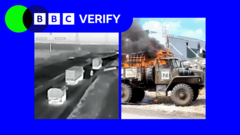
Kyiv has escalated its operational tactics against Russian forces, deploying sophisticated AI-enabled drones to systematically target critical supply convoys. This strategic shift aims to sever the logistical lifelines sustaining Moscow’s military efforts in occupied Ukrainian territories, signaling a new phase in the ongoing conflict.
Analysis from BBC Verify has confirmed at least 14 incidents within the past week where vehicles transporting essential supplies—ammunition, fuel, and food—were successfully struck. These attacks occurred along vital routes connecting Russia to Crimea and other southern Ukrainian territories under occupation, underscoring a deliberate strategy to undermine Russian operational capacity.
The Strategic Shift in Logistics Warfare
Ukraine’s defense minister, Mykhailo Fedorov, articulated this approach as a “logistics lockdown.” The objective is clear: to “increase pressure on the Russian military in the rear and deny the enemy the ability to conduct sustained offensive operations.” This strategy represents a focused effort to degrade Russia’s ability to maintain its frontline presence and offensive momentum.
The targets of these drone strikes are not random; they are integral to Russia’s war effort:
- Ammunition trucks: Disrupting the flow of ordnance directly impacts combat readiness.
- Fuel tankers: Essential for vehicle movement, air operations, and power generation.
- Food supplies: Critical for troop morale and sustained operations, especially in isolated areas.
By targeting these convoys, Ukraine seeks to create a cumulative effect of attrition, making it increasingly difficult for Russian forces to resupply and reinforce their positions.
Advancements in Drone Technology
Experts point to recent advancements in drone technology as the catalyst for this intensified campaign. Systems like the AI-enabled Hornet are reportedly allowing Ukrainian forces to engage Russian targets at greater distances and with enhanced accuracy. This technological edge is proving crucial in a conflict characterized by entrenched positions and a long, contested front line.
The ability to deploy drones that can identify, track, and strike targets autonomously or with minimal human intervention significantly boosts their effectiveness. It reduces risk to Ukrainian personnel and expands the operational reach against Russian logistics hubs and transport networks deep within occupied territory.
“Ukraine’s ‘logistics lockdown’ strategy aims to increase pressure on the Russian military in the rear and deny the enemy the ability to conduct sustained offensive operations.”
Impact on the Battlefield Dynamics
For the first time since 2023, Ukraine is showing signs of regaining more ground than it is losing, according to analysis from the Institute for the Study of War (ISW). While neither side has achieved significant territorial gains in recent months, the ability to consistently disrupt Russian supply lines could be a decisive factor in shifting the battlefield dynamics.
The effectiveness of these drone attacks directly correlates with Russia’s capacity to maintain its occupation. A weakened supply chain impedes troop rotations, equipment maintenance, and the overall sustainability of offensive actions. This sustained pressure on logistics could force Russia to divert resources to protection and repair, further straining its military capabilities.
Looking Ahead
The strategic deployment of advanced drone technology by Ukraine underscores the evolving nature of modern warfare. This focused campaign to disrupt Russian supply lines represents a significant effort to shift the balance of power on the battlefield. As Kyiv continues to leverage technological innovation, the pressure on Moscow’s logistical infrastructure is set to intensify, potentially paving the way for further operational successes and a more stable future for the region.