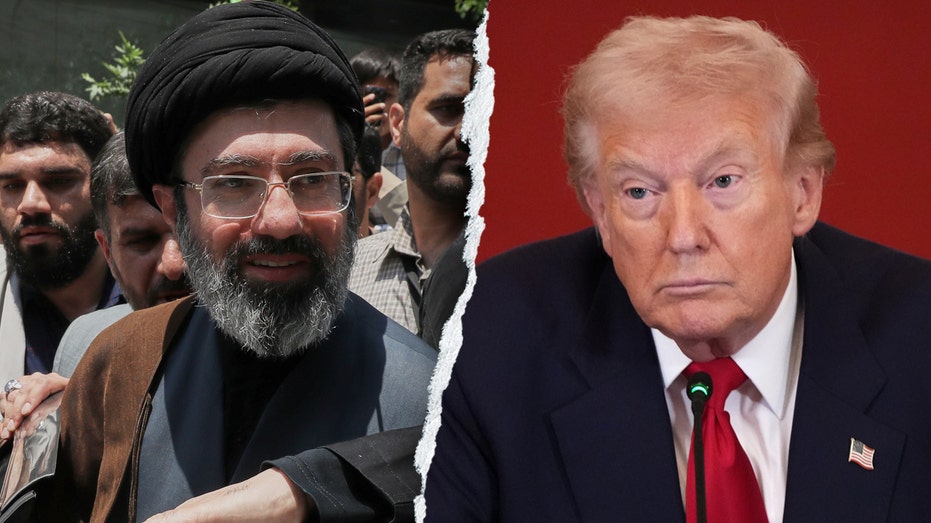
The United States finds itself in an unprecedented and complex diplomatic situation, reportedly negotiating a crucial accord with Iran’s Supreme Leader, Mojtaba Khamenei, who remains a designated target and operates entirely through a clandestine courier system. This highly unusual arrangement raises profound concerns for counterterrorism experts regarding the transparency and enforceability of any potential deal.
Reports indicate that any final agreement would require approval from Khamenei, delivered via his secretive network. This setup, described by experts as an ‘invisible counterparty,’ suggests Washington is navigating a high-stakes accord with a leader who cannot publicly show his face, fundamentally altering traditional diplomatic engagement.
The Unseen Counterparty in High-Stakes Diplomacy
Counterterrorism experts highlight the extraordinary nature of these negotiations. Dr. Omar Mohammed, a director at George Washington University’s Program on Extremism, emphasized to Fox News Digital that Khamenei’s reliance on couriers is not a temporary measure but the fundamental ‘operating system of his rule.’ This means the U.S. is not dealing with a transitional phase but a deeply entrenched system of secrecy.
The implications are far-reaching. Conventional arms control or diplomatic agreements typically rely on public accountability and direct engagement with recognized state actors. When the primary decision-maker remains hidden, the mechanisms for verification and enforcement become inherently more complex and vulnerable to opacity.
Operational Secrecy and Inherent Risks
For experts like Dr. Mohammed, the fact that Khamenei is a ‘designated target’ means that every confirmed sighting of him constitutes a military coordinate. This status necessitates his continued anonymity and reliance on a robust, secretive infrastructure. The challenge for any U.S. administration is crafting a deal that can be effectively managed and enforced with a leader whose very survival depends on remaining out of public view.
This situation transforms the nature of international agreements, moving them away from standard state-to-state relations into a realm of covert diplomacy with a leader who holds immense power but operates outside conventional visibility. The stability and integrity of such an agreement are therefore inextricably linked to the continued, unseen survival of its principal signatory.
“Any deal the United States signs will have to be designed for a permanently invisible counterparty whose enforcement depends on his continued survival.”
Diplomatic Delays and Covert Communications
Recent comments by Secretary of State Marco Rubio have inadvertently shed light on the operational challenges. Rubio, explaining delays in the deal, noted that it ‘takes the Iranians — takes them a little while longer to get back’ with responses. Dr. Mohammed interpreted Rubio’s statement as an on-the-record confirmation of the ‘courier latency’ inherent in negotiating with an unreachable supreme leader.
This latency is not merely a bureaucratic hurdle but a structural feature of engaging with a regime whose ultimate authority resides with an individual cloaked in secrecy. It underscores the profound difficulties in establishing trust, verifying intentions, and ensuring compliance when the counterparty is fundamentally inaccessible and operates through layers of covert communication.
The current diplomatic efforts represent a unique challenge to established international norms. Negotiating with an ‘invisible’ leader who is a designated target introduces unprecedented layers of complexity and risk, demanding careful consideration of long-term stability and enforceability for any resulting agreement.