Matox News

Truth Over Trends, always!

Police Label North London Stabbing as Terror Attack Amid Rising Threats

In an era overshadowed by rising global extremism, the recent events unfolding in London signal a disturbing trend that extends beyond national borders—highlighting the fragility of security and societal cohesion amidst a backdrop of international tensions. The swift declaration by local police governing the stabbing incident in Golders Green as a terrorist incident marks a critical turning point, compelling nations worldwide to reevaluate their responses to internal threats sharpened by external propaganda and geopolitical conflicts.

As authorities investigate whether the attack was deliberately targeting the Jewish community, the incident underscores the dangerous intersection of domestic extremist ideologies and the broader turbulence fomented by hostile state actors. The suspect, a 45-year-old man with a troubling history of violence and mental health issues, was swiftly apprehended after assaults on police officers and civilians, demonstrating the increasing boldness of radicalized individuals. UK officials, including the Metropolitan Police, are probing whether the attacker was influenced by terrorist propaganda from groups like Islamic State and al-Qaeda, which have recently called for attacks against Jewish targets. Analysts suggest that such attacks are often instigated or facilitated by proxy networks aligned with Iran, aiming to destabilize Western nations by igniting sectarian conflicts through orchestrated acts of violence.

The geopolitical impact of this incident is multifaceted. International organizations, such as the United Nations, have long warned of a surging tide of antisemitism, exacerbated by state-sponsored disinformation campaigns and extremism fed by regional conflicts in the Middle East. The Israeli government, with President Isaac Herzog expressing his “horrification” over yet another attack, emphasizes that these acts are part of a larger pattern of hate that crosses borders and threatens global peace. The UK’s response—calling a Cobra meeting and increasing police presence—reflects a strategic effort to prevent further escalation. Historically, such incidents have served as stark reminders of how interconnected local violence and global politics truly are, often presaging wider conflicts or shifts in diplomatic stances, especially when nations fail to address root causes of radicalization.

The decision to treat the attack as terrorism and the subsequent investigation into ideological motives reveal the importance of international cooperation in counter-terrorism efforts. Security experts warn that the rise in hate crimes like this in London is directly linked to weakening civil society debate, which allows hateful narratives to flourish. As the police and security agencies mobilize to contain the threat, international allies are urging the UK to “act decisively and urgently”—a message echoed by the Israeli foreign ministry. The incident exemplifies how internal societal divisions—often exploited by hostile actors—can threaten the social fabric of democratic nations, emphasizing that the fight against terrorism is as much about ideological resilience as it is about tactical policing.

In the shadows of these events, a deeper importance emerges: the unfolding narrative of a world where alliances are continually tested, and the defining lines of liberty, security, and sovereignty are being redrawn. As London grapples with these acts of terror, history continues to write itself—reminding us that today’s response will shape tomorrow’s geopolitical landscape. For while the movement of nations might seem like a relentless tide, it is ultimately the choices of societies—once perceived as resilient—that will determine whether these dark days forge a stronger, more vigilant civilization or plunge the world further into chaos.

Hot Deal for Power on the Go: Score 50% Off the DJI Power 1000 Portable Station!

The Rise of Portable Power Stations: Fueling the Next Generation of Outdoor Enthusiasts

In a landscape where adventure and technology are increasingly intertwined, a new trend has emerged that is capturing the attention of young, socially conscious consumers: portable power stations. These compact yet mighty devices are revolutionizing how outdoor enthusiasts, hobbyists, and even remote workers stay connected and powered up, regardless of location. Thanks to brands like DJI, which recently slashed its flagship Power 1000 portable power station from $699 to $350—offering a 50% discount—this movement is gaining momentum fast.

What makes these power stations more than just a gadget is their cultural impact on lifestyle. In an era where urban living and remote work blur traditional boundaries, the desire for autonomy and resilience influences consumer behavior. Influencers like outdoor adventurers and tech enthusiasts champion these devices as essential tools that balance convenience with sustainability. The DJI Power 1000, with its 2200W max output, supports everything from camping gear and power tools to smartphones and laptops. Its ability to recharge in just 70 minutes or harness solar power—taking only 1.35 hours to reach a full charge—embodies a shift towards eco-conscious, self-sufficient living.

Social analysts and sociologists point out that this surge in portable power technology aligns with a broader societal shift towards multisensory experiences. As younger generations spend more time exploring the outdoors while staying digitally connected, they are redefining the boundaries of what it means to enjoy lifestyle trends. The fact that these devices are whisper-quiet, highly efficient, and built for longevity—boasting up to 4,000 cycles—positions them as symbols of long-term sustainability. These trends reflect an embedded desire for self-reliance that is embedded into youth culture, with influencers and trendsetters emphasizing that embracing technology isn’t a compromise but a new form of freedom.

  • Supporting off-grid living and outdoor adventures
  • Facilitating remote work from scenic locations
  • Encouraging sustainable energy solutions like solar charging
  • Fostering a community of tech-savvy explorers

As this trend accelerates, a next big question looms: Will portable power stations become an essential part of the digital nomad lifestyle, or will they remain a niche luxury? The answer hinges on how society’s perception of mobility and independence evolves. With brands like DJI and others making these devices more accessible—especially during major sales—it’s clear that the cultural landscape is shifting. These devices are no longer just tools; they’re symbols of a **future where technology fuels freedom, anywhere and anytime**. The challenge ahead is whether the societal understanding of sustainable independence can keep pace with the rapidly expanding capabilities of these portable power solutions. As we teeter on the edge of this electrifying frontier, one thing is certain: the true power game has just begun.

Finally hitting the shelves: Our top-rated ultra-light cast-iron pan—durable, stylish, and ready to elevate your kitchen game—on sale now!

In a world where consumerism often encourages relentless innovation and disposable habits, a counter-movement is quietly reshaping the way younger generations approach lifestyle and wellness. At the heart of this shift is an emphasis on **buying fewer, better things**—an ethos championed by influencers, wellness experts, and cultural icons alike. **The pursuit of _mindful consumption_** connects deeply with an emerging _lifestyle philosophy_ that champions durability, quality, and personal impact over fleeting trends. Amid this landscape, brands like Field Company are exemplifying these values, offering heirloom-quality cookware that appeals to both practicality and purpose.

By prioritizing **heirloom craftsmanship** and _mindful design_, the modern youth is redefining what it means to invest in life’s essentials. Consider the case of the No 5 Chef Skillet, a cast-iron marvel that recently received rave reviews for how it “fixed everything I hated about cast iron.” This pan is a testament to the _wellness shift_—light enough at just 2.2lbs to flip breakfast with one hand, yet durable enough to last generations. As wellness advocates like Dr. Mark Hyman and Marie Kondo emphasize, _choosing quality over quantity_ not only enhances health through better cooking experiences but also encourages a **cultural recalibration** toward **sustainable, lasting** possessions. The recent Mother’s Day sale—offering 15% off sitewide with code MOM15 until May 3—embodies this _miniature revolution_, making it accessible to those ready to embrace _the art of owning less but better_.

Beyond cookware, this _lifestyle_ trend seamlessly extends into **travel, leisure, and personal growth**, with dynamic young audiences seeking _authentic_ experiences and _well-being_ that emphasizes _quality_. Travel tips for the aspirational include exploring **local hidden gems** rather than chasing overhyped destinations, and investing in _wellness retreats_ that prioritize _mindfulness_ and *intentionality*. Meanwhile, brands that foster _long-term value_ resonate more deeply, encouraging the **cultivation of skills, passions, and connections** that provide lasting satisfaction. From a cultural perspective, thinkers like Ralph Waldo Emerson and contemporary authors such as Courtney Carver advocate for _simplicity_ as the **ultimate sophistication**, framing _lifestyle shifts_ not just as fashion but as a vital **path to personal fulfillment.**

Ultimately, the _journey to embracing this lifestyle_ mirrors a broader societal movement towards _resilience_ and _self-reliance_—a conscious effort to **invest in what truly matters**. Whether it’s a heirloom skillet that will outlast generations or the deliberate choice to pursue _wellness_ through quality over quantity, this _mindful approach_ encourages young people to see lifestyle as a **journey of self-discovery**, purpose, and _lasting impact_. Such a perspective invites reflection: as we shape our habits and possessions, we weave a narrative not just of _luxury_, but of _meaning_—a testament to the idea that in the end, **living well** is less about _acquiring_ and more about _embodying_ what nourishes both the body and soul.

  • Reflect on your possessions—are they _serving_ your well-being or just filling space?
  • Prioritize _quality_ in your investments, whether in cookware, fashion, or experiences.
  • Seek _authentic_ adventures and _wellness_ practices that foster _mindfulness_ and _growth_.

As the _lifestyle revolution_ continues to gain momentum, the message is clear: **ownership of fewer, better things** is not just a trend but a path toward _greater_ _personal impact_, _wellness_, and _purpose_. Each choice, each purchase, becomes part of a narrative—an inspiring journey that champions resilience, authenticity, and an enduring commitment to _living intentionally_. The future belongs to those who see every moment as an opportunity to _cultivate_ meaning, reminding us that _living well_ is, undeniably, an ongoing **adventure of intention**.

Arctic Monkeys’ Defiant Youth: How Resistance Fueled Their Rise to Fame

In the early 2000s, the city of Sheffield emerged as a crucible for a rebellious yet deeply rooted musical movement that challenged the sterile conformity of mainstream Western culture. It was an era marked by vernacular authenticity and a shared longing for something genuine—a counterpoint to the hollow gloss of globalized pop. Oasis’s definitiveRock ‘n’ Roll ethos, which once celebrated the grit and grit of working-class Britain, found a new extension in Sheffield’s scene where local bands, fueled by raw talent and an unyielding spirit, sought to redefine identity through sound. The emergence of Arctic Monkeys and their compatriots encapsulated a cultural renaissance where the tradition of regional pride and musical innovation coalesced into a movement that was at once insular and universally resonant.

Central to this phenomenon was a keen sense that culture functions as more than mere entertainment; it forms the very backbone of societal identity. As Ortega y Gasset observed, a society’s cultural expression is the act through which it affirms its unique existence against a homogenizing world. Sheffield’s young musicians, operating in basement gigs, sweaty clubs, and red-brick venues like The Boardwalk, exemplified this principle. Their art was an act of cultural defiance, deliberately rejecting the overearnestness and pretensions of traditional indie stereotypes by the band Long Blondes, who openly mocked the superficiality lurking within the scene. The irreverent, mischievous attitude of bands like Milburn echoed G.K. Chesterton’s notion of progressive tradition: it was not an abandonment of the old, but a deliberate reimagining—an invitation to renewal rooted in the rugged landscapes of Sheffield’s working-class pride.

What makes this story relevant today is the realization that cultural memory is intimately linked to the prophecy of future identity. The bands’ shared history—marked by fierce regional rivalry, familial bonds, and a collective shrug at industry pressures—created a cultural compact that transcends superficial fame. Turner’s lyrical improvisations, influenced by the raw energy of the John Cooper Clarke school, serve as a testament to the power of culture as a language of resistance. Even amidst waves of superficial hype—exploited by music managers who sought to harness the scene—these bands maintained an authenticity that is, perhaps, more precious than fame itself. This speaks to T.S. Eliot’s assertion that the ultimate role of tradition is to be “the memory of humanity,” and the prophecy that guides us toward a future where spirit and culture remain intertwined.

In this narrative of Sheffield’s musical awakening lies a reminder: culture is both memory and prophecy. It is the echo of ancestors who dared to forge new paths, and the whisper of generations yet to come—carrying in their hearts the enduring belief that human creativity, when rooted in authenticity, becomes the greatest act of rebellion and renewal. As we look to the past, we do so with the hope that tomorrow’s culture will continue to honor its sacred commitment to identity, tradition, and the eternal quest for meaning—a journey woven through the very fabric of our shared legacy, a story whispered by the wind, echoing into eternity, awaiting its next chapter in the unfolding poetry of human existence.

Top Walking Pads for WFH in 2026: Stay Productive on Your Feet

Disruption in Personal Fitness: The Rise of Intelligent Walking Pads Transforming the Active Lifestyle Market

In a landscape where work-from-home culture continues to dominate, personal fitness technology is experiencing unprecedented innovation. Leading the charge are brands like Urevo and Sperax, which are disrupting traditional gym equipment with compact, multifunctional walking pads that seamlessly integrate into daily routines. The market shift towards lightweight, space-saving fitness solutions is driven by consumer demand for convenience and multifunctionality. Industry analysts from Gartner and MIT underscore how these devices are not merely exercise tools but are becoming essential components of modern productivity and wellness ecosystems, threatening to overhaul the entire health tech sector.

The Urevo CyberPad, for example, exemplifies this innovation with some impressive features: a 14 percent incline capability, Bluetooth control, and the ability to log workout data via a dedicated app. Kristin Canning of WIRED praises its durability, ease of setup, and the inclusion of a control interface compatible with a smartphone app. These features allow users to get a vigorous workout while maintaining productivity—an essential trait in today’s sedentary workplace environment. Moreover, the incorporation of smart technology paves the way for disruption in health data management, transforming these pads from simple mechanical devices to data-driven health companions. The business implications are significant, with companies positioning themselves at the forefront of healthier, more active lifestyles tailored for remote workers.

Meanwhile, the Sperax Walking Pad enters the market as a compelling budget option. Weighing just 27 pounds, it captures the attention of budget-conscious consumers and those with limited space, offering features such as a built-in vibration mode and straightforward assembly. While some critics highlight its noise levels and modest app functionality, its overall affordability—priced around $280—makes it a game-changer for mass market adoption. As noted by industry insiders and Reddit enthusiasts, its portability and ability to be stored under furniture exemplify the industry’s push for ultra-compact, multi-use fitness devices.

The significance of these innovations extends beyond individual fitness. Industry leaders and market analysts anticipate a wave of disruption in health, wellness, and workspace design, as these devices integrate with emerging IoT ecosystems. Tech magnates like Elon Musk and Peter Thiel are increasingly investing in AI-powered health and wellness startups, which signal a broader industry movement towards wearable and embedded health solutions. As businesses recognize the potential for health data-driven insights and personalized wellness plans, the market will see further investment in smart, adaptive fitness hardware—setting a new standard in personalized health technology.

This wave of innovation demands urgent attention. As the boundaries between work, fitness, and health technology blur, the next two to five years could redefine how society approaches physical activity. Companies that fail to adapt risk obsolescence in favor of more disruptive market entrants who harness AI, IoT, and user-centered design. For investors and consumers alike, the emerging landscape presents a binary choice: embrace the disruption or be left behind. The future favors those who understand the need for rapid adaptation, viewing these devices as leverage points in the broader mission of augmenting human productivity and health in an increasingly digital world.

Mugabe’s Son Faces Deportation from South Africa Over Firearm Charge

In a development that has captured the attention of international observers, a 28-year-old individual was detained in February following a violent incident at a residential property in Johannesburg. The incident, involving a man being shot at his residence, underscores the persistent challenges faced by many nations in maintaining internal security amidst rising tensions and social unrest. Though domestic in origin, such events ripple beyond local borders, igniting concerns about regional stability and the effectiveness of law enforcement agencies in confronting violence.

The arrest comes at a delicate moment when South Africa is grappling with economic turmoil and escalating societal unrest. Experts from international organizations have noted that violence and instability in emerging markets like South Africa threaten broader geopolitical stability. Analysts argue that such incidents reveal deeper issues related to organized crime, political discontent, and social inequalities. As the situation unfolds, the international community watches closely, emphasizing the need for comprehensive reform and strengthened law enforcement to prevent further breakdowns in civil order.

Historian and geopolitical analyst Dr. Margaret Owens has emphasized the broader geostrategic implications of internal violence in developing nations. “The stability of countries like South Africa is pivotal in shaping regional alliances and economic corridors,” she explained.
Furthermore, the United Nations has reiterated its stance that internal security and social cohesion are critical to regional stability, urging local governments to implement sustainable peacebuilding strategies. Current events demonstrate that failures to address internal grievances can serve as catalysts for external pressures, affecting trade, diplomatic relations, and investment flows across the continent.

As investigations proceed, questions about the motivations behind the shooting and the individual’s background remain at the forefront. This incident could serve as a turning point, highlighting the urgent need for reforms that address socioeconomic disparities, improve law enforcement accountability, and mitigate the influence of criminal networks. Ultimately, the arrest underscores how local acts of violence can have far-reaching consequences, threatening to destabilize the fragile balance of regional power and echo through the corridors of international diplomacy.
The unfolding narrative in Johannesburg is a stark reminder: the course of history is never fixed, and the decisions made today—whether rooted in justice or neglect—will shape the future of millions, as Nigeria, Brazil, and India watch closely, aware that the next chapter remains unwritten, and that stability remains a delicate, fleeting gift in an ever-turbulent world.

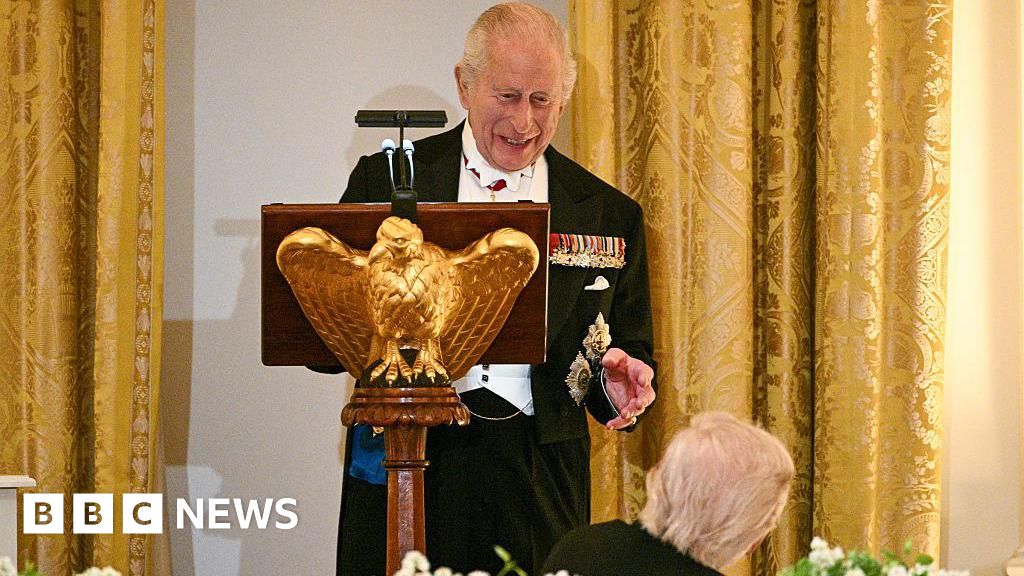
King Charles III and Donald Trump crack jokes during speeches, sparking attention among young conservatives

The recent state visit of King Charles III to the United States, marked by camaraderie and diplomatic banter, has cast a spotlight on the evolving landscape of international relations. During a high-profile banquet, President Donald Trump publicly lauded the King for rallying the Democrats to stand—a move that analysts view as a symbol of shifting transatlantic alignments. The exchange of jokes, notably the Queen’s jokes about the Middle East crisis and a humorous remark about France, underscored a lighter diplomatic tone but masked underlying geopolitical realities that threaten to reshape alliances and power balances.

In his speech, King Charles took the opportunity to make pointed quips about the current global unrest, including references to the Middle East crisis—a conflict that remains unresolved and is a focal point of international instability. Historians and crisis analysts warn that such conflicts are, in reality, catalysts for further upheaval that could destabilize entire regions and challenge Western interests. Meanwhile, the British monarch’s jest about Britain’s colonial history—”if it wasn’t for us, you’d be speaking French”—serves as a timely reminder of Britain’s imperial past and its ongoing influence, however diminished, in shaping global narratives and alliances.

The geopolitical impact of the visit extends beyond diplomatic exchanges. Decisions made in these high-profile moments influence social perceptions and international policy pathways. As international organizations and foreign policy experts debate these developments, a consensus emerges: the future of global power is increasingly multipolar. The U.S. and UK reflect a strategic dance—balancing tradition with emerging realities. Key events like this visit stoke new tensions, encouraging rival powers like China and Russia to reassert their influence, further complicating the geopolitical chessboard.

Many analysts warn that these diplomatic gestures are but the surface of a much more tumultuous undercurrent. As history shows, moments of friendly banter among leaders often precede significant shifts in policy or alliances. The alliances formed and broken today could dictate the global order for generations to come. This is a critical juncture—an era where decisions echo in the corridors of power and in the streets of nations. The weight of history is on the line, with the world watching as the narrative continues to unfold—an epic of shifting borders, competing visions, and the relentless pursuit of influence.

Endangered Antelopes Return to Kenya from Czech Zoo in Historic Homecoming

Amidst the rugged terrains of Kenya, a true icon of biodiversity teeters on the brink of extinction. The mountain bongo, a rare antelope endemic to Kenyan highland forests, now numbers fewer than 100 individuals in the wild—an alarming indicator of escalating environmental pressures and inadequate conservation efforts. This critically endangered species symbolizes broader ecological vulnerabilities that threaten not just Kenya but impacting regional biodiversity and global ecological stability. Conservationists, governmental agencies, and international organizations continue to grapple with the pressing need for sustained efforts to save this species before it vanishes entirely.

The decline of the mountain bongo illustrates a complex interplay of human activity, habitat degradation, and insufficient enforcement of protected areas. As Kenya faces rapid population growth and expanding agricultural frontiers, vital highland forest habitats are increasingly under threat. Historically, experts like Dr. James Carter, a leading ecologist, have warned that without aggressive intervention, keystone species such as the mountain bongo could disappear, disrupting ecological balances in the region. Global organizations like UNEP and WWF emphasize that saving the mountain bongo requires international collaboration—particularly in addressing emergent threats such as poaching and climate change, which compound habitat loss.

International attention has shifted towards innovative conservation initiatives.

  • In 2022, Kenya established a series of protected corridors aimed at reconnecting fragmented habitats and ensuring genetic diversity for the remaining population.
  • Islamic conservation groups have launched funding campaigns prioritizing the species’ survival, acknowledging its symbolic value as Kenya’s natural heritage.
  • Scientists are exploring captive breeding programs, yet experts maintain that reversing habitat loss remains critical to sustainable recovery.

Meanwhile, analysis by geopolitical observers highlights how conservation challenges often interact with regional stability. Border disputes, land-grabbing, and economic development programs tend to marginalize environmental priorities, exacerbating species decline. The fate of the mountain bongo is thus entwined with broader geopolitical currents that impact regional policy, resource allocation, and social stability.

As the world witnesses a crescendo of environmental crises, the story of the mountain bongo serves as a somber reminder of how fragile our ecological heritage truly is. Historians continue to debate whether humanity’s surge into resource exploitation represents progress or a reckless abandonment of stewardship. The parameters of international responsibility are being tested as nations grapple with the potential loss of unique biodiversity—an irreplaceable component of Earth’s natural tapestry. In the shadow of dwindling populations and fading ecosystems, the question remains: will decisive global action come in time, or will this remarkable creature become a silent victim of mankind’s neglect—another chapter in the tragic saga of extinction?

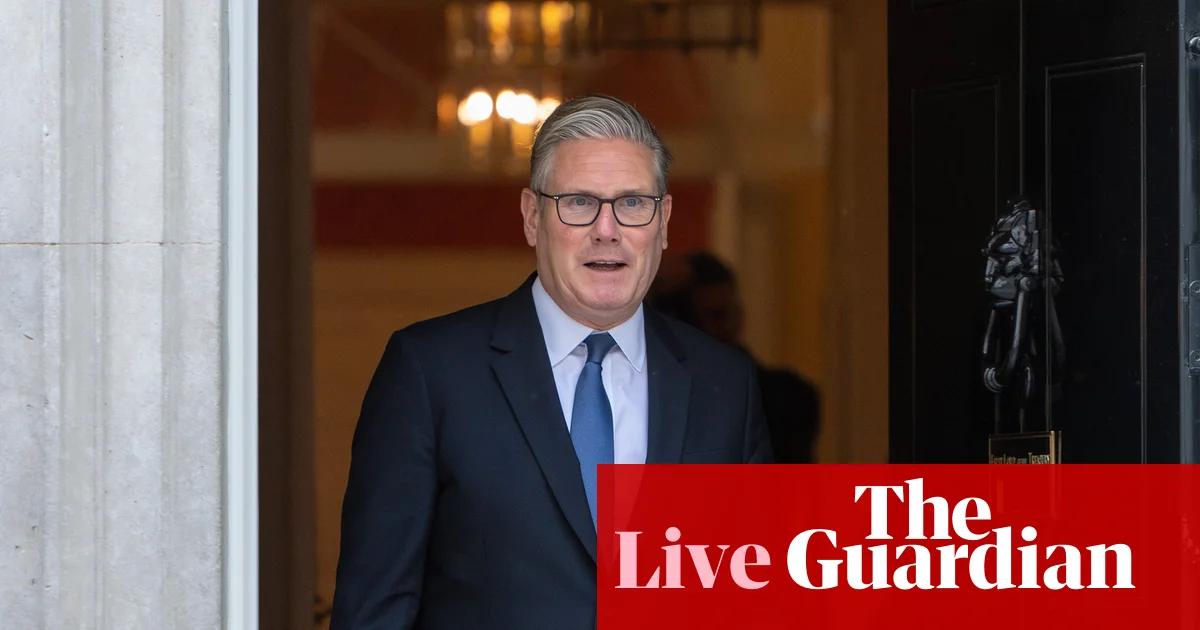
Minister brushes off Labour rebels as “usual troublemakers”; Starmer readies for last PMQs of the session — UK politics update

Global Power Dynamics Face Unprecedented Strain Amid Shifting Alliances

As Europe and North America grapple with internal political turbulence, the geopolitical landscape outside the Western Hemisphere is undergoing a profound transformation. A recent international realignment is accelerating, driven by strategic, economic, and ideological shifts. Major powers are reevaluating alliances, with China & Russia consolidating influence in Asia, Africa, and Latin America, challenging the long-standing dominance of the United States and its European partners. Analysts warn that recent votes and decisions in national parliaments—such as those seen in the UK—are mere microcosms of a broader upheaval, where traditional geopolitical lines are being redrawn at an alarming pace.

Historian and international observers assert that the current wave of political shifts signals *the beginning of a new multipolar era*. The recent events in the UK Parliament, where the opposition leader Keir Starmer faced off against his critics, underscore a global pattern: nations are increasingly polarized within their own borders, yet connected in a web of international crises and competitions. For instance, the UK’s internal political debate—centered on issues like parliamentary privilege and rebel MPs—reflects the fractured state of established governance models. Such fragmentation signals to seasoned analysts that the political status quo is under siege, making the geopolitical impact even more fraught.

The core of this upheaval lies in a series of critical international decisions and agreements that will shape the prospects of individual nations and societies for decades.

  • An escalation of economic sanctions, mainly targeting Russia and China, which has ripple effects across the global markets, affecting energy supplies and trade routes.
  • The reshaping of military alliances, with NATO redefining its strategic priorities amidst growing tensions in Eastern Europe, and China aggressively expanding its military footprint in the South China Sea.
  • The emergence of new spheres of influence in Africa, where rising Chinese investments are often viewed as neo-colonial encroachments, prompting a countermove by Western powers trying to safeguard their interests.

Like many international commentators and policy experts warn, these developments do not merely shift the balance of power; they threaten to redefine societal structures globally. Lessons from past eras suggest that such crises often deepen societal divides, fuel nationalist movements, and undermine democratic institutions—risks fiercely warned against by historians, who see echoes of the interwar period. As the United States faces its own internal struggles, including political rebellions and debates over constitutional norms, the international community finds itself at a pivotal crossroads. Decisions made in the coming months will determine whether the world descends into chaos or establishes a new equilibrium of power and influence.

Indeed, history’s pen is poised to record whether this epoch will be remembered as the moment when the old order crumbled, or as the dawn of a resilient new chapter. As nations quietly plot, forge, and fracture alliances in the shadows of geopolitical chaos, the weight of international destiny presses heavily on every decision. The landscape is shifting beneath our feet, and the chapters yet unwritten carry the promise—and peril—of a future still fiercely contested by the currents of history itself.

Study suggests racial stress may be fueling higher maternal death rates among Black women

Recent scholarly research sheds light on a troubling yet often overlooked reality: the pervasive impact of systemic racism and socioeconomic disparities on maternal health outcomes among Black women. Analyzing 44 studies, researchers identified three physiological pathways—oxidative stress, inflammation, and uteroplacental vascular resistance—where Black women exhibit higher levels compared to other demographics. These biological markers are not rooted in genetics but are the tangible results of social and environmental stressors—factors deeply embedded within our societal fabric. As families, educators, and communities observe, such physiological disparities translate into tangible risks, including pre-eclampsia, preterm birth, and fetal growth restrictions, which threaten the well-being of mothers and children alike.

The findings point to a profound societal injustice, emphasizing that these health disparities stem from broader systemic issues rather than individual biology. According to Grace Amedor, a researcher from the University of Cambridge, “Pregnancy and childbirth put great stress on a woman’s body. Black women may experience additional strain due to factors including systemic racism, socioeconomic disadvantage, and environmental stressors.” Such conditions, often invisible but deeply felt, impair the body’s natural ability to sustain a healthy pregnancy. Elevated levels of inflammatory markers and vascular resistance are symptoms of a society that neglects vulnerable populations, resulting in a cycle where social injustices directly influence biological health, threatening the very foundation of family stability and societal growth.

Experts like Prof Dino Giussani from the University of Cambridge and Dr Jenny Barber of the Royal College of Obstetricians and Gynaecologists warn that these disparities are an urgent call to action. They advocate for

  • coordinated cross-government strategies
  • sustained investment in maternity services
  • targeted efforts to dismantle systemic barriers

that enable every woman to access safe, personalized, and compassionate care. Without such measures, these issues threaten not just individual families but the social cohesion of our communities, creating a landscape where inequality becomes entrenched and generational.

As sociologists and social commentators emphasize, social issues like these serve as a mirror reflecting societal values and priorities. The persistent disparities faced by Black women in pregnancy outcomes highlight the urgent need for societal transformation—one that recognizes health not as a privilege but as a fundamental human right. This struggle is not merely about healthcare; it’s about moral justice and ensuring that every mother, regardless of race or class, can experience the dignity of safe childbirth. The hope lies in a society willing to confront its shadows, make difficult reforms, and foster an environment where social and health equity become the foundations of a truly inclusive future. Reflecting on these challenges, society must ask: Can we, as a collective, find the resolve to rewrite the narrative—one where hope replaces despair, and justice prevails over neglect?

Social Media Auto Publish Powered By : XYZScripts.com