Fact-Checking Trump’s Claims to Farmers: Reality Behind the Soundbites
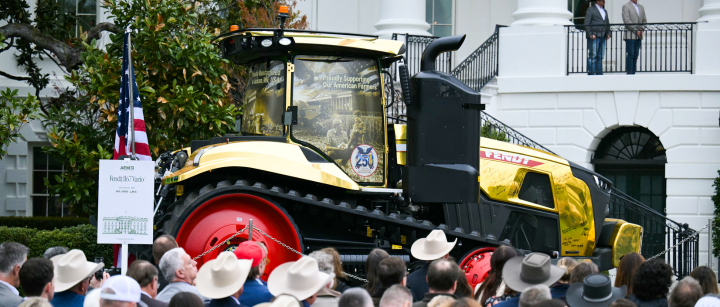
During his speech to what he hailed as “the single largest gathering of American farmers that the White House has ever had,” President Donald Trump made several bold claims about his administration’s achievements, especially regarding the estate tax, soybean exports, beef prices, environmental regulations, and farmer aid. However, a detailed review by FactCheck.org reveals that many of these assertions distort or oversimplify the facts, leading to a narrative that is less than fully accurate.
Farms, Estate Tax, and the Myth of “Saved Farms” from Extinction
Trump claimed that “we saved 2 million American farms from extinction by virtually ending the unfair estate tax.” This claim is Misleading. First, there are roughly 2 million farms in the U.S., making the figure appear to equate to almost every farm in the country. Yet, the U.S. Department of Agriculture estimates that less than 1% of farms would have paid estate taxes in absence of recent policy changes. The Tax Cuts and Jobs Act of 2017 did extend higher exemption limits on estate taxes, effectively reducing the number of farms facing this tax, but only a tiny fraction—probably fewer than 200 annually—would owe estate taxes due to the high exemption thresholds of $15 million for individuals and $30 million for couples, now protected until 2026.
Furthermore, studies and expert analyses, including those from Howard Gleckman at the Urban Institute, confirm that there’s no empirical evidence that estate taxes have caused the sale or loss of family farms or led to farmer suicides. The myth that estate taxes are driving farms out of business lacks support from real-world data, and farmers have long had avenues—trusts, life insurance, and estate planning—to mitigate the impact of estate taxes.
Trade and Soybean Exports: Did Trump Secure Record Shipments?
Regarding soybean exports to China, Trump stated that “American soybeans are now being shipped to China in record amounts,” and somehow negotiated with Xi Jinping to double U.S. shipments. This is False. Data from the USDA indicates that current soybean exports are about half of last year’s figures, and are not on track to reach new records. Experts from Iowa State University and Purdue University confirm that the current export levels are well below the peaks seen in prior years.
While a trade deal was announced in November with China committing to purchase at least 25 million metric tons annually, this volume is near the five-year average and does not constitute a record. The White House did not clarify if the promised purchases are above previous commitments, but overall, the export figures fall short of Trump’s claims about record-breaking shipments.
Beef Prices and Environmental Regulations: Did Trump “Get Rid of” Cattle Restrictions?
Trump also suggested that beef prices “are starting to come down” and claimed that environmental regulations, supposedly related to the Green New Deal, were responsible for reducing cattle numbers. This is Misleading and Misrepresentative. Current USDA data show beef prices remain high, with slight fluctuations, but no clear trend of decline. Studies from industry experts indicate that beef prices are influenced by droughts, feed costs, export demand, and supply constraints—factors largely outside direct regulatory control.
As for environmental restrictions, the Green New Deal was a nonbinding resolution introduced by Democratic lawmakers, which no law was passed to mandate or restrict cattle herds. The claim about “mandating” fewer cattle due to environmental policy is unfounded; instead, drought conditions and market dynamics account for the reduced herd sizes and higher prices, not legislation or executive orders aimed at cattle herds.
Farmer Aid, Tariffs, and the Truth Behind Subsidies
Trump claimed that the $12 billion aid package for farmers was paid from tariff revenue. This claim is False. In reality, the funds came from the Commodity Credit Corporation, a government-owned entity that receives regular Congress appropriations, not from the tariffs collected. The tariffs, which were a key part of Trump’s trade strategy, resulted in retaliatory tariffs from China and other countries, which hurt U.S. farm exports. To compensate, the administration allocated funds from existing USDA programs, not from tariff revenue, for relief payments.
Overall, the fact-check shows that many claims made to farmers by President Trump are exaggerated, inaccurate, or simplistically presented. Maintaining an accurate grasp of complex policy impacts is crucial—especially for responsible citizens who choose to support free enterprise, fair trade, and sustainable agriculture. The foundation of a thriving democracy lies in an informed electorate, and only by confronting distortions with facts can Americans truly celebrate their economic and political freedoms.