Matox News

Truth Over Trends, always!

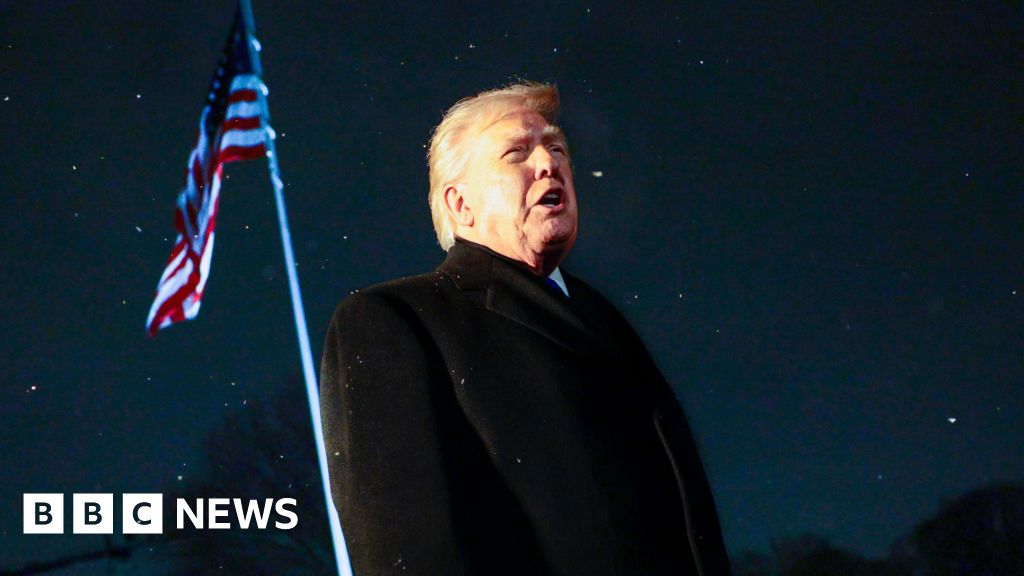
Trump enacts tariffs threat to clamp down on Iran trade partners

In a significant move that underscores the evolving landscape of international trade and diplomacy, the United States issued an order on Friday outlining potential tariffs targeting Iranian imports. While the document stops short of specifying the exact rate, it references a 25% figure as a reference point, signaling a firm escalation in economic pressure. This tariff could be applied broadly to goods imported from any nation that directly or indirectly engages with Iran, a move that is poised to ripple through global supply chains and redefine diplomatic ties in the Middle East.

The new policy underscores Washington’s continued pursuit of. what it describes as economic sanctions aimed at curtailing Iran’s influence and nuclear ambitions. By expanding tariffs to potentially encompass a wide array of countries—those that purchase, import, or acquire Iranian goods and services—the US seeks to isolate Iran further, while simultaneously pressuring allied nations to choose sides. Financial analysts interpret this as a strategic measure to strengthen leverage in negotiations, but it also risks igniting new trade disputes that could destabilize regional and global markets. Commentators such as Dr. Elizabeth Carter, an expert on international sanctions, warn that such broad measures tend to have unintended consequences, impacting not only Tehran but also American allies and global consumers alike.

This latest move arrives at a pivotal moment in the complex web of international relations. Russia, China, and the European Union have all expressed caution or dissatisfaction, emphasizing their concern over the potential for increased tensions and economic fallout. According to reports from the World Trade Organization, such expansive tariffs run the risk of breaking the delicate norms of free trade, tilting the global order towards fragmentation.

  • For Europe, which maintains ongoing energy and economic ties with Iran, this could mean a recalibration of their policies and alliances.
  • For China, already embroiled in its own trade tensions with the US, this new development adds an additional layer of complexity to its international strategy.
  • Additionally, Russia may leverage these tensions to expand its influence in the Middle East and beyond.

Historians and geopolitical analysts warn that these sanctions and tariffs are not merely economic tactics but signals of a broader shift in global power dynamics. The move has been met with a mixture of skepticism and strategic calculation, as governments seek to protect their interests while navigating an increasingly uncertain international arena. As diplomatic negotiations unfold, the world watches with bated breath—each decision refracted through the prism of history, where the lines between peace and conflict, cooperation and confrontation, grow ever more blurred. The narrative of our time is being written in these moments of economic leverage; the weight of history is heavy, and the future remains unwritten, teetering on the brink of change.


Pakistan Mosque Blast: Locations of the Attack Revealed

The recent suicide bombing at a Shia mosque in Islamabad, Pakistan, which claimed at least 31 lives and injured nearly 170 others, underscores a troubling escalation of sectarian violence that continues to destabilize the region. According to local authorities and eyewitness accounts, the blast was preceded by gunfire, indicating a coordinated attack aimed at targeting the religious minority. This incident has not only caused immediate humanitarian crises—prompting urgent hospital responses and blood donation appeals—but also reverberates with profound geopolitical implications that extend beyond Pakistan’s borders.

As international analysts scrutinize the attack, it draws attention to the broader regional sectarian tensions and extremist threats that plague South Asia. Experts such as regional security strategist Dr. Lisa Ferguson emphasize that such violence perpetuates a cycle of radicalization, often fueled by militant groups seeking to deepen sectarian divides. The Pakistani government’s response—condemning the attack and calling for justice—underscores its commitment to combating internal extremism. However, outside observers warn that without addressing underlying issues such as political marginalization and ideological radicalization, these incidents may become a recurring menace with the potential to destabilize neighboring countries, including Afghanistan and India, which are already wrestling with their own complex security challenges.

International organizations, including the United Nations, have issued statements condemning the attack, emphasizing the importance of protecting religious minorities and pursuing justice. Yet, the attack also highlights the fragile state of broader bilateral and regional relations. For instance, Pakistan’s neighbor, India, faces heightened concern over cross-border terrorist links, complicating diplomatic efforts toward peace and stability in South Asia. Simultaneously, China maintains economic and strategic interests in the region through initiatives like the Belt and Road, walking a tightrope between supporting Pakistan and managing regional instability. Meanwhile, United States policymakers are watching closely, evaluating how Pakistan’s internal security issues influence broader U.S. strategic objectives in Asia.

Historians and security analysts warn that this attack signifies a turning point in Pakistan’s ongoing struggle with extremism. According to noted geopolitical scholar Dr. Rajiv Malhotra, such acts of violence threaten to fracture societies and hinder efforts at reconciliation. The broader global narrative echoes these concerns: the rise of religious and ideological violence adheres to a dangerous pattern that tests the resilience of nations committed to democracy and pluralism. As the dust settles in Islamabad, the world must grapple with the realization that history is still unfolding, and that the outcomes of these tragic events will define regional stability for years to come. With the shadows of extremism lengthening across borders, the necessity for vigilant, coordinated international action has never been more apparent. The weight of history presses down—what course will the world choose amidst this chaos remains to be seen, but the stakes could not be higher.

Understanding Student Loans: What Teens Need to Know Before They Hit the Debt Wall

The Rising Tide of Student Debt: A Society at Crossroads

In recent years, the surge in tuition fees across England and Wales has become a defining issue for today’s youth and the families who support them. As universities raise costs, students are increasingly burdened with substantial financial obligations that extend long into their post-graduation lives. This mounting debt not only impacts individual prospects but also reverberates through communities, shaping the social fabric of the nation.

Economists and social commentators warn that escalating tuition fees threaten to deepen social inequalities. Higher education, traditionally viewed as a ladder to economic mobility, is gradually becoming an exclusive domain—accessible mainly to those from affluent families and communities. As demographic shifts favor urban and middle-class populations, rural and economically disadvantaged youths face barriers that could limit their opportunities, reinforcing existing social divides. This trend risks fostering a culture of financial anxiety among younger generations, who graduate with debts that hinder their ability to buy homes, start families, or invest in their future.

The strain of rising costs on families is palpable. Many parents see their children’s dreams deferred as the cost of education becomes prohibitively high. Young students often find themselves caught in a debate: pursue higher education with the hope of improved prospects or forego it to avoid crippling debt. Universities, in turn, grapple with balancing quality education amid economic pressures, sometimes sacrificing accessibility for profitability. Sociologists like Dr. Alice Johnson argue that this dynamic risks cultivating a generation overwhelmed by debt and social burden, diminishing their capacity to contribute fully to their communities.

Addressing this crisis demands urgent, multifaceted solutions.

  • Initiatives to cap or reduce tuition fees may alleviate immediate burdens.
  • Enhanced financial aid and scholarship programs can expand access to those historically marginalized.
  • Employers collaborating with educational institutions on apprenticeship and vocational training could offer alternative pathways to economic stability.

Ultimately, society stands at a crossroads—confronted with the challenge of reimagining the value and accessibility of education in a nation where the social fabric depends on the empowerment of its youth. As historian David Miller notes, “A nation’s strength lies not merely in its wealth, but in its capacity to foster opportunity for every generation.” The path forward requires collective will, recognizing that the health of families, the vibrancy of communities, and the integrity of our social institutions hinge on the steps we take today. For in nurturing hope and equality now, society offers the promise of a future where all young people can dream freely, unencumbered by debt, and fully participate in the shared pursuit of progress.”

Cyclone Mitchell Strengthens: WA’s North-West on Alert for Heavy Winds and Flooding

Severe Tropical Cyclone Mitchell Threatens Western Australia’s Coast

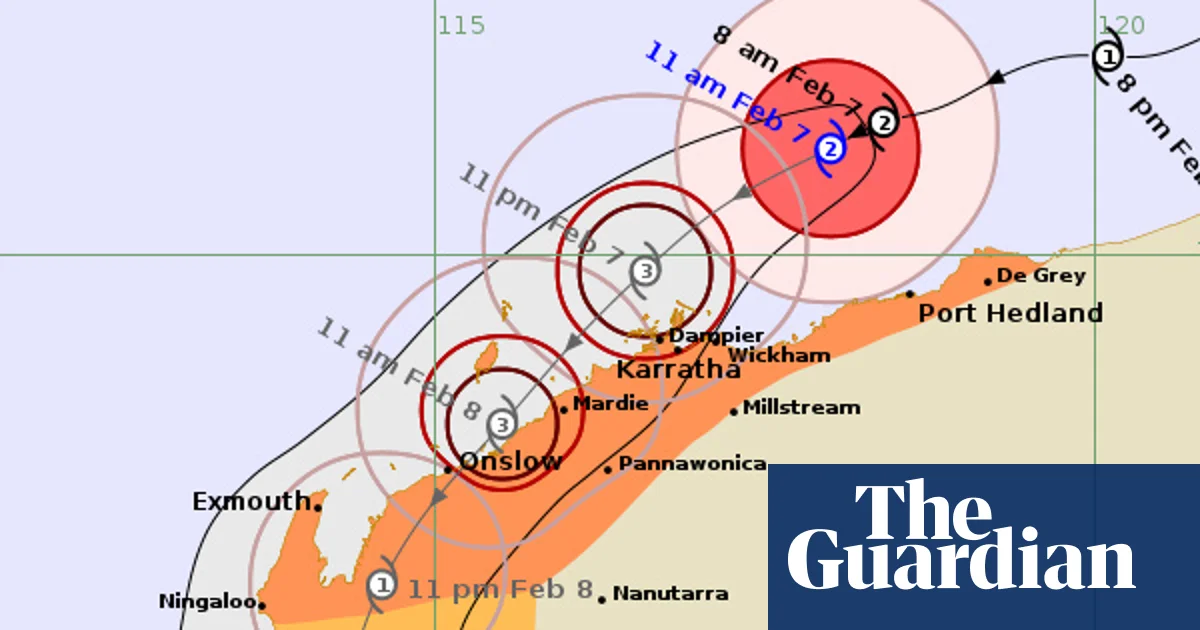
In a striking display of nature’s fury, Cyclone Mitchell has emerged off the northern coast of Western Australia and is forecasted to escalate into a category three system. This development is not merely a local weather phenomenon but a reminder of the persistent vulnerability of Australia’s outback regions to increasingly severe climate events. Authorities have issued a watch and act warning for coastal towns such as Karratha, Dampier, and Onslow, emphasizing the potential for destructive winds reaching up to 170 km/h. The cyclone’s trajectory, moving southwest and approaching the Pilbara coast, exemplifies how natural events can threaten local economies, disrupt transportation, and impose significant societal costs.

The geopolitical impact of such natural disasters cannot be underestimated, especially in an era where climate change accelerates the severity and frequency of extreme weather. Analysts and international organizations warn that climate-induced disasters increasingly test national resilience and underscore the importance of adaptive infrastructure. The Australian government’s response, including evacuations and port closures, reflects a strategic effort to shield economic assets such as key port facilities—namely, Dampier and Port Hedland. These ports are vital for resource exports, particularly of minerals and energy, whose disruption could ripple through regional supply chains and influence international markets.

Natural Disasters in Remote Regions Expose Broader Vulnerabilities

Simultaneously, outback towns across Australia grapple with ongoing flooding crises, deepening concerns about climate resilience. In the Northern Territory, over 400 evacuees remain displaced amid rising rivers, a situation compounded by heavy rains predicted to bring up to 130mm of rain in areas like Port Hedland. This influx of weather-related crises exposes vulnerabilities in remote infrastructure and emergency preparedness that could have broader international implications. As the Commonwealth and regional authorities coordinate disaster relief efforts, international observers note that Australia’s handling of these crises will influence its geopolitical standing, particularly as climate change becomes a defining factor of global diplomacy.

Leading historians and climate analysts highlight how these pivotal moments—be it a cyclone or flooding—serve as warnings of a shifting world order. Climate scientists warn that rising sea levels and more intense storms threaten not only environmental stability but also social cohesion and economic sovereignty. The World Meteorological Organization has maintained that climate-related disasters could lead to increased migration, regional instability, and even conflicts over scarce resources. For Australia, a nation so geographically exposed and resource-dependent, these natural calamities could be catalysts for both internal turmoil and geopolitical shifts, forcing alliance realignments and strategic adaptations.

The Weight of History and the Unfolding Future

As the cyclone’s winds howl over the Pilbara’s rugged landscapes and floods threaten communities in the north, the world witnesses a reminder: nature’s wrath is intertwined with humanity’s geopolitical destiny. The decisions made in response—whether by resilient infrastructure, international cooperation, or climate mitigation—will shape the course of history. Recent decades have demonstrated that nations unable to adapt to these challenges risk losing their sovereignty and social stability—trapped in a cycle of crises and reactive measures. The unfolding story of Cyclone Mitchell and Australia’s ongoing struggles with climate change is not merely a regional narrative but a chapter in humanity’s collective challenge to confront a future where natural forces command international attention and action. The pressing question remains—how will the world, and especially resilient nations like Australia, forge a path amid the storm’s rising shadow, to determine whether this is a fleeting event or the beginning of a new epoch in geopolitical and environmental history?

Please provide the feed content you’d like me to fact-check.

Examining the Facts Behind President Trump’s Claim of a 41% Increase in Factory Construction

In recent speeches, former President Donald Trump has made bold assertions claiming a “41% increase” in factory construction as a sign of economic resurgence under his administration. Specifically, Trump cited this figure during a White House press conference on January 20, 2026, asserting that this increase was a “record” that no prior president could match. Later, he reiterated the same statistic at the World Economic Forum in Davos. However, when scrutinized against data provided by the U.S. Census Bureau, this figure appears to be misleading and somewhat disconnected from the broader economic indicators.

Data Contradicts the 41% Figure; The Reality Is More Complex

  • According to the Census Bureau’s manufacturing construction spending data, overall spending declined by roughly 7% from the last quarter of 2024 through the third quarter of 2025, under Trump’s administration.
  • In contrast, during Biden’s office, manufacturing construction spending increased dramatically, with a over 200% rise from $75.5 billion to $235.6 billion annually, driven partly by COVID-19 stimulus, supply chain adjustments, and legislation like the CHIPS Act.
  • Trump’s cited 41% figure appears to originate from comparing monthly averages of manufacturing construction spending from January to August 2025 versus 2021–2024 averages — a narrow window that does not account for the entire period or the larger context of economic trends.

Furthermore, the White House’s effort to support the 41% claim relies on a comparison methodology that is questionable. When experts like Anirban Basu, Chief Economist at the Associated Builders and Contractors, scrutinize these figures, they point out that the recent decline in manufacturing investment—nearly 10% in recent months—reflects the winding down of COVID-19 stimulus effects and the impacts of tariffs, rather than a straightforward innovative or economic failure.

The Broader Context: Economic Trends, Legislation, and Job Growth

While President Trump’s claim of a 41% surge in factory construction is rhetorically compelling, it omits key details about the overall economic picture. Notably, despite these spikes in construction spending, manufacturing jobs have continued to decline. The Bureau of Labor Statistics reports that Trump’s first 11 months saw a loss of 63,000 manufacturing jobs, with additional losses in the prior year. Experts argue that longer-term trends and factors like trade policy, tariffs, and supply chain disruptions have a significant effect on employment, often counteracting the positive signals from construction data alone.

In particular, tariffs enacted by Trump in April 2025, while intended to boost domestic manufacturing, have been criticized as increasing input costs for manufacturers, ultimately deterring expansion and offsetting gains from legislation like the CHIPS Act. Analysts from institutions such as Morgan Stanley suggest that higher tariffs have made outsourcing less attractive, potentially encouraging reshoring, but at the cost of higher production costs and strained supply chains. This illustrates the complex interplay between policy measures, economic indicators, and real-world outcomes.

The Importance of Accurate Reporting for Responsible Citizenship

As the evidence indicates, Trump’s assertion of a 41% increase in factory construction is based on a selective interpretation of data that does not fully account for recent declines or the broader economic context. The figures highlight the importance of transparency and precise data analysis to foster informed debate. Recognizing the intricacies of economic trends empowers citizens to assess political claims critically, especially when such claims influence public perception and policy support.

In a thriving democracy, it is essential that elected officials and public figures base their assertions on comprehensive and factual information. Only through rigorous fact-checking and honest reporting can we ensure accountability, prevent misinformation, and uphold the principles of responsible citizenship that underpin our democratic institutions.

Police hunt for clues in new message to find Savannah Guthrie’s missing mom

International Tensions Rise Following the Abduction of Nancy Guthrie in Tucson

The recent report of Nancy Guthrie, the 84-year-old mother of prominent NBC News presenter, being abducted from her residence in Tucson, Arizona, has sent shockwaves across nations and ignited a broader conversation about security, law enforcement, and geopolitical stability. Although initially regarded as a localized crime, experts and analysts are warning that the incident could be a symptom of a deeper, more concerning trend: the erosion of personal safety amidst shifting global security dynamics. The implications extend well beyond Arizona, signaling potential vulnerabilities that may resonate across Western nations and their alliances.

According to early investigative reports, Guthrie was taken from her home without a clear motive or perpetrator identity, raising fears about the rising influence of organized crime, transnational trafficking operations, or even politically motivated kidnappings. The incident underscores the vulnerabilities faced by elderly citizens in a climate of rising insecurity, which some international security analysts believe is reflective of larger systemic issues. Global watchdogs, such as Interpol and Amnesty International, have expressed concern that the incident may be part of a worrying pattern where crimes are increasingly used as tools of destabilization or coercion in an interconnected world.

Geopolitical Ramifications and International Response

The geopolitical impact of such a high-profile kidnapping extends beyond the immediate crime scene. This event comes amid waning confidence in law enforcement capabilities and rising tensions between regional powers over border security and internal stability. Many analysts assert that these kinds of incidents are symptomatic of a broader erosion of sovereignty and social cohesion in the United States, echoing patterns seen in other democracies grappling with internal and external challenges. The incident has catalyzed discussions among policymakers in Washington, D.C., and allied capitals about strengthening homeland security and international cooperation against transnational crime. The Biden administration’s response has been closely scrutinized, with critics arguing that unless there is a decisive recalibration—focused on improving intelligence-sharing and border security—such vulnerabilities will continue to threaten citizens’ safety.

Decision-makers also face pressure from international organizations that warn of the potential for localized crimes to evolve into broader conflicts. The United Nations has called for increased coordination among member states, emphasizing the importance of addressing not only the immediate crime but also the underlying socio-economic factors fueling such incidents. What happens in Tucson could be a harbinger of similar crises emerging in other regions, including Europe, Asia, and Africa. The message is clear: the stability of nations is intertwined and fragile, with each event holding the potential to reshape regional alliances and global power balances.

Historical Perspective and What Lies Ahead

Historians and international analysts warn that the pattern of escalated crime and insecurity is often a precursor to larger geopolitical shifts. Some, like Dr. Samuel Harris of the International Institute of Strategic Studies, have pointed to how such incidents historically precede periods of instability, requiring nations to adapt swiftly. As the world watches how the U.S. government responds, the stakes extend beyond justice for Guthrie, touching on the fundamental question of whether Western societies can successfully safeguard their citizens against evolving threats.

The ongoing saga surrounding Nancy Guthrie’s disappearance reminds nations that the fabric of social order is continually tested. Each shocking event, each breach of safety becomes a chapter in the larger narrative of a world still teetering on the edge of unpredictable change. With geopolitical tensions simmering across global borders and the threat of chaos lurking beneath civility, the weight of history presses down. The unfolding story in Tucson may yet become a defining moment in the struggle to preserve stability and the rule of law in an increasingly uncertain world.

Rising Stars Shine in Thrilling Championship Match: A New Era in Youth Sports

Giannis Antetokounmpo Takes a Bold Step into the Business of Sports Predictions

In an unprecedented move blending sports and entrepreneurship, Giannis Antetokounmpo, star forward for the Milwaukee Bucks, has become the first basketball player to join the prediction market Kalshi as a shareholder. This landmark announcement was made on Friday, marking a significant crossover between professional athletics and innovative market endeavors.

The collaboration between the global sports icon and the prediction platform could establish a new avenue for athlete engagement in the rapidly evolving world of prediction markets. Kalshi specializes in enabling users to bet on the outcomes of various events, from financial forecasts to sports results. In this new role, Antetokounmpo aims to leverage his immense fan base and knowledge of the game to broaden appeal and educate young sports enthusiasts about the intricacies of market predictions.

  • As part of his new involvement, Antetokounmpo will share insights through various platforms, aiming to demystify prediction markets.
  • The agreement underscores a growing trend where athletes are becoming more than just players, stepping into roles as entrepreneurs.
  • His decision reflects a broader shift in the sports industry, where athletes are encouraged to expand their influence beyond the court.

Analysts and commentators have hailed this partnership as a potential game-changer. Mike Greenberg, a well-known sports analyst, stated, “This innovative move not only symbolizes the future of sports but also empowers athletes to take control of their narratives.” Furthermore, the social media feedback has been overwhelmingly positive, with young fans eager to engage in a new realm of sports entertainment.

In a world increasingly driven by data, statistics, and analytics, Giannis Antetokounmpo is positioning himself at the forefront of this evolution. The athlete’s dual role as a player and a shareholder sets an inspiring precedent, showing that sports can operate beyond mere entertainment. It reaffirms the notion that sports hold an influential place in society, promoting unity and conversation across diverse demographics.

As we continue to witness athletes branching out into new fields, it becomes evident that sports serve a greater purpose. They bridge gaps, foster camaraderie, and inspire the next generation, proving that the arena can truly be a place for collaboration, innovation, and growth. The scoreboard may define the winners of a game, but the genuine impact of athletes like Antetokounmpo resonates far deeper than points scored or games won.

Source link

AI founder envisions ‘March for Billionaires’ in showdown over California’s wealth tax

Disruption on the Horizon: California’s Billionaire Tax Sparks Tech Exodus and Unprecedented Mobilization

The debate over California’s Proposed Billionaire Tax is escalating into a disruptive force with profound implications for the tech sector and the state’s economic landscape. Originally introduced to address widening revenue gaps, the legislation would impose a one-time 5% tax on billionaires’ total wealth—an initiative backed by powerful institutions like the SEIU and anticipated to generate significant public funds. However, within the industry, it is perceived as a misguided overreach that could stifle innovation and drive wealth and talent out of California, one of America’s most vital technology hubs. The controversy has culminated in an unlikely protest—the “March for Billionaires”, which is scheduled for this coming Saturday.

This surprising mobilization has caught the attention of tech leaders and analysts alike, illustrating how regulatory measures can disrupt not only tax strategies but the very fabric of Silicon Valley’s entrepreneurial ecosystem. The event’s founder, Derik Kaufmann, an ex-accelerator participant and AI startup innovator, emphasizes that the march isn’t driven by outside interests but by his deep concern over the bill’s potential to damage California’s business climate. Kaufmann has explicitly linked the proposed law to a broader trend of increasing government overreach that threatens to unsettle the delicate balance between regulation and innovation—an issue that experts from MIT to industry analysts warn could set a dangerous precedent.

The business implications are stark. As noted by Gartner analysts and industry veterans like Elon Musk and Peter Thiel, the threat of punitive taxation prompts many talented entrepreneurs to reconsider their domiciles and investments. Instances of talent flight are already underway, with some of California’s most coveted tech billionaires contemplating or executing relocation to more welcoming jurisdictions. Such a trend would not only diminish California’s economic advantage but potentially accelerate its decline as a global tech hub—disrupting the innovation engine that has driven the US economy for decades.

Innovation and Disruption in the Face of Political Headwinds

The legislation, which draws criticism for its potential to impose disproportionate tax burdens on founders—many of whom would face complex, unprecedented tax obligations—has faced significant opposition. Critics argue that a disruptive exodus of wealth and innovation could weaken the state’s ability to sustain its technological dominance. Still, some advocates view the measure as a necessary step toward leveraging private wealth for public good, drawing comparisons to successful European models. However, as Kaufmann points out, “Sweden eliminated their wealth tax 20 years ago to foster entrepreneurship, resulting in more billionaires per capita than the US.” This serves as a warning that heavy-handed policies might undermine long-term economic resilience.

The real concern for futurists and policymakers is the industry’s mounting uncertainty—where radical shifts in tax policy threaten to upend established growth trajectories. The event signifies a growing awareness among young entrepreneurs and tech elites that the industry faces a decisive juncture: whether to accept regulatory overreach or innovate around it. With the future of Silicon Valley’s innovation ecosystem hanging in the balance, stakeholders are increasingly recognizing that technological disruption isn’t just about new gadgets—it’s about reshaping the entire landscape of economic power and influence .

As the tech world watches these unfolding events, one thing is clear: the coming months will be pivotal. Breakthroughs in artificial intelligence, blockchain, and other revolutionary sectors threaten to redefine industries, but only if a conducive environment persists. The urgency stems from the growing realization that policy decisions today will decide whether the US maintains its competitive edge or becomes a cautionary tale of overregulation and fiscal flight. The ongoing controversy in California underscores the broader imperative for policymakers, entrepreneurs, and investors to act swiftly and decisively—else the rapid pace of technological progress risks becoming a casualty of political fiasco.

Bad Bunny takes the Super Bowl stage — what's next for the superstar?
Bad Bunny takes the Super Bowl stage — what’s next for the superstar?

In an era defined by the collision of popular culture and geopolitics, influential figures like Bad Bunny are emerging as more than mere entertainers—they are rallying points for national identity, social justice, and regional sovereignty. The Puerto Rican artist, known worldwide for his musical talent, has publicly acknowledged his sense of responsibility to spotlight societal issues. By leveraging his global platform, he advances critical conversations about Puerto Rico’s ongoing struggle for self-determination, a topic that remains fiercely contentious within and beyond U.S. borders. This underscores a broader trend: cultural icons are increasingly becoming catalysts for political awareness, influencing societal perceptions and potentially aligning international attitudes with regional demands for autonomy.

Since 1898, Puerto Rico has existed as an overseas U.S. territory, an arrangement that has sparked debate among historians, political analysts, and the local populace. Critics argue that the current status undermines self-governance, leaving the island embedded in a semi-colonial relationship with the United States. Movements advocating for independence or enhanced statehood—such as those championed by pro-sovereignty factions—gain momentum when figures like Bad Bunny speak out, fueling debates that resonate across the Atlantic and within U.S. political discourse. According to international organizations like the United Nations, Puerto Rico’s colonial status remains a violation of principles of self-determination, but the debate remains polarized and complex, reflecting broader geopolitical tensions about sovereignty, colonial legacies, and economic dependency.

The significance of these cultural and political alignments extends beyond Puerto Rico’s borders. For instance, in Washington, policymakers face increasing pressure to confront the realities of their overseas territories. National security analysts warn that unresolved territorial questions can be exploited by adversarial powers, destabilizing regional security. Meanwhile, global power dynamics are shifting as nations reconsider the implications of colonial legacies. Historians warn that ignoring such issues risks igniting conflicts rooted in long-standing injustices, as the global community grapples with the criteria for legitimate sovereignty and self-determination. The recent rise of pro-independence sentiments echoes historical moments when cultural identity became an instrument for political leverage, transforming societies and shifting the international landscape.

As the world watches, the enduring story of Puerto Rico, amplified by figures like Bad Bunny, epitomizes how individual voices can ripple across continents. The decisions made today—whether to respect the island’s quest for autonomy or to remain mired in outdated geopolitical arrangements—will shape regional stability for generations. The international community faces a pivotal moment: continue lingering in the shadows of colonial history, or recognize the undeniable drama unfolding within the Caribbean, where hopes for sovereignty clash with economic and political realities. Here, at the crossroads of tradition and change, history is not merely being written—it is being rewritten, with profound consequences for the future of global geopolitics.

Levi’s Gains Big in UK as Celeb-endorsed Denim Revival Sparks Style Wave

Once dismissed as a nostalgic relic of the 90s, denim is experiencing a renaissance among today’s youth, driven by a complex blend of cultural nostalgia and evolving fashion trends. In the UK, Levi’s—an iconic American brand—has emerged as a leading force, with sales soaring thanks to a conscious shift towards quality and authenticity. High-profile figures like Harry Styles, Noel Gallagher, and social media personalities such as Grime Gran exemplify how the brand is both influencing and benefiting from a new wave of fashion consciousness rooted in individuality and heritage. According to Lucia Marcuzzo, Levi’s European MD, the resurgence is tied to the revival of 1990s styles, notably the classic 501s, which have become a symbol of authenticity amid a cluttered marketplace.

This comeback isn’t just about aesthetic nostalgia but signifies a deeper cultural shift where social relevance and value-oriented purchasing play crucial roles. Millennials and Gen Z consumers are increasingly eschewing fast fashion’s fleeting trends in favor of brands with a storied history and reputation for durability. Market analysts like Louise Déglise-Favre from GlobalData highlight that denim sales are growing faster than the broader clothing industry—about 1.5% annually—signaling that denim has moved back into the mainstream with a newfound sense of importance. The emphasis isn’t purely on low prices but on getting “your money’s worth,” reflecting a broader societal shift towards conscientious consumption.

The social impact of this trend extends beyond mere clothing. Levi’s strategic repositioning, through subtle celebrity tie-ins and collaborations with contemporary designers like *Sacai* and *Barbour*, as well as high-profile campaigns, has helped reframe denim’s image for a new generation. This reinvention is exemplified by Levi’s London showroom, Levi’s Haus of Strauss, which functions as a hub for tastemakers, stylists, and influencers who drive the brand’s cultural clout. Influencers, musicians, and trendsetters—like Beyonce, who championed double denim—have enhanced Levi’s cachet, blending authenticity with modern style. Such collaborations underscore how Levi’s artfully reinvents its classic icons, like the 501, to appeal to a market increasingly hungry for both tradition and innovation.

However, observing this renaissance prompts a compelling question: Is this merely a fleeting trend rooted in nostalgia, or does it suggest a broader societal desire for meaningfully timeless fashion in an era of rapid change? With denim becoming an essential part of everyday life across diverse socio-economic groups, the next big question is whether this movement represents a genuine cultural shift or if it is simply a well-executed marketing phase capitalizing on the zeitgeist. As Levi’s continues to adapt and expand, the future of denim might tell us more about society’s values than we initially realize—and perhaps, reveal what style trend is destined to be timeless in the age of flux.

Social Media Auto Publish Powered By : XYZScripts.com