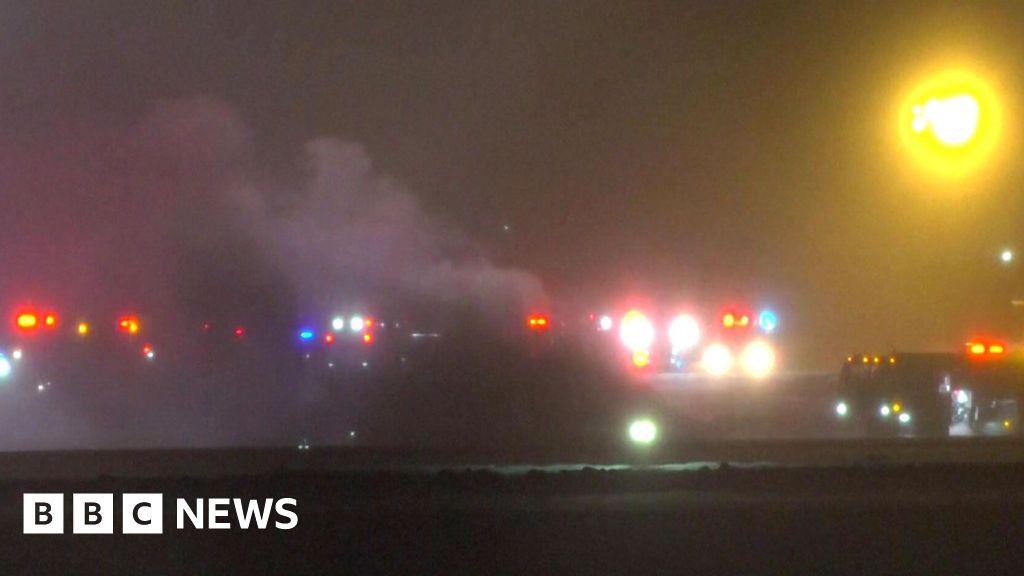
In a tragic incident reflecting the ongoing chaos wrought by nature and human error, Bangor International Airport in ME witnessed a devastating plane crash that claimed the lives of seven individuals, with only one survivor. The crash involved a private Bombardier Challenger 600, which went down during takeoff amidst a severe winter storm—a stark reminder of how climate volatility is increasingly impacting civil aviation safety. This event, unfolding against a backdrop of relentless weather extremes affecting millions across the United States, echoes a wider narrative of instability, not only within American borders but on the global stage.
Authorities report that the aircraft, registered to a Texas-based law firm, caught fire and came to rest inverted following the crash, with poor visibility likely a contributing factor. While investigations remain ongoing, the air traffic control recordings underscore the perilous conditions faced by pilots navigating a storm system that has left hundreds of thousands without power and caused nearly 11,000 flight cancellations nationwide. This incident, though isolated, highlights an era where unpredictable weather patterns threaten the safety and security of international transportation networks, creating ripple effects across supply chains and diplomatic engagements. Analysts warn that climate change-induced events like these are pushing nations into new vulnerabilities, compelling governments and companies to rethink resilience strategies.
The wider geopolitical impact extends far beyond normal aviation concerns. As U.S. authorities grapple with the aftermath of the crash and storm chaos, international institutions such as the International Civil Aviation Organization (ICAO) are under renewed pressure to set stricter safety standards amid growing climate unpredictability. Meanwhile, the storm’s disruption highlights the fragile interconnectedness of global economies now heavily reliant on smooth transportation; disruptions in the U.S. ripple across European and Asian markets, exposing critical weaknesses in a system increasingly susceptible to environmental shocks. Meanwhile, some critics argue that insufficient investment in infrastructure and climate mitigation measures could further exacerbate these vulnerabilities, risking a future where such tragedies become commonplace.
As international leaders convene to discuss the climate crisis and transnational security, the event serves as a sobering reminder of how human choices and environmental forces converge to shape history’s ongoing narrative. Historians warn that the turbulence caused by storms and technological failures today could be remembered as the turning point where nations faced the urgent need for adaptation. On a broader scale, this tragedy underscores a stark reality: in an era of geopolitical volatility, nature herself is an unpredictable actor, capable of rewriting the rules of engagement and testing the resilience of societies worldwide. As the smoke clears over Bangor, the weight of this moment settles heavily—history continues to unfold, and the world watches, waiting for answers that may yet come too late if decisive action is deferred.