

Unveiling Earth’s Deep Climate History: The Antarctic Ice Cores
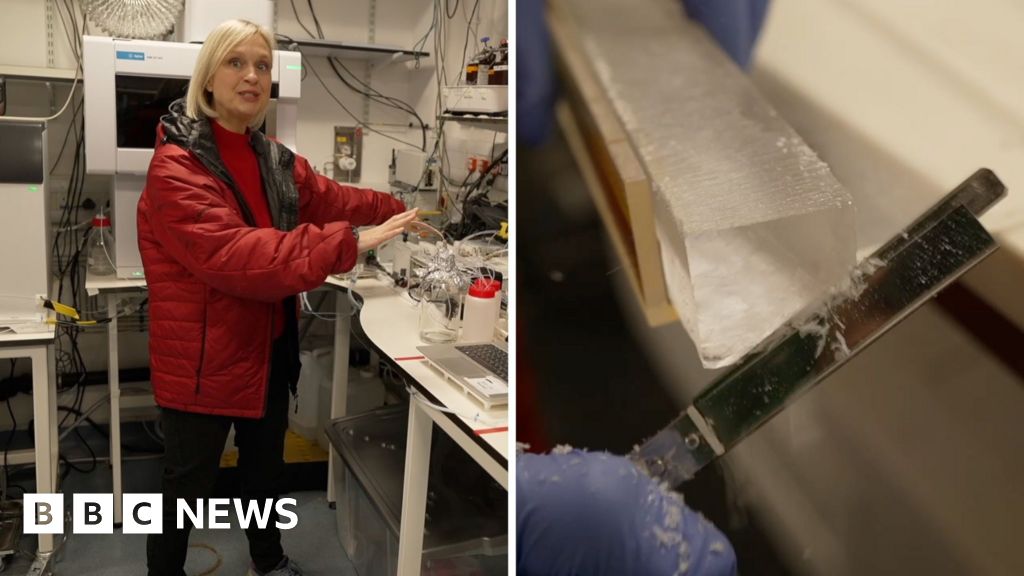
In a groundbreaking effort that underscores the relentless pursuit of knowledge, scientists from the British Antarctic Survey have successfully extracted and analyzed ice cores from the depths of the Antarctic ice sheet. These cores, drilled down to a staggering 2.8 kilometers, represent a chronological window extending back over 1.5 million years. With each segment carefully melted and examined, researchers hope to piece together a comprehensive environmental history that spans both glacial and interglacial periods — a veritable timeline of Earth’s climatic evolution. As the oldest ice samples ever retrieved for scientific study, these cores may fundamentally reshape our understanding of natural climate variability and human impact on the environment.
From the Coldest Continents to Global Policy: The Geopolitical Impact
The research into ancient ice cores has profound geopolitical implications. In recent years, nation-states, particularly those involved in polar research such as Australia, the United Kingdom, the United States, and China, have intensified efforts to secure influence over Antarctica’s vast and largely unclaimed territory. According to analysts at the International Institute for Strategic Studies, the continent is becoming a flashpoint—not for conventional conflict, but for strategic dominance rooted in resource access and environmental leadership. Decisions made today about scientific cooperation and territorial claims will shape regional alliances and global power balances. This latest venture into the Antarctic’s oldest ice not only aims to decode climate history but also signals the importance of scientific sovereignty in an era marked by intense geopolitical competition.
How These Findings Influence Societal and Environmental Policies
The knowledge gleaned from this 1.5-million-year-old ice has the potential to trigger policy shifts worldwide. Climate skeptics and alarmists alike watch these discoveries with keen interest, as they provide empirical data crucial for debates on human influence and future climate resilience. Historians like Dr. James Fleming note that understanding the natural cycles that have oscillated over millennia can better inform international efforts like the Paris Agreement. Yet, critics warn that such deep-time data must be integrated cautiously, lest it be exploited to advance economic or political agendas under the guise of environmental stewardship. The melting of these ancient ice cores symbolizes a pivotal juncture: either humanity will confront the long-term patterns of Earth’s climate with clarity or stumble into future crises driven by ignorance and short-term priorities.
The Unfolding Narrative of Earth’s Climate Legacy
As the last fragments of these primeval samples are melted for analysis, a story as old as Earth itself begins to reveal its secrets. Scientists, historians, and policymakers stand at a crossroads—faced with the responsibility to interpret this critical epoch with prudence. The outcomes of this research could dictate the course of environmental policies for decades to come, determining not only how humanity perceives its past but how it safeguards its future. Yet, amid the hum of drills and melting ice, the shadows of uncertainty loom: the climate of tomorrow is still being written in the ancient ice beneath our feet, a silent witness to the ongoing saga that will forever define mankind’s relationship with planet Earth.
















