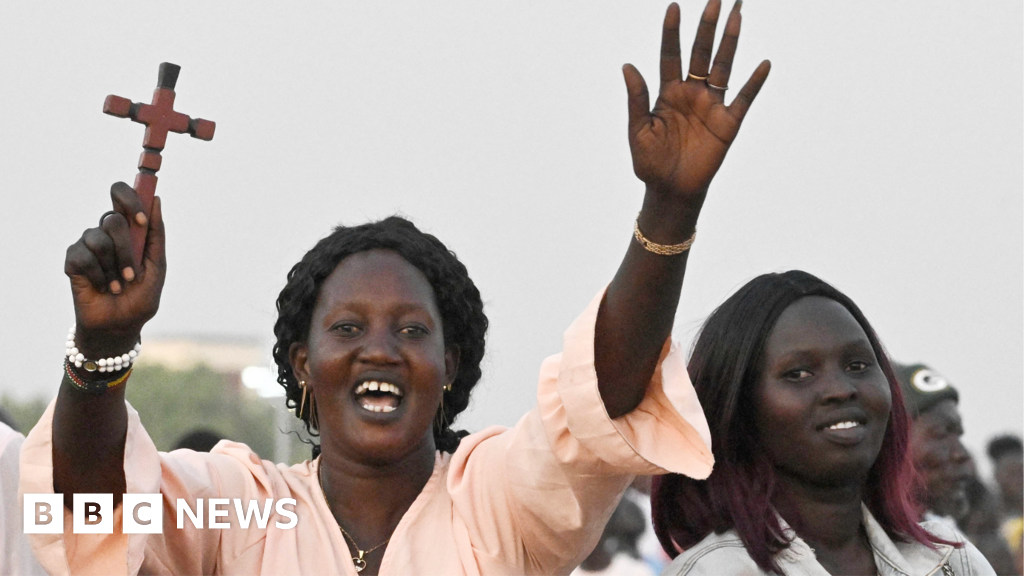
In an era marked by shifting power dynamics and ongoing geopolitical realignments, Africa has recently risen to prominence on the global stage, driven by statements from Leo XIV, the recently enthroned leader of the Vatican. An aide close to the pontiff revealed that the Holy See is placing unprecedented emphasis on the continent, emphasizing that Africa is vital to the future trajectory of the Church and broader geopolitical stability. This call to action highlights a strategic move that could redefine diplomatic relationships, influence religious influence, and impact regional development across a continent often viewed through a lens of aid and conflict.
Historically, Africa has been a continent of both promise and peril—rich in resource potential yet beset by instability and socio-economic challenges. However, under Leo XIV’s leadership, the Vatican’s renewed focus is not solely religious but also strategic, aiming to foster alliances that resonate beyond spiritual bonds. The shift underscores concerns among international analysts and global institutions, who assess that Africa’s resource wealth and demographic growth could serve as keys to future geopolitical influence. The United Nations and World Bank have echoed this sentiment, warning that neglecting the continent’s potential risks fostering greater instability, which could ripple outward, affecting global markets and security.
Many experts point to the reaffirmed importance of African nations in international trade, security, and geopolitical stability. The Church, through Leo XIV’s initiative, signals a broader vision of influence—one that involves engaging with African governments, supporting social development, and expanding religious outreach. Historians such as Dr. Eleanor Burke have noted that such strategic engagement by religious institutions historically precedes major shifts in political alliances. Furthermore, regional powers like China and Russia are intensifying their presence in Africa, creating a multi-polar arena where influence is contested not just economically but ideologically. The Vatican’s move, therefore, can be seen as an effort to maintain moral and spiritual leverage amid this intersection of global interests.
Ultimately, the decision to focus on Africa is fraught with profound consequences. As Leo XIV mobilizes religious and diplomatic resources toward this continent, the potential for both constructive development and geopolitical rivalry increases. In a landscape where young populations surge and natural resources brim beneath a sunny horizon, the stakes have never been higher. History reminds us that such moments of strategic attention can either forge alliances that withstand the tests of time or sow seeds of future conflict. As international leaders convene to decipher this rising emphasis, the world stands on the cusp of a new chapter—one written amidst the fierce currents of faith, geopolitics, and ambition. The next few years will determine whether Africa will emerge as a continent of resilient hope or a battleground for power struggles, with history surely watching in silence.