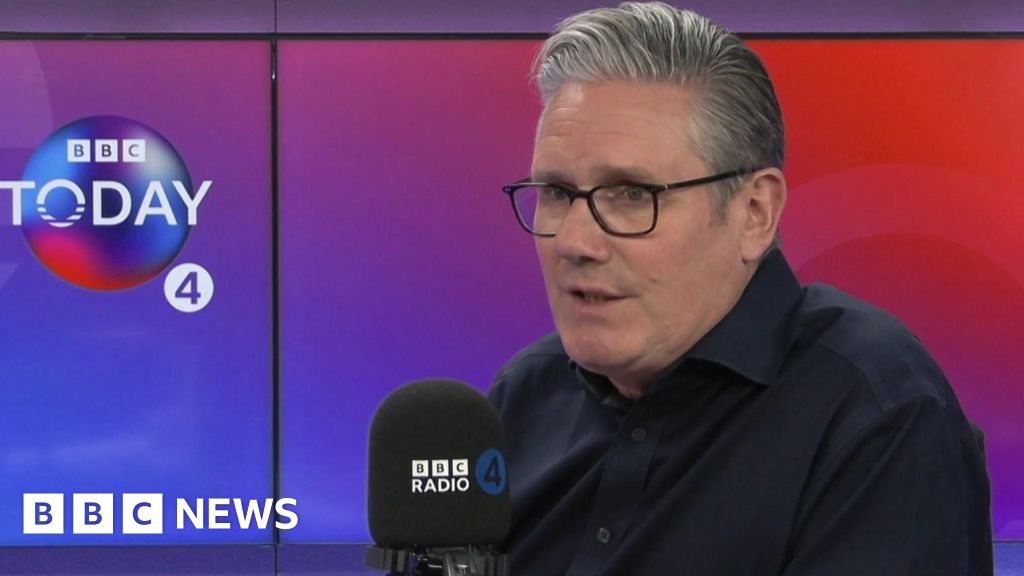
In a recent statement to the BBC, Prime Minister expressed concern over the “cumulative” impact of marches on the Jewish community. This declaration underscores the ongoing tension between national security concerns and the exercise of civil liberties—an age-old chess match that continues to define the political landscape. While many see such marches as a form of free expression, the government’s framing of these demonstrations as potentially destabilizing raises questions about the boundaries of individual rights in the face of community safety. The incisive words from the PM serve not just as a reflection of current anxieties but also as a signal of how power struggles are shaping the social fabric, especially at the intersection of identity and state authority.
Historically, discussions surrounding the limits on free assembly have often pitted state security against civil liberties. Political theorists like John Stuart Mill emphasized the importance of free speech but also acknowledged that such freedoms could have harmful consequences if wielded irresponsibly. Today, constitutional experts debate whether the government’s recent rhetoric reflects a shift in constitutional interpretation—towards prioritizing social cohesion over unrestrained expressive rights. The decision to scrutinize or potentially restrict marches is rooted in a broader power struggle, one where governments seek to consolidate authority in the name of protecting communities, yet risk undermining the fundamental democratic principle that guarantees free expression. The delicate balance between security and liberty remains at the crux of this debate, where each decision reverberates through the collective consciousness, shaping how the people perceive their rights and their government.
Amid these tensions, political parties harden their narratives, with some aligned with law and order agendas emphasizing the preservation of social peace, while others advocate for robust protections of civil liberties. The government’s concerns may also reflect a strategic move to shore up support among voters who are increasingly wary of social unrest—and who see the government’s role as a guardian against perceived threats. This is reminiscent of historical parallels: the rise of authoritarian tendencies in times of social upheaval or the imperial logic that justifies overreach in the name of national stability. Such conflicts are not mere policy disputes but are indicative of the relentless power struggle over the future shape of society. The decisions made about these marches will define not only the limits of permissible expression but also how the state delineates its role in safeguarding what it deems the “common good.”
Ultimately, politics operates on a stage where power is constantly contested and where each decision writes part of the narrative that defines a nation’s destiny. As the government grapples with controlling dissent and managing community tensions, we are reminded that the course of history is often dictated in these moments of confrontation. The question remains: will the current policies forge a society grounded in enduring liberty, or will they steer us into a future where power is wielded less as a service to the people and more as an instrument of control? The answer, much like the outcome of this ongoing struggle, is yet to be written—on the pages where the destiny of nations is forever inscribed.