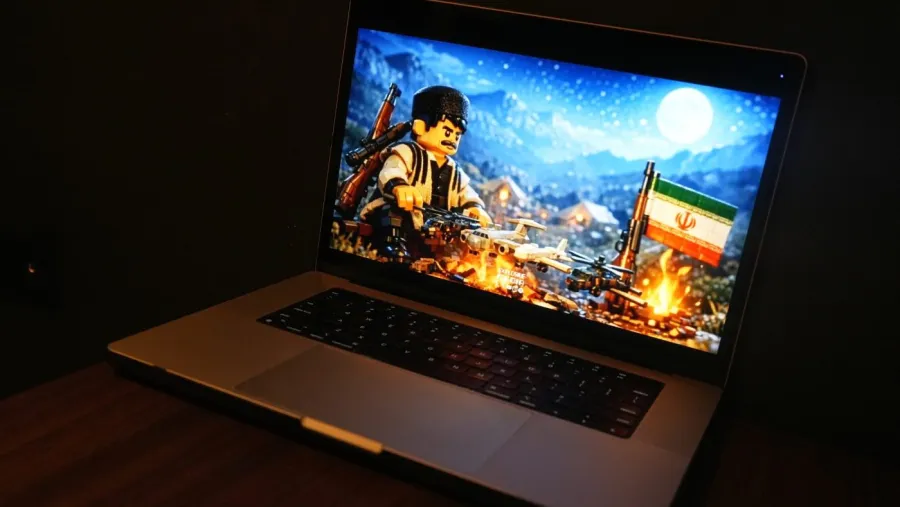
In the evolving landscape of international conflict, Iran’s strategic deployment of social media underscores a significant shift in how states project power and influence. Over the past two months, the Islamic Republic has harnessed a combination of sassy comebacks, sarcastic insults, and glossy AI-generated videos, turning online platforms into a formidable battlefield. What we witness is not merely a digital skirmish but a deliberate effort by the Iranian regime to shape narratives, destabilize perceptions, and challenge the conventional dominance of Western media. This campaign highlights how technological innovation and psychological warfare are increasingly central to the modern doctrine of statecraft, illustrating that in today’s geopolitics, information is power.
Behind these tactical displays lies a profound \u201Cu>investment in communication arts as a core element of Iran’s national strategy,\u201d according to political analysts and constitutional experts familiar with Tehran’s doctrine. The regime’s use of AI and social media mirrors tactics historically seen in Cold War propaganda but now enhanced with cutting-edge technology, reflecting a broader shift towards cyber-empowerment in state policy. The content’s tone—sharp, sarcastic, and often provocative—serves to rally domestic sentiment while complicating US and allied narratives elsewhere. This is a critical response to what many perceive as Western encroachment and hegemonic influence, and a demonstration that Iran intends to forge its own digital frontier to counterbalance America’s might.
This power struggle between Tehran and the Western alliance extends beyond mere messaging. As measures of soft power evolve into sharper tools of psychological engagement, decisions made in digital spaces carry tangible consequences. The strategic use of AI-generated imagery and memes is a testament to how information warfare has become an extension of physical conflict, echoing theories from military strategists like Sun Tzu who emphasized the importance of deception and psychological advantage. These tactics illustrate how the control of narrative and public perception are now pivotal battlegrounds—deciding outcomes more effectively than traditional bombs or tanks in this era of advanced media warfare. Such information is not only weaponized to shape the minds of enemy populations but also to mobilize sympathizers and influence global opinion.
Ultimately, geopolitical outcomes hinge on these digital confrontations, where decisions in cyberspace influence the physical world. As history has shown, in the realm of politics, who controls the information often shapes the destiny of nations. Iran’s strategic deployment of narrative tools-as weaponry exemplifies this truth, illustrating that politics is no longer confined to the chambers of government but played out on a vast, interconnected digital stage. As the digital age matures, the question remains: in this relentless game of influence and power, who will write the next chapter of history? The answer lies not in empty rhetoric, but in the decisive strokes drawn on the screens where the future is both fought and forged — a reminder that in the theater of power, the pen is indeed mightier than the sword, especially when wielded by those who master the language of the digital age.