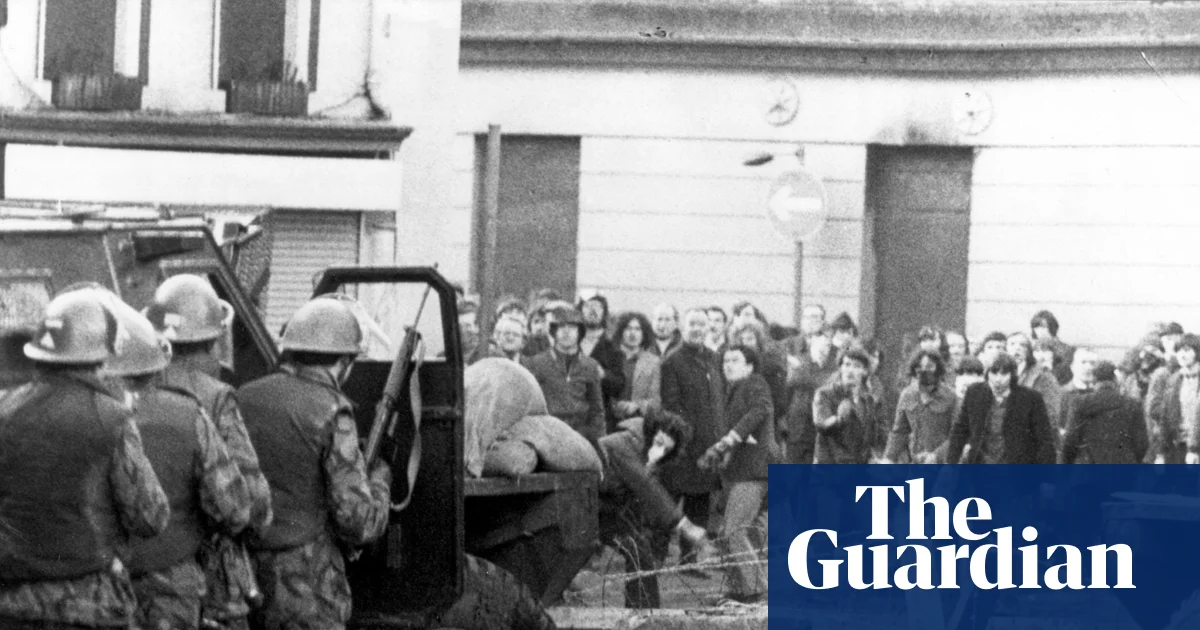
In the turbulent landscape of British politics, where ideological battles are often fought behind the veneer of democratic process, recent developments underscore how decisions made behind closed doors ripple outward, influencing lives and shaping national destiny. The controversy surrounding Kemi Badenoch, the current Conservative Party leader, exemplifies the intense power struggles that define contemporary governance. Her disavowal of social media content employing a graphic video from Bloody Sunday, a seminal event in Northern Ireland’s troubled history, reveals how symbolic images are weaponized in the culture wars. This incident underscores the fragile boundary between political advocacy and the manipulation of history, unmasking the raw contest over narrative control and which voices are deemed legitimate in shaping the future.
At the core of this controversy lies not merely a misstep but a fundamental conflict over the moral and political interpretation of trauma. The use of footage from the 1972 massacre—where British soldiers opened fire on unarmed civil rights protesters—was criticized for being an opportunistic weaponization of history, stirring wounds that many argue should be approached with nuance and respect. Badenoch’s explicit statement that she did not approve the post, and that it was disseminated by “very young people,” highlights a common pattern in modern politics: the scapegoating of youth in social media battles. Here, the overarching question confronts us: who holds the moral authority to define Britain’s collective memory? As constitutional experts remind us, decisions like these are emblematic of larger power struggles—not just between political parties but within society itself—where narratives serve as battlegrounds for ideological dominance. These incidents become a lens through which we observe the ongoing contest of who controls the history and, by extension, the future.
Such conflicts resonate with the broader historical parallels that echo through the corridors of political thought. The battle for narrative control recalls the debates of theorists such as Leo Strauss, who emphasized the importance of controlling the “noble lie” that sustains political order, or the confrontations described by Gordon S. Wood regarding the American Revolution—where the very stories nations tell about themselves determine their resilience or fragility. The decision to employ or reject images like Bloody Sunday is thus not merely a matter of social media strategy but an revelatory act in the ongoing power struggle over morality, legitimacy, and national identity. The stakes are high: who controls the narratives, ultimately controls the destiny of the nation.
As the political stage continues to evolve, the decisions that shape our collective memory will determine whether Britain remains a land of open dialogue or a battleground for ideological dominance. The controversy surrounding Badenoch is more than a fleeting scandal; it is a mirror reflecting the essential truth — that politics is where the fabric of history is woven, and power struggles write the chapters of tomorrow. As history unfolds in real time, one must ask: in this relentless game of influence and narrative, who will emerge as the true custodians of Britain’s future? The answer lies not in the past, but in the choices made today—each one a stroke on the canvas of destiny, where the stage is set for the unfolding drama of power, morality, and national identity.