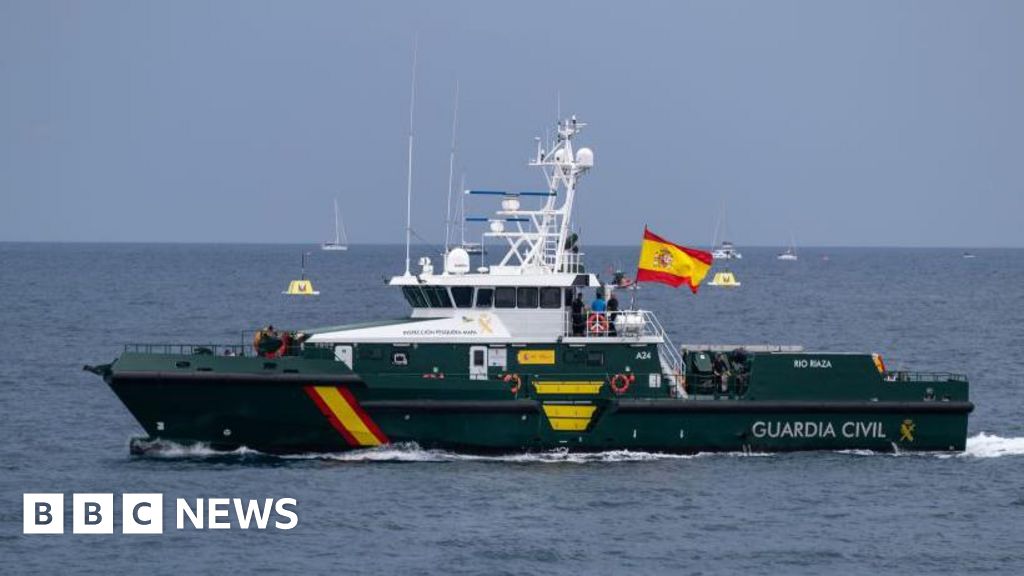
In a remarkable display of law enforcement prowess, the Civil Guard recently intercepted a massive illicit shipment of narcotics en route to Libya. Authorities uncovered between 30,000 and 45,000 kilograms of the drug on a freight vessel, marking one of the largest seizures in recent history. This operation not only highlights the ongoing challenge of transnational organized crime but also underscores the shifting dynamics within regional geopolitics that allow such trafficking to flourish.
The intercepted shipment, believed to be part of a well-coordinated network, signals a troubling escalation in the scope and scale of drug trafficking across Mediterranean routes. Analysts suggest this large consignment could significantly bolster the illicit markets within North Africa and Southern Europe, fueling instability and fostering environments where extremism and corruption thrive. “This seizure demonstrates the increasing complexity of international drug networks,” stated a senior officer within the Civil Guard, emphasizing the critical need for enhanced surveillance and international cooperation. The magnitude of this find also raises questions about the effectiveness of existing maritime border controls and the sophistication of traffickers who are continually adapting to enforcement tactics.
From a geopolitical impact perspective, this incident reverberates across multiple nations and interests. Libya’s ongoing destabilization, marked by civil strife and civilian displacement, facilitates the free passage of illicit cargos. Meanwhile, European nations pressure their counterparts and international organizations to strengthen counter-narcotics operations, aware of the social and economic toll these drugs inflict on societies. Global institutions like the United Nations Office on Drugs and Crime (UNODC) have long warned about the destabilizing effects of drug commerce—effects that stretch beyond borders and threaten regional security frameworks.
Historically, crises such as this also serve as a stark warning about the broader erosion of state sovereignty. As traffickers exploit weak governance and porous borders, the influence of non-state actors expands—an alarming trend confirmed by security experts and historians alike. With the international community’s gaze fixated on other global priorities, these challenges risk growing unchecked. The recent drug seizure thus highlights a moment where decisive action is required to preserve stability and uphold the rule of law amid a shifting global landscape, where alliances are tested, and the fabric of order itself is challenged.
As history continues to unfold, one cannot ignore the weight of this moment. The corridors of power, the battlefield of diplomacy, and the shadows where criminals operate are all converging in a narrative that will define the future of Mediterranean security and beyond. The outcome of these efforts—whether they lead to sustained stability or further chaos—remains a pivotal chapter in the ongoing story of nations striving to defend their sovereignty against those who seek to undermine it. The question persists—how will the world respond in the face of this audacious threat, and what new conflicts or alliances will emerge in the smoke of this massive seizures? Only time will reveal the next chapter in this unfolding saga of power, peril, and resilience.