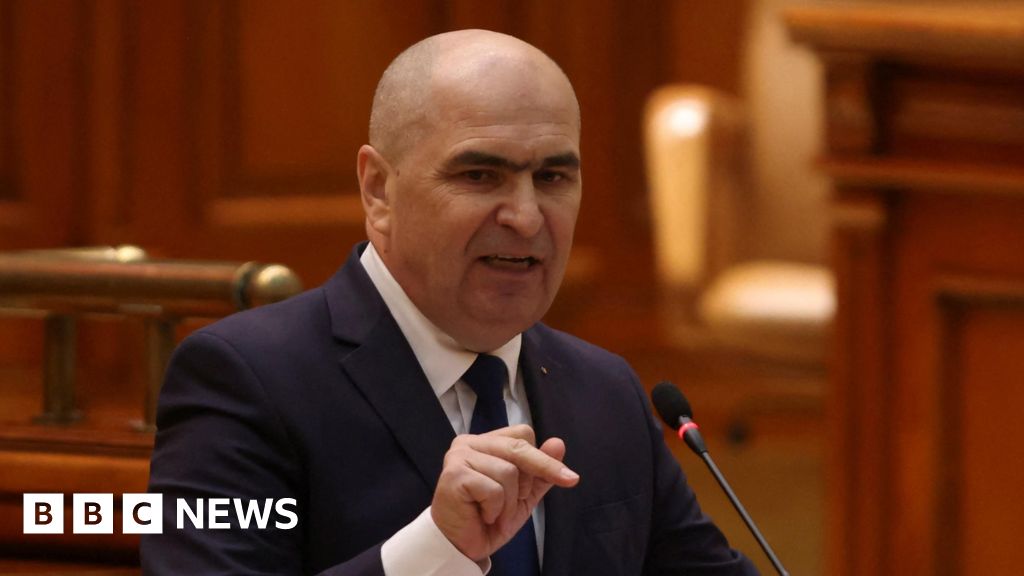
In a startling turn of events that underscores the fragility of contemporary governance, Ilie Bolojan recently faced a decisive defeat in a parliamentary vote after the largest party within his coalition aligned itself with the far-right opposition. The outcome not only signals internal fractures within the political landscape but also signifies a potential realignment of regional power dynamics, resonating far beyond the borders of Romania.
Analysts and political commentators note that this episode highlights the increasingly volatile nature of coalition politics in Eastern Europe, where traditional alliances are now being reconfigured amid rising nationalist sentiments. Historically, such shifts have often served as precursors to wider geopolitical recalibrations, especially as nations grapple with issues of sovereignty, regional security, and economic stability. The decision by the largest coalition partner to bolster far-right forces marks a pivotal moment—potentially reorienting the nation’s approach to both domestic policies and foreign relations.
Most notably, international organizations and international analysts are closely scrutinizing the implications of these internal conflicts. The European Union, for instance, observes with cautious concern as the rise of far-right factions within member states lands at odds with the bloc’s foundational principles of democracy and pluralism. Experts warn that such political shifts could embolden similar movements across the continent, thereby weakening EU cohesion and complicating efforts to pursue unified foreign policy initiatives. Meanwhile, global institutions such as NATO are watching closely, aware that instability within key allied nations could have ripple effects on regional security architectures.
This development also carries significant geopolitical impact. The fragmentation within Romania’s political landscape exemplifies a broader trend of rising nationalism across Europe and beyond, challenging established international norms and treaties. It forces leaders and strategists to question the durability of existing alliances and the future of multilateral diplomacy. As noted by historian Dr. Maria Vasilescu, “When internal factions align with extremist groups, it catalyzes a shift in the entire geopolitical structure, where sovereignty begins to conflict with supranational commitments, rendering traditional diplomacy increasingly complex.”
As history diligently records these moments, the fate of Romania and its regional allies hangs in the balance, with each decision carrying weight well beyond national borders. The recent upheaval serves as a stark reminder that in a world where power is often measured in spheres of influence, the line between stability and chaos can be dangerously thin. The course of history remains unwritten, but the unfolding narrative suggests that the coming days may prove pivotal not only for Romania but for the global order itself—the very fabric of international relations poised on the cusp of transformation and uncertainty.