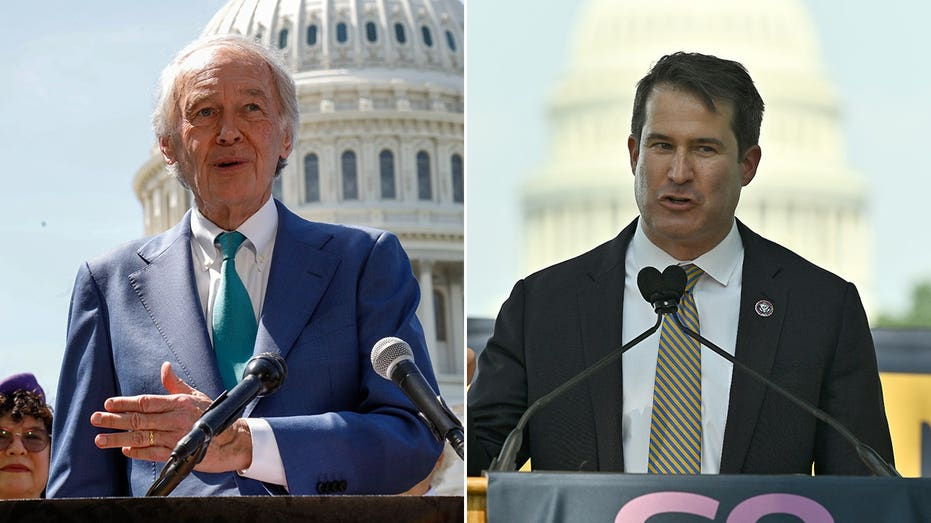
The Massachusetts Democratic Senate primary is heating up as Rep. Seth Moulton narrows the lead held by incumbent Senator Ed Markey. A recent Emerson College poll indicates that Markey’s once sizable advantage has shrunk considerably, reflecting changing voter sentiment in the state.
With the primary election drawing closer, the gap between the long-standing progressive senator and his centrist challenger is tightening, posing a significant contest that may influence the Democratic Party’s direction in Massachusetts.
Poll Shows Shrinking Lead for Senator Markey
The Emerson College survey, conducted on May 3 and 4 among likely Democratic primary voters, reveals Senator Markey ahead by just 5 percentage points—37% to 32%—over Representative Moulton. This is a notable decline from previous polls where Markey commanded leads of up to 20 points.
About 29% of voters remain undecided, leaving room for shifts as the campaign progresses. Other candidates in the race collectively garner only 2% support, underscoring the head-to-head nature of the primary.
Demographic Breakdown Reflects Divergent Support
Markey continues to maintain support among registered Democrats, leading by 13 points within this group. However, among unenrolled voters, who can often sway primaries, Moulton holds a slight edge.
- Women voters: Markey leads 37% to 29%
- Men voters: Support is nearly even, with Moulton at 38% and Markey at 37%
- Under 50 years old: Markey leads 33% to 26%
- Over 50 years old: The race is nearly tied, 40% for Markey and 38% for Moulton
Endorsements Highlight the Ideological Divide
The contest represents a broader ideological split within the Massachusetts Democratic electorate. Senator Markey, 79, enjoys backing from prominent progressives including Senator Elizabeth Warren and Representative Ayanna Pressley, emphasizing his established progressive credentials.
Meanwhile, Moulton, 47, positions himself as a more centrist alternative, gaining endorsements from groups such as VoteVets PAC and the Massachusetts Teamsters. This coalition signals his appeal to moderate and labor-oriented voters.
“Senator Markey leads the Democratic primary by 13 points among registered Democrats, while Rep. Moulton holds a 38% to 32% edge among unenrolled voters,” noted Spencer Kimball, executive director of Emerson College Polling.
Implications for the Massachusetts Democratic Party
The tightening race underscores the dynamic nature of electoral politics within the Democratic Party, reflecting tensions between progressive and centrist factions. With a significant portion of voters undecided, the primary outcome remains uncertain.
Both campaigns will likely intensify efforts to mobilize their bases and sway independents in the weeks ahead. The result will have implications not only for Massachusetts but for the broader ideological balance within national Democratic politics.
The Emerson College poll, as reported by Fox News, serves as a critical indicator of the shifting landscape in this key primary.