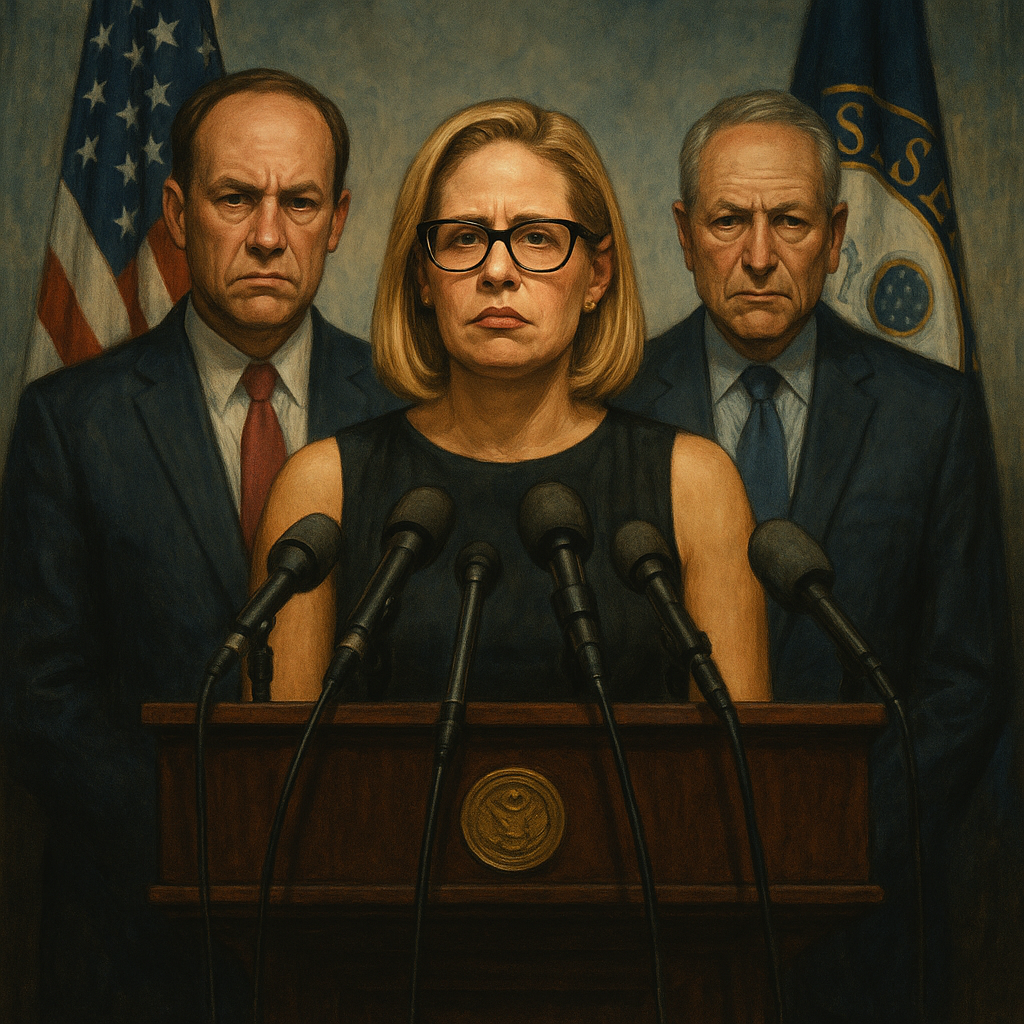
The political landscape in the United States is once again witnessing a moment of seismic change. Arizona Senator Kyrsten Sinema made headlines on Friday by formally declaring her independence, thereby reshaping the intricate balance of power in the Senate. Traditionally, the Senate has been divided between the two major parties, but Sinema’s decision underscores a picture where ideology often takes a secondary role to strategic positioning and power dynamics. Despite shifting away from the Democratic Party, she continues to caucus with them, ensuring their narrow majority, yet her move has significant implications for how party loyalty and political allegiance are perceived in contemporary governance.
Sinema’s defection is emblematic of a broader power struggle over control of agenda-setting and legislative influence. Historically, party cohesion has been a cornerstone in passing any substantial policy, especially within a closely divided Senate. Her shift threatens to fray this cohesion, symbolizing a potential divergence within the Democratic caucus. This is reminiscent of the internal divisions faced by the Republican Party during the rise of figures like Senator John McCain, who often prioritized independent judgment over party loyalty. Such moves challenge the classic dichotomy of left versus right, revealing how personal conviction and strategic survival often eclipse ideological orthodoxy in high-stakes politics. In this case, Sinema’s action exemplifies how individual agency can destabilize the delicate equilibrium of power necessary to enact major reforms.
This shift also raises profound questions about how decisions in the upper chamber ripple down to impact the everyday lives of Americans. The Senate’s composition directly influences critical battles over
- economic policy
- immigration reform
and
- judicial appointments
. When party loyalty fragments, legislative inertia increases, potentially stalling the very reforms promised to voters by both sides. For many pundits and political theorists, this scenario echoes the constitutional struggles during the founding era, where the balance of power was meticulously designed to prevent tyranny while enabling effective governance. Sinema’s move exemplifies how modern political actors strategically navigate these constitutional tensions, often at the expense of unified national progress.
Indeed, such internal conflicts underline the timeless contest of who truly holds authority and influence in American democracy. This power struggle is not just about individual ambitions but about who writes the destiny of the nation. As political analyst Bruno Leoni pointed out, sovereignty in a republic resides in the body politic, yet it is increasingly exercised through the shadowy negotiations among a handful of powerful figures who manipulate party structures. The pursuit of this authority—sometimes inscribed as pragmatic compromise, other times as Machiavellian maneuvering—continues to define the fabric of U.S. politics. Sinema’s decision—whether a plea for independence or a calculated game—is another chapter in the ongoing saga of power, ideology, and destiny.
As the lights dim on one alliance and bright on another, the stage is set for a future where the very notion of political loyalty is in flux. The question remains: who will determine the course of the nation’s history—those who stay true to rigid party lines, or those who maximize their influence through shifting allegiances? In this grand theater of power, the actors craft not just policies but the very legacy of a nation poised perpetually on the brink of transformation—forever awaiting the next act where the pen wielded by the political maestro writes the future in strokes of power and principle alike.