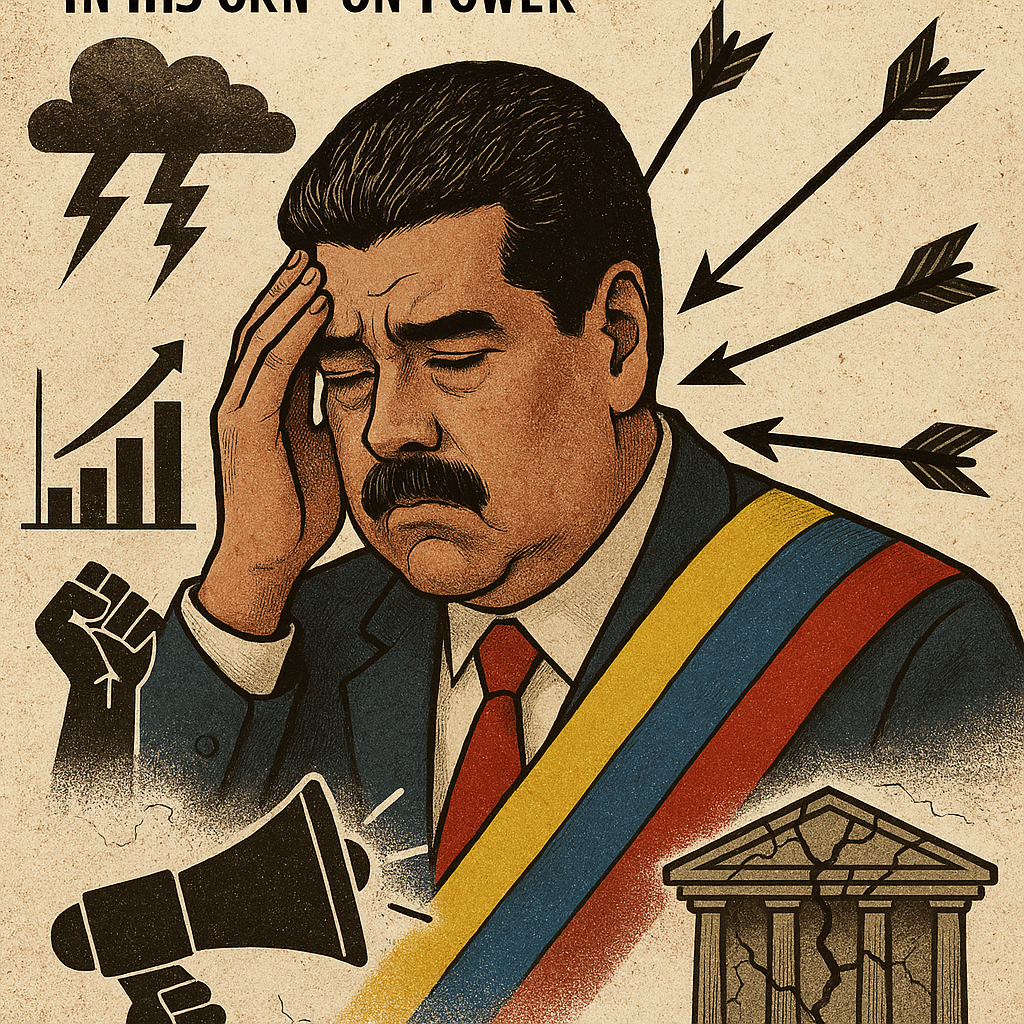
Within the tumultuous landscape of Latin American politics, Venezuela’s President, Nicolás Maduro, faces a critical juncture emblematic of the broader crisis threatening the very fabric of democratic legitimacy. Once heralded by some as a champion of socialist ideals, Maduro now finds himself entangled in a relentless power struggle that echoes the classic conflicts between authoritarian resilience and revolutionary resurgence. The whispers of international condemnation, combined with growing domestic unrest, suggest that Maduro is increasingly running out of options, with each decision echoing deeper into the nation’s destiny.
Maduro’s recent measures signal a potential shift that many political analysts see as an attempt to consolidate power amidst mounting challenges. The decision to tighten control over opposition-led institutions, coupled with crackdowns on dissent, mirrors historical tactics used by populist regimes seeking to strengthen the grip on the levers of power. As constitutional experts dissect these moves, parallels arise with regimes of the past that prioritized centralized authority over democratic accountability. The question remains: are these reforms defensive acts designed to preserve Maduro’s tenure, or are they the harbingers of an irreversible slide into authoritarianism?
Furthermore, the socio-economic fallout of these power struggles extends far beyond Caracas. The Venezuelan people, caught in a relentless struggle for survival, are often seen as pawns in a grand political chess game. The decisions made in the palace corridors—whether to hold new elections, amend the constitution, or suppress opposition voices—directly shape the life chances of millions. This reflects an age-old truth in political theory: where power resides, so too does the capacity to shape societal destiny. As the regime tightens its grip, it raises a fundamental question rooted in historical parallels — will the nation’s sovereignty be dictated by the ambitions of a solitary leader, or will it ultimately pivot back to the sovereignty of the people?
As the global community observes, the internal fractures within Venezuela serve as a stark reminder of how power struggles define history’s course. Whether Maduro manages to prolong his hold on power or succumbs to internal dissent and external pressure, the unfolding crisis underscores a timeless truth: politics is the arena where the fate of nations is decided, and where the future is written with each decision made in the corridors of power. With each passing day, Maduro’s dwindling options reveal that in the theater of sovereignty, the stage is set for either resurgence or ruin—only history can truly reveal the scripts yet to be enacted.