Is President Trump Funding the White House Ballroom in Full? An Investigative Look
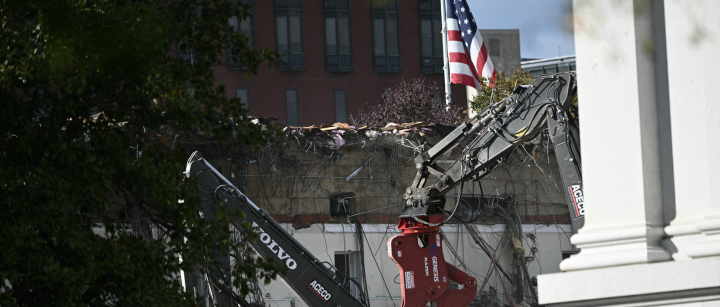
Public discourse around the construction of a new ballroom at the White House has been rife with claims and counterclaims, prompting numerous questions about the project’s financing and ethical implications. Chief among these is whether President Donald Trump is paying for the ballroom in full, and if so, what the actual costs and funding sources are. The White House officially announced that Trump and “other patriot donors” would cover the cost of the $200 million project, with some estimates suggesting it could cost up to $250 million. However, substantial details about the actual contributions of Trump himself or the specific donors remain opaque, raising critical questions about transparency.
Funding Claims and Actual Contributions
- The White House stated on July 31 that a fundraising campaign involving “patriot donors” was underway to cover the $200 million cost. President Trump has repeatedly claimed he would *personally* pay for the ballroom, with an explicit increase in the estimated cost to $250 million in September. Yet, the White House has not disclosed how much the president has pledged or will contribute, leading to uncertainties about the true source of funding.
- On October 15, a fundraising dinner was held, attended by representatives from major corporations such as Amazon, Apple, Google, Lockheed Martin, and others, along with Trump’s political supporters. Despite this, the White House spokesperson confirmed that *”nearly $200 million has been pledged”*, but provided no specifics on individual contributions—especially Trump’s pledged amount.
This ambiguity presents a fundamental issue. While the administration emphasizes private donation efforts, experts point out the lack of clarity on how much Trump himself is contributing. Richard W. Painter, a former White House ethics lawyer, emphasizes that such nondisclosure raises concerns, especially considering the scale of the project and its political optics.
Ethical Concerns and Potential Violations
Beyond the questions of who is paying and how much, the project has attracted significant ethical scrutiny. Critics, including prominent ethics and legal experts, argue that this initiative risks crossing several ethical boundaries. As Noah Bookbinder of Citizens for Responsibility and Ethics in Washington notes, accepting large donations for a project centered on the White House could inadvertently influence presidential decision-making, creating a perception—or reality—of undue influence. Furthermore, Richard W. Painter warns that using private donors for a project that directly benefits the president raises potential violations of federal ethics rules that prohibit using official position for private gain.
Legal concerns extend further into compliance with the Code of Federal Regulations and the Antideficiency Act. Such laws prohibit federal agents from accepting voluntary services or gifts that could distort the transparency of public funding and violate appropriations rules. Many experts argue that accepting donations—especially from powerful corporations seeking contracts—may be motivated by access rather than genuine philanthropy, challenging the boundaries of acceptable presidential fundraising practices.
Public Benefit and Transparency
Another critical point involves whether constructing and funding a private ballroom benefits the American public. While historic monuments like the Vietnam Veterans Memorial and the Martin Luther King Memorial were funded by private donations explicitly dedicated to public memory, critics argue that a White House ballroom—primarily for hosting high-profile donors and political allies—is less aligned with public interest. As Claire Finkelstein, a law professor, points out, the use of a nonprofit like the Trust for the National Mall to coordinate private donations raises questions about transparency and proper scope of such charitable funds.
This situation underscores a broader concern about accountability. The practice of private funding for government projects is not new, but it must be executed with a clear focus on public benefit and adherence to legal and ethical standards. Otherwise, it risks fostering perceptions—if not realities—of favoritism and “pay-to-play” politics that erode citizens’ trust in democratic institutions.
Conclusion: Embracing the Truth for Responsible Governance
As investigations continue into the funding and ethics of the White House ballroom, one principle remains clear: transparent, honest reporting is vital for responsible citizenship and democratic accountability. The American people deserve clarity on how public spaces and resources are managed—especially when private dollars are involved. Upholding the rule of law, maintaining public trust, and ensuring that government actions serve the broader good are the pillars of a resilient democracy. Only through committed transparency can we ensure that projects like this are evaluated fairly, executed ethically, and ultimately serve the people, not just political elites or special interests.