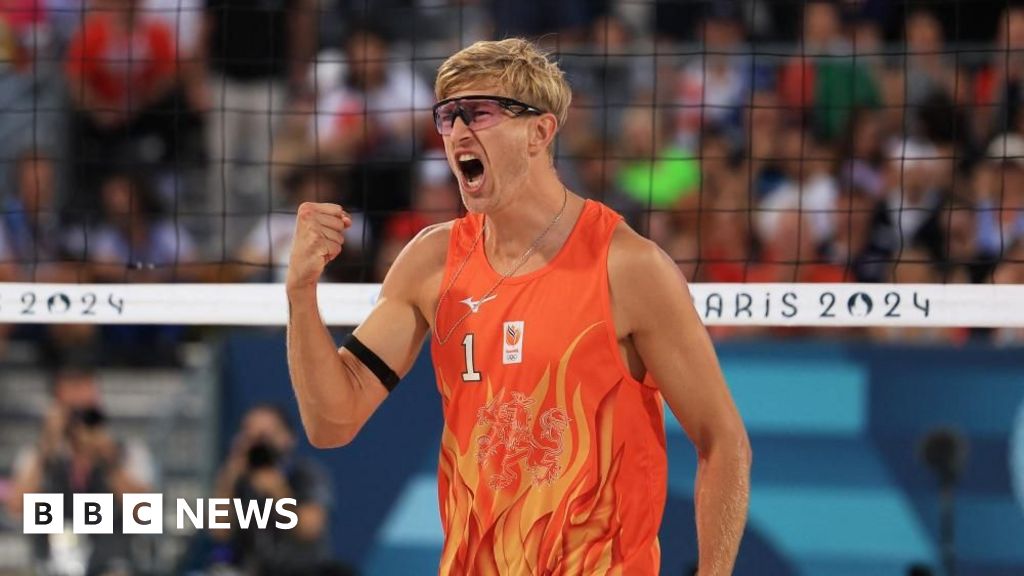
In an era where national security and public morality increasingly influence international relations, recent events have sharply highlighted the ongoing debate over how nations uphold their societal standards and legal principles. Dutch Olympic volleyball player Steven van de Velde, 31, has become a focal point of this controversy after a series of actions that challenge the assumptions of open international sporting events. Van de Velde’s past criminal convictions, including his 2016 guilty plea for the raping of a 12-year-old girl in Milton Keynes — a morally and legally abhorrent offense — have prompted UK and Australian authorities to act decisively. As he prepared to compete at the upcoming Beach Volleyball World Championships in Adelaide, South Australia, his visa application was vehemently denied—a decision rooted in the broader principle that certain crimes must disqualify individuals from representing their nations on the international stage.
The decision underscores a critical shift in how international sporting organizations and host nations are navigating the delicate intersection of athletics, morality, and security. South Australia’s Attorney-General Kyam Maher explicitly called for the rejection of Van de Velde’s visa, emphasizing that “we do not believe that foreign child sex offenders should be granted entry to this country.”1 This stance echoes broader sentiments in Western democracies increasingly motivated by a desire to preserve societal safety and uphold the moral fabric of nations. Australia’s Home Affairs Minister Tony Burke articulated a tough stance, affirming that the government will “continue to use every tool we have available to ensure that Australians can be safe and feel safe in their communities.” Such statements reflect a broader geopolitical shift where sovereign nations prioritize national morality and security over transient athletic or diplomatic considerations.
This incident has ignited intense debate among political analysts and international observers regarding the limits of forgiveness and rehabilitation, especially when it comes to offenders with heinous pasts. Historians and criminal justice experts argue that the evolving policies in countries like Australia and the UK signal a departure from the often lenient international attitude towards athletes with criminal histories. While Van de Velde’s return to professional sport after serving only 12 months of his four-year sentence raises ethical questions, it also spotlights the aspirations of host countries to assert moral authority in the face of global sporting commerce. The incident is also a bellwether for how international organizations and younger audiences may increasingly align with conservative principles that emphasize justice, safety, and societal integrity over rehabilitation alone.
As the controversy unfolds, the international geopolitical landscape is shifting, with nations reevaluating how their decisions impact not just international perceptions of morality but also their standing in a chaotic global order. The incident has garnered reactions from a range of sources, including global institutions like the IOC, who are often caught between the democratization of sport and the maintenance of moral standards. The growing disapproval of Van de Velde’s participation and similar cases reflect a broader narrative: the weight of history is still unfolding, and the decisions made today will echo for generations, shaping a new era of international governance rooted in sovereignty, morality, and societal protection.