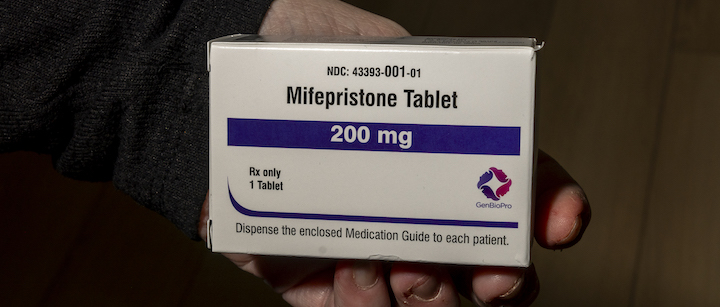
Examining the Validity of Recent Claims on Mifepristone and Medication Abortion Safety
Amid ongoing debates about abortion access, recent statements from Trump-era officials and accompanying reports have fueled concerns over the safety of mifepristone, a drug used in medication abortions. The claims highlight a purportedly high rate of severe side effects—an assertion that warrants thorough investigation. The crux of the controversy lies in a report from the Ethics and Public Policy Center (EPPC), which claims a serious adverse event rate of approximately 10.93%, vastly exceeding the FDA’s reported rate of less than 0.5%. Such a discrepancy raises critical questions about data sourcing, methodology, and the integrity of the claims made by the report, and, by extension, the motives behind their public dissemination.
Assessing the Evidence and Methodology Behind the Report
The EPPC report’s fundamental claim is based on health insurance claims data aggregating outcomes within 45 days of medication abortion. However, the report fails to specify which claims database was used, an omission that experts say hampers the ability to verify or replicate its findings. Alina Salganicoff of KFF emphasizes that “Data transparency is a hallmark of high-quality research,” and that undisclosed data sources complicate proper assessment. Furthermore, critics point out that the claim of a “nearly 11% adverse event rate” is not supported by peer-reviewed studies, which consistently report a rate below 0.5% based on multiple clinical trials and decades of real-world data. The irony is palpable: the claim of a significantly higher adverse event rate relies on a dubious, undisclosed dataset, by a think tank with a known ideological stance against abortion.
Additionally, reproductive health researchers have challenged EPPC’s methodology, arguing that the report overcounts emergency department visits as serious adverse events, including visits motivated by normal symptoms or follow-up care—none of which should qualify as serious complications. Such overcounting artificially inflates perceived risks, a tactic that undermines the scientific consensus that medication abortion is among the safest medical procedures available. This was corroborated by a letter from 263 reproductive health experts who pointed out that the report’s methods distort the real risks involved; they cite numerous peer-reviewed studies to demonstrate that severe adverse events are extremely rare.
The Role of Political and Ideological Motivations
The EPPC, a conservative nonprofit, is openly opposed to abortion and has historically sought to restrict access to medication abortion drugs. Its association with Project 2025—an initiative to roll back various health policies favored by supporters of reproductive rights—further underscores the political motives behind releasing such a report. Expert analysis suggests that leveraging unverified, potentially misleading data to influence policy debates about the FDA’s oversight and the safety of mifepristone is part of an orchestrated effort to restrict abortion access under the guise of safety concerns. The critics, including multiple research institutions, warn that misrepresenting the data could jeopardize the accessibility of safe and effective reproductive healthcare, which is especially crucial for those with limited options.
Factual Accuracy of Safety and Regulatory Actions
All reputable evidence—experience from France, the U.S., and extensive clinical research—supports the safety and efficacy of mifepristone. Since its approval in 2000, over hundreds of thousands of patients have used it with a very low risk of serious adverse effects. Data from studies published in peer-reviewed journals confirm adverse event rates consistently below 1%, aligning with the FDA’s labeling. Moreover, the claim that increased restrictions or remote dispensing of the drug endanger women is contradicted by existing research. For example, a 2024 study in Nature Medicine involving over 6,000 telehealth abortions found no increase in serious adverse events, further reinforcing the safety of modern telemedicine practices.
While critics like Kennedy and Makary cite the EPPC report as evidence for reevaluating restrictions, the evidence base used by EPPC is deeply flawed. Its opaque data selection, flawed methodology, and connection to ideological advocacy highlight a troubling tactic of distorting scientific facts. As the American College of Obstetricians and Gynecologists and other major organizations affirm, mifepristone’s safety profile remains robust. Ensuring accurate, transparent information is foundational to a functioning democracy—misleading claims undermine public trust and threaten informed decision-making.
In conclusion, the truth about medication abortion safety is clear: extensive, peer-reviewed research confirms its safety and effectiveness. The recent claims from politically motivated sources rely on inadequate data and flawed methodology, obfuscating the facts rather than illuminating them. Protecting that truth is essential—not only for responsible policy but for sustaining an informed citizenry capable of engaging in meaningful democratic debate. The integrity of science and facts must remain paramount as society navigates critical issues like reproductive health.