The recent disbandment of the “department of government efficiency” (Doge) in the United States marks an extraordinary turning point in the ongoing experiment of centralized federal reform. Once envisioned as a bold effort to overhaul and slim down federal agencies, Doge has been officially declared nonexistent, despite still being under contract merely eight months prior. This move signals a dramatic retreat from the ambitious reorganization championed by President Donald Trump and his allies, aligning with a broader shift in Washington toward traditional bureaucratic resilience rather than radical reform.
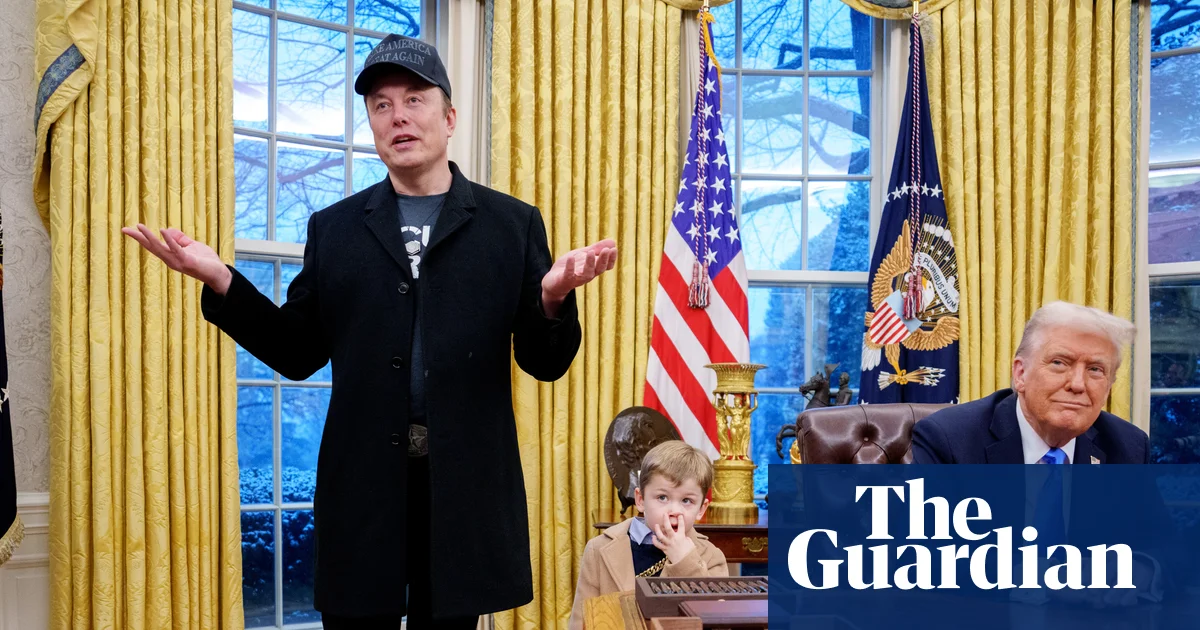
Leading figures like Elon Musk and Vivek Ramaswamy, originally appointed to spearhead Doge’s large-scale restructuring, now find themselves on the sidelines, their influence waning amid internal chaos and public controversies. Musk’s public comments on transparency, ironically, contrast sharply with reports from whistleblowers and government insiders who described the agency’s covert operations—refusing to identify agents, cutbacks without consultation, and a lack of accountability. These discrepancies reflect a profound crisis of trust and legitimacy within the federal reform movement, which, according to analysts, was never fully rooted in transparent governance but rather in untested experimentation that ultimately backfired.
Internally, critics argue that Doge’s aggressive layoffs—more than 200,000 federal workers affected—have precipitated a crisis of confidence across essential government sectors. While the official narrative touts billions in savings and streamlined efficiency, independent experts have expressed deep skepticism about these claims—a suspicion only amplified by the absence of clear public accounts. Leading historians like Dr. Marc Epstein warn that such drastic measures, driven by political and ideological agendas rather than pragmatic reform, threaten the stability of federal institutions at a time when geopolitical confidence in the U.S. is already strained. The fallout now extends beyond domestic governance, impacting the country’s international standing as allies and adversaries alike observe its internal struggles.
The seismic shifts within U.S. domestic policy are also echoing abroad. Russia and China, keenly aware of Washington’s internal disarray, are watching closely for any signs of vulnerability. The disbandment of Doge may symbolize a retreat from ultra-ambitious reform efforts, yet it also underscores a fundamental truth—decisions made in Washington ripple across the world’s geopolitical fabric, influencing alliances, military posture, and economic stability. As NATO and other international alliances reassess U.S. leadership, the chaos surrounding this audacious reform attempt reveals how internal discord can weaken even the most powerful nations on the global stage.
As history continues to unfold, the disbandment of Doge invites a sobering reflection for nations watching from afar: in the map of geopolitics, stability often hinges on the capacity of powerful nations to maintain internal cohesion. The fate of this short-lived endeavor to revolutionize federal efficiency underscores an enduring lesson—the weight of history does not rest solely on the decisions of global institutions, but on the resilience or fragility of their core institutions. With the echoes of this upheaval resonating across borders, the question remains: will the United States regroup and forge a new path forward, or will its internal chaos persist as a symbol of declining influence in a shifting world order?