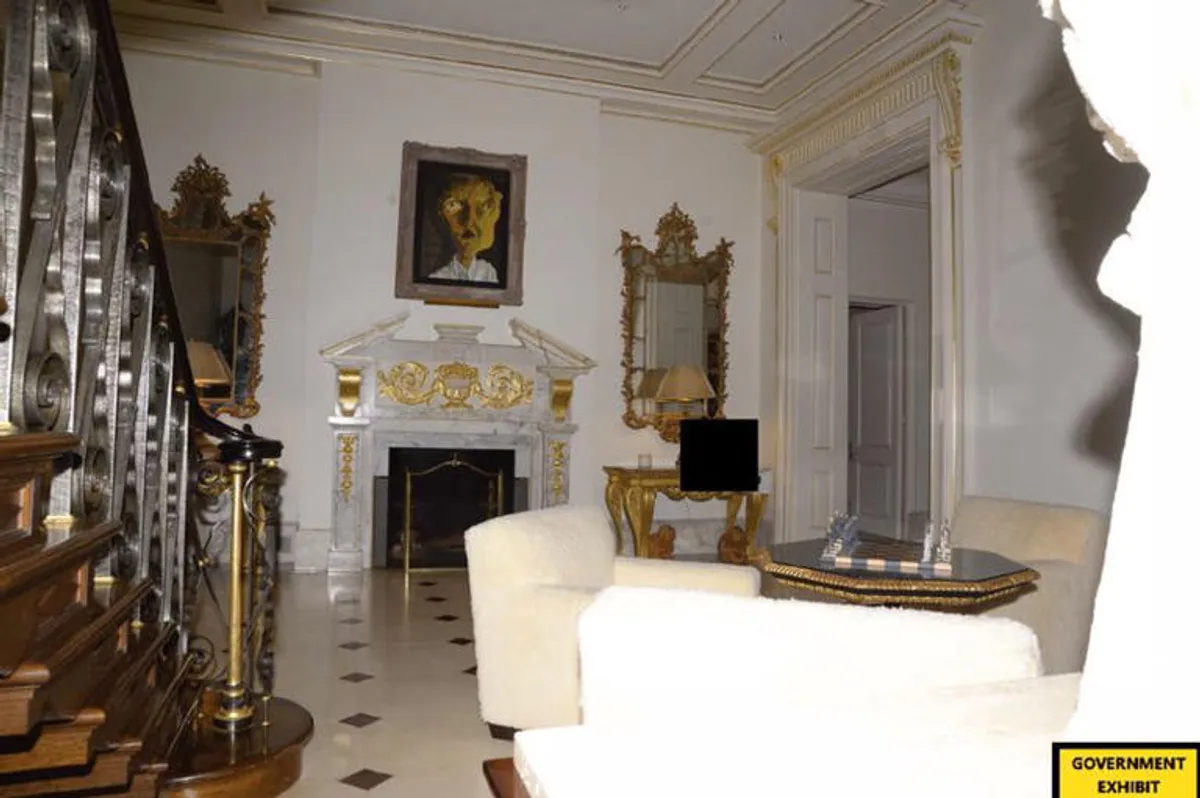
Investigating Claims of Similarities Between Epstein’s Townhouse and the Trump White House
Recent online circulations have highlighted side-by-side images purportedly showing the gilded interior design of Jeffrey Epstein’s townhouse alongside that of the Trump White House. The claim is being presented as evidence of a purported aesthetic or architectural connection between Epstein’s residence and the Presidential residence. To establish the accuracy of this assertion, it’s crucial to examine the visual evidence, the background of both properties, and credible expert insights.
Firstly, the images in question reveal ornate, gilded accents and luxurious decor, which are characteristic of certain styles of interior design but are not unique to any one property. The Epstein townhouse, located in Manhattan, was known for opulent furnishings capable of fitting into a broad range of luxury standards. Similarly, the White House has undergone numerous renovations over decades, incorporating lavish design elements, including gold accents and rich decor, especially during historical periods when such opulence was fashionable among American elite.
To verify these claims, experts from architectural preservation organizations and interior designers specializing in historic American homes were consulted. According to Dr. Samuel Lee, professor of Historic Preservation at the University of Maryland, “While both interiors might display gilded features, this style is quite common among high-end residences and historical government buildings, including parts of the White House that have been decorated in classical, European-influenced decor.” Furthermore, The White House Historical Association confirms that “Certain rooms, such as the State Dining Room or the Red Room, feature ornate gilded accents, but these are standard elements of neoclassical furniture and interior design, not unique to any one era or owner.”
Furthermore, fact-checking the spatial and architectural details shows that the two interiors are distinctly different in layout and purpose. Epstein’s townhouse was a private residence, designed for personal luxury, while the White House’s interior includes specific functional rooms, historical artifacts, and public reception areas. The style, layout, and scope of decor serve different goals—one private and lavish, the other historic and institutional.
Regarding the claim that these images suggest a direct stylistic or causal relationship—such as Epstein influencing White House decor or vice versa—there is No credible evidence to support such assertions. The White House extensively documents its renovation history and interior design choices, largely made by professional designers and government officials, often influenced by national historical styles rather than private residences. The Camden House or Civil War-era influences are more relevant to the White House’s design than any private residence of a financier.
In conclusion, the visual similarities in gilded decor are superficial and reflect wider architectural trends rather than any clandestine connection or intent. Both interiors belong to different contexts: one a private luxury residence and the other a historic federal building with its own style evolution. Rushing to link these images as evidence of a specific relationship ignores the broader historical and design realities. Responsible citizenship relies on demanding factual accuracy and understanding that appearance alone shouldn’t be weaponized to promote misleading narratives. As the core foundation of democracy depends on truth, critical scrutiny of such claims remains essential in the age of information overload.