Rivian’s Bold Push Toward Autonomous Driving Disrupts Future of Electric Vehicles
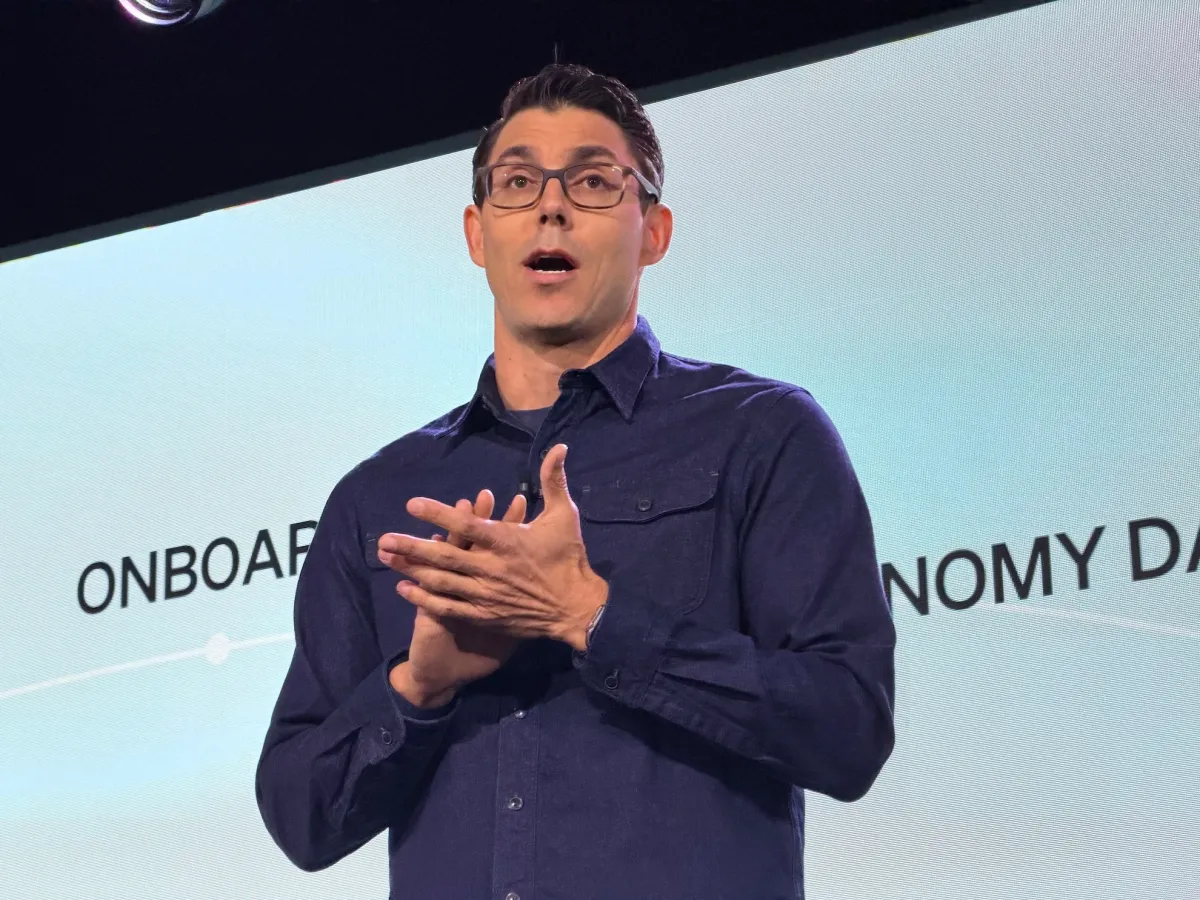
In a paradigm-shifting move, Rivian has announced its accelerated transition into the realm of fully autonomous vehicles, promising a future where “hands-off” driving becomes a reality by 2026. The company’s recent Autonomy & AI Day revealed a series of groundbreaking developments rooted in innovation and disruption—aimed squarely at redefining the EV and autonomous market landscape. This move places Rivian ahead of many traditional automakers, demonstrating how a fresh approach to AI-centric design, powered by transformer-based architectures, can potentially overhaul existing automotive paradigms.
Central to Rivian’s strategy is the development of its Large Driving Model (LDM), a product of a shift from deterministic rule-based systems to a data-driven, AI-first platform. As CEO RJ Scaringe explained, Rivian’s earlier models relied heavily on prescriptive control strategies, but his team quietly pivoted in 2021, adopting a comprehensive transformer-based AI structure similar to innovations pioneered by Tesla with its Full Self-Driving (FSD). This new platform leverages Nvidia’s Orin processors and accumulates data from its fleet to rapidly enhance vehicle autonomy capabilities.
The implications for the automotive business are profound: Rivian’s focus on AI-centric systems is surprising industry veterans who traditionally favored rule-based automation. The company’s goal to achieve “Universal Hands-Free” driving by early 2026, covering over 3.5 million miles in North America, demonstrates a committed disruption to the traditional automobile manufacturing timeline. Should Rivian successfully train its LDM in this tight window, it could establish a new standard for disruptive innovation—shifting consumer expectations from semi-autonomous systems to fully autonomous, driverless operations significantly earlier than competitors.
Advancements in lidar technology and custom hardware, including the unveiling of a new autonomy computer, are set to facilitate this transformation. However, the industry remains cautious. The challenge of transitioning from “eyes-on” to “eyes-off” driving is non-trivial, and even with a state-of-the-art system, safety remains a paramount concern. Nevertheless, Rivian’s transparent communication about product timelines aims to differentiate itself in a crowded market by setting realistic expectations, potentially giving it a competitive edge in consumer trust and brand loyalty.
The broader market impact could be revolutionary. Industry analysts from Gartner and MIT acknowledge that this integration of AI and hardware signifies a fundamental shift—foreshadowing a future where traditional automakers are forced to rethink their strategies. Companies like Tesla have pioneered this space, but Rivian’s approach, emphasizing clarity on timelines and customer choices, signals a new era of agile innovation in the EV sector. Such disruption threatens established giants, paving the way for smaller, nimble challengers leveraging cutting-edge AI to accelerate autonomous capabilities.
Looking ahead, Rivian’s focus on AI-driven software and hardware advancements points toward a future where autonomous mobility is not a distant dream but an imminent reality. The company’s roadmap to roll out progressively capable driver assistance systems, culminating in fully hands-free and eyes-off driving, features a dynamic mix of **innovation, disruption**, and relentless business pragmatism. The industry’s next few years will dictate whether Rivian’s aggressive push can succeed in transforming the automotive landscape—an urgent call for competitors to innovate or risk obsolescence in a rapidly evolving tech-automotive ecosystem.