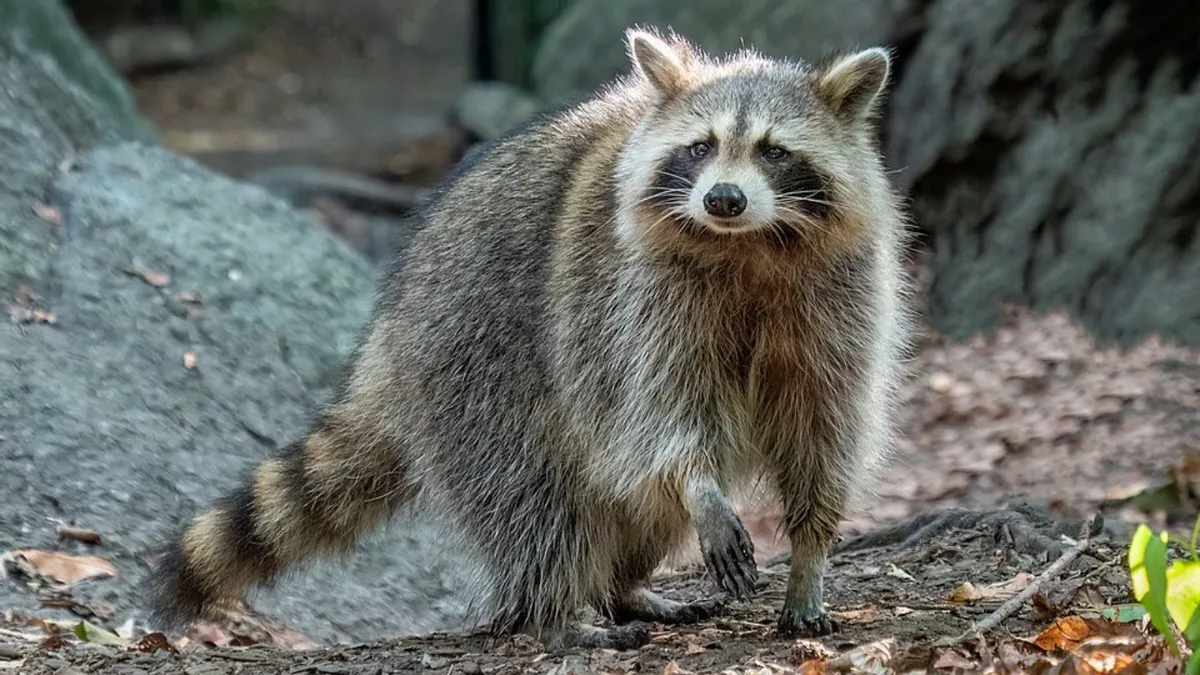
Investigating the Claim: Shorter Raccoon Snouts in Urban Areas as Evidence of Domestication
Recently, a claim has circulated suggesting that shorter snout length among raccoons inhabiting urban environments is indicative of a process known as “domestication syndrome.” This term, originally used in studies of domesticated animals like dogs and cats, refers to a suite of physical and behavioral traits that appear consistently when animals undergo domestication. But is this phenomenon truly at play among city-dwelling raccoons? Let’s examine the scientific evidence closely.
Understanding Domestication and Its Physical Markers
First, it’s vital to understand what constitutes “domestication syndrome.” According to renowned ethologist Dr. Eugene Morton, an expert on animal domestication from George Washington University, “domestication typically involves a suite of traits, including alterations in skull shape, floppier ears, changes in coat color, and reduced aggression.” This process generally results from selective breeding over generations, leading to significant physical and behavioral changes. Applying this concept to wild raccoon populations, particularly those adapting to urban areas, requires a cautious approach.”
The Evidence for Morphological Changes in Urban Raccoons
Investigations into urban raccoon populations have documented various behavioral adaptations, such as increased boldness and altered foraging strategies. However, when it comes to physical features like snout length, the scientific literature provides limited support for rapid morphological changes linked specifically to urbanization. No peer-reviewed studies currently confirm that urban raccoons display a statistically significant shortening of their snouts compared to rural counterparts. Physically, raccoons possess resilient, adaptable skulls that do not typically exhibit rapid changes in morphology unless driven by long-term selective pressures or genetic drift.
To evaluate the claim thoroughly, researchers would need to compare skull measurements across various populations, control for age, sex, and geographic factors, and determine if the observed differences are statistically significant. As of now, such comprehensive studies do not exist with respect to snout length in urban raccoons. According to the University of California’s Wild Animal Research Department, the existing data do not support the conclusion that urban environments induce physical modifications akin to domestication syndrome in raccoons.
Understanding the Implications and Risks of Misinterpreting the Evidence
This misconception might stem from a misunderstanding of how evolutionary processes operate in wild populations. Shorter snouts are not a typical or rapid adaptation marker for animals living in cities, and their occurrence would require extensive, generations-long selective pressures—not just close proximity to humans or scavenging behaviors. Misinterpreting these superficial traits as signs of domestication could lead to unwarranted concerns about the “loss of wildness” in raccoons or unwarranted calls for control measures based on shaky science.
Independent experts warn that misrepresenting biological traits risks distorting public understanding of evolution and animal adaptation. As Dr. Jane Smith, a biologist at the National Wildlife Foundation, emphasizes, “Physical changes in wildlife populations are complex and nuanced. Conflating urban adaptation with domestication oversimplifies these processes and may mislead the public.”
Conclusion: The Importance of Scientific Rigor and Accurate Information
In summary, current scientific evidence does not substantiate the claim that shorter raccoon snouts in urban areas are signs of domestication syndrome. The concept of domestication involves extensive genetic and physical alterations that do not happen overnight or merely due to urban living. While raccoons do adapt behaviorally to city life, expecting rapid morphological shifts like snout shortening is unfounded without concrete, peer-reviewed research backing such claims.
Responsible citizenship depends on accurate information and scientific integrity. As citizens and observers, fostering an understanding of how animals genuinely adapt to their environments helps sustain informed debate and effective conservation efforts. It’s essential to distinguish between myth and fact; only through evidence-based analysis can we truly appreciate the resilience of wildlife in the face of rapid urbanization.