Fact-Checking President Trump’s Claims on Tariffs and Federal Revenue
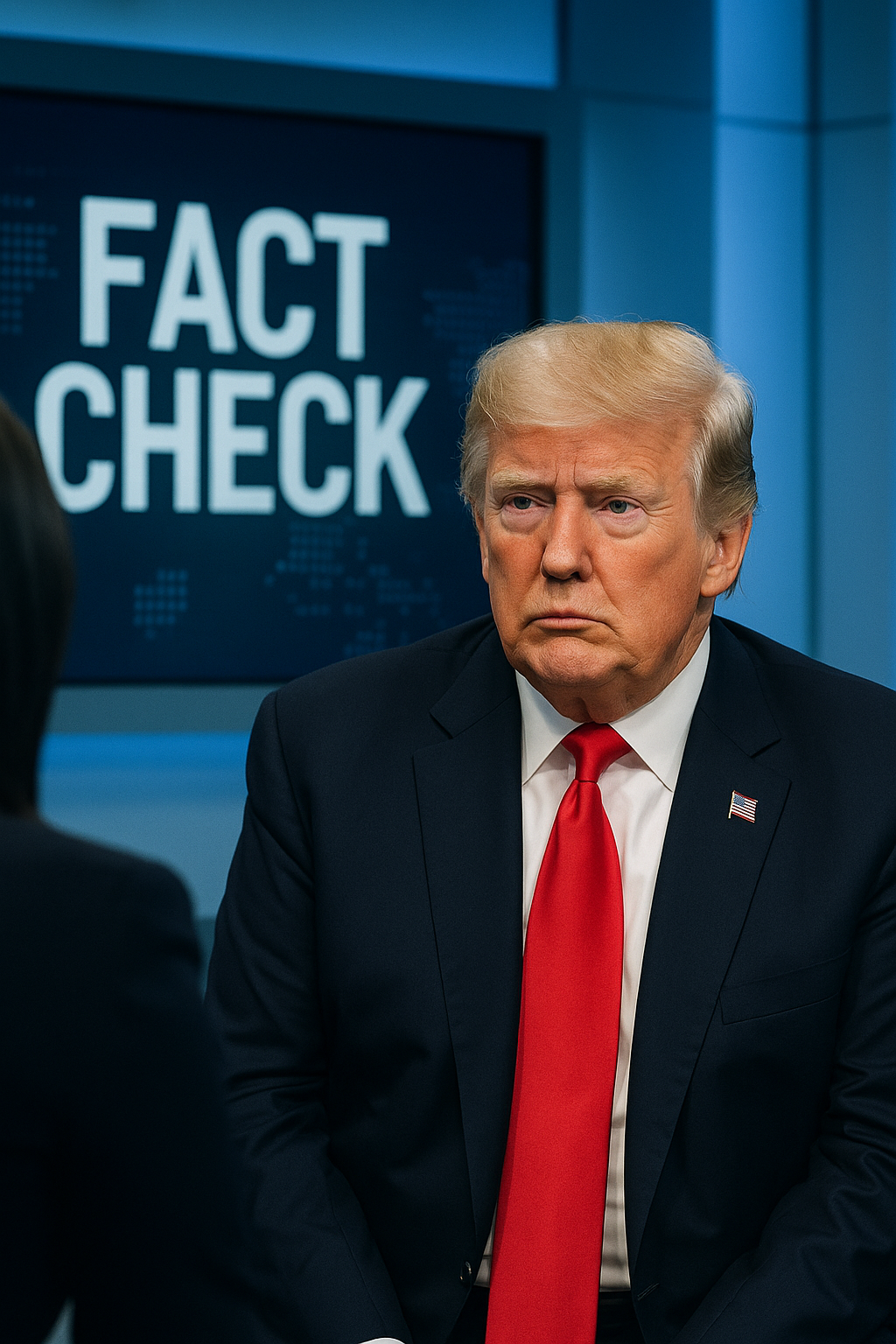
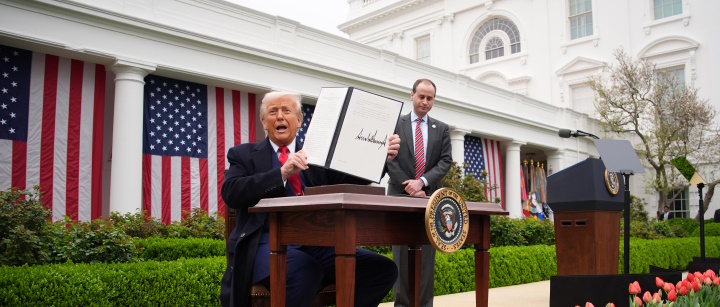
Recently, President Donald Trump claimed that the revenue generated from increased tariffs on imports could finance almost a dozen major government initiatives, including paying down the national debt, boosting the military budget, and providing dividend checks to Americans. His assertion that tariffs could “easily” fund these priorities has prompted a closer investigation into the facts, given the complex mechanics of federal revenue and government spending. As a responsible citizen and defender of democracy, it’s crucial to understand whether such claims hold up under scrutiny.
Can Tariffs Cover Large-Scale Government Spending?
During his recent statements, Trump stated that tariffs would sufficiently fund efforts like a 50% increase in the defense budget, dividend checks of $2,000 to Americans, and debt reduction. However, current data from the U.S. Treasury Department indicates that in the fiscal year 2025, the United States collected approximately $264 billion in tariff revenue — less than a quarter of the trillions needed for the initiatives Trump has proposed. For example, the proposed military budget increase from $1 trillion to $1.5 trillion alone would cost an additional $500 billion, which exceeds the predicted tariff revenue for years to come. Likewise, the Yale University analysis estimates the cost of dividend checks at about $450 billion, almost double the total tariff revenue forecasted over the next decade.
- Tax foundation experts and economists, such as Erica York and Kimberly Clausing, confirm that tariffs are insufficient to cover such broad expenditures.
- Official government estimates (Congressional Budget Office, Tax Policy Center) project annual tariff revenues averaging around $230 billion over the next ten years.
- Major government initiatives, like military expansion and universal dividend checks, run into trillions of dollars — widely outstripping tariff income.
Thus, Trump’s claim that tariffs could “easily” fund these large initiatives misrepresents the current and projected financial data. Tariffs, while they do raise considerable revenue, are just a small part of the overall federal income, which relies predominantly on individual income taxes, payroll taxes, and other sources.
Are Tariffs Truly Funding the Debt or Providing Dividends?
Another common assertion is that tariffs will eliminate or significantly reduce the national debt. Yet, the total U.S. national debt exceeds $38 trillion, meaning that even the full tariff revenue forecasted ($around $2.5 trillion over 11 years) would only cover less than 1% of this amount. Moreover, the actual amount collected from tariffs is a fraction of total federal receipts, which amounted to about $4.9 trillion in fiscal year 2024, with income taxes making up the lion’s share — over 50%. Despite Trump’s claims, tariffs are a drop in the bucket and cannot realistically fund debt repayment plans.
In terms of dividend checks and military bonuses Trump mentioned, these are financed through specific appropriations not directly linked to tariffs. For instance, the Warrior Dividend bonus program for military personnel was funded via a dedicated congressional allocation, not tariff revenue. Similarly, the proposed $2,000 direct payments to Americans would cost approximately $450 billion, which again is substantially higher than the projected tariff income, rendering the claim that tariffs pay for such dividends false.
Are Tariffs an Effective or Sustainable Fundraising Tool?
Legal experts, such as those at Skadden and the Congressional Research Service, highlight that the legislation used to impose these tariffs — Section 232 of the Trade Expansion Act and the International Emergency Economic Powers Act (IEEPA) — are intended for trade negotiations and national security rather than revenue collection. The Supreme Court is currently reviewing whether IEEPA tariffs can be used primarily as a tax revenue tool, indicating unresolved legal questions and the rarity of such use.
Economists from the Peterson Institute for International Economics agree that as tariffs grow in size, they tend to shrink the import base, triggering a negative feedback loop that diminishes potential revenue. Kimberly Clausing and Maurice Obstfeld state that to replace income taxes with tariffs would require implausibly high rates on a very narrow import base, making Trump’s plans financially unfeasible.
Conclusion: The Truth Matters for a Healthy Democracy
In sum, President Trump’s promises that tariffs alone could fund comprehensive government initiatives are not supported by current economic data or government projections. While tariffs can contribute to federal revenue, their capacity is limited and insufficient for large-scale expenditures such as trillions in military spending and universal dividend payments. As Americans, it’s vital to rely on facts and data rather than overstated claims. Only through honest discussion grounded in reality can we uphold the integrity of our democratic process and ensure responsible governance that truly serves the interests of the people.