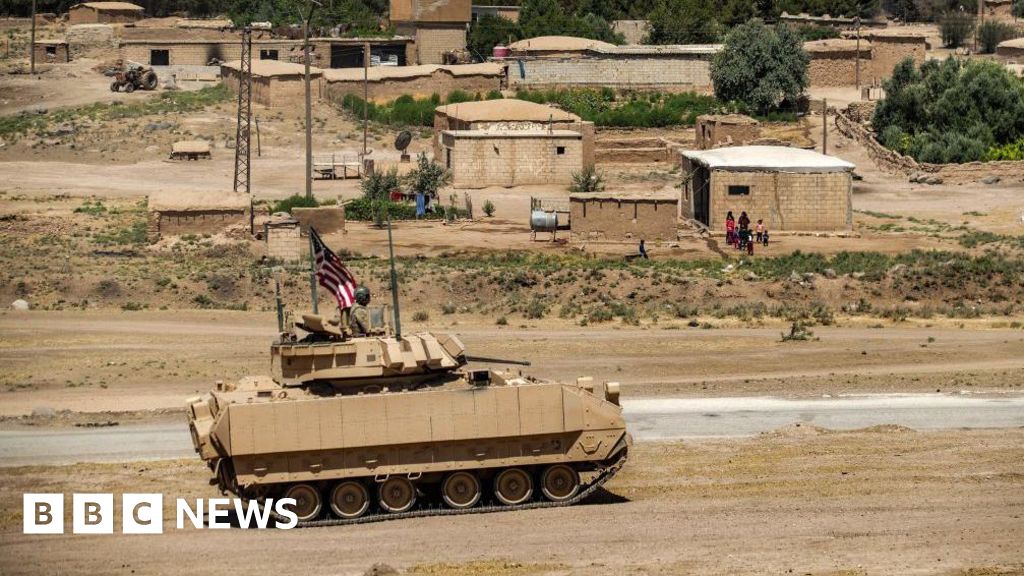
The recent ambush in Palmyra, Syria, resulting in the death of two US soldiers and a civilian interpreter, marks a stark reminder that the geopolitical landscape in the Middle East remains perilous and volatile. According to the US Central Command, the attack was carried out by a gunman allegedly affiliated with Syrian security forces, with some reports indicating the involvement of elements hostile to both the Syrian government and Western interests. The unclaimed responsibility by any militant group, combined with the Syrian Observatory for Human Rights suggesting the attacker may have been part of the Syrian security apparatus, underscores the complex web of alliances and betrayals woven into the region’s ongoing chaos.
This incident comes amid renewed tensions regarding the U.S. military presence in Syria—a contentious issue that continues to shape international perceptions and impact regional stability. An area where the Syrian government admits to having little control, Palmyra has long been a strategic and symbolic frontline. The attack’s timing, during a joint US–Syrian security operation, highlights the fragile peace and the persistent threat posed by remnants of the Islamic State (IS), which, despite losing territorial control in 2019, still manages to carry out insurgent attacks. The ongoing battle against IS is not just about retaking territory; it’s a broader fight for influence, sovereignty, and regional dominance by global and local powers alike.
International reactions emphasize hardline resolve. US Defense Secretary Pete Hegseth issued a warning that echoes through the corridors of power: “if you target Americans—anywhere in the world—you will spend your brief, anxious life knowing the United States will hunt you, find you, and ruthlessly kill you.” This rhetoric signals an escalation in US military posture and commitment to counter-terrorism operations, despite the risk to diplomatic relations. Meanwhile, Syria’s Foreign Minister Asaad al-Shaibani condemned the attack, extending condolences to the victims’ families, as the Assad regime seeks to project stability amidst chaos. The incident risks igniting further clashes in a landscape where alliances are shifting, and the lines between friend and foe blur.
Historically, analysts and international organizations have warned of the consequences of prolonged foreign military intervention. Global institutions like the United Nations estimate that between 5,000 and 7,000 fighters remain active for IS across Syria and Iraq. Despite recent victories, the jihadist threat persists, facilitated by fractured governance and regional rivalries. The recent rapprochement between Syria and the international coalition combating IS, which includes the US, signifies a precarious hope for stability—yet it also necessitates vigilant watchfulness. As the US continues its military presence, seemingly committed to a undefined mission in Syria, the risk remains that innocents, soldiers, and local populations will continue to pay the price of geopolitical chess games that no longer resemble clean victories.
As history unfolds amid the dust and ruins of Palmyra, the global stage stands at a crossroads. The narratives of American strength, Syrian sovereignty, and the fight against extremism intersect in a tragic tableau—one where decisions made today will echo for generations. With each loss, each attack, the world’s balance teeters anew. The question remains: how much longer can this fragile mosaic withstand the relentless tides of conflict, or are we simply witnessing the beginning of an even darker chapter in Middle Eastern history?