Matox News

Truth Over Trends, always!

Black Musical Theater: Celebrating 200 Years of Cultural Resilience and Innovation

In the great tapestry of human civilization, culture functions as both the mirror of our collective identity and the canvas upon which we project our future aspirations. On the cusp of pivotal moments in history, artists and cultural pioneers have often assumed the mantle of societal architects, shaping and reflecting the values, struggles, and triumphs of their epoch. The founding of Amas Musical Theater in 1968 by LeLaine LeNoire exemplifies this parallel—it was not merely an act of artistic enterprise but a declarative stance on the importance of cultural diversity and representation in American society. Her initiative, infused with purpose, sought to elevate multiethnic casting, thereby enriching the cultural dialogue and affirming the integral role of identity within the American narrative.

Much like the Greeks of ancient times, who consecrated myth and drama as essential facets of civic life, modern cultural innovators understand that the arts serve as repositories of memory and beacons of prophecy. The success of productions like “Mama, I Want to Sing!” and “Bubbling Brown Sugar” signals a turning point—a recognition that authentic stories rooted in diverse experiences contribute to the moral and aesthetic fabric of society. These works, born amidst tumultuous social change, echo the timeless insight of thinkers like G.K. Chesterton: that tradition, which preserves the best of our collective past, must evolve to include the voices previously marginalized. In this context, cultural renaissance is intertwined with the assertion of rightful identity, a vital act of cultural self-preservation amid an ever-changing world.

The importance of such cultural endeavors extends beyond entertainment; they forge a profound connection between society’s fabric and the individuals anchoring it. A nation’s cultural output, as Tocqueville observed, reveals the undercurrents of its democracy, exposing the virtues and flaws woven into its institutions. In this regard, Amas Musical Theater and similar initiatives symbolize a democratization of culture—a recognition that art is not just a luxury, but a vital expression of societal sovereignty. They remind us that by celebrating roots and forging new traditions, society cultivates resilience and continuity, allowing forgotten histories to reemerge and guiding humanity towards a future mindful of its heritage.

Ultimately, culture emerges as both memory and prophecy: a living archive charting the human journey and a visionary force shaping what is yet to come. As the poet T.S. Eliot might have suggested, in our pursuit of harmony between past and future, we discover “the still point of the turning world”—a place where the echoes of tradition inform the aspirations of tomorrow. Our shared cultural history is a testament to our resilience, an ongoing dialogue that sustains not merely individual identities but the spirit of civilization itself. To engage with this heritage is to participate in a sacred act of rebirth, forging a path where the memory of yesterday guides the prophecy of tomorrow, reflecting the eternal human endeavor to find meaning and coherence amid chaos.

All Her Fault review – Sarah Snook’s gripping thriller delivers a thrilling and thought-provoking experience for today’s youth | Television

In an era where culture seems to tremble on the edge of fragmentation, the resilience of societal identity often manifests through the narratives we elevate and the stories we choose to tell. As Ortega y Gasset once posited, “The spirit of a nation lives in its stories,” and amidst the chaos of modern life, television dramas have become the new agora — spaces where the collective psyche is reflected, scrutinized, and subtly shaped. The recent series All Her Fault, an adaptation rooted in Andrea Mara’s bestselling thriller, exemplifies this phenomenon. It braids together the troubling realities of middle-class affluence, the darker undercurrents of modern motherhood, and the existential crises that accompany societal privilege. But more than entertainment, such works serve as mirrors and prophecy, revealing what we value, fear, and unconsciously endorse as a society.

This series not only examines the disappearance of a child within a seemingly secure suburban enclave but also unravels the complex web of human motives and societal expectations, echoing Tocqueville’s insight that “America’s greatness lies in its individualism, yet its survival depends on collective community.” Here, the affluent women, Marissa and Jenny, embody modern American ideals of success and nurturing, yet beneath their polished exteriors lie layers of guilt, repression, and moral ambiguity. These characters evoke Chesterton’s recognition that “an adventure is only an inconvenience rightly considered,” acknowledging that behind comfort and prosperity lie often unspoken, unresolved tensions. In this cultural microcosm, we see a reflection of a society wrestling with the penultimate question: what is the true cost of security? And at what point does protection devolve into paranoia? It is in this tension that the series finds its moral heartbeat, questioning whether the superficial safeguards of wealth truly shield us from the chaos lurking beneath?

Moreover, All Her Fault underscores the indelible connection between culture and identity. It probes the penalty women pay for societal roles, exposing the quiet suffering and sacrifices anchored in modern motherhood — a theme as old as the mythos of Demeter and Persephone. As T.S. Eliot wrote, “The tradition does not consist of a common inheritance but rather an ongoing dialogue between the past and present,” thus emphasizing that our cultural identity is an evolving conversation. This series chronicles that dialogue, revealing the fissures and fractures in the beautiful facade of suburban bliss, ultimately inviting viewers to ponder: are we merely characters scripted in a cultural play or authors of a new chapter? This tension makes the narrative not just compelling storytelling but cultural commentary that challenges us to reflect on how privilege isolates, isolates, and redefines our collective values.

In the end, the cultural fabric woven through television and art survives not merely to entertain but to serve as the collective memory and prophecy of mankind. Like Homer’s epics or the Great Works of classical antiquity, modern storytelling holds within its lines the echoes of human striving, fragility, and hope. As Chesterton observed, “Art, when it is most truly artistic, is the most radically conservative of all human activities,” anchoring us to our roots even as it propels us into the future. Therefore, culture becomes both a mirror illuminating our current state and a lantern lighting the path ahead — reminding us that in the harmony and dissonance of our stories, humanity’s eternal song continues. And in that song, we find not only our memory but also the prophecy of what we might yet become.

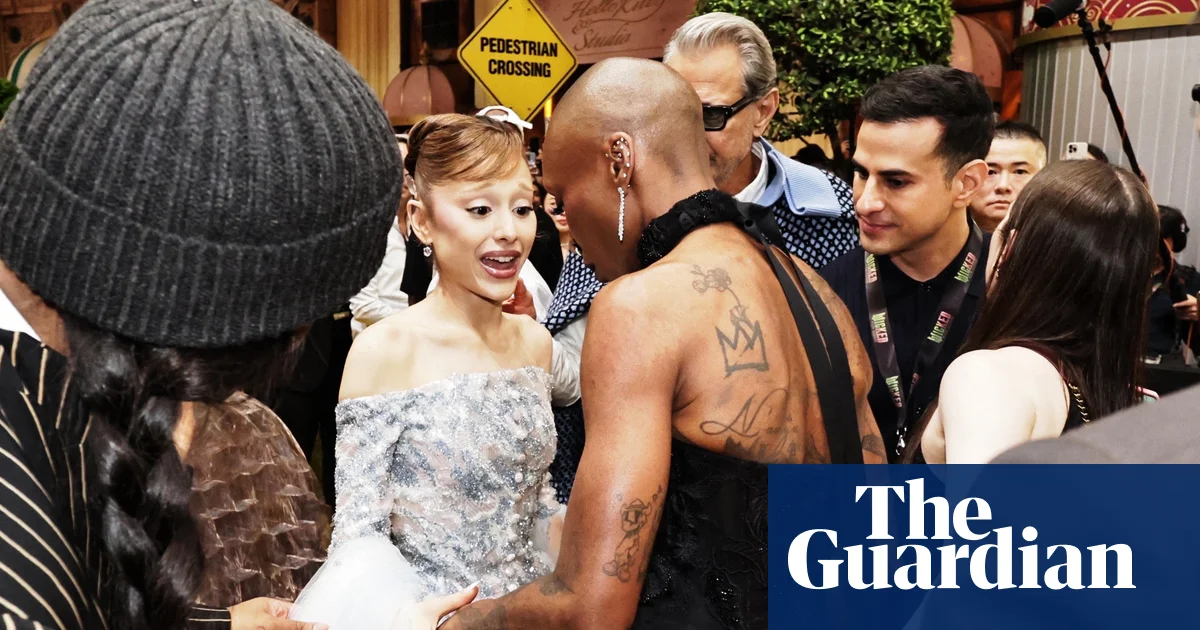
Jade, Reece Witherspoon, and Aimee Lou Wood celebrated at the Women of the Year awards—champions of resilience and female achievement

The Enduring Power of Culture: A Reflection of Heritage and Humanity’s Future

In an era where the rapid influx of information and shifting social paradigms threaten the continuity of tradition, cultural events serve as vital reminders of our shared heritage and collective identity. The recent Harper’s Bazaar Women of the Year Awards held at London’s prestigious Claridge’s Hotel exemplifies this phenomenon, drawing luminaries from entertainment, sports, and intellectual spheres to celebrate the enduring significance of culture as both a mirror and a mold of society. How we honor our achievements — be they in film, music, or activism — underscores the intrinsic bond between history, identity, and societal values. As Ortega y Gasset observed, “The greatest danger for most of us is not that our aim is too high and we miss it, but that it is too low and we reach it,” highlighting the importance of cultivating lofty ideals rooted in our cultural essence.

Within this mosaic, figures like Jade Thirlwall from Little Mix and actress Erin Doherty exemplify the potency of culture in inspiring new generations—serving as icons who, despite contemporary challenges, embody resilience and authenticity. Jade’s heartfelt tribute to Cheryl, her childhood idol, mirrors the way cultural icons function as beacons of aspiration and continuity; an echo of Chesterton’s assertion that “A dead thing can go with the stream, but only a living thing can go against it,” emphasizing the importance of preserving cultural integrity amidst pressures to conform. The recognition of Doherty’s performance in Netflix’s Adolescence reflects society’s appreciation for what T.S. Eliot called the “tradition,” a living consciousness that connects past art with present expression, ensuring that art remains a catalyst for societal reflection.

Moreover, the celebration of figures like Reese Witherspoon and Rosamund Pike underscores the role of cultural icons in shaping societal narratives, challenging the superficial and advocating for authentic storytelling. Witherspoon’s comment on creating Hello Sunshine in response to Hollywood’s inadequacies echoes the importance of storytelling as a form of cultural renewal. Likewise, Pike’s acclaimed performance in National Theatre’s Inter Alia reminds us that art and performance are vital repositories of historical memory, and through them, society continuously drafts its future. As Tocqueville observed, “The life of a democracy will be rich and earnest… only if the ideas which animate it are rooted in the family, in religion, and in the arts,” signaling that our collective cultural endeavors are foundational to societal health.

The Memory and Prophecy of Humanity

Ultimately, culture embodies both memory and prophecy; it is the archive of our ancestors’ wisdom and the forecast of future possibilities. Just as Chesterton saw in tradition the fellowship of the past with the present, our cultural expressions serve as the threads binding generations, offering continuity amid change. The ceremony’s celebration of human achievement—whether through art, entertainment, or activism—reminds us that our cultural pursuits are human anchors and guiding stars. They are where history whispers its lessons and where imagination envisions the horizons yet to come. As we stand amid the echoes of the past and the dawn of the future, it becomes clear: Culture is the canvas of human memory, painted with the colors of our aspirations—a living prophecy that carries us forward, both rooted and reaching, into the infinite unfolding of human destiny.

Director of Kim Kardashian’s All’s Fair addresses critics: ‘We’re hopeful opinions will shift’ | U.S. Television

In an era where cultural expression often mirrors societal shifts, the recent reception of the series “All’s Fair” highlights a crucial lesson: not everything curated for mass consumption will resonate universally, and that divergence is itself a reflection of society’s complex fabric. Directed by Anthony Hemingway, a veteran of acclaimed productions such as The Wire and True Blood, the show purports to explore themes of law, femininity, and human frailty through the lens of a female-led law firm specializing in divorce. Yet, despite its ambitious storytelling and the star power of Oscar nominees like Glenn Close and Naomi Watts, it has faced scathing criticism and has been labeled as “fascinatingly, incomprehensibly, existentially terrible” by critics. Such disparagement raises the question: in a culture increasingly obsessed with instant validation, how do we discern genuine artistry from superficiality?

The critics’ aversion to “All’s Fair” exemplifies a broader cultural tendency towards dismissiveness of ventures that challenge the conventional. Hemingway’s response—that “not everything is for everybody”—echoes the insights of thinkers like Ortega y Gasset, who lamented the commodification of culture and underscored the importance of individual aesthetic judgment. In a time preoccupied with the superficial, authentic artistry must often grapple with indifference before claiming its rightful place in the cultural dialogue. Hemingway draws a pertinent parallel between the show’s initial reception and the initial indifference that characterized revolutionary works such as Shakespeare’s or Beethoven’s. Like them, “All’s Fair” seeks to strike a chord that may not resonate immediately but holds the potential for cultural relevance over time, emphasizing that true art often requires patience and openness to new paradigms.

Furthermore, Hemingway’s defense of the show as “wish fulfillment” and a reflection of the human condition highlights an essential argument: culture’s role in shaping identity and societal understanding. In an age where cynicism often dominates, the attempt to grapple with how humans process loss, hope, and justice through storytelling remains vital. This echoes Chesterton’s assertion that “art is the signature of man,” an indelible mark of human aspiration and frailty. As history and philosophy remind us, culture is both memory and prophecy—a record of our collective past that guides and informs our future. Hemingway’s emphasis on the show’s evolving nature and his call for patience encapsulate this notion, suggesting that true cultural works are less about immediate applause and more about planting seeds for future reflection.

In the end, the enduring power of culture lies in its ability to connect us to ourselves and to the times yet to come. Like a song that echo’s through the ages or a monument carved in stone, it embodies our hopes, fears, and memories. As T.S. Eliot noted, “Our civilization is in a state of flux, but culture—true culture—is what sustains and elevates us through change.” Thus, whether “All’s Fair” finds its audience or not, it reminds us of the vital truth: culture is both our collective memory and our prophetic voice—an enduring testament to the nobility and complexity of human life, inspiring us still to dream, reflect, and forge a future rooted in our deepest human essence.

De Niro Challenges JLaw: Are Celebrities Obligated to Oppose Trump? | Culture

In an era where culture seems increasingly detached from the values that hold tradition and identity together, the spectacle of celebrity influence on politics has visibly waned. Historically, the powerful interplay between art, ideas, and society has offered a mirror and a prophecy—shaping collective memory while hinting at future pathways. Yet, as philosophers like Ortega y Gasset noted, when society loses its cultural compass, it drifts into superficiality and fragmentation. Today, the wave of celebrity activism, once heralded as a new form of societal engagement, appears to have receded, revealing that true cultural authority does not reside in Hollywood plaques or red carpets, but in the enduring principles that define a people’s soul.

  • The shift away from celebrity endorsements in political discourse signals a disillusionment with superficial sways capable of molding collective destiny.
  • High-profile figures like Jennifer Lawrence and Sydney Sweeney now prefer silence or nuanced expression over blatant opinion—a calculated retreat perhaps, but also a recognition of the limits of star power.
  • Veterans like Harrison Ford and Robert De Niro have stepped forward, embodying a rare voice of conviction rooted in an understanding that culture is more than fleeting opinion—it’s the moral fabric of society itself.

As the venerable Chesterton once argued, culture is the divine dialogue that binds past and future; it is both memory and prophecy. Today’s celebrity silence—an attempt to avoid fueling divisions—can be seen as an acknowledgment that the era of movie-star-swung elections is finally dissolving into a new epoch. This void, however, is not a sign of decline but rather a call to a deeper engagement with the roots of our cultural identity. The true power lies not in the endorsement of movements or politicians but in the cultivation of a society that understands its own past, preserves its traditions, and recognizes that art is the vessel of enduring values. Societies that neglect this vital connection risk losing their moral compass, swayed instead by superficial spectacle and ephemeral influence, the kind that politicians like Trump’s celebrity-like antics masterfully exploit.

In this shifting landscape, the voices of artists who speak from a place of genuine conviction serve as the custodians of culture’s deeper purpose. Echoing the sentiments of T.S. Eliot, who urged us to consider the shaping power of tradition, we are reminded that culture is a living organism—both rooted in memory and inherently prophetic. The role of the artist is thus to channel this divine dialogue, forging a path where truth and beauty serve as anchors in the storm of modernity. As we watch figures like Ford and De Niro take a stand against the chaos of politics, our task is to reclaim that sacred space—where the spirit of culture nurtures the soul of society, and history whispers the prophecy of human destiny.

In the end, culture is neither static nor mere decoration; it is the Subtle Rhythms of humanity’s eternal song—both the memory that sustains us and the prophecy that beckons us forward. To honor this divine narrative is to recognize that, beyond the spectacle and fleeting fame, it is the enduring insight of our shared history that offers true guidance—a silent, powerful testament to the human condition, echoing across generations like an almost-forgotten melody waiting to be rediscovered. And in that rediscovery, perhaps, lies our greatest hope: that what we cherish as our cultural memory will one day illuminate the pathway to a nobler future.

Squid Game: The Challenge Season Two – A Stark Reflection of Today’s Cultural Tensions

In a world increasingly captivated by screens and spectacle, culture remains the vital vessel of tradition, identity, and societal coherence. Yet, in the relentless pursuit of entertainment and profit, we find ourselves confronting a spectacle that almost seems to invert this truth—a grotesque mirror held up by Netflix’s Squid Game: The Challenge. This reality television adaptation shamelessly embodies the brutal logic of hyper-competition, turning human suffering into a commodified showcase. As critics have noted, the producers deny the underlying truth—that it’s merely a reflection of the original artsy dystopian drama—yet the spectacle’s essence is painfully clear: it’s a game of survival, where humiliated contestants are pawns in a high-stakes ritual designed more for voyeuristic thrill than meaningful critique. Such moments underscore a troubling cultural turn, where the fascination with violence and desperation erodes traditional notions of dignity and community, reducing human lives to tokens in a capitalistic game of captivation.

At its core, culture is more than mere entertainment; it is the narrative of our collective memory and the prophecy of our shared future. The unabashed monetary reward of over four million dollars propels the participants into a wild frenzy that reveals much about contemporary society’s values—money as the ultimate measure of worth, competition as the sole form of identity. The contestants’ conduct, orchestrated for the grand prize, echoes Ortega y Gasset’s reflections on the “mass-man,” whose social identity dissolves into the relentless pursuit of material success. The spectacle forms a perverse theater where our societal virtues of camaraderie, sacrifice, and dignity are schnell replaced by greed, treachery, and self-interest. The staged betrayals, the mock deaths, the self-destruction—all are dramatizations of a cultural nightmare where the individual’s worth is reduced to how cheaply they can sell their humanity for a shot at riches.

This phenomenon invites a stark reflection from thinkers like Chesterton, who warned that losing one’s sense of cultural roots invites a descent into barbarism, where human life becomes mere collateral damage in a race for wealth. Tocqueville’s insights on American individualism resonate here: unchecked pursuit of self-interest, when divorced from the binding threads of shared moral and cultural tradition, results in a society that is ultimately fragmenting itself. What we witness in Squid Game: The Challenge is less a critique and more a symptom of that fracture—a society that has forgotten its roots and now celebrates the spectacle of its own moral decay. The game’s twists and sob stories are but distractions from the core truth: that modern entertainment often serves as a mirror reflecting society’s soul, which, at this moment, appears torn and longing for a deeper connection to the authentic.

In this cultural landscape, where memory and prophecy intertwine, the danger lies in mistaking the spectacle for significance, the competition for identity itself. As T.S. Eliot lamented, the true crisis of modernity lies in a loss of shared purpose—a fragmented narrative where cultural symbols become mere commodities. Yet, beneath the degradation, there remains a seed of hope—a reminder that culture is the sacred ground where humanity cultivates itself, where tradition shapes the future. We must recognize that true culture guards the sacredness of human life, fostering virtues that transcend mere monetary gain. Like the enduring words of Chesterton, our cultural task is to forge a new meaning from the chaos, reweaving the fabric of tradition with conscious will and moral clarity. For in the end, culture is both memory and prophecy; it is the echo of who we were and the blueprint of who we will become. It is, after all, the poetry of the human spirit—an ancient chorus echoing through the ages, calling us to remember and to dream anew.

Quick Boost: Transform Your Space with a 10-Minute Flower Vase Masterpiece

In the relentless tide of modernity, where instant gratification often diminishes the value of dedicated craftsmanship, the art of still life painting emerges as a profound symbol of human endurance and aesthetic pursuit. Consider the exquisite work by Margareta Haverman, a Dutch artist from the early 18th century, whose mastery transcends the superficiality of fleeting trends. Her meticulous layering of up to seven coats of paint on a canvas—crafted in a time when mechanical reproduction was nonexistent—mirrors a philosophical ideal championed by thinkers like Ortega y Gasset, who emphasized that culture is the expression of a “vocation” towards excellence. Haverman’s painstaking effort reminds us that true beauty is not accidental but an achievement of disciplined vision, vital to the fabric of national identity and artistic tradition.

The composition, a vibrant bouquet teeming with thirty different species of flowers, fruits, and insects, encapsulates a microcosm of natural order—each element carefully studied and rendered with painstaking detail. It is as if Haverman, inspired by her teacher Jan van Huysum, engaged in a silent dialogue with nature itself, striving to preserve its transient beauty. This act of preservation aligns with the insights of T.S. Eliot, who observed that great art is a form of memory and prophecy, anchoring us in the present while gesturing towards eternity. The intricate layers and textures serve as metaphors for society’s enduring quest to domesticate chaos through culture, forging an identity that is both rooted in tradition and poised to confront the unknown future.

Cultural critic G.K. Chesterton remarked that modern society often forgets that art’s highest calling is to serve as a “great reminder,” not merely decoration. Haverman’s work resonates with this idea, acting as a tangible link between historic mastery and contemporary purpose. The inclusion of everyday symbols—flowers fading into decay—reminds us of life’s impermanence, yet even these elegies serve to elevate the mundane into a moral and aesthetic statement. Much like the Dutch tulip frenzy of the early 1600s, which exemplified the human obsession with beauty and wealth, this painting underscores that our cultural pursuits are rooted in an innate desire to impose order and meaning upon the chaos of existence. The flowers, once the symbol of fleeting luxury, now serve as evocations of enduring values that transcend the temporal realm.

As humanity stands at crossroads of technological change and cultural upheaval, the significance of these artistic endeavors becomes ever more evident. They forge an identity that is not solely materialist but rooted in a collective memory that aspires to the divine. Such works whisper of a future where art remains an act of heroism—an affirmation that our spirits can be refined amid the shadows of decay. Like Chesterton’s view of the childlike wonder that sustains society, true artistry embodies the hope that through diligent effort and reverence for tradition, humanity can craft a legacy resilient to time’s erasure. In this silent language of colors and forms, we find the prophecy of a legacy—where memory sustains us, and hope guides us towards horizons yet unseen, for the culture that endures is both the echo of the past and the seed of what is to come.

Unlocking the Power: ‘A House of Dynamite’ — Behind the Scenes of a Defining Moment

In the realm of cinema, the craft of storytelling has often served as a mirror reflecting the core tensions of our society—our fears, our hopes, and the underlying philosophical currents that shape our collective identity. The recent depiction of a nuclear crisis in “A House of Dynamite” exemplifies how contemporary cinema continues to explore the profound stakes of our geopolitical realities. Director Kathryn Bigelow masterfully constructs a seamless narrative that underscores the visceral urgency of national security, where the choreography of locations—from a reconstructed White House Situation Room to the strategic command centers in Omaha—serves as a testament to the cultural obsession with control, technology, and the brinkmanship that defines the modern age.

What emerges from this cinematic tableau is an intricate dance between philosophical paradigms—one hawkish, the other cautious—embodying the perennial debate over the use of power and restraint. On one side, the aggressive posture of military command reflects a view echoed in Ortega y Gasset‘s assertion that “life is a sum of battles fought in the name of civilization.” Conversely, the advocates for measured deliberation evoke the wisdom of T.S. Eliot, who warned against the chaos of unrestrained action. The scene captures a cultural battleground, where the tension between tradition and innovation manifests not only in command decisions but also in the very architecture—standing as silent witnesses to the epochs of history, crafted to resemble colonial-era pillars and porticoes akin to the White House’s original form. Such details evoke a sense of continuity, of culture as a vessel of collective memory.

This rigorous emphasis on authenticity, as seen in the meticulous recreation of military and political venues, demonstrates that culture is no mere backdrop but the foundation of societal identity. The response of military personnel, convinced by the set’s accuracy, exemplifies the power of cultural elements to forge realism and authority. This echoes G.K. Chesterton’s sentiment that “tradition means giving a vote to the most obscure of all classes—our ancestors.” For a society that perceives itself as rooted in historical continuity, culture becomes a safeguard against the chaos of fragmentation.

Ultimately, the depiction of nuclear threat in cinema is more than entertainment; it is a symbolic allegory of humanity’s ongoing struggle to balance power and prudence. Like the works of Chesterton and Eliot, this portrayal reminds us that culture is both memory and prophecy—a luminous bridge linking the sacred inheritance of our traditions with the divine potential of our future. As we contemplate the flickering lights of ICBMs streaking across the sky, we are called to remember that our culture, steeped in history yet alive with prophecy, is the sacred script of human destiny—one that demands we choose wisely the words we inscribe on our collective soul.

Confirmed: Actors Cast as The Beatles’ Spouses in Sam Mendes’ Films—A Fresh Perspective on the Fab Four’s Legacy

In an era where cultural narratives are often reduced to fleeting social media trends, the enduring significance of tradition and collective memory in shaping national identity can hardly be overstated. Sam Mendes’ ambitious project—a four-part cinematic homage to the legendary Beatles—evokes a profound reflection on how art and biography intertwine to forge a collective cultural consciousness. As the film prepares to bring to life the intimate stories of Maureen Cox, Linda Eastman, Yoko Ono, and Pattie Boyd, it underscores the idea that culture is both memory and prophecy: a living archive that informs our present and forecasts our future.

The choice to focus on these four women—each embodying a different epoch and facet of the Beatles’ story—reminds us that culture is rooted in human relationships, personal sacrifices, and the ideological conflicts defining our era. As Ortega y Gasset elucidated, society is a complex fabric woven from the threads of individual experiences; the lives of Cox, Eastman, Ono, and Boyd represent the diverse material that has contributed to the mythos of one of history’s most influential bands. These women are not mere accessories to a musical legend but pivotal figures whose influence extends into the very fabric of Western civilization’s understanding of love, artistry, and societal change.

Philosopher and cultural critic G.K. Chesterton observed that some stories give us a sense of home, a refuge in the chaos of progress. The narratives of these women serve as a reminder that our most meaningful identity is anchored in tradition and shared history. Their stories are landmarks in a cultural landscape that echoes with the imaginative energy of the 1960s, a period when art became a voice of societal upheaval and hope. The film’s casting decisions, notably Saoirse Ronan as Linda Eastman and Yoko Ono portrayed by Anna Sawai, symbolize a conscious effort to reclaim and recontextualize these figures’ stories—stories that have long grappled with the tension between personal liberty and societal expectation.

As the project unfolds, it echoes the insights of Tocqueville, who saw democracy and shared culture as intertwined forces shaping the destiny of nations. Through such artistic endeavors, the cultural memory of the Beatles—frequently portrayed as emblematic of youthful rebellion—transform from mere spectacle into a profound reflection on the human condition. The film reminds us that clinging to our cultural roots and the stories handed down through generations is essential in resisting the homogenizing effects of modernity. Like the works of J.R.R. Tolkien or Gustave Flaubert, history and myth serve as guides to our moral compass, anchoring us amidst the chaos.

In the end, this cinematic project transcends mere biopic storytelling. It serves as a lyrical testament that culture is both the memory of the past and the prophecy of what humanity can become. As Eliot famously pondered, “the end of all our exploring will be to arrive where we started and know the place for the first time.” Through the enduring threads of art, love, and sacrifice woven into the lives of Cox, Eastman, Ono, and Boyd, we are invited to rediscover our roots and glimpse the future—an ongoing, sacred dialogue between tradition and innovation, memory and possibility.

Unearthing History: A Captivating Haunted Tour Through the Met Museum

In a world increasingly shaped by fleeting trends and superficial diversions, the deep currents of cultural memory and tradition serve as our guiding constellations—reminding us that to understand ourselves, we must delve into the artifacts of our shared past. As Zachary Small and his team take us on a haunting tour through The Metropolitan Museum of Art—highlighting artworks that evoke fear, fascination, and the darker aspects of human nature—the significance of culture as both a reflection and a shaper of identity becomes unmistakable. It is through such visceral encounters with the artifacts of previous civilizations, with their sometimes grotesque or mysterious representations, that we come to see culture not merely as entertainment, but as the pulse of tradition and society.

Indeed, the artworks featured—including a decapitation platter and a sculpture rumored to depict a cannibal—serve as visceral reminders of the moral and spiritual dilemmas that have haunted humanity across epochs. As the philosopher Ortega y Gasset might suggest, culture is the possession of a society’s collective memory—an ongoing dialogue with its own history. These artifacts, perhaps unsettling to modern sensibilities, anchor us in a worldview where the boundaries of morality, the fears of the unknown, and the boundaries of human capability are laid bare. Such nightmarish visions challenge us to reflect on our current society’s fragile veneer, revealing beneath it a tapestry woven with both beauty and terror, remembrance and prophecy.

Furthermore, in the context of a society often criticized for its loss of roots, these artworks stand as milestones of traditional expression—reminders that culture is integral to the formation of societal identity. As Tocqueville observed, democracy’s greatest challenge lies in maintaining a shared sense of cultural continuity—when the collective memory of the past diminishes, the community itself risks disintegration. Here, the arts become a bulwark against cultural amnesia, preserving essential facets of our moral and aesthetic identity. They forge a link between the past and the future, anchoring new generations in their inherited values while warning of the consequences of neglect.

In the final analysis, culture is both memory and prophecy. It acts as a mirror reflecting the deepest fears and aspirations of humanity, from the grotesque to the sublime. As T.S. Eliot famously remarked, “The past is never dead; it’s not even past.” Our cultural artifacts, whether frightening or beautiful, serve as silent orator—guiding us through the corridors of history and into the unknown future. In these haunted treasures of the museum, we find a silent promise: that understanding our cultural roots grants us the strength to shape tomorrow, to transcend mere survival, and to forge a society rooted in the resilient memory of what we once were and what we might yet become. Culture, in the end, remains our human prophecy—a testament to the enduring soul of mankind.

Social Media Auto Publish Powered By : XYZScripts.com