United States Faces Rising Internal Tensions as Federal Troops Deployed to Portland
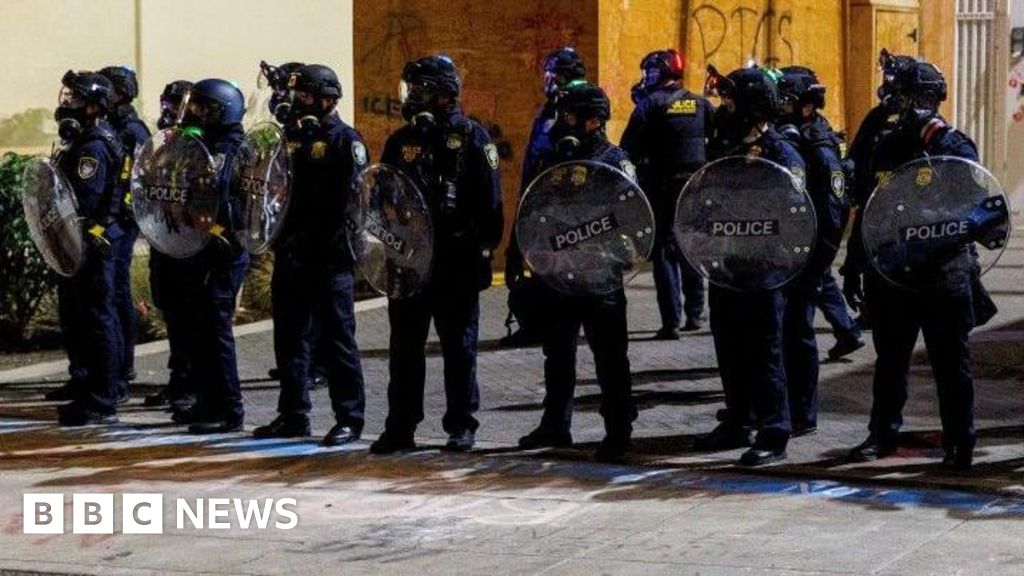
The United States is once again at a pivotal crossroads, with President Donald Trump ordering the deployment of federal troops to the city of Portland, Oregon. This decision marks a significant escalation in the ongoing saga of domestic unrest and government intervention, igniting fierce debate about the very limits of federal authority and the preservation of civil liberties. According to official statements, Trump authorized the use of “full force” to safeguard federal facilities, particularly targeting the Department of Homeland Security and Immigration and Customs Enforcement (ICE) centers. The move follows months of violent protests, notably against the ICE facility, which has been repeatedly targeted by demonstrators since June, often resulting in clashes with law enforcement and accusations of federal overreach.
Political Fallout and Strategic Concerns
Despite Trump’s claims that the deployment aims to protect national security, democratic lawmakers and local officials have condemned the measure as unnecessary and potentially harmful. Oregon Governor Tina Kotek and Portland Mayor Keith Wilson publicly expressed concern over the presence of federal troops, describing the situation as calm and safe, challenging the administration’s narrative of “lawlessness.” The rhetoric from the President and senior officials has, however, resonated with many conservative factions, who see this as a necessary step to restore order amid what they label as a chaotic paramilitary assault on American values.
Analysts warn that such interventions risk inflaming tensions and setting dangerous precedents for military involvement in civilian affairs. Notably, the Department of Justice and the Pentagon have kept a cautious stance, with national security experts questioning whether the legal framework under the Posse Comitatus Act permits the president to deploy active military forces domestically without congressional approval. Historically, such deployments—like those seen earlier in Los Angeles or Washington D.C.—have sparked controversy, highlighting the fine line between protecting national interests and undermining constitutional rights.
Undermining Social Unity and International Stability
On the international stage, U.S. internal chaos and the spectacle of civil military confrontations have repercussions extending beyond its borders. Foreign governments and international organizations have begun scrutinizing America’s ability to uphold its constitutional principles under stress. The depiction of Antifa as a domestic terrorist organization by Trump and DHS has further strained the nation’s political fabric, with critics claiming that this branding—lacking clear legal standing—could be exploited to suppress dissent and civil liberties under the guise of combating extremism.
As historians like Samuel P. Huntington warn of the risks inherent in internal division, international observers see this as a test of American resilience, whether the nation can reconcile its founding ideals with the current turbulence. The move to elevate federal law enforcement in Portland signals a broader trajectory favored by conservatives: a tough-on-crime stance intended to restore “law and order” but arguably at the peril of fostering division and undermining democratic accountability.
Conclusion: The Unfolding Epilogue of a Nation Divided
As Portland and other cities teeter on the edge of chaos, the weight of this chapter in American history hangs heavy—an ongoing saga that will define more than just federal power, but the essence of the nation itself. Will this hardened stance mend society’s fractures or deepen them? Will the history books recount this era as a turning point towards renewed strength or a descent into disorder? Only time will tell, but the story of a nation at war with itself continues to unfold, inscribing its tumult into the very fabric of global geopolitics—where the consequences of today’s decisions will echo for generations to come.