Global Glaciers in Rapid Retreat: A Warning from the Frontlines of Climate Change
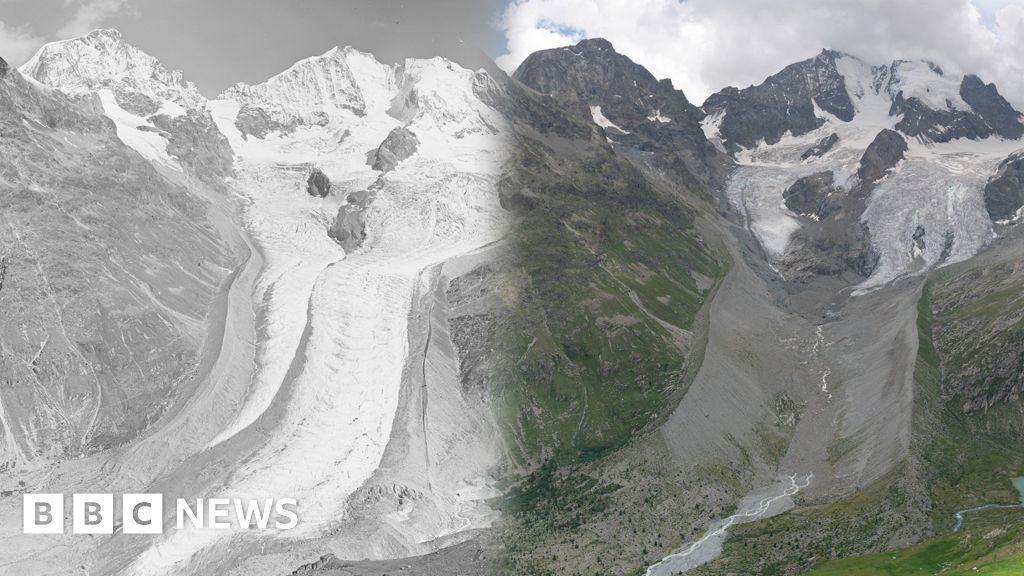
Across the globe, the once-mighty glaciers that have shaped mountain landscapes for centuries are vanishing at an unprecedented rate. In Switzerland, a country renowned for its alpine beauty and climate resilience, the retreat of glaciers like the Rhône and Great Aletsch has become a symbol of a warming planet. Matthias Huss, director of Glacier Monitoring in Switzerland (GLAMOS), vividly recalls his childhood memories of glaciers that once stretched deep into the valleys—memories now replaced by distant, receding ice and growing lakes. The stark reality is that, according to a recent World Meteorological Organization report, glaciers outside the Greenland and Antarctic ice sheets lost a staggering 450 billion tonnes of ice in 2024 alone, enough water to fill 180 million Olympic pools.
Scientists globally warn that the rapid loss of glaciers is a direct consequence of human activity. Prof. Ben Marzeion of the University of Bremen emphasizes: “They are sitting in a climate that is very hostile to them now because of global warming.” The pattern is relentless. Satellite imagery and ground observations from the Alps reveal that some glaciers, previously thought to lose only 2% of their ice annually—considered “extreme”—are now hemorrhaging nearly 6% in a single year. Such accelerated loss underscores how natural glacier fluctuations, once considered slow and cyclical, are being overridden by anthropogenic climate change. The melting is not just a regional problem; it has far-reaching geopolitical impact, threatening fresh water supplies for hundreds of millions in Asia, Africa, and beyond.
In the context of global politics, the melting glaciers serve as stark warnings and call for urgent international cooperation. Asia’s so-called “Third Pole,” the Himalayan mountain range, harbors enough ice to impact nearly 800 million people dependent on meltwater for agriculture, drinking water, and hydropower. Professor Regine Hock from the University of Oslo warns that the “biggest vulnerability” lies in these drier regions, where meltwater is often the sole source of water during summer months. Yet, despite the alarming evidence, some nations continue to prioritize economic growth over environmental stewardship, complicating international efforts to mitigate climate impacts. Historians and analysts concur that the contemporary rapid glacial retreat, especially over the past four decades, is unequivocally linked to the rise of global fossil fuel consumption since the Industrial Revolution.
Decisions Today Will Shape the Glacial Future
The interplay between natural variability and human-made climate change has created a scenario where glaciers are lagging behind current temperatures, with much of their future melt already inevitable. As Prof. Marzeion states, “A large part of the future melt of the glaciers is already locked in.” This means even if global efforts succeed in stabilizing temperatures tomorrow, many glaciers will continue to diminish for decades due to delayed response mechanisms. Yet, some hope persists—research published in *Science* indicates that limiting global warming to 1.5°C above pre-industrial levels could save half of Earth’s remaining mountain ice. Conversely, at the current trajectory of approximately 2.7°C warming, projections suggest that up to 75% of glaciers may ultimately succumb to melting, dramatically reshaping landscapes and societies.
This ongoing retreat portends profound consequences beyond geography; it threatens to destabilize ecosystems, alter river flows, and escalate sea-level rise, which endangers coastal cities worldwide. Provinces like the Himalayas, often dubbed the “Third Pole,” stand as testament to the human toll—where Himalayan glaciers feed rivers vital for agriculture and industry, their loss could trigger water scarcities affecting billion-dollar economies and vulnerable populations alike. This is a crisis that transcends borders, calling on international organizations and world leaders to confront the stark reality of climate inaction—a challenge where history is still being written, and the pages are being turned with every melting glacier and rising sea.
The weight of history presses heavily as glaciers continue to vanish
As the glaciers vanish—once seen as eternal in the eyes of ancient communities—the modern world faces an epochal dilemma: whether to heed the warnings etched into icy scars or to ignore the call to preserve Earth’s irreplaceable cryosphere. In the crucible of mounting evidence and irreversible change, the choices made now hold the power to either forge a sustainable future or condemn generations to witness the relentless advance of a warming world. The echoing cry of the glaciers, frozen in time but melting in reality, reminds us that while the natural cycle of ice and fire has persisted for millennia, human influence now shapes the course of Earth’s history itself—leaving us to linger on the precipice of an uncertain future, where every melting drop writes the beginning of an inevitable transformation.