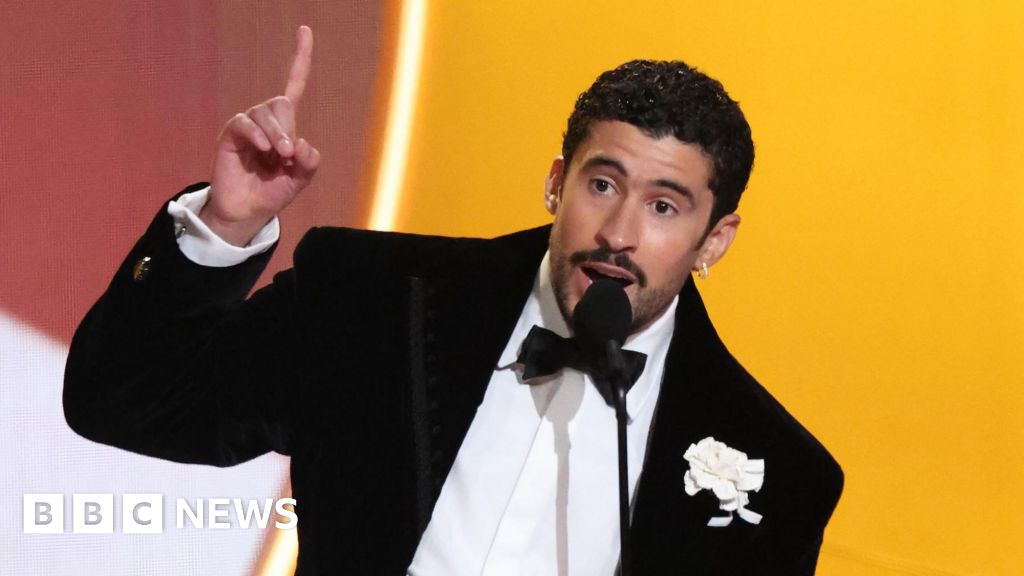
The recent surge of international attention surrounding a prominent Puerto Rican artist, poised to win the Album of the Year award, represents more than just a cultural milestone. In an era where pop stars serve as influential voices on political and social issues, this artist’s involvement signals an important intersection of entertainment and geopolitics. While the music industry often reflects societal trends, the implications of such a public figure adopting a political stance extend well beyond entertainment, impacting diplomatic narratives and national identities across the Caribbean and beyond.
Analysts emphasize that the artist’s palpable political engagement can significantly influence geopolitical perceptions. The Caribbean region, historically a crossroads of colonial powers and emerging independence movements, sees its cultural icons increasingly involved in shaping international discourse. Moreover, with the artist’s anticipated win, global institutions and nations are watching how this influence might translate into tangible diplomatic shifts. Certain international observers, including historians specializing in Latin American affairs, argue that when cultural figures mobilize around political issues, they often serve as catalysts—either amplifying local sentiments or challenging established authority structures. Such moments can redefine regional alliances and prompt foreign policymakers to recalibrate their approaches toward Puerto Rico and its cultural exports.
Despite the celebratory view of the artist’s success, critics warn that this bold political stance heralds complexities. The U.S. federal government’s ongoing debates regarding Puerto Rico’s political status, including issues of sovereignty and statehood, are embedded in this cultural backdrop. The artist’s prominence could galvanize diverse political factions on the island, rekindling conversations about independence and autonomy. International organizations, such as the United Nations, have long considered Puerto Rico’s status a matter of decolonization, and this individual’s influence may add fresh momentum or tension to those discussions. As political theorists note, public figures who align with specific ideologies often shape societal debates, influencing the balance between cultural pride and political allegiances.
Historically, artists have played pivotal roles in shaping international perceptions through their work and activism, but the current context signifies something more profound. As global powers watch how this cultural icon’s stance unfolds—potentially a reflection of shifting allegiances or internal divisions—the ripple effects will likely extend to diplomatic corridors. Industry experts and international analysts warn that this phenomenon exemplifies a broader trend: cultural influence increasingly intertwining with geopolitical strategy. Ultimately, as history continues to be written in the charged atmosphere of cultural diplomacy, the question remains whether Puerto Rico’s latest musical star will serve as a unifying symbol or a catalyst for further division—an enduring reminder that, in today’s international arena, the power of the individual is transforming the landscape of global relations.