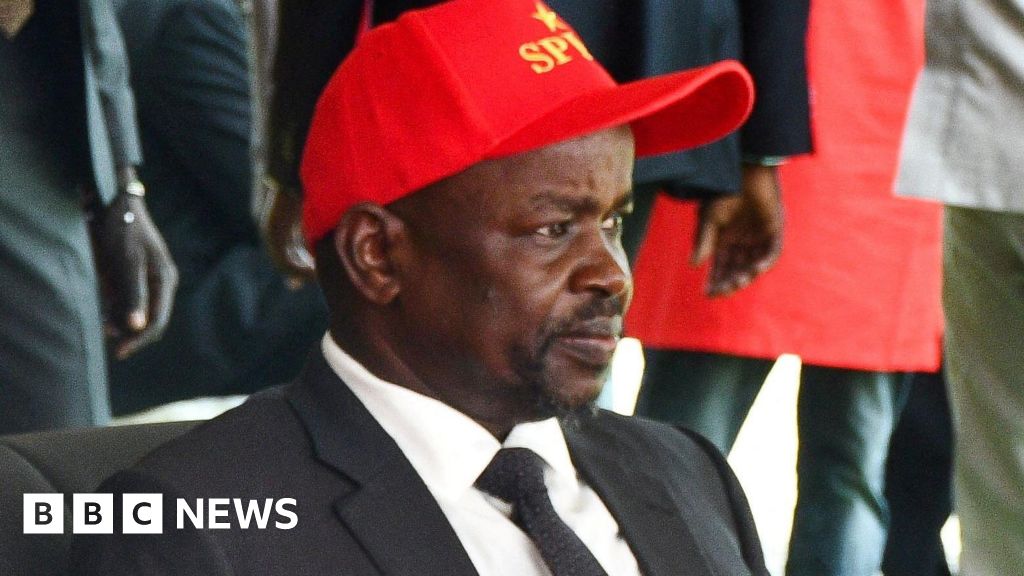
The recent dismissal of South Sudan Vice-President Benjamin Bol Mel by President Salva Kiir has sent shockwaves through the young nation’s fragile political landscape. This move, announced via decree and devoid of explanation, underscores the ongoing volatility in a country that only gained independence in 2011 but has been plagued by civil unrest ever since. The removal of Bol Mel—who previously appeared poised as Kiir’s likely successor—appears to symbolize a decisive consolidation of power amid mounting fears of renewed civil war. Analysts warn that such internal struggles threaten to unravel the last remnants of peace established under the 2018 power-sharing agreement, which has continuously faltered under the weight of old tensions and new conflicts.
South Sudan’s tumultuous history is well documented by international organizations and historians, recognizing its journey from a peaceful separation from Sudan into a maelstrom of violence. The recent crisis follows the escalation of fighting between government forces loyal to Salva Kiir and armed groups aligned with ex-vice-president Riek Machar. Notably, Machar was sacked earlier this year, arrested, and charged with serious crimes, prompting accusations from his supporters of a politically motivated witch-hunt that only worsened tensions. This cycle of power struggles exposes the underlying fragility of South Sudan’s state institutions, which continue to be vulnerable to internal divisions and external pressures, including sanctions and diplomatic isolation.
In the wake of Bol Mel’s removal, social media and local sources reflect a broad consensus: his dismissal signals an internal power struggle within the Sudanese People’s Liberation Movement (SPLM). A senior government official, speaking anonymously for security reasons, indicated that Bol Mel was viewed as a “divisive figure” whose presence was exacerbating factional discord. The apparent withdrawal of Bol Mel’s security detail and the lack of immediate replacements suggest a sudden and potentially destabilizing power vacuum. These events could accelerate the erosion of recent ceasefire efforts, with some regional analysts warning of a possible descent into chaos—a scenario that international observers, including the United States and regional powers, are desperate to prevent. Yet, the very nature of South Sudan’s regime suggests that internal factionalism remains unresolved, with entrenched elites vying for dominance amid a nation still scarred by years of violence.
The geopolitical impact of this upheaval extends beyond South Sudan’s borders. As Africa’s youngest nation, its stability affects regional security, oil markets, and international efforts aimed at fostering peace. The United States, which has historically played a dominant role in supporting South Sudan’s peace process, remains cautious, maintaining sanctions against figures like Bol Mel for purported corruption, despite his promotion to prominent security roles. The broader implications involve how neighboring nations and global institutions respond to escalating instability. As historians and analysts draw parallels with other post-conflict states, the specter of what if looms large: Could internal power struggles ignite a larger civil conflict, destabilizing the already volatile Horn of Africa?
As South Sudan’s leadership grapples with internal dissent, the weight of history presses upon its young democracy. The fate of a nation born from hope now teeters on the brink of chaos, with every decision in Juba echoing through corridors of power and across the continent. The unfolding story remains a stark reminder that in the heart of Africa—where oil riches and ethnic allegiances intersect—the future is written in moments of upheaval. History’s pen hovers, uncertain whether this chapter will forge a fragile peace or plunge South Sudan back into the shadows of conflict, a stark testament to the unpredictable course of nations in transition. And thus, the world watches, silent yet attentive, as the next pages of this turbulent saga are yet to be written.