Matox News

Truth Over Trends, always!

El Salvador starts major trial for 486 suspected gang members—standing up against crime and chaos

In a decisive move that underscores El Salvador’s relentless campaign against organized crime, the country’s authorities have initiated a mass trial involving 486 suspected members of the MS-13 gang. This unprecedented judicial effort marks a pivotal chapter in the nation’s ongoing struggle to reclaim stability and safety amidst years of violence and criminal dominance. The attorney general’s office revealed that the accused collectively stand accused of over 47,000 crimes spanning a decade—including murder, extortion, drug trafficking, and arms smuggling—highlighting the brutal scale of the gang’s influence within the country.

Footage from the trial, broadcast via video link, shows large groups of detainees in prison, illustrating the size and scope of law enforcement efforts. *Such mass proceedings, however, raise *serious concerns among international observers and human rights advocates.* The United Nations experts have criticized these tactics, asserting that mass trials “undermine the exercise of the right to defence and the presumption of innocence of detainees.” This critique points to a broader debate: can swift, severe justice truly justify the potential erosion of fundamental rights? El Salvador’s government remains resolute, asserting that they possess “compelling” evidence capable of imposing “maximum penalties” on those convicted, emphasizing their commitment to justice over international criticism.

Historically, the push for aggressive anti-gang measures in **El Salvador** reflects a wider ideological shift within parts of the global south—favoring tough-on-crime policies that prioritize security over process. Analysts argue that the Salvadoran government’s approach is a response to the failure of softer policies and a recognition that criminal corporations like MS-13 wield significant socio-economic power that can only be countered with assertive action. Nevertheless, critics warn that such strategies risk setting dangerous legal precedents, potentially sacrificing due process for short-term security gains. The United Nations and numerous human rights organizations highlight the danger of overlooking civil liberties in the pursuit of order, arguing that the long-term social costs of undermining legal safeguards could prove disastrous.

  • El Salvador’s government defends its crackdown as essential in dismantling deeply entrenched criminal networks that threaten civil order.
  • International bodies express concern over the fairness and legality of mass trials, cautioning against setting a precedent that could be exploited elsewhere.
  • The global perception of **El Salvador** as a nation willing to sacrifice constitutional protections raises profound questions about the balance between security and liberty.

As global analysts analyze this turbulent chapter—where justice and human rights seem to collide—the situation underscores a broader geopolitical impact: increasingly, **Latin American** nations and others plagued by similar crises are contending with the limits of sovereignty versus international standards. The actions of **El Salvador** are watched carefully, not just for the immediate results but for what they portend for the future of law and order in fragile democracies. With international organizations sharpening their critiques and rights groups mobilizing, the specter of a new paradigm—one where security trumps process—looms large. In this intensity, history remains unwritten, edging toward an uncertain future, as **El Salvador**’s government transforms its response into a test case with implications for the entire Western Hemisphere.

Yelp’s AI Chatbot Gets a Major Upgrade for a Smarter, Better Experience

Yelp’s Major AI Upgrade: Transforming Consumer Engagement and Industry Dynamics

In a bold move emblematic of current industry trends, Yelp has unveiled a comprehensive upgrade to its chatbot assistant, elevating the platform toward a next-generation digital concierge. This initiative exemplifies how disruption is reshaping local business discovery and customer service, aligning with broader AI-driven shifts observed across multiple sectors. By integrating advanced conversational AI, Yelp aims to turn user data into a powerful competitive advantage, echoing strategies championed by industry pioneers such as Elon Musk and Peter Thiel.

At the core of this transformation is the deployment of a revamped Yelp Assistant chatbot, now embedded centrally within the app’s interface through a dedicated “Assistant” tab. This technology extension positions the bot as more than a mere search helper—it’s now a personal digital assistant capable of answering questions, making recommendations, and facilitating bookings within a seamless, conversational environment. This evolution represents a paradigm shift in how consumers interact with local service providers, emphasizing conversational commerce and personalized service experiences. According to Yelp’s chief product officer, Craig Saldanha, this marks the company’s “most significant AI product evolution yet,” underscoring the strategic emphasis on AI-driven engagement.

  • Intelligent assistance that simplifies user workflows
  • Unified interface consolidating multiple service functions
  • Enhanced data analytics capabilities derived from user interactions
  • Strategic positioning against competitors leveraging AI for local discovery

This move is not happening in isolation; rather, it is part of a wider industry trend towards integrating AI to disrupt traditional search and booking paradigms. Companies like Google and Facebook are leveling up their AI offerings, but Yelp’s focus on a personalized, action-oriented experience marks a distinctive approach. The initiative also signals how large-scale user-generated data is being leveraged to refine algorithmic recommendations, fostering a more engaging and sticky user experience—an element emphasized by Gartner analysts as vital for future differentiation in local commerce platforms.

The implications extend beyond consumer convenience. For local businesses, this innovation could dramatically impact market dynamics, offering new avenues for exposure and customer acquisition. As Yelp’s AI becomes more sophisticated, there’s a growing potential for automated bookings and personalized marketing, potentially reducing friction in the customer journey and amplifying revenue streams. This aligns with a broader shift where AI-driven personalization can generate a market advantage—a trend closely monitored by industry veterans and investors alike, eager to identify the next wave of disruption. The strategic emphasis on continuous AI evolution suggests that competitors who lag behind risk obsolescence in a market increasingly driven by digital-first interactions.

Looking ahead, industry experts such as those at MIT and AI think tanks warn that the rapid proliferation of conversational agents introduces new challenges—privacy concerns, data integrity, and the need for robust AI governance. Yet, the opportunity for business innovation and disruption remains immense. As technological advances accelerate, the companies that invest early in AI-driven platforms—like Yelp—are positioning themselves at the forefront of a revolution in local commerce. The future belongs to those willing to harness the power of AI to create more intuitive, responsive, and integrated consumer experiences. The question remains: who will lead this charge, and how fast can they adapt? For now, Yelp’s bold step signals a clear message: in the race for digital dominance, agility and innovation are paramount.

Midwest Faces Major Storm Threat: Weather Agency Issues Alert for Youth and Families

Celestial Fury Strikes the Heartland: A Wake-Up Call for America and the World

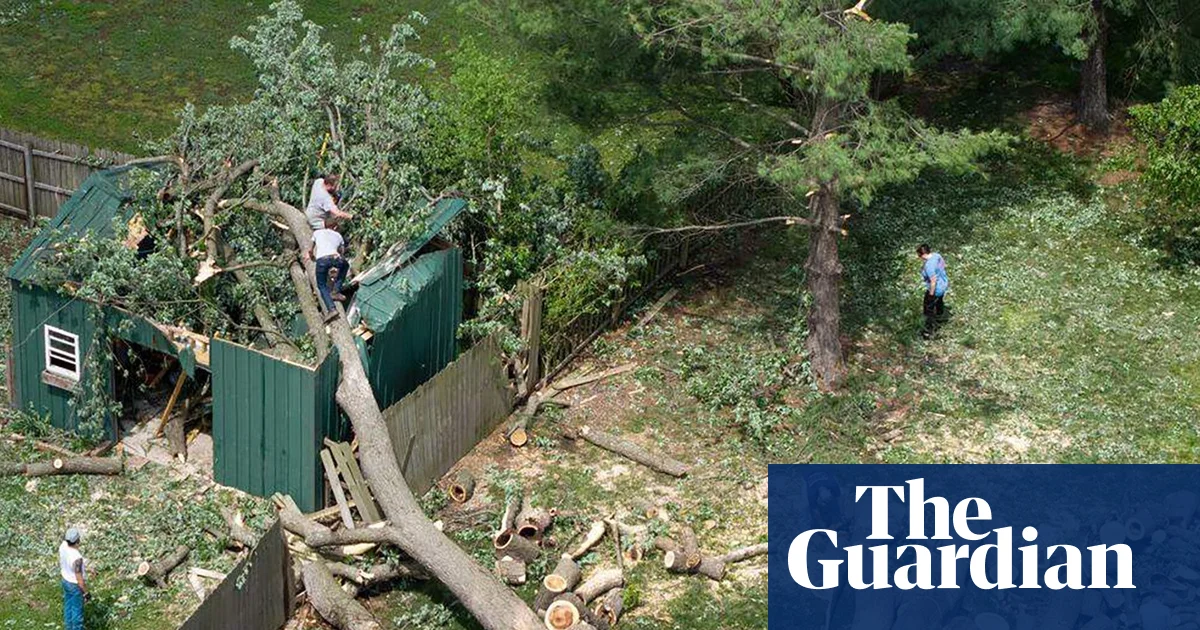
As a devastating series of violent thunderstorms and tornadoes tore through the Midwestern United States this week, the stark reality of nature’s fury converged with the geopolitical landscape, reminding nations of the fragile balance between human preparedness and the uncontrollable forces of the environment. Over 26 million Americans found themselves under tornado watches, with federal and state authorities sounding alarms about the impending danger. This grim cascade of weather events, captured vividly on social media and covered extensively by mainstream outlets, is a sobering testament to the intensifying patterns of extreme weather—patterns many analysts attribute to centuries of environmental neglect and global instability.

Local Chaos, Global Consequences

From the chaos in Milwaukee—where flash floods crippled essential infrastructure—to the tragic death of a man struck by lightning in Waukesha, the serious impact on local societies is undeniable. The debris-strewn towns and suffering families embody the human toll of these violent storms. Yet, what resonates beyond the immediate tragedy is an underlying narrative of a society increasingly vulnerable due to a confluence of climate change, government preparedness, and economic resilience. As American leaders mobilize emergency responses, international observers and think tanks like the World Meteorological Organization warn that such extreme weather events could become the new normal, reshaping geopolitical priorities.

Environmental and Political Underpinnings

Historically, climate experts such as Dr. William H. Frey and international organizations highlight that recent weather extremes are less anomalies and more symptoms of longstanding environmental shifts. The stark reality is that these storms threaten to destabilize rural and urban communities alike, straining emergency services and testing the limits of federal government capacity. The decision by environmental policymakers and global institutions to address rising temperatures and unpredictable weather will ultimately define the future stability of single nations and the global order. This crisis underscores an urgent need for America’s infrastructure to adapt—not just to endure, but to mitigate damages and prevent larger catastrophe.

Geopolitical Ramifications and Strategic Shifts

  • The United States faces critical internal challenges—disaster management debates, economic strains, and the social cohesion of affected communities—becoming a microcosm of global instability.
  • Internationally, powerful nations recognize that climate-induced upheaval may accelerate geopolitical shifts, as resource scarcity and environmental migration reshape diplomatic priorities.
  • Urgent geopolitical recalibrations are underway, with alliances and strategies increasingly focused on climate resilience and disaster response—areas where Western nations seek to demonstrate leadership, yet often falter under political discord and budget constraints.

Analysts warn that how the Western bloc responds to these crises—both domestically and on the global stage—will influence the trajectory of international power. The emergence of new alliances, the realignment of energy policies, and the contest over technological and financial resources will shape the unfolding chapters of history. In this densely interconnected world, the relentless march of nature’s fury tests the resolve of societies—warning that in the theater of geopolitics, complacency and inaction may prove to be the most costly mistakes of all.

As the American Midwest recovers from the latest storm, the weight of history presses heavily upon us. Each tornado, each flood, is a grim reminder that the earth’s tempests are not merely environmental, but deeply intertwined with the fabric of global power. The storm’s aftermath whispers a warning: the future of nations hinges not only on their military might and economic strength but also on their capacity to adapt to the unpredictable face of nature—a challenge that history, in its silent, relentless way, continues to write.

Rising Stars Shine: Young Athletes Ignite Excitement in Major Championships

The Speed Game: How Pace is Shaping the NBA Landscape

In today’s NBA, the term “pace” has taken on a life of its own, becoming a pivotal factor determining a team’s success or failure. ESPN analyst Zach Kram recently examined this counterintuitive trend, illustrating how both elite teams and struggling franchises are redefining their game plans to adapt to the ever-quickening tempo of the league.

The surge in pace has led to a fascinating dichotomy. On one hand, teams like the Golden State Warriors thrive in this fast-paced environment, using their quick transitions and three-point shooting to dominate the scoreboard. Conversely, teams like the New York Knicks appear to be lost, unable to keep up with the frenetic energy of their opponents. Kram notes, “The gap between the fast and the slow is widening, exposing teams that can’t adapt.” This evolution in strategy raises questions about whether traditional playbooks still hold value in a league increasingly characterized by tempo.

  • Golden State Warriors leverage pace with their innovative ball movement.
  • New York Knicks struggle to find consistency, often falling short against faster teams.
  • Increased pace has resulted in a spike in overall scoring averages across the league.

As Kram points out, the statistics paint a remarkable picture: teams playing at a higher pace are averaging significantly more points per game, creating high-stakes environments where every possession counts. This leads to not just thrilling finishes but also unexpected victories. For example, Tyler Herro of the Miami Heat has excelled in this rapid-play setting, averaging over 20 points per game and proving to be an integral part of his team’s offensive scheme. In tight matchups, it is often the quickest strategy that prevails.

As the season progresses, one thing becomes increasingly clear: the rapid pace is not merely a trend; it is a transformation that is here to stay. For players, coaches, and fans alike, basketball embodies more than a mere competition. It stands as a potent symbol of unity, resilience, and the ongoing quest for excellence. From the roar of the crowd to the intensity on the court, sports remind us that together we can savor the adventure, transcending the final score. In the world of the NBA, the game of basketball might just be the ultimate unifying force that we all need.

Source link

Israel launches major air strikes across Lebanon amidst mounting tensions

In a significant development amidst the ongoing turmoil in the Middle East, Lebanon has taken a notable turn in its approach to the conflict with Israel. President Joseph Aoun, a respected former army chief, explicitly rejected the option of employing force to manage the rising tensions, emphasizing instead the importance of restraint. His cautious stance was driven by the hard-earned lessons from past regional conflicts, where escalation often led to widespread violence and suffering. This approach aligns with broader international calls for de-escalation, yet the situation remains fragile, with undercurrents of instability that threaten to spill over into wider regional conflict.

The Lebanese government, in a move that caught global attention, declared a willingness to engage in direct negotiations with Israel—a nation with which they have no formal diplomatic relations and whose existence Lebanon remains vigilant over. This historic announcement signals a potential shift in regional diplomacy; it underscores the recognition among Lebanese authorities of the disastrous consequences of ongoing hostilities and the need for political solutions. However, Israel has so far dismissed this overture, refusing to acknowledge or respond to the offer. This deafening silence further complicates the peace process and underscores the challenges faced by international mediators attempting to broker stability in a deeply divided region.

International analysts and historians are closely watching these developments, noting that the decision to negotiate directly with Israel marks a significant departure from Lebanon’s previous posture of hostility and strategic ambiguity. Political experts argue that it reflects a broader realization among Lebanese leaders of the strategic costs inflicted by continued conflict—costs that resonate deeply within Lebanese society, which bears the brunt of economic collapse and social dislocation. Yet, the absence of a reciprocal response from Israel serves as a reminder that peace remains elusive, with entrenched mistrust and ideological divides complicating diplomatic efforts. As UN analysts warn, such intransigence could prolong regional instability, pulling neighboring countries into a destructive cycle that hampers development and threatens global peace.

The geopolitical impact of this evolving situation cannot be understated. Lebanon’s initiative hints at a possible paradigm shift—an acknowledgment by some regional actors that strategic conflict may no longer serve their long-term interests. However, the broader regional landscape is rife with competing interests, external influences, and unresolved grievances. The persistent presence of militias, the shadow of Syria’s ongoing civil war, and Iran’s influence all weigh heavily on Lebanon’s prospects for peace. How these decisions impact societies, economies, and even future generations depends on whether stakeholders recognize the dire stakes and push towards diplomacy or succumb to the inertia of hostility.

This unfolding chapter in Middle Eastern history carries with it a sense of foreboding—an awareness that the decisions taken today will echo through decades to come. As the world watches this fragile attempt at diplomacy unfold amid a backdrop of conflict and distrust, the weight of history presses upon the shoulders of leaders and nations alike. Will they seize this moment to steer away from the destructive path of war, or will they allow the scars of the past to deepen, leaving future generations to inherit a region still scarred and divided? Only time will reveal whether these tentative steps toward peace serve as the dawn of a new era or the last gasp before chaos engulfs the region once more.

Iranian Strikes Hit Gulf, Major Industrial Sites Targeted

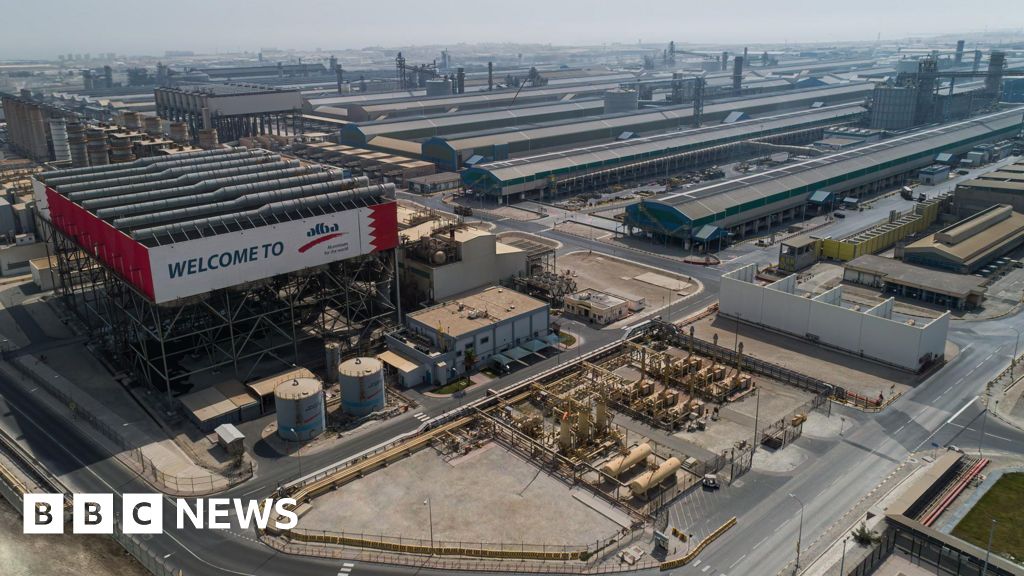
Recent developments in the Middle East signal a potentially dangerous escalation in regional conflicts, as reports emerge of attacks targeting critical aluminium production sites in the UAE and Bahrain. Though details remain scarce, the attacks have reportedly injured several individuals, raising serious concerns among international observers about the stability of this volatile region. These actions, likely carried out by non-state actors or covert state-sponsored groups, underscore the fragile security landscape predating ongoing geopolitical confrontations.

Such strikes on industrial infrastructure do more than cause immediate damage—they threaten to destabilize regional economies heavily reliant on energy and industrial export sectors. The attack underscores a broader geopolitical strategy by adversarial factions seeking to undermine the economic resilience of the Gulf Cooperation Council (GCC) countries. Analysts from global think tanks have pointed out that these incidents could be a warning sign of a more aggressive posture from regional rivals, notably Iran, whose influence extends across much of the Middle East. Many experts contend that these attacks are part of an ongoing campaign to weaken the Gulf states’ economic and military stability, thus shifting the regional balance of power.

International organizations and security analysts have voiced mounting concern over the potential for these incidents to spark wider conflict. The United Nations and Middle East Peace Initiative have called for heightened vigilance and diplomatic efforts to de-escalate tensions. Meanwhile, U.S. and European allies have condemned these attacks as provocative acts that threaten regional peace. Yet, critics warn that such condemnations may fall short unless accompanied by substantial diplomatic and strategic responses. Historically, attacks on economic infrastructure have often served as catalysts for larger conflicts — a reminder of the destructive power of unchecked hostilities.

The geopolitical impact of this escalation extends well beyond immediate casualties. As regional powers reassess their military postures, alliances are being tested, and international investments are under threat. The Sunni-led Gulf nations, wary of Iran’s regional ambitions, are likely to respond with increased military preparedness and tighter security measures. Conversely, adversaries might exploit the chaos to pursue asymmetric warfare or covert operations. This delicate balance of power highlights how pivotal decisions made in the coming weeks could shape the geopolitical landscape of the Middle East for years to come. As security alerts rise and diplomatic dialogues falter, the world must confront the sobering reality that these seemingly isolated incidents could serve as catalysts for a broader regional conflagration.

In the end, history reminds us that conflicts of this nature often evolve in unpredictable ways, with consequences that stretch across borders and generations. The recent assaults on Gulf industrial sites are more than just acts of sabotage; they are a stark warning of how fragile peace can be and how vital it is to recognize the interconnectedness of regional stability and global security. As the world watches, the question remains: will these developments usher in a new era of confrontation, or can diplomacy still forge a path toward enduring peace? The weight of history lingers, uncertain of its next chapter.

Australia and EU strike major trade deal amid global chaos

Australia and the EU Forge Landmark Trade and Security Agreements

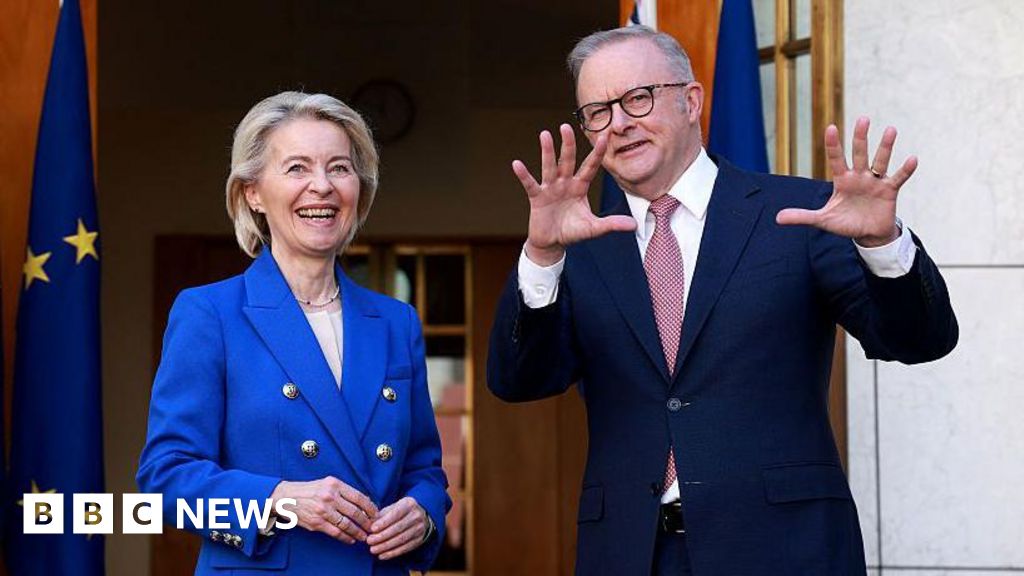
In a decisive move that echoes across the global political landscape, Australia and the European Union have officially signed a comprehensive suite of trade and security agreements, marking a pivotal chapter in their diplomatic histories. After years of intense negotiations characterized by shifting alliances and strategic recalibrations, the two centers of influence are now forging deeper economic and geopolitical ties that could significantly alter the power dynamics in the Indo-Pacific and Europe. This development is widely regarded by analysts and international observers as a clear signal of both parties’ intent to bolster sovereignty and resilience amid growing global uncertainties.

The agreements, described as “the most sweeping” multilayered accords to date, encompass wide-ranging provisions in trade liberalization, digital cooperation, defense collaboration, and strategic infrastructure development. The EU’s representatives emphasize that these accords will strengthen the economic independence of Australia from traditional alliances while advancing Europe’s strategic footprint in the Asia-Pacific. For Australia, they symbolize a reaffirmation of independence from external economic dependencies, especially amid concerns over China’s rising assertiveness in the region—a subject often highlighted by geopolitical analysts such as those at the International Institute for Strategic Studies.

  • The trade component reduces tariffs, streamlines customs procedures, and expands access for Australian agricultural goods in European markets.
  • The security dimension involves increased intelligence sharing, joint military exercises, and a mutual commitment to countering terrorism and cyber threats.
  • Strategically, the agreements establish a framework for coordinated diplomacy addressing issues from regional stability to climate change, reflecting a more assertive European stance outside its traditional sphere.

This new alliance is more than just economic pragmatism; it signifies a conscious pivot by both parties toward a more autonomous, multi-vector global strategy. Experts suggest that these deals are a response to the shifting U.S.–China rivalry, with Europe seeking to diversify its trade partnerships and Australia aiming to protect its national interests amidst an increasingly volatile Indo-Pacific. International organizations such as the World Trade Organization and regional security forums have already begun analyzing the broader geopolitical impact: a potential reduction in dependence on traditional allies and a move towards a multipolar international order.

From a historical perspective, this signing marks a significant evolution in global diplomacy. Analysts like Dr. Emily Carter of the Global Policy Institute point out that these agreements reflect a broader trend in the 21st century: nations increasingly seeking to forge independent paths, shaping alliances that are flexible and resilient against the unpredictable tides of international politics. Significantly, this evolution signals to other countries—especially emerging powers and middle nations—that economic and security sovereignty are now central to national strategy. Europe’s strategic realignment and Australia’s intent to diversify their global partnerships underscore a fundamental shift in how nations seek to secure their futures in a world where traditional bonds are often tested.

As global actors recalibrate their strategies, the decisions taken today will have lasting repercussions for generations. The ink is barely dry on these historic agreements, yet their impact resonates far beyond the economic corridors and military command centers—embedded in the fabric of global history still being written. The world stands at a crossroads, with the unfolding narrative of these alliances promising either increased stability and prosperity or a tense tug-of-war for influence that could redefine the very essence of sovereignty. The weight of history presses heavy, reminding us that in the shifting sands of geopolitics, each decision bears the power to shape the destiny of nations—and perhaps, the future of the world itself.

Live Nation strikes settlement in major US monopoly case, redefining the concert industry for a new generation

In a decisive shift that echoes the greater currents shaping our societal landscape, Ticketmaster—a dominant force in the realm of live events—announces its plans to open segments of its operations to rival companies. This move signifies not merely a business strategy but an emblematic act within the ongoing struggle for cultural stewardship and the preservation of collective memory. As a company that has long held sway over the gateway to our most treasured public gatherings, Ticketmaster’s willingness to diversify its partnerships may herald a broader acknowledgment of the importance of pluralism in cultural institutions.

From a philosophical vantage point, this decision can be viewed as a reflection of the delicate balance between centralization and decentralization, a theme that resonates through historical epochs. Just as Tocqueville observed the American tendency towards individualism within democratic spirit, today’s move suggests an understanding that no single entity can claim absolute dominion over the cultural conduit that connects citizens to their shared experiences. As Ortega y Gasset might remind us, culture is not merely a static relic but a dynamic process—an ongoing dialogue between tradition and innovation. Opening up Ticketmaster’s platform aligns with the notion that society must foster healthy competition to ensure that cultural expressions remain vibrant, accessible, and reflective of a burgeoning national identity.

Importantly, the significance of this shift extends beyond mere commerce, touching upon the roots of community and tradition. Live events—concerts, sports, theater—serve as societal rituals: modern-day equivalents of the Ancient Greek symposia or the medieval village feast. They forge bonds, affirm shared values, and reinforce the collective consciousness. As G.K. Chesterton famously argued, culture is a means of **affirming life’s enduring truths** amidst the chaos of change. When a company like Ticketmaster takes steps towards fostering a more open marketplace, it consciously recognizes that the spirit of community depends on maintaining accessible crossroads for vital cultural exchanges.

In a broader philosophical context, the act of opening its platform to competitors echoes the notion of culture as both memory and prophecy. As T.S. Eliot noted, true culture involves a recognition of the past’s enduring resonance while also projecting the possibilities inherent in the future. It is an ongoing process—an artful alchemy of tradition and innovation. By allowing diverse contenders into the marketplace of live events, Ticketmaster implicitly affirms that **our cultural identity is best preserved not through monopoly but through the vibrant interplay of competing visions**. Ultimately, this moment stands as a testament to the enduring human quest: to forge a society where the echoes of memory shape our hopes and dreams, guiding us towards a future rich with meaning and rooted in the enduring values of community, tradition, and shared destiny.

Wildlife Trusts Celebrate 100 Years with Major Woodland Initiative for Future Generations

Across the United Kingdom, a profound shift in nature conservation is unfolding that resonates far beyond its borders, illustrating a nationalist pride in restoring the natural landscape as a cornerstone of cultural resilience. The recent purchase of 136 hectares of farmland at Wood Norton by the Norfolk Wildlife Trust marks a compelling turning point in how nations prioritize ecological revival in their policy agendas. With a £4.6 million investment, this project symbolizes more than ecological preservation—it signifies a commitment to rebalancing human activity with natural processes. Historians and scientists have long debated whether the modern state’s role should be to exert control or enable the land to reclaim its own destiny, and the Norfolk initiative clearly leans toward the latter—a move that experts argue could set a precedent for similar efforts worldwide.

The geopolitical impact of such ecological initiatives extends well beyond national borders, influencing regional policies, trade, and even the global climate architecture. The project is partly funded through Natural England’s nutrient mitigation scheme, aimed at reducing nitrates and phosphates in waterways—a strategy increasingly adopted in nations facing water pollution crises. International organizations like the United Nations Environment Programme acknowledge that restoring wetlands and floodplains can drastically improve water quality and mitigate extreme weather events. By turning degraded farmland into vibrant wildlife corridors, the UK sets a template for how countries can use ecological restoration as a form of soft power—demonstrating leadership in environmental stewardship while fostering economic benefits in agriculture and tourism. Critics, however, warn that such measures could threaten food security, especially as the nation balances the need for ecological resilience with the imperative of feeding a growing population.

Moreover, this project mirrors a global reawakened appreciation for ‘rewilding’—a movement that champions the return of herbivores and natural predators to restore ecological balance. Drawing inspiration from successful initiatives like the Knepp estate, conservation experts emphasize that supporting biodiversity is not merely about protecting the rare but recognizing ‘how common species are suffering’ and how their resurgence can reinforce the resilience of entire ecosystems. International research indicates that habitat creation and restoration can fortify local communities against climate-induced calamities. As analysts warn of looming resource crises and ecological instabilities, the Norfolk project stands as a testament to a rising tide of ecological nationalism—where the land’s future is dictated by its own natural intelligence rather than human interference alone.

As history unfurls, what transpires at Wood Norton may become a symbol of a broader realignment—an age where human ambition must reckon with the planet’s innate capacity for regeneration. It is a landscape infused with the hope of renewal, yet fraught with the weight of decisions made: will this be merely an isolated sanctuary or the seed of a global movement reimagining land use? With the return of beavers, the resurgence of wild flora, and the recognition that ‘the land should decide its own destiny,’ humanity is at a crossroads. The choices we make today—whether in Norfolk or elsewhere—will echo into history’s chapters, shaping a world on the brink of either ecological collapse or renaissance. The shadows of past conflicts over land and resource are still cast long, but now, amidst the rising dawn of ecological sovereignty, the story remains fundamentally ours to write.

US and Ecuador crack down on drug traffickers in major new operation

Recent statements from Washington reveal a concerted effort to combat what it describes as ‘designated terrorist organizations’ operating within Ecuador. This development signals a significant escalation in regional security dynamics, with broad geopolitical implications extending well beyond South America. The United States’ involvement underscores a broader strategy to contain extremist elements that threaten not only regional stability but also international security, as global powers seek to project influence amid shifting alliances and rising threats.

Analysts point out that the uprising of terrorist groups in the region signals a troubling trend, with insurgent groups leveraging Ecuador’s geographic and political vulnerabilities. Historically, Ecuador has remained relatively insulated from the turmoil that has plagued neighboring countries, but recent years have witnessed increased infiltration by various militant factions. According to reports from international organizations such as the United Nations, these groups have posed threats not only to Ecuador’s internal security but also to global efforts to destabilize fragile governments. Washington’s assertions suggest a desire to prevent these entities from establishing sanctuary on the continent, which could facilitate transnational operations, drug trafficking, and illicit arms smuggling.

In response, Ecuador’s government has reaffirmed its commitment to joint operations with the United States and regional allies, exemplifying what some analysts describe as a pivot toward stronger security cooperation. The move comes amid ongoing debates about sovereignty versus the need for international assistance in combating extremism. Historians emphasize that such cooperation often marks a pivotal shift in a country’s foreign policy, reflecting the increasing importance of security alliances in a world where traditional borders are increasingly porous. Yet, critics caution that such interventions could also fuel anti-Western sentiments, complicating diplomatic relations and potentially destabilizing the region further.

This unfolding scenario exemplifies the delicate balance of power in the 21st century, where the fight against terrorism serves as a proxy for broader geopolitical strategies. As global leaders deliberate the next moves, the international community must reckon with how these decisions will shape the societal fabric of Ecuador and neighboring nations. The echoes of history warn us that, often, the true cost of such interventions is paid in the long run—by innocent civilians caught in the crossfire and by nations entangled in the shifting tides of global conflict. As the world watches, the pages of history continue to be written, with each chapter potentially determining the future stability of a continent whose every move resonates far beyond its borders.

Social Media Auto Publish Powered By : XYZScripts.com