Unveiling the Truth Behind Trump’s Greenland Assertions
Recently, former President Donald Trump made headlines with his bold claims regarding Greenland, suggesting that the United States seeks ownership of the Arctic island for strategic supremacy. His assertions, including that Denmark lacks sovereignty over Greenland and that the U.S. needs legal ownership to defend it, prompted widespread debate. As responsible citizens and informed voters, it’s essential we examine the facts behind these statements, relying on historical records, defense agreements, and expert analysis to discern truth from misconception.
Greenland’s Sovereignty: A Well-Established Legal Reality
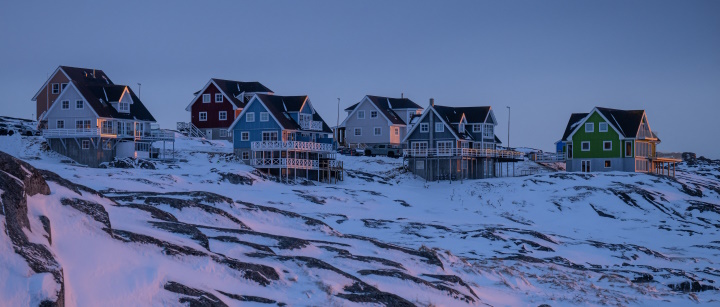
One of Trump’s more provocative claims was that “there are no written documents” establishing Greenland as Danish territory, implying U.S. sovereignty might be justified by historical landing claims. However, this is a *misleading* portrayal. Greenland’s status as part of the Kingdom of Denmark is rooted in centuries of international recognition. Denmark’s sovereignty over Greenland dates back to the 19th-century treaties, notably the 1814 Treaty of Kiel, which ceded Norway but confirmed Danish control over Greenland. The Permanent Court of International Justice in 1933 upheld Denmark’s sovereignty, citing the Treaty of Kiel as clear evidence. Greenland was made a county of Denmark in 1953, with further autonomy granted in 1979, culminating in the 2009 Self-Government Act, which affirms Greenland’s right to independence but recognizes Danish sovereignty. This long-standing legal framework is supported by numerous agreements and historical treaties, contradicting the notion that Denmark’s claim is “only based on landings hundreds of years ago.”
- 1953: Greenland becomes a county of Denmark.
- 1979: Greenland gains Home Rule.
- 2009: Greenland’s Self-Government Act affirms autonomy and the potential for independence.
- 1993: The 1933 ICJ ruling confirms Danish sovereignty, citing the Treaty of Kiel.
Moreover, the U.S. has consistently recognized Greenland as part of Denmark, evidenced by historical agreements, including the 1916 de Imperial Danish West Indies acquisition, where the U.S. explicitly acknowledged Danish sovereignty over Greenland. Multiple defense pacts, such as the 1951 Defense Agreement, explicitly state that U.S. access to Greenland does not challenge Danish sovereignty.
The U.S. Military Presence and Legal Access: Not Contingent on Ownership
Trump’s assertion that the U.S. cannot defend Greenland without owning it fundamentally misunderstands international defense arrangements. The U.S. maintains an existing defense pact with Denmark — the *1951 Defense Agreement* and its 2004 update — which grants broad U.S. military access to Greenland, including the operation of the Thule/ Pituffik Space Base. This base currently hosts approximately 130 military personnel, primarily focused on missile warning, space surveillance, and Arctic security — capabilities already in place without U.S. ownership. Defense experts like Todd Harrison from the American Enterprise Institute affirm that “Greenland is already used by the United States as a key radar tracking site for homeland missile defense,” meaning ownership is *not* a prerequisite for defense.
Furthermore, the U.S. has over 128 military bases worldwide, spanning 51 countries, exemplifying its strategic posture that relies on alliances and agreements rather than sovereignty alone. Analysts like Ivo Daalder, a former U.S. ambassador to NATO, emphasize that “merely suggesting that the U.S. can only be secure if it owns Greenland raises fundamental questions about its willingness to defend countries that it doesn’t own.” Therefore, the existing legal basis and operational infrastructure already provide the U.S. with strategic access in Greenland, undermining Trump’s argument.
The Political and Strategic Context of Greenland Policy
Multiple Danish officials, including Foreign Minister Lars Løkke Rasmussen, have publicly stated that the U.S. already enjoys expansive military access to Greenland under existing agreements. Rasmussen noted, “The U.S. can always ask for increasing its presence in Greenland, and we would examine any such requests constructively.” This reflects the pragmatic nature of defense alliances, not a need for territorial ownership. Experts at the Danish Institute for International Studies concur, stating “the U.S. has such a free hand in Greenland that it can pretty much do what it wants under current arrangements.”
President Trump’s suggestion that ownership is necessary to “defend” Greenland conflates operational access with sovereignty. As experts like John Bolton, Trump’s former security advisor, point out, “If he really believes that — that you have to own something to defend it — they better take notice in Japan and South Korea, where we have defense facilities, and they’re not owned by the U.S.” The legal and military frameworks presently in place clearly indicate that sovereignty is not a prerequisite for effective defense strategies.
Conclusion: The Significance of Accurate Information in a Democracy
In a democratic society, truth serves as the foundation upon which policies are debated, decisions are made, and sovereignty is respected. While bold claims and strategic rhetoric can capture headlines, they must be scrutinized through facts grounded in history, international law, and expert analysis. Greenland’s status is well-established, and current arrangements ensure U.S. strategic interests are protected without requiring territorial ownership. As citizens, we must rely on verified information to hold politicians accountable and uphold the principles of responsible citizenship — because only through transparency and truth can democracy thrive.