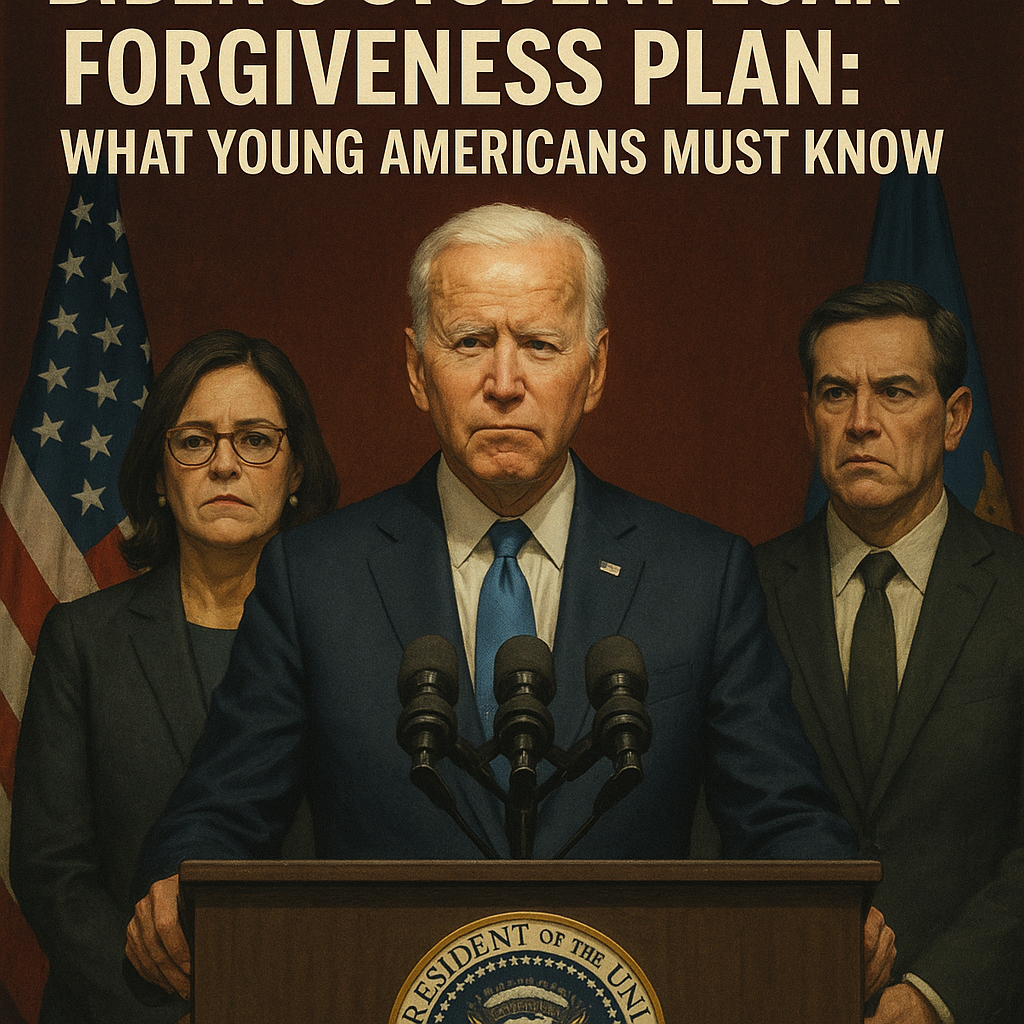
The recent suspension of President Joe Biden’s ambitious federal student loan forgiveness program underscores a pivotal moment in the ongoing power struggles within American politics. Announced as a bold move to provide up to $20,000 of debt relief for millions, this policy was intended to serve as a cornerstone of Biden’s broader economic and social agenda. Yet, its current indefinite hold, amidst mounting legal challenges, reveals how deeply entrenched conflicts over authority and visions for national policy continue to shape the lives of ordinary Americans. With progressive allies championing debt relief as a matter of fairness, conservative opponents see it as an overreach of executive power—highlighting the fundamental clash of constitutional interpretations.
The legal roadblock emerges from a broader power struggle between the executive branch and the judiciary. While the Biden administration asserts that the federal government has the authority to modify student debt policies under existing statutes, opponents argue that this action exceeds the constitutional limits of executive power, demanding congressional approval instead. This dynamic recalls historical moments where executive orders or policies have become lightning rods for constitutional debates. Legal experts and constitutional scholars point to the importance of checks and balances—with some arguing that the courts are asserting their role as guardians against potential overreach by the administration. Conversely, supporters interpret the move as an essential step toward addressing economic inequality, emphasizing that the executive branch must sometimes act decisively amidst legislative gridlock.
The impact of this debate extends beyond legal circles, as it directly influences the political landscape and the fabric of American society. For proponents, the forgiveness program symbolizes a
In this high-stakes theatre, political actors are engaging in a battle for influence—a contest that will determine the contours of policy, the limits of executive agency, and the future of economic justice. Just as historical figures like Alexander Hamilton argued for a strong federal government, and Thomas Jefferson emphasized states’ rights, the current debate echoes the foundational questions of American democracy: whose interests does government serve, and who ultimately wields sovereign authority? As each side stakes its claim, citizens are left to ponder whether political power is truly a force for reform or merely a stage for conflict—a battle where the outcome writes the next chapter of American destiny. The conclusion of this constitutional clash may well determine whether the nation advances towards a future of shared prosperity or slides further into disillusionment and division.