AI Infrastructure Evolution Accelerates with Nvidia and Industry Giants at Forefront
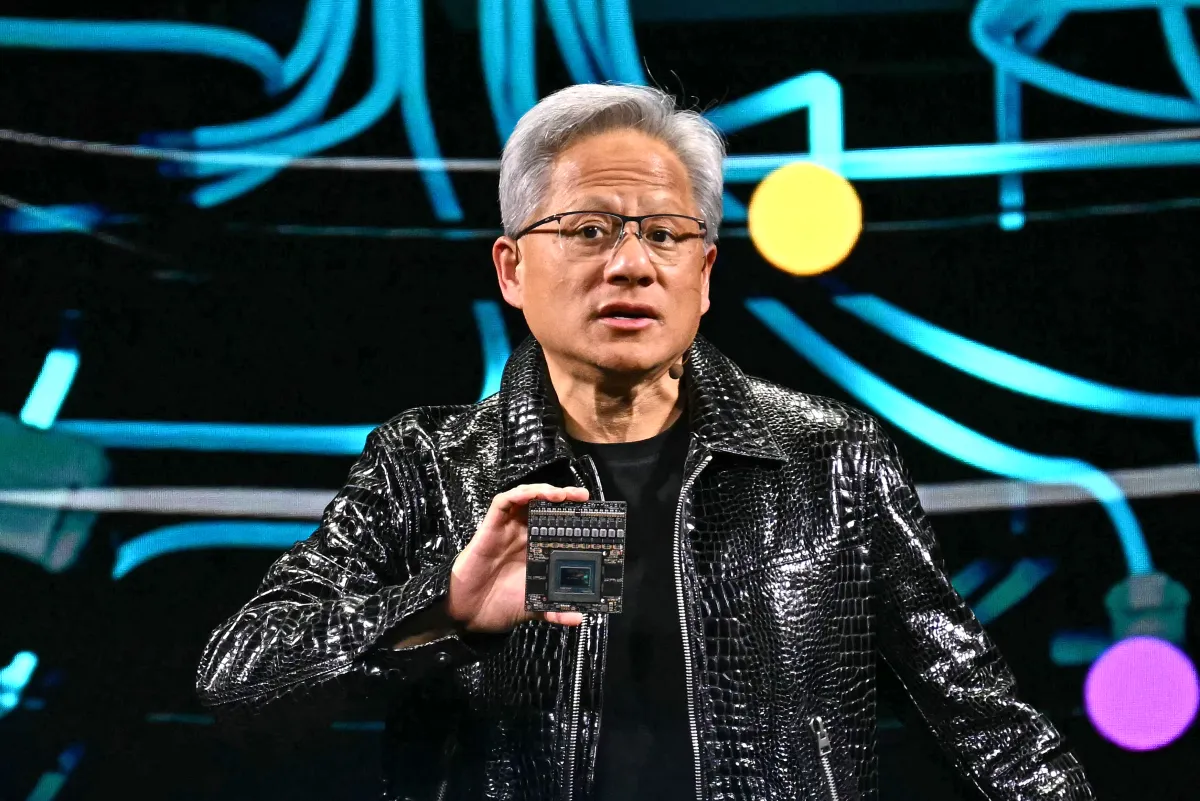
In a remarkable display of innovation and industry disruption, the latest advancements in AI hardware infrastructure signal a seismic shift toward dominance by tech titans such as Nvidia, OpenAI, and Microsoft. The deployment of a colossal AI system comprising over 4,600 Nvidia GB300 rack computers, powered by the highly sought-after Blackwell Ultra GPU chips, exemplifies the accelerated push toward supercharged AI capabilities. These systems utilize Nvidia’s cutting-edge InfiniBand networking technology, a strategic asset acquired through Nvidia’s 2019 $6.9 billion purchase of Mellanox, which has enabled unparalleled data transfer speeds critical for training today’s most advanced AI models.
The stakes are high as OpenAI, one of the most influential players in generative AI, ramps up its data center investments amidst reports of strained relationships with its partner Microsoft. With estimates suggesting OpenAI has committed over $1 trillion toward developing its own dedicated data centers, the firm’s strategic pivot underscores a broader industry trend: the race for AI sovereignty is intensifying. Notably, OpenAI’s recent high-profile data center deals with Nvidia and AMD signals a multi-vendor approach, aiming to diversify hardware dependencies and increase resilience.
- OpenAI’s investments aim to support models with “hundreds of trillions of parameters”
- CEO Sam Altman anticipates additional, soon-to-be-announced deals
Microsoft’s Strategic Positioning: A Power Play in AI Infrastructure
Meanwhile, Microsoft asserts its leadership by leveraging an extensive global network of more than 300 data centers across 34 countries. The company claims its infrastructure is “uniquely positioned” to meet the stringent demands of frontier AI workloads, capable of supporting models with unprecedented scale. This aggressive positioning underscores Microsoft’s intent to embed itself at the core of the AI revolution, facilitating the next wave of innovation that could reshape industries across sectors.
With AI models growing exponentially in complexity—aiming at horizons of hundreds of trillions of parameters—the deployment and management of such infrastructure will be key. Microsoft’s upcoming showcase at TechCrunch Disrupt 2025 illustrates its ambition to lead the narrative in this space, with CTO Kevin Scott expected to outline plans to scale AI workloads further. As the industry witnesses these developments, a new era of AI-powered business transformation is becoming non-negotiable.
Industry Outlook: Disruption as a Catalyst for Change
Experts such as Gartner analysts and MIT researchers emphasize that the convergence of hardware innovation and strategic data center investments marks a decisive turning point. Tech giants recognizing the need for self-sufficient AI ecosystems aim to outmaneuver traditional cloud providers, disrupting existing business models. This evolution underscores a broader warning: organizations that fail to adapt to the accelerating pace of innovation risk being left behind.
Looking ahead, the urgency is clear. The race to dominate AI infrastructure is not just about technological leadership but about shaping the future economic landscape. As Nvidia, OpenAI, and Microsoft push the boundaries of what current infrastructure can deliver, the industry must brace for a future where AI’s capabilities redefine competitiveness and market norms. The next decade will likely see a consolidation of power among these key players, with disruptive technology acting as the engine for exponential growth and strategic realignment.