
TRENDING NEWS





Truth Over Trends, always!

In an era marked by rapid flux, the role of culture remains paramount as both a mirror and a prophecy of society. The recent satirical musings of Stephen Colbert serve as a modern reminder that humor, even when wrapped in absurdity, underscores deeper truths about our allegiances, values, and identity. His playful critique of the surreal “Rock Out Workout” featuring RFK Jr and Kid Rock, encapsulates the strange spectacle of political spectacle turned pop culture carnival. This spectacle, with its shark attacks, taxidermized bears, and American flags, exemplifies how contemporary culture often blurs the lines between the authentic and the performative—raising questions about the foundations of shared tradition and national ethos.
Historically, cultural shifts have reflected broader societal changes. As Ortega y Gasset observed, a civilization’s vitality hinges on its cultural identity, which in turn is sustained by the collective memory of its traditions. In our current landscape, this collective memory is often commodified or obscured, replaced by spectacle and transient trends. Colbert’s commentary on RFK Jr.’s unconventional workout, highlighting the absurdity of modern masculinity and camaraderie, echoes Chesterton’s notion that “the true soldier fights not because he hates what is in front of him, but because he loves what is behind him.” This love for the traditional, for the cultural symbols that bind society, is often challenged by the spectacle-driven culture that seems to replace genuine societal bonds with superficial entertainment.
Furthermore, the cultural icons we elevate and memorialize—as demonstrated in Colbert’s tribute to civil rights leader Jesse Jackson—serve as anchors in the tumult of cultural change. Jackson embodies a form of leadership rooted in compassion, which is increasingly a scarce commodity in today’s polarized climate. The public’s engagement with such figures, and the respect they command, underscores that culture is more than entertainment; it is the moral fabric that sustains societal cohesion and persistence. As Tocqueville noted, the strength of a nation depends on its social and moral capital, both of which are cultivated through enduring stories, shared struggles, and collective sacrifices. Our culture, therefore, functions as both memory—keeping alive the lessons of the past—and prophecy—guiding us toward a future rooted in tradition and resilience.
In essence, the ongoing dialogue between culture and society is a poetic one—an intricate dance of memory and aspiration. It reminds us that although the media spectacle may distract, beneath the surface lies a profound quest for identity, rooted in our collective history and directed toward the horizon of human potential. As we navigate the challenges of an ever-changing world, let us remember that culture is not merely a reflection of who we are, but also the lighthouse illuminating who we may become—a living testament to the enduring capacity of humanity to remember, to uphold, and to hope. It is in that eternal cycle that our true strength resides—an ongoing prophecy written in the language of tradition, echoing through the corridors of time, guiding us home.
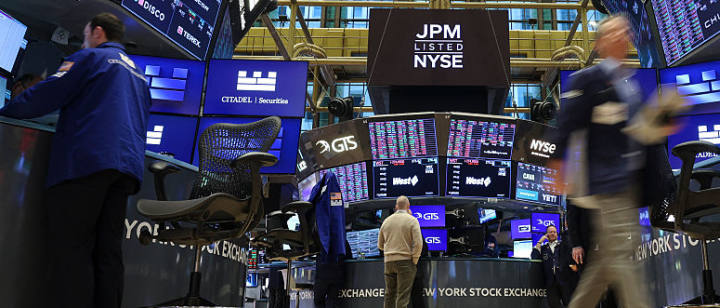
As President Donald Trump prepares for his State of the Union address, a critical eye should be cast on the myriad of economic claims he has made recently. While Trump touts a narrative of unprecedented economic success, most of his assertions rest on a foundation of selective data and oversimplified interpretations. This fact-check aims to scrutinize twelve core claims Trump has made about inflation, economic growth, job creation, stock market performance, and more, providing clarity for responsible citizens seeking the truth in political discourse.
Trump asserts that the American economy has experienced “exploding” growth under his leadership, citing quarterly increases of 3.8% and 4.4% in recent quarters as indicators of record-breaking performance. However, experts from the Bureau of Economic Analysis (BEA) clarify that these figures, while strong compared to recent past performance, are not record-setting. The historical record for quarterly GDP growth includes a 34.9% surge during the early pandemic recovery in 2020 and a 16.7% growth during the 1950s, far surpassing the current numbers.
*Kyle Handley*, an economist at UC San Diego, notes that “these quarterly figures do not constitute a record and reflect typical economic recovery dynamics.”
Trump claims that more Americans are employed now than at any other point in history, numbering over 158 million. While technically true, this statistic neglects the population growth over the years. When accounting for population, the employment-to-population ratio has actually declined slightly from 60.1% to 59.8%, indicating that a larger share of Americans are not employed, despite the raw employment figures reaching new highs. Additionally, job growth between January 2025 and 2026 was only 0.2%, compared to a 0.8% gain during Biden’s last year, signaling a slowdown in the pace of employment increase under Trump.
Trump claims that he inherited “the worst inflation in U.S. history” but now there’s “almost no inflation.” This is misleading. At his inauguration, inflation was around 3%, a moderate level historically, and only risen sharply under Biden to 9.1% in June 2022— the highest since 1981. As of January 2026, inflation decreased to 2.4%, still above the Fed’s 2% target, and prices for some essentials remain elevated. The narrative that inflation has been eradicated is inaccurate; it has simply slowed in recent months.
Trump touts the stock market’s rebound, claiming it has “outperformed expectations,” yet the underlying data suggests a more nuanced picture. The S&P 500 has risen about 14.5% since Trump’s inauguration, which is good but only slightly better than pre-election forecasts. Notably, the market’s recovery began after a dip caused by tariff announcements, like the “Liberation Day” tariffs in April 2025, which temporarily sent stocks lower. Moreover, the overall growth under Biden has been robust, with the S&P 500 increasing nearly 58% over his four years, surpassing the gains seen under Trump.
Regarding gasoline prices, Trump claims “$1.99 a gallon,” but the actual national average was closer to $2.90 at the time. This is a clear exaggeration. Gas prices are about 19 cents lower than when Trump took office, but the figure he cites is not representative of national averages. Energy prices, including electricity, continue to rise modestly, with household energy costs up 6.6% over the past year. These facts undermine the narrative of a Trump-era energy miracle, showing that prices are gradually increasing rather than collapsing.
Ultimately, the wealth of data from reputable sources such as the BEA, BLS, and Federal Reserve highlights that much of Trump’s recent economic rhetoric is either exaggerated or misleading. As responsible citizens and informed voters, it is imperative to scrutinize claims critically, relying on objective data rather than political spin. A healthy democracy depends on truth and transparency. When political leaders manipulate statistics to craft a narrative of never-before-seen success, they undermine public trust and weaken accountable governance. Only through diligent fact-checking and adherence to verified information can Americans make informed judgments about their nation’s economic future.

In a stunning display of skill and resilience, Alysa Liu has clinched the Olympic gold medal in figure skating, marking an unforgettable highlight for the U.S. figure skating team. This triumphant win comes after a week marked by challenges and a rollercoaster of emotions, further establishing Liu as a rising star on the world’s biggest stage.
The road to success was not without its hurdles. Liu’s journey was characterized by an array of obstacles—the pressure of competition, shifting weather conditions, and the high expectations following her previous performances. Yet, as exemplified during the decisive moments of her routine, *she executed breathtaking jumps and flawless spins that left audiences breathless*. In the closing seconds of her program, Liu landed a triple axel that solidified her position at the top.
The day was filled with remarkable moments that had fans on the edge of their seats. Key highlights from the event included:
As commentator Bobby Deen noted during the coverage, “Alysa has not just skated; she has told a story with her performance, transforming pressure into pure artistry.” The entire nation watched as she transformed anxiety into triumph, showcasing the core values of dedication and determination often heralded in the world of sports.
This Olympic gold for Liu serves as a powerful reminder that sports are more than just victories and losses. They reflect a shared spirit that unites individuals from diverse backgrounds—each from their own corner of the world. As the U.S. figure skating team celebrates this monumental achievement, they embody the truth that every competition is an opportunity: a chance to inspire, to strike gold, and above all, to bring people together in a shared love for the game. This is what makes sports a unifying force, reaching beyond the final score into the hearts of millions.
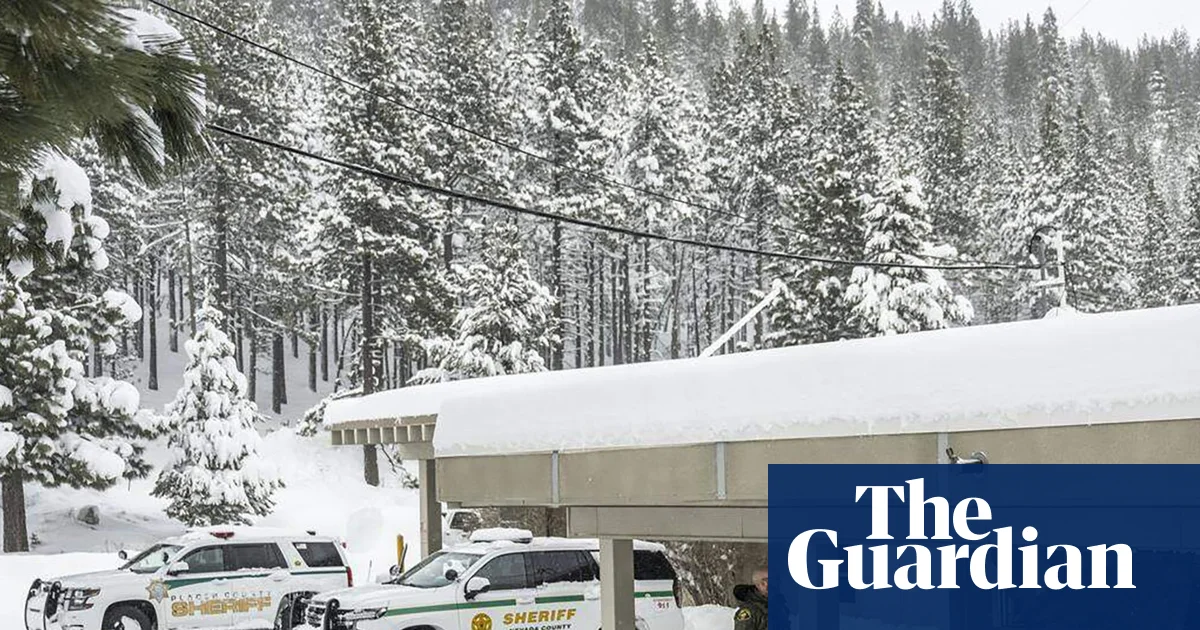
The recent tragedy in California’s Sierra Nevada region has sent shockwaves through the international community, highlighting both the risks of extreme outdoor pursuits and the unpredictable power of nature. An avalanche in the Castle Peak area claimed the lives of eight individuals, with six survivors and one person still missing. The victims, including a nurse, a technology consultant, and community volunteers, belonged to a close-knit group of experienced backcountry skiers, underscoring how even the most prepared can fall prey to nature’s unforgiving forces. This incident, the deadliest in the region’s recent history, raises urgent questions about climate-driven changes that intensify avalanche risks, especially in a time of widespread environmental uncertainty.
Analysts and international organizations are closely watching the escalating dangers posed by snow droughts and unseasonal weather patterns. The avalanche’s occurrence amid California’s ongoing snow drought, exacerbated by climate change, demonstrates a critical, turning point in environmental stability. Climate scientists warn that such phenomena undermine traditional winter ecosystems and threaten outdoor recreation and local economies reliant on tourism and winter sports. Sovereign nations along mountain ranges—from Switzerland to Japan—are re-evaluating their avalanche safety protocols, with some calling for stricter safety measures and environmental policies. As noted by international environmental analysts, the increasingly erratic weather underscores the dangerous, uncertain future of alpine environments—a threat not only to thrill-seekers but to entire communities intertwined with mountain life.
Meanwhile, the United States is facing internal questions about the adequacy of safety measures in the face of rising natural disasters. State officials and local authorities are reviewing protocols for avalanche warnings and backcountry travel, especially after incidents like this highlight a deepened vulnerability. Critics argue that insufficient investment in safety infrastructure, combined with climate-induced instability, has left many mountain regions exposed. The tragedy has also sparked a broader debate on how international yet localized decisions—such as environmental policies and emergency preparedness—shape the resilience of societies in the face of natural disasters.
Historically, **mountain communities** have been at the mercy of forces beyond their control, but recent patterns suggest that human decisions—especially regarding climate policies—have a compounded impact. Scientists warn that if global cooperation fails to address environmental degradation, the frequency and severity of such tragedies could multiply. The United Nations and other leading entities remain divided on urgent climate action, with some nations resisting aggressive measures that threaten short-term economic interests. As the world watches this unfolding story, history reminds us that the choices made today will resonate across future generations, carving the trajectory of civilization amidst a rapidly changing planet. The weight of this tragedy is not only felt in California but echoes a global warning—a testament to the fragile boundary between human ambition and natural chaos, a line that is increasingly blurred as time progresses.
In a decisive move that underscores the relentless pace of AI innovation, Google has announced the release of Gemini 3.1 Pro, its latest iteration of a highly advanced large language model (LLM). Currently available in preview, this model is poised to reshape the AI ecosystem once it transitions to a full-scale launch. Industry analysts and AI experts are already interpreting this development as a critical leap forward in the ongoing AI arms race, with Google sharpening its competitive edge against rivals like OpenAI and Anthropic.
Early benchmarks indicate that Gemini 3.1 Pro surpasses even its already impressive predecessor, Gemini 3, released last November. Notably, Brendan Foody, CEO of AI startup Mercor, lauds the model’s performance by placing it atop the APEX-Agents leaderboard, a benchmarking system designed to quantify real-world professional competency. Foody emphasizes that this achievement “demonstrates how quickly agents are improving at real knowledge work,” positioning Gemini 3.1 Pro as a key driver of disruption across sectors reliant on AI-driven automation and knowledge processing.
The timing of this release coincides with a broader escalation in what is now being termed the AI model wars, where tech giants are committed to releasing increasingly powerful models capable of handling agentic tasks and complex multi-step reasoning. As the market shifts toward models that excel in productivity and professional-level cognition, industry analysts such as Gartner forecast an imminent transformation in enterprise AI adoption. Companies eager to leverage these innovations will find themselves at a strategic crossroads—those who adapt swiftly stand to redefine their operational paradigms, while laggards risk extinction.
Significantly, these advancements are not occurring in isolation. The recent launches by OpenAI and Anthropic highlight an accelerated competitive landscape driven by disruption and innovation. The race is now about more than raw power; it demands mastery of multi-modal reasoning, contextual understanding, and integration into business flows—all of which Google aims to reinforce with Gemini 3.1 Pro.
Looking ahead, industry experts like Elon Musk and Peter Thiel warn of a future where AI advances leapfrog human capability, presenting both unparalleled opportunity and significant risk. The emergence of Gemini 3.1 Pro exemplifies the acceleration toward hyper-intelligent systems that could redefine entire industries—from healthcare and finance to legal services and beyond. As these models evolve, the imperative for organizations is clear: embrace innovation or become obsolete in the wake of transformative disruption.
With a major tech event scheduled for June 2026 in Boston, where industry leaders will convene to dissect these developments, the pace of change is unlikely to slow. Stakeholders across the tech ecosystem—including startups, global conglomerates, and policy makers—must remain vigilant, investing in the breakthroughs that will define the next era of AI-powered business. The window to shape the future is now, and those who act decisively will determine the trajectory of technological dominance in the coming decade.
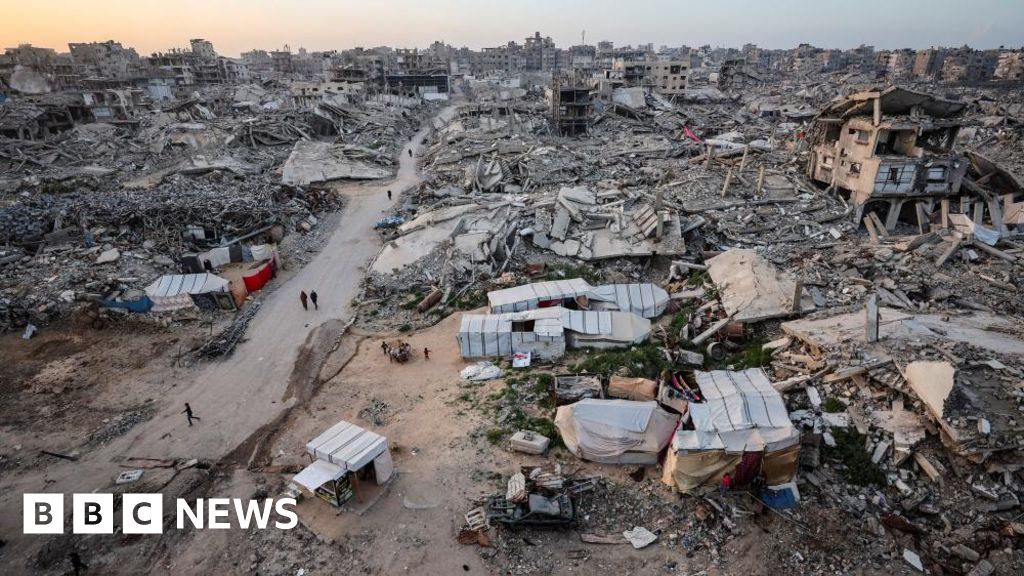
In a statement that has sent ripples through international diplomatic circles, former U.S. President Donald Trump recently expressed a cautiously optimistic outlook, suggesting that Hamas might disarm. His remark came amidst growing concerns over the group’s apparent resurgence in the Gaza Strip, despite pervasive international efforts aimed at curbing the militant organization’s influence. While Trump’s comment appears to signal a potential de-escalation, recent signs point toward a more complex reality on the ground, where Hamas is undoubtedly regrouping, testing the limits of peace and undermining longstanding efforts toward stability in the region.
According to analysts, Trump’s assessment, while optimistic, does little to account for the recent evidence of Hamas’s resilience and strategic realignments. Intelligence reports and on-the-ground observations reveal that the militant organization is actively rearming, recruiting, and consolidating influence among local populations. This resurgence challenges the narrative of an imminent disarmament and underscores the intricate power struggles shaping the geopolitics of the Middle East. Experts from institutions such as the Council on Foreign Relations and the Middle East Institute warn that disregarding these signs of regrouping could result in renewed violence, destabilizing an already fragile region. The international community remains divided over how to approach this volatile equation, with some advocates emphasizing diplomatic engagement, while others urge a firmer stance against militant regrouping.
Such developments carry profound geopolitical implications. Decisions made at the highest levels of diplomacy will resonate across nations, influencing regional alliances, economic stability, and the future of peace negotiations. The Biden administration, along with allies in Europe and the Middle East, faces mounting pressure to reassess their strategies. Historically, efforts to suppress militant movements have often been sidetracked by internal political divides and shifting alliances. As mentioned by security analysts, this pattern underscores the importance of comprehensive, long-term approaches rather than temporary tactical victories. Meanwhile, the United Nations continues to call for de-escalation, but critics argue that such calls lack the enforcement power necessary to curb militant encroachment.
In the backdrop of these developments, the narrative of Middle Eastern conflict remains as complex and treacherous as ever. The implications extend far beyond regional borders, affecting global security and economic interests. The United States, in particular, finds itself again at a crossroads, weighing whether to double down on military support or renew diplomatic efforts. As history has demonstrated, symbols and statements carry weight, but it is the tangible actions—those taken in corridors of power and on the battlefield—that ultimately shape the course of future generations. The world watches with bated breath, aware that the unfolding story in the Middle East is not merely a regional conflict but a pivotal chapter in the larger narrative of global stability, where alliances are tested and the faint hope of peace remains an elusive, yet fervently pursued, beacon amidst the chaos. For in the game of nations, history is written not in words but in deeds—and every move now could echo for generations to come.

As global climate patterns shift and natural hazards become increasingly unpredictable, countries with prominent winter sports industries, such as France, are revisiting their safety protocols and regulatory frameworks. Particularly in renowned resorts like La Plagne and others across the Alps, authorities are shifting focus away from outright restrictions—such as closing off off-piste areas—and toward comprehensive guidance designed to empower tourists. While these measures may seem benign, they symbolize a broader geopolitical and societal discourse about responsibility, sovereignty, and the mounting risks driven by environmental change.
Recent advisories from French resorts emphasize pre-trip information, mandatory safety gear—including avalanche transceivers, shovels, and probes—and the critical importance of expert guidance. For example, La Plagne’s policy underscores a consensus among safety officials and international analysts that personal responsibility should be the frontline defense against disasters. This approach, however, raises complex questions concerning how nations balance tourism industry interests with public safety. As climate scientists, like those from the Intergovernmental Panel on Climate Change, warn of increased snowfall volatility and unpredictable avalanches, some critics argue that governments are under pressure to keep resorts operational, even as risks escalate. The decision to prioritize economic vitality over restrictive closures reflects a delicate geopolitical negotiation, not just within France, but across Europe, where reliance on winter tourism fuels local economies and national identity alike.
Historically, the tension between economic development and environmental realities has underpinned international debates. Analysts note that global institutions like the United Nations and regional bodies are increasingly scrutinized for their role—or lack thereof—in managing climate-induced hazards. Recent reports suggest that international cooperation has yet to establish a definitive framework for sustainable winter tourism amidst mounting risks. This imbalance leaves individual nations to make perilous choices—either banish tourists from dangerous terrain or rely heavily on personal responsibility and traditional rescue services. The societal consequence of this approach becomes apparent in the tragic incidents that occur despite warnings. With resorts incentivizing tourists to acquire safety gear and go with guides, there is a persistent underbelly of potential disaster if individuals underestimate the dangers or emergency responses become overwhelmed—a concern echoed by numerous emergency responders and safety experts.
The geopolitical impact of these policies extends beyond immediate safety. They reflect a broader conflict over sovereignty and economic priorities in a world grappling with environmental upheaval. As historians highlight, the decisions made today about winter sports safety will resonate in future generations’ understanding of how nations navigated the chaos of climate change. The confrontation is not only about protecting lives but about safeguarding national reputation on the global stage. How countries choose to handle these risks—whether through restrictions, technological innovation, or personal responsibility—will define their legacy in an era where the natural world increasingly defies human control.
Ultimately, the ongoing saga of alpine safety policies underscores a stark reality: the weight of history is still being written, and the future of winter tourism hangs in delicate balance. In such a time of uncertainty, one thing remains clear—how the world responds to this unprecedented challenge may very well determine whether societies adapt or succumb to the relentless forces of environmental change. As nations chart their course forward, the echoes of past decisions serve as a haunting reminder: the mountain’s wrath waits silently, ready to mete out its justice, leaving a legacy that the pages of history will judge for generations to come.
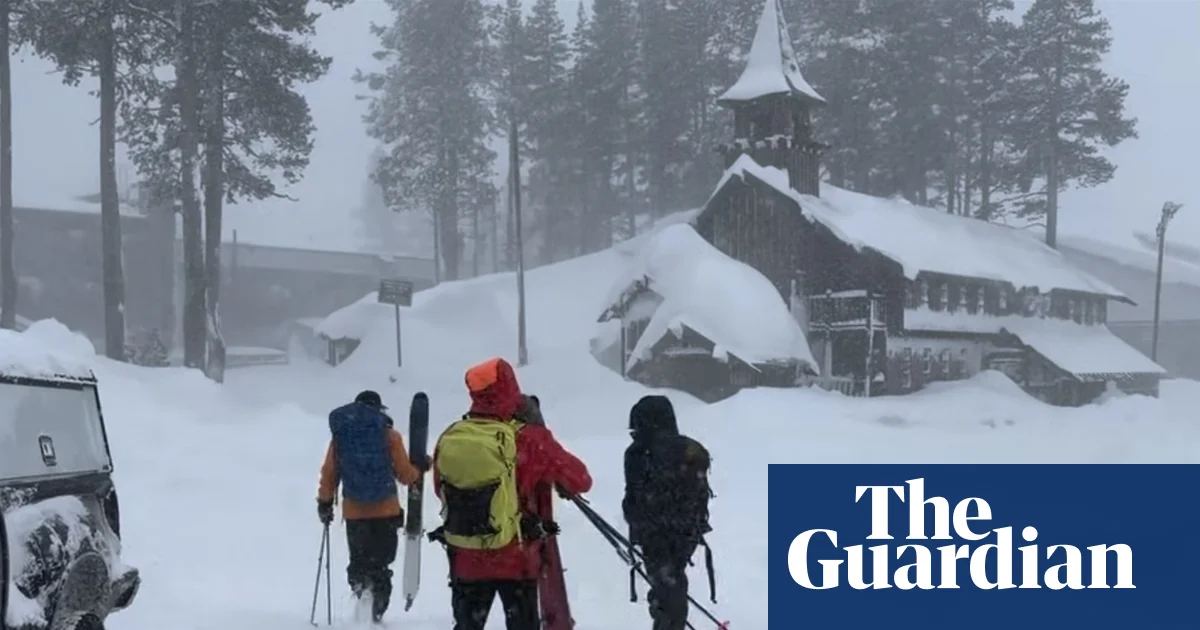
The tragic accident near Lake Tahoe, which claimed the lives of at least eight individuals in a devastating avalanche, underscores the profound influence of technological innovation in the realm of crisis management, especially amid the increasingly unpredictable challenge of natural disasters. The incident involved a group of 15 skiers, including six instructors and nine clients, with six survivors rescued thanks to the pioneering emergency SOS feature embedded within Apple’s devices. This cutting-edge technology, introduced in 2022, exemplifies how private technological advancements are becoming instrumental tools in the broader context of international safety and security cooperation.
According to reports, the survivors relied on the iPhone’s satellite-based emergency communication to alert authorities, enabling rescue efforts in a remote, rugged environment where traditional cell towers are nonexistent. Sheriff Shannan Moon confirmed that emergency teams accessed vital information through conversations facilitated by the feature, leading to the rescue of six individuals and the discovery of multiple bodies. Meanwhile, the California Office of Emergency Services engaged in extensive, hours-long coordination with rescuers and guides via personal locator beacons capable of satellite texting, illustrating a shift towards a more technologically interconnected era of crisis response. This incident demonstrates an important “turning point” in crisis management, where private corporations and government agencies are increasingly intertwined in safeguarding lives during natural disasters.
From a geopolitical impact perspective, the incident and technological responses highlight a rapidly evolving landscape where nations are compelled to adapt to the geopolitical consequences of technological sovereignty and innovation. As global institutions and governments rely more deeply on private corporations’ advances, such as Apple’s satellite capabilities, the independence and security of national emergency infrastructure are indirectly affected. Experts warn that reliance on private tech firms for critical situations raises questions about sovereignty, data control, and the potential for international tensions, especially if these technologies are manipulated or fail during crises. Analysts like Dr. Maria Lopez, a security scholar at the Global Policy Institute, note that “the integration of commercial satellite tech into state-level rescue operations signifies a new form of public-private partnership, reshaping the realm of international crisis response and security.”
In the geopolitical theater, where nations contest control over technology and airspace, these incidents serve as a stark reminder that the boundary line between private innovation and national security is becoming increasingly blurred. As international organizations scrutinize the role of private corporations in critical communications, the implications of a single tech company wielding such influence become more apparent. This moment, poised at the intersection of natural peril and technological power, reminds humanity that the march of history continues—a relentless pursuit of survival shaped by the decisions of today, where the nation-state’s sovereignty is no longer the sole arbiter of security, but part of a broader, interconnected tapestry spanning corporate interests, technological control, and global stability.
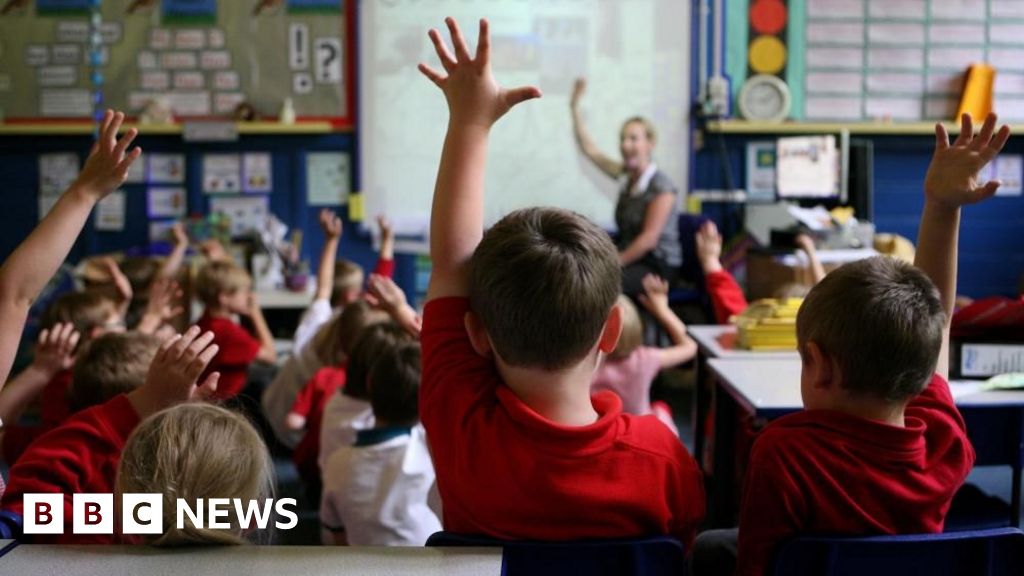
Recent leaks have revealed a potential overhaul of special educational needs (SEN) and disabilities support systems within schools, igniting debates across communities about the future of inclusive education. As the fabric of society evolves, so too does the recognition that every child, regardless of their physical or learning challenges, deserves equitable access to quality education. Yet, these proposed reforms underscore ongoing tensions between institutional efficiency and the moral obligation to foster environments where diversity is genuinely embraced.
The impending changes suggest a comprehensive redesign of SEN support structures, which could significantly impact families, educators, and students. Historically, sociologists like Pierre Bourdieu have emphasized how social inequalities become embedded within educational institutions, often marginalizing students with disabilities or learning difficulties. The current conversation centers around whether these reforms will address such disparities or inadvertently exacerbate them. Many parents of children with special needs express concern that a top-down approach might diminish the personalized care and attention their children rely on, potentially reducing access to specialized resources that are crucial for their development. For families, this is more than policy—it’s a matter of justice and opportunity.
Furthermore, the proposed shifts could reshape how schools integrate students with disabilities, impacting community cohesion and educational equity. Educators face the complex challenge of balancing the allocation of limited resources while fostering an inclusive classroom environment. The history of social integration reveals that well-structured support is key to breaking down barriers of misunderstanding and prejudice. As social theorist Michael Apple notes, “education has the power either to reinforce existing inequalities or to serve as a site of social transformation.”
The societal implications extend beyond the classroom—families feel the ongoing weight of navigating bureaucratic systems that often overlook their specific needs. Children with disabilities are not mere statistics; they are individuals whose daily struggles reflect broader societal attitudes toward diversity. A failure to adequately support them undermines the moral fabric of a society that claims to value fairness and opportunity.
In the words of social historian Howard Zinn, “society is a body that can only be healthy when every part is nourished and supported.” As communities grapple with these upcoming reforms, they are compelled to reexamine the core values of inclusivity and shared responsibility. The challenge lies in implementing change that genuinely uplifts families, educators, and students, fostering a future where differences are not just accommodated but celebrated. The hope remains that, amidst society’s complexities, the collective effort to nurture a truly inclusive environment will lead to a stronger, more resilient community—one where every individual’s potential is recognized and realized.

This past weekend brought a flurry of excitement across the sports landscape, from the hard-hitting arenas of professional football to the swift courts of collegiate basketball. Fans from all walks of life tuned in to witness not just games, but moments that underscored the heart and grit of these athletes. Whether through nail-biting finishes or historic performances, the weekend showcased sports as a unifying force in our nation.
In the world of professional football, the New England Patriots faced off against the Dallas Cowboys in a highly anticipated match. The tension was palpable as the game reached its climax. With mere seconds left on the clock, the Patriots’ quarterback connected with wide receiver Tyler Johnson for a sensational 45-yard touchdown, dramatically turning the tide of the game. This last-minute play not only secured a victory for the Patriots but also highlighted their determination to reclaim their place in the league. Commentator Troy Aikman remarked, “You can never underestimate the heart of a champion team.”
Meanwhile, in college basketball, the Duke Blue Devils clashed with the North Carolina Tar Heels in another thrilling encounter. The intensity escalated as the game went down to the wire. With just three seconds remaining, freshman sensation Jordan Harris made a bold three-pointer, leading Duke to a riveting 72-71 victory. This moment not only showcased Harris’s talent but also reaffirmed the fierce rivalry between the two teams. Analyst Jay Bilas noted, “This is what college basketball is all about—passion, rivalry, and unforgettable moments.”
These games are more than just scores; they symbolize the unity and spirit of competition inherent in sports. On and off the field, athletes inspire dreams and ignite passions that reach every corner of society. Fan engagement and community support reflect a deeper connection that transcends the scoreboard. As we reflect on these electrifying encounters, it becomes clear that sports serve as a cornerstone of collective experience, reminding us all that win or lose, we are united in our love for the game.


