



Matox News

Truth Over Trends, always!

OpenAI teams with Tata for 100MW AI hub in India, targeting 1GW growth

OpenAI Sets Strategic Milestone with Tata Group Partnership in India’s AI Revolution

In a move signaling disruption and innovation in the global artificial intelligence landscape, OpenAI has announced a groundbreaking partnership with Tata Group to develop a robust AI-ready data center infrastructure in India. This partnership is a core component of OpenAI’s Stargate project, which aims to build scalable, enterprise-grade AI infrastructure on a global level. Starting with an initial capacity of 100 megawatts, the collaboration is set to expand to a staggering 1 gigawatt, positioning India as a key hub for AI innovation and enterprise adoption.

Leading industry analysts, including Gartner and MIT research teams, emphasize that this strategic shift underscores the importance of localized data processing for large-scale AI deployment. Hosting AI models domestically reduces latency—vital for delivering real-time solutions in sectors such as finance, healthcare, and digital governance—while enabling compliance with India’s data residency laws. Notably, the move positions OpenAI at the forefront of industry disruption, with capabilities rivaling the world’s largest AI data centers, exemplified by tech giants like Google and Amazon, who have already demonstrated the business potential of massive infrastructure investments.

Innovation Driven by Strategic Infrastructure and Enterprise Collaborations

The partnership is more than just a hardware upgrade; it symbolizes a paradigm shift in enterprise AI adoption. TCS’s HyperVault data centers, backed by approximately $2 billion in planned investments, will serve as the backbone for OpenAI’s local operations. This infrastructure will enable deployment of advanced AI models like GPT-4 locally, significantly improving turnaround times, data security, and compliance for Indian enterprises. Large-scale AI training, which demands intensive GPU clusters, underscores the scale of this operation, reflecting the company’s long-term ambitions for India as a regional powerhouse.

  • Deployment of ChatGPT Enterprise to streamline Tata’s workforce, empowering hundreds of thousands of employees with AI-driven tools.
  • Standardization of AI-native software engineering through OpenAI’s Codex tools, sparking a wave of innovation within Tata Group’s diverse portfolio.
  • Certification programs launched by OpenAI to upskill Indian professionals, ensuring a ready workforce equipped to harness the AI revolution.

Leading voices like Sam Altman have highlighted India’s rising influence, with over 100 million weekly ChatGPT users, driven by a surge of student, developer, and entrepreneurial activity. This rapid adoption rate signals an urgent window of opportunity for global AI firms to embed deeply into India’s digital economy. The collaboration also aligns with Tata’s vision to culturally and technologically position itself as a leader in AI, a move echoed by industry insiders as a disruptive force that could redefine enterprise software standards across Asia and beyond.

Future Implications and Next Steps

As OpenAI ramps up its local footprint, including upcoming offices in Mumbai and Bengaluru, the company’s strategy signals a recognition that AI’s future is rooted in regional infrastructure and enterprise integration. The partnership with Tata and the HyperVault platform signifies a critical inflection point—where innovation meets strategic deployment, and global AI leadership is renegotiated. With AI’s disruptive potential only accelerating, India is poised to become an engine of the next wave of digital transformation.

Market observers and industry leaders must remain vigilant. The acceleration of AI infrastructure development underscores the urgent need for regulatory clarity, ethical standards, and innovations that safeguard user interests. As giants like OpenAI position themselves for dominance, delay or complacency could render other players obsolete in this rapidly evolving landscape. The question is no longer whether AI will reshape industries—it’s about who will lead the charge. The future belongs to those willing to invest boldly now, shaping a world where AI drives unparalleled economic growth, technological breakthroughs, and societal transformation.

Union Chief Urges Ministers to Drop Foolish Pay Restraints on Civil Service

Challenges Facing Society’s Core Institutions and Families

In an era marked by rapid technological advancement and shifting socio-political landscapes, public institutions stand at a critical juncture. The civil service, tasked with implementing policies that shape everyday life, faces a crisis rooted in underfunding and regulatory undermine. Union leader Mike Clancy has issued a stark warning: if Ministers do not end the misguided restraints on civil service pay, the essential pool of technical and digital specialists will continue to erode. These professionals are the backbone of effective governance, yet low pay and limited career progression threaten to disarm the very institutions designed to serve society. Clancy emphasizes that the government’s outdated approach—such as equating civil service pay at senior levels with that of the Prime Minister—is both “barking mad” and self-sabotaging. Such policies not only hinder recruitment but also compromise the quality of public service that families depend upon for stability and fairness.

The Impact on Education, Environment, and Community Trust

Across the fabric of our communities, resource shortages translate into tangible delays and neglected responsibilities. According to recent reports, agencies like Natural England and the Environment Agency are unable to meet critical deadlines—delays that directly impact families and local environments. For example, over half of planning application responses have missed their targets, primarily due to insufficient staffing and expertise. This is not just a bureaucratic failure; it is a breakdown in the social contract that holds communities accountable and ensures their well-being. As sociologists like Michael Sandel argue, trust in civic institutions is foundational to societal cohesion. When residents see their requests ignored, especially on issues like housing or infrastructure, the consequences deepen social divides and foster cynicism towards authorities meant to protect them.

Underlying Social Tensions and the Need for a Cultural Shift

At the heart of these issues lies a profound cultural shift—one where regulation is misinterpreted as an obstacle rather than a safeguard. Clancy warns against the simplistic view that deregulation and austerity will boost productivity, asserting instead that “regulators are builders, not blockers.” The misallocation of resources and the neglect of institutional capacity threaten to unravel the moral fabric of society, where fairness, opportunity, and progress for families and workers are paramount. The push by some business groups to weaken worker protections, such as the Employment Rights Act, exemplifies how economic interests often overshadow social stability. It highlights a need for a societal narrative that recognizes the importance of equitable pay, strong regulations, and invested public services as pillars of a resilient, forward-looking nation.

In this fragile landscape, the challenge is to balance economic vitality with social justice, ensuring that families are not sacrificed on the altar of deregulation. As historian and social commentator David Hackett Fischer notes, societies flourish when they invest in their human capital; neglecting this investment leads to disillusionment and decline. The path forward demands courage—rejecting right-wing tropes that trivialize the vital role of civil servants, and embracing a vision where communities are active agents, not passive recipients of government policy. Only through such a cultural renaissance can society begin to mend its fractured trust and cultivate a hopeful future where societal resilience is built on fairness, resourcefulness, and shared purpose.

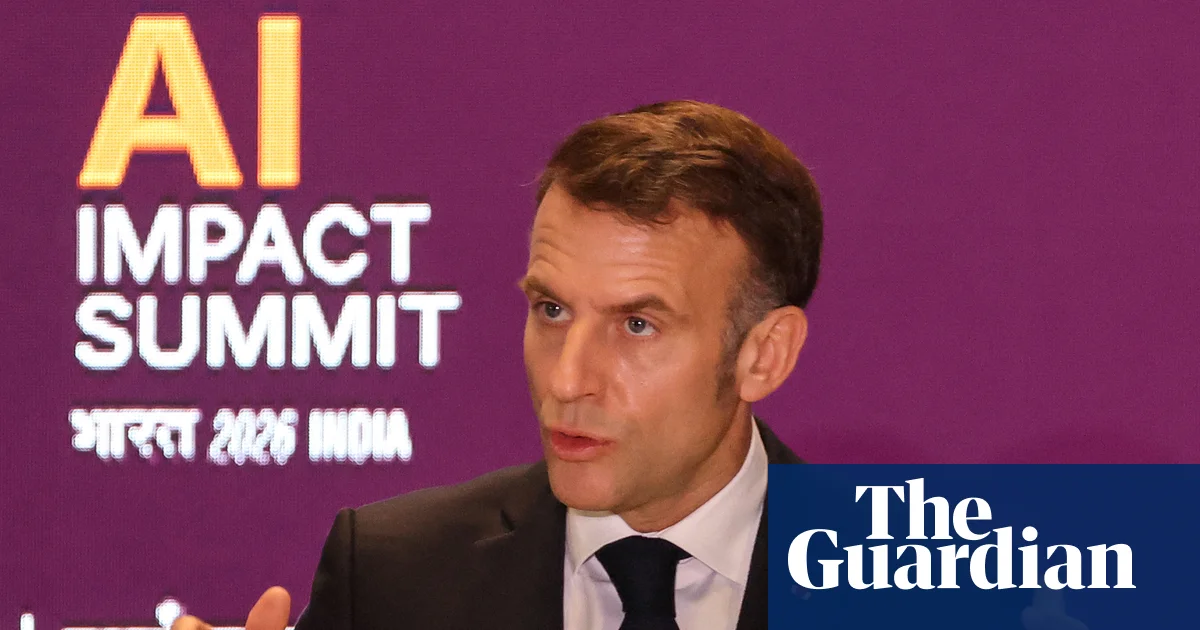
Macron backs EU AI rules, pledges swift action against online child abuse

Europe and France Assert Leadership in AI Safety Amid Global Contest

In a rapidly evolving global landscape dominated by artificial intelligence advancements, Europe and France are positioning themselves as formidable frontrunners in establishing a balanced approach to regulation and innovation. During the recent G7 summit hosted by France, President Emmanuel Macron boldly defended Europe’s commitment to safeguarding children and promoting responsible AI development. His remarks come amidst mounting international concern over the unchecked proliferation of AI-generated content, especially concerning the exploitation of minors and the concentration of power within a handful of US and Chinese tech giants. Macron’s advocacy for robust safeguards signals a clear intention to champion a safe and innovative digital future—an agenda that resonates across democracies weary of reckless techno-capitalism fueling societal vulnerabilities.

International observers, including the United Nations Secretary General António Guterres, have underscored the urgency of global cooperation, emphasizing that “no child should be a test subject for unregulated AI.” The UN’s stance — echoing concerns raised by child safety advocates and cybersecurity researchers — underscores that AI must be “the property of everyone,” not just a domain of corporate or geopolitical interests. Meanwhile, Bill Gates, prominently scheduled to speak at the conference, withdrew suddenly amid revelations regarding his controversial past associations, illuminating broader debates around accountability in the AI industry. Critics argue that true progress hinges on transparency and moral responsibility, realities often sidelined by the concentration of AI development within American and Chinese tech conglomerates, which control the lion’s share of the world’s most advanced models.

Decisions on Regulation Will Define Power and Influence in the 21st Century

Amid these debates, the European Union remains at the forefront with its AI Act, a comprehensive regulatory framework aimed at curbing abuses and ensuring human-centric AI development. European leaders, including Macron, emphasize that regulation does not stifle innovation but rather cultivates a safer environment where progress can flourish sustainably. Critics from the White House—like senior adviser Sriram Krishnan—have voiced opposition, arguing that restrictive legislation hampers entrepreneurial spirit. Yet, as historians highlight, history demonstrates that unchecked technological power can lead to societal destabilization, especially when AI technologies morph into tools for manipulation or surveillance. UNICEF and Interpol reports reveal a deeply troubling trend: over 1.2 million children have been victims of sexually explicit deepfakes, exposing the dark underbelly of AI misuse. Such alarming findings underscore the crucial need for vigilant regulation and international cooperation, so that societies do not pay the ultimate price for corporate greed or geopolitical ambitions.

Meanwhile, global powers like India seek to carve out their rightful place on the AI stage. With ambitious plans to invest over $15 billion in data centers and infrastructure, India under Prime Minister Modi aims to become a major AI hub, leveraging its vast population as both a growth market and a testing ground for emerging technologies. Modi’s call for “established levels of authenticity” for online content illustrates a strategic move to prevent AI monopolies from consolidating control—especially at a time when US models remain fiercely proprietary and opaque, while Chinese systems like DeepSeek and Qwen are often more open-source and adaptable. Such divergences not only impact technological sovereignty but also signal a new era of geopolitical contest, where AI’s strategic value could shape the future balance of power.

The Face of a New World Order Emerges

The unfolding debate over regulation, transparency, and moral accountability marks a pivotal juncture in history—one where the fabric of society, sovereignty, and individual rights hang in the balance. As world leaders and tech titans grapple with the profound responsibilities imposed by AI’s limitless potential, the decisions made today will echo throughout generations. With each new directive, each law, and each technological breakthrough, humanity strides into an uncertain dawn—where the fate of countless lives and the ideals of freedom, safety, and truth are intricately intertwined. In these tumultuous moments of technological revolution, the true measure of a civilization’s resilience lies not only in its innovations but in its unwavering commitment to safeguarding its people from the unseen dangers lurking within the code of the digital age. The history of tomorrow is being written now; the question remains—will it be a future of liberty and safe progress or one of control and chaos? Only time will tell, and the pages of history are still turning.

White House urges Iran to strike deal as U.S. boosts military presence

Amid escalating international tensions, reports emerging from US media indicate that President Donald Trump has engaged in high-level discussions with national security advisers regarding potential military action. Sources reveal that an attack could be launched as early as Saturday, underscoring the precarious state of global stability. These developments unfold against a backdrop of complex geopolitical maneuvering, where the decision of an influential superpower carries profound consequences for regional and world order alike.

The possibility of a preemptive strike highlights a critical juncture in international relations, raising questions about the escalation of conflicts and the fragility of diplomatic channels. Historically, decisions by superpowers to resort to military force have often recalibrated the global chessboard, leading to unpredictable repercussions. Experts suggest that such an action, if undertaken, would be indicative of America’s intent to project strength and deter perceived threats, but also increases the risk of unintended consequences, including a broader regional conflict. International organizations and foreign governments continue to monitor the situation closely, aware that the decision will reverberate across multiple theaters of geopolitical interest.

Analysts argue that the geopolitical impact of such a strike would not be confined to the immediate target. Historically, when the US has engaged in unilateral military actions, it has precipitated shifts in alliances, economic sanctions, and diplomatic realignments. Countries in the region, especially those with vested interests in stability, are bracing for the possibility of escalation. Senior international diplomats and security analysts warn that rushed decisions could undermine long-standing efforts at diplomacy and increase instability, especially if aligned with broader narratives of national security and sovereignty. The drama unfolding now underscores the delicate balance of power and the perilous path toward conflict, where every decision writ large shapes the lives and societies of millions.

As the wheels of war turn ominously closer, history reminds us of the destructive power of unchecked military cravings and the ripple effects that follow. The shadow of past conflicts looms large, where once hesitant diplomacy was abandoned for force, leaving nations fractured and communities scarred. The world watches with bated breath as America’s leadership grapples with this decisive moment, bearing the weight not only of immediate strategic interests but of the historical trajectory they forge. The unfolding story offers a stark reminder: in the arena of international power, every decision is a chapter in the ongoing narrative of history—one that could end in chaos or the hard-won stability of peace, depending on the choices made in these critical hours.

UK Retailers Hunt for Cost-Cuts as Rising Wages Hit Jobs and Hours

The United Kingdom is currently experiencing a severe economic contraction within its retail sector, reflecting broader geopolitical and domestic hurdles that threaten social stability and national prosperity. According to the latest findings from the British Retail Consortium (BRC), nearly two-thirds of retail company finance leaders are planning to cut working hours or reduce overtime, signaling a distressing decline in employment opportunities. This shift is driven by a surge in employment costs—an increase of £5 billion anticipated for 2025—as a result of rising employer national insurance contributions and the implementation of a higher legal minimum wage. Moreover, retail stores are losing ground to dominant online competitors like Shein, Vinted, and Temu, which leverage cut-price, fast-fashion models that threaten local high street vitality. These economic pressures evoke a pivotal question: how will the UK balance economic sustainability with social stability?

Analysts and historians warn that such a turbulent economic environment could accelerate social discontent and regional disparities. The ongoing loss of 74,000 retail jobs in the last year alone, compounded by automation and advanced AI-driven tools, forebodes a future where employment becomes even more precarious but also more reliant on technology. Helen Dickinson, the BRC’s CEO, highlighted that over the past five years, the sector has shed a staggering 250,000 roles, with youth unemployment climbing at an alarming rate. This raises urgent questions about the social fabric and the distribution of opportunity in Britain, especially for the youth and marginalized communities. Strikingly, 84% of retail finance leaders now rank labor costs among their top concerns, marking an exponential increase from previous years and indicating an industry straining under the weight of government policies and economic pressures.

The geopolitical impact extends beyond Britain’s borders. The economic difficulties facing UK retailers are symptomatic of a wider pattern affecting global markets, where fragile Western economies confront rising inflation, energy crises, and geopolitical conflicts that disrupt supply chains and elevate input costs. International organizations, including the International Monetary Fund and World Bank, have issued warnings that global economic instability could erode middle-class stability and enlarge social divides across emerging and developed nations alike. The UK’s predicament reflects a broader shift, where political decision-making—such as the upcoming employment rights bill—may either usher in reforms that stabilize the workforce or accelerate economic backlash by increasing rigidity and reducing flexibility. For policymakers, the task is clear yet daunting: navigating the tightrope between fostering flexible, high-quality jobs and implementing reforms that do not suffocate the very opportunities the nation’s youth depend upon.

As the UK grapples with these intertwined issues, the world’s eyes turn to a pivotal question: how will a nation, sitting at the crossroads of economic decline and social upheaval, forge a path forward? Will it succumb to the chaos wrought by economic mismanagement and global instability, or will it rise anew, borrowing lessons from history’s great power struggles and societal upheavals? The unfolding decisions in Westminster, the evolving global economic landscape, and the resilience or fragility of civil society will write the chapters of this ongoing saga. The story of Britain’s future is not yet concluded; instead, it stands at a haunting juncture of potential renewal or irreversible decline, echoing through the corridors of history where nations have either fallen by neglect or risen through battle and perseverance. The next pages remain unwritten, but every choice made now will resonate long into the annals of history and shape the face of a nation in turmoil, caught in the relentless tide of time and change.

Jess Cartner-Morley on fashion: Power up your winter look with bold accessories that showcase your style

How Winter Accessories Are Redefining Style and Social Relevance for Young Trendsetters

As the chill of winter sets in, many young people are discovering that the true power of cold-weather fashion lies beyond the basics of bulky coats and sturdy boots. In fact, a new shift in behavior is quietly underway—one that elevates accessories like scarves and gloves from simple functional items to essential expressions of personality and cultural identity. This shift reflects a broader societal move towards embracing individuality and creativity even when practicality demands uniformity. Influencers, stylists, and sociologists are tracing this evolution, noting that today’s youth are using these often-overlooked details to make bold statements, challenge norms, and reconnect with a sense of personal warmth amid the urban cold.

Think about the timeless appeal of a personality scarf. It’s no longer just about keeping warm; it’s about making an intentional style choice. Oversized, vibrantly colored, tied in bows, or looped with flair—all serve as a “cherry on top” that signals confidence and individuality. It’s a way for young trendsetters to express themselves unapologetically, reinforcing the idea that what you wear on your neck or hands can have social relevance. More than a fashion statement, this practice fosters a sense of community among those who see these accessories as a form of silent rebellion against the monotony of winter uniformity. As influencers ramp up their styling videos, and fashion-critical sociologists emphasize the importance of self-expression, accessories are becoming more than just utility—they are cultural statements in their own right.

Meanwhile, the social impact of this accessory renaissance is palpable. During major moments in recent history—such as Michelle Obama’s iconic inauguration outfit—accessories played a pivotal role in conveying relatability and authenticity. Her carefully chosen scarves and gloves, subtly contrasting with her elegant ensemble, showcased that fashion could be both functional and meaningful. These details told stories of hope, resilience, and identity—lessons that resonate strongly with young audiences seeking genuine connection in their style choices. Today’s youth are channeling this approach, pairing unexpected colors and details that challenge “safe” fashion norms. This movement shifts the focus from fast fashion to fostering a personal narrative through accessories, cementing their social relevance as tools for identity-building, especially in an age where visual communication is king.

Stylists and fashion analysts agree that embracing these accessory trends isn’t just about aesthetics—it’s about confidence in a climate that often feels impersonal and disconnected. From chic gloves in oxblood or soft green to looped sweaters doubling as scarves, every element becomes part of a larger storytelling canvas. As simple as tying a scarf in a bow or adding a brooch, these choices allow young people to set themselves apart. With coats and boots often standardized, accessories become the playground for individual style, the bits of wardrobe that enable flexible expression. The next big question looming in this evolution is whether this accessible form of self-expression can sustain its social power, or if it will become just another fleeting trend in the fast-paced world of fashion. As society continues to navigate a landscape of shifting norms and digital influence, the future of winter accessories may hold surprising shifts—where even in the coldest seasons, the hottest style conversation remains firmly rooted in the choices we make just above our collarbones.

At 71, Seasoned Dancer Proves You’re Never Too Old in Taylor Swift’s Latest Video

In a world increasingly driven by fleeting digital signals and transient trends, the selection of Denise Sides from hundreds of applicants to partake in the Opalite video underscores a profound truth: culture remains our most sacred vessel of identity. Her selection is not merely an arbitrary event but a testament to the enduring significance of artistic expression in shaping collective consciousness. Amidst the chaos of modernity, artists like Sides emerge as custodians of tradition, embodying values, stories, and symbols that anchor societies in purpose and remembrance. This act of choosing reflects the age-old understanding that culture functions as a mirror of our deepest selves—a mirror crafted through generations, which reveals who we are and who we aspire to be.

Historically, cultural icons and movements have served as both reflection and critique of societal shifts. Philosophers like Ortega y Gasset have emphasized that we are cultural beings, inherently bound to the narratives we craft and uphold. The Opalite project, with its deliberate focus on visual art and symbolism, taps into this tradition. It reminds us that art is more than aesthetic—it is a dialogue between the past and future, a symbol of our collective memory and hope. As Tocqueville observed, democracies flourish when their cultural fabric is strong and resilient, woven by shared stories and common values. The selection of Sides, therefore, signifies recognition of this vital fabric, a call to preserve the cultural identity against the corrosion of nihilism that often accompanies contemporary pursuits.

The role of culture in societal cohesion is undeniable; it reaffirms our roots and guides us amidst shifting tides. G.K. Chesterton once pointed out that tradition is the democracy of the dead, a testament to the ongoing dialogue between generations. In this light, the Opalite video is not just a showcase of aesthetic talent but a renewal of that dialogue—a reminder that, through the arts, we honor our ancestors and inspire future generations. It is in these expressions that the essence of our humanity persists: as a legacy to be cherished and a prophecy to be fulfilled. When we nurture our cultural memory, we forge a collective identity resilient enough to face the uncertainties ahead.

Ultimately, culture encapsulates both memory and prophecy, embodying the enduring spirit of human aspiration. As T.S. Eliot noted, “The past should be altered by the present as much as the present is directed by the past.” The story of Denise Sides and the Opalite project exemplifies this sacred chain—an act of cultural transmission, rooted in tradition yet reaching toward an uncertain future. In this delicate interplay between remembrance and renewal, we find the true essence of society—an ongoing, lyrical journey where the past prophesies the shape of what is to come, and memory paints the portrait of our shared humanity.

Please provide the feed content for me to generate the fact-checking headline.

Fact-Checking Claim: President Trump’s Promises on Drug Prices

In recent speeches and on his administration’s promotional platforms, former President Donald Trump has repeatedly claimed that “Americans are now paying or will pay the lowest price anywhere in the world for drugs,” attributing this success to his administration’s negotiations with pharmaceutical companies. At first glance, such a bold assertion demands careful scrutiny. A review of available data, expert opinions, and government reports suggests that while there are some specific instances of price reductions, broad claims of “lowest in the world” are either misleading or impractical to verify.

According to our investigation, the Trump administration has negotiated voluntary agreements with 16 drug companies, promising discounts on certain drugs, especially for cash buyers and specific medications like insulin and fertility drugs. The Centers for Medicare & Medicaid Services (CMS) reported that these agreements result in some savings. However, “there’s no evidence that these negotiations have translated into widespread, substantial savings for most Americans,” as health economist Rena Conti and other experts have noted. The data show that, historically, list prices for many drugs in the U.S. continue to increase at about 4% annually—mirroring previous years—suggesting only limited or isolated impact from these negotiations.

Furthermore, the administration’s claim of “lowest-price-in-the-world” relies heavily on comparing U.S. prices to those in other wealthy nations—often referred to as the “most favored nation” (MFN) model. The White House has not provided detailed, transparent data on how these comparisons are made, and experts from institutions such as Boston University and the RAND Corporation emphasize the difficulties in verifying such claims. Variability in international rebate practices and the availability of generic drugs complicate these comparisons. As Juliette Cubanski of KFF pointed out, many foreign governments negotiate extensive rebates off list prices, making direct comparisons challenging and often overstated.

Regarding broader policy plans, the current state of MFN proposals remains uncertain. The CMS has announced initiatives to pilot MFN pricing for certain Medicare drugs, projecting estimated savings of around $12 billion over seven years—roughly 6% of Medicare’s annual drug spending. Yet, “these efforts are likely insufficient to lead to sweeping reductions in drug prices,” according to independent health policy experts. The complexity of pharmaceutical supply chains, international pricing strategies, and political resistance—particularly from Congress and drug industry stakeholders—means that the promised “dramatic” price drops are yet to materialize.

Additionally, critics argue that even if these policies result in lower prices for some drugs, the tangible benefits for most Americans—especially those with private insurance or high out-of-pocket costs—remain uncertain. The argument that increased transparency alone will translate into substantial savings is contested by experts, who warn that such measures might inadvertently reduce insurers’ incentives to negotiate aggressively. As Pragya Kakani of Weill Cornell underscored, “it’s really hard to predict the actual impact” of these policies on consumer prices, and the current data do not support the claim that widespread, significant reductions are imminent.

In conclusion, while President Trump’s assertions about achieving the “lowest prices” are partially based on tangible, small-scale discounts, the overall claims are misleading when considering the broader context of U.S. drug pricing trends and international comparisons. The landscape of pharmaceutical pricing is complex, opaque, and influenced by multiple factors beyond negotiations alone. As responsible citizens and informed voters, we must demand transparency and factual integrity from leaders—truthful reporting on drug costs is foundational to a functioning democracy and a marketplace based on real competition. Without clear, verified data, exaggerated promises undermine public trust and hinder policy solutions that truly serve the American people’s interests.

Rising Stars Shine: High School Athletes Break Records in Thrilling Weekend Showdown!

Delay in NYCFC’s Etihad Park Opening Signals New Era for MLS

The anticipated opening of New York City FC’s Etihad Park has been officially pushed back to the beginning of the 2027-28 Major League Soccer (MLS) season. Initially slated for an earlier debut, this delay has raised eyebrows among fans, players, and analysts alike. With city officials expressing confidence in the project, the team aims to build a venue that reflects the vibrant spirit of both the franchise and its faithful supporters.

This monumental stadium is designed to not only provide a home for NYCFC but also to elevate the experience of soccer in New York City. According to comments from head coach Nick Cushing, the delay is seen as a pivotal opportunity. “While we must wait a bit longer, our focus remains on enhancing our current squad and community engagement. A state-of-the-art facility will revolutionize our approach to training and fan interactions,” Cushing stated, emphasizing the long-term vision that the club holds.

Despite the postponement, the franchise remains committed to excellence both on and off the field. Fans are eagerly awaiting updates, and analysts expect the completed facility will include cutting-edge technology and amenities designed to boost the fan experience. Commentators highlight potential benefits, stating that a more modern venue would attract both top-tier talent and a larger fanbase to the sport, increasing its visibility across the nation.

  • Delays in stadium construction often lead to significant shifts in fan engagement and funding.
  • NYCFC’s developments may inspire further investments in soccer infrastructure.
  • Coach Nick Cushing remains optimistic about the team’s performance in the interim period.

In the world of sports, such delays serve as reminders of the intricate dance between ambition and reality. They transform challenges into opportunities for growth and community cohesion. As MLS continues to gain traction across the United States, the story of NYCFC is more than just about a stadium; it is about uniting fans from all walks of life under the banner of soccer. The game remains a powerful connector, a force that transcends scorelines and binds communities together—an ethos that will surely resonate when Etihad Park eventually opens its doors. Together, we await a future filled with exhilarating matches, spectacular moments, and an indomitable spirit of unity.

Source link

Etsy strikes big, sells Depop to eBay for $1.2B—youth culture goes mainstream

eBay’s Strategic Acquisition of Depop Signals Industry Disruption and Innovation

In a move set to recalibrate the landscape of online secondhand fashion, eBay announced the acquisition of Depop from Etsy for $1.2 billion in cash. This strategic deal underscores a notable shift within the e-commerce sector, emphasizing the importance of innovative, social-focused marketplaces appealing to Gen Z and millennial consumers. As widespread digital disruption continues to reshape consumer behavior, eBay’s move to acquire a highly social, community-driven platform signals its ambition to dominate the lucrative pre-loved fashion niche—an area experiencing unprecedented growth and innovation.

Depop’s Rapid Growth Highlights the Power of Innovation and Disruption

Founded in 2011, Depop has emerged as a trailblazer within the resale economy, generating an impressive $1 billion in gross merchandise sales in 2025. Its appeal to Generation Z—more than 90% of its active buyers under 34—and its vibrant community of over three million active sellers, underscore its position as a disruptive force in fashion retail. Unlike traditional marketplaces, Depop leverages social networking features, fostering a sense of community and purpose around sustainable consumer practices—an approach that resonates profoundly with the values of younger generations. Industry analyst firms like Gartner have highlighted how this social-commerce convergence is redefining e-tailing, and suppliers like MIT are exploring new paradigms of virtual community engagement as the future of commerce.

Furthermore, Depop’s year-over-year growth rate of nearly 60% in the U.S. demonstrates the disruptive potential of niche, community-centric platforms in a saturated market. This growth reflects a broader trend — consumers increasingly favor sustainable, unique fashion choices made through social platforms that foster authenticity and personal expression. While traditional retail models face pressure from digital transformation, innovative resale platforms are capitalizing on this market shift, disrupting longstanding dominance of fast fashion giants.

Business Implications and Future Industry Trends

The divestment by Etsy signals a broader strategic shift among online marketplaces towards specialization and targeted growth. By focusing solely on its core platform, Etsy aims to deepen its market penetration, emphasizing handcrafted and niche goods, as Kruti Patel Goyal indicated. Conversely, eBay’s acquisition of Depop positions it at the forefront of this social-driven resale revolution, with the potential to leverage its existing scale and infrastructure to accelerate Depop’s global expansion.

This move exemplifies the ongoing disruption in the online marketplace ecosystem, where traditional players are acquiring niche platforms to innovate and stay competitive. According to analysts from Gartner, such M&A activity reflects a recognition that in the age of digital capitalism, speed and innovation are critical for survival, and the ability to tap into younger, digitally-native audiences is a game-changer.

Looking ahead, industry experts warn that others must follow suite or risk obsolescence. The exponential growth of social e-commerce, bolstered by advances in AI, virtual communities, and immersive tech, will define the next wave of market disruption. As Elon Musk and Peter Thiel have often emphasized, the companies that invest early in innovative models—like social marketplaces and niche resale platforms—will control the future. The race is now on for legacy players and disrupting newcomers alike to harness these technological shifts and capture the lucrative, fast-evolving demographic landscape.

Conclusion: Urgency for Tech Innovators in the Face of Disruption

This latest deal exemplifies the relentless pace of innovation in digital commerce and underscores the importance of disruption for strategic advantage. With Gen Z and millennial consumers driving demand for authentic, community-driven shopping experiences, the companies that adapt swiftly will shape the industry’s future. As the landscape continues to evolve with emerging technologies and changing consumer behaviors, the imperative for agility, innovation, and strategic foresight becomes clear. The coming years will be decisive in defining the next generation of tech giants—those willing to disrupt, innovate, and lead the charge into the new economy.

Social Media Auto Publish Powered By : XYZScripts.com