
TRENDING NEWS





Truth Over Trends, always!

Recent developments within the Federal Bureau of Investigation (FBI) have ignited debates that resonate far beyond the confines of American justice agencies. Reports indicate that between 15 to 20 agents, who were photographed kneeling during a 2020 racial justice protest in Washington, D.C., have been dismissed. These agents participated in a symbolic gesture—kneeling at a demonstration sparked by the tragic death of George Floyd. Floyd, a Black man, was killed in a brutal incident where a police officer, Derek Chauvin, knelt on his neck for over nine minutes. The act became a global emblem of protest against police brutality and systemic racism. However, amidst a climate increasingly tense following the Trump administration’s push to purge what it perceives as “woke” ideology, these firings are portrayed by many as emblematic of the fight over the soul and role of law enforcement in America.
The FBI’s choice to fire agents citing their participation in a gesture observed widely as a peaceful act of dissent raises concerns about the suppression of free expression within the ranks of American federal agencies. The agency has declined to comment on the matter, but the FBI Agents Association issued a blistering statement condemning the firings as violations of the agents’ rights and warning that the integrity and capability of the bureau are at risk. The controversy becomes even more profound considering recent legal actions by former agents suing FBI Director Kash Patel and the U.S. Attorney General, claiming their dismissals are politically motivated, aimed at placating the Trump legacy.
Internationally, this internal crisis feeds into the larger narrative of how Western democracies grapple with the legacies of social activism and identity politics. Historians and political analysts warn that the framing of these firings as ideological purges not only impacts public trust in law enforcement but also signals a shift in how the balance of order and dissent is navigated in the post-pandemic era. As countries across the world watch the unfolding drama, many are debating whether the American model is veering towards a new form of authoritarianism disguised as “restoring order,” or if this is merely a turbulent phase in the country’s ongoing evolution.
The decision to dismiss those who sought only to act as symbols of lawful dissent underscores a larger, more somber reality: history is watching, and the pages of the future are still being written. The unrest over police violence, social justice, and political partisanship has not yet reached its final chapter. As young Americans and global citizens await the next move, they are left to ponder: will history remember this as the moment when law and order surrendered to ideological extremism, or as the dawn of a new era where justice embraces dialogue over suppression? The answers depend on the choices made now, and on the resolve of societies to confront the true meaning of liberty and justice in a fractured world.
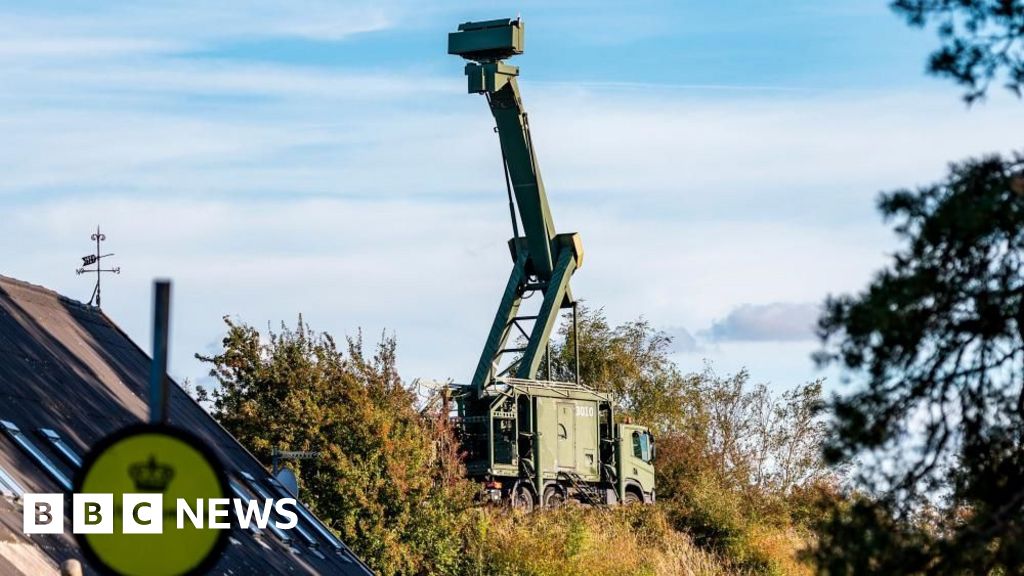
Recent sightings of unidentified drones near military and civil infrastructure across Denmark, Germany, Norway, and Lithuania have sent shockwaves through an increasingly tense European security landscape. The series of incursions, notably the drone activity above key military bases like Karup airbase in Denmark, align with a disturbing pattern of aerial disruptions that threaten the stability of the continent. These events come just days after major airports in the region, including Copenhagen and Oslo, experienced temporary closures due to drone activity, highlighting vulnerabilities within civilian and military airspace alike.
Analysts suggest that these incidents are part of a broader hybrid attack, a sophisticated blend of military and non-military tactics designed to destabilize and undermine interconnected security systems. The Danish Defense Ministry has cautiously refrained from accusing any state actor, though some officials hint at the possibility of Russian involvement. This suspicion is fueled by recent heightened tensions between Russia and NATO allies, with Eastern European countries such as Estonia and Poland reporting similar incursions involving Russian drones and fighter jets. The North Atlantic Treaty Organization (NATO) has responded with urgent consultations, as fears grow that Moscow may be engaging in a broader strategy of indirect aggression, leveraging these covert operations to weaken Western unity and sow discord in the heart of Europe.
Government officials and international organizations warn that these drone incursions signal a new phase in hybrid warfare, where the battlefield extends beyond traditional combat zones to include the cloud of technological vulnerabilities that modern societies have come to depend upon. German Interior Minister Alexander Dobrindt has emphasized the high threat level, ordering further investigations and regional discussions on how to counteract this rising threat. Meanwhile, U.S. and European security analysts cite the increasing frequency of such incidents as a warning that the age of aerial proxy conflicts has arrived, demanding a coordinated, strategic response to prevent escalation into overt conflict.
As Russian officials vehemently deny involvement, dismissing allegations as “absurd provocations”, the weight of history and recent events suggest a more complex reality. Past accusations of hybrid assaults, coupled with Russia’s openly strategic posture in Eastern Europe, leave many experts questioning whether these violations are a form of weaponized diplomacy. The unfolding drama in Northern Europe encapsulates a larger narrative of geopolitical rivalry, where control of information, airspace, and influence determines the fate of nations. The world watches as the specter of war, cloaked in the shadows of digital and aerial warfare, lingers just beyond the horizon, leaving humanity at a perilous crossroads where every decision could tip the balance towards peace or chaos. The consequences of these silent battles will echo through history, shaping the legacy of this turbulent era.

As the excitement builds for the upcoming fantasy hockey drafts, rookie talent is becoming the focal point for many avid fans. Whether participating in a redraft or dynasty league, understanding the next generation of talent is crucial. Hockey analysts have been spotlighting several players whose performances in junior leagues and international competitions suggest they are set to make a significant impact.
This year features an impressive lineup of prospects, notably Connor Bedard, who has generated waves with his skating prowess and elite scoring ability. His outlook for the season is highly promising, as some commentators are labeling him a potential franchise cornerstone. “Bedard’s ability to create offense in tight spaces is unmatched,” stated renowned coach Mike Babcock. With an eye on both short-term victories and long-term roster strategies, involving a player like Bedard early in drafts could be a game-changer.
Other rookies worth noting include Adam Fantilli and Leo Carlsson. Both have excelled in development leagues, showcasing their talents in various international fixtures. Fantilli’s performance in the NCAA has drawn comparisons to some of the league’s elite, while Carlsson’s versatility gives teams flexibility in both offensive and defensive play. Based on current stats and projected performances, here are some key takeaways:
As illustrated by the talent emerging in this year’s draft pool, it’s evident that fantasy hockey is not merely a numbers game. It represents a greater narrative—a community of fans rallying together, united by the exhilarating highs and the bittersweet lows that characterize the sport. In many ways, hockey transcends individual statistics, with stories like those of Bedard, Fantilli, and Carlsson reminding us of the hope and vitality that young talent injects into the game. As the puck drops on a new season, this unity among fans and players alike will resonate well beyond the confines of the rink, uniting hearts and minds in pursuit of victory.

In the pursuit of progress and adaptation, societies often face the peril of losing sight of their foundational narratives. Respecting our roots is more than a nostalgic nod to history; it is a fundamental pillar for cultivating a cohesive and resilient national identity. As critics argue that globalism and rapid modernization threaten traditional values, it becomes clear that maintaining a connection to our history is essential for fostering a sense of unity rooted in shared heritage. This connection is not an impediment to growth but a framework within which sustainable progress can flourish.
National identity is deeply intertwined with cultural memory, historical landmarks, language, and collective experiences. As renowned historian Yale’s John Lewis Gaddis suggests, “A nation that forgets its past is condemned to repeat its mistakes and lose its purpose.” In essence, respecting our roots helps safeguard the values, stories, and lessons that shape societal continuity. For young generations navigating a rapidly changing world, understanding their history offers a grounding point—a lens through which to assess modern challenges. It enables them to recognize that the liberties they enjoy are often rooted in past struggles, sacrifices, and moral victories. Dismissing these connections risks creating a disjointed identity, susceptible to manipulation or apathy, which ultimately weakens the very fabric of nationhood.
Furthermore, the preservation of cultural and historical heritage strengthens national pride and social cohesion. Analysts highlight that societies with a strong sense of their foundational stories tend to have higher civic participation and resilience in times of crisis. By honoring our past, we create a collective narrative that transcends individual differences, fostering a sense of belonging and shared destiny. While critics may advocate for deconstructing traditions as a way to embrace diversity, responsible respect for our roots embraces diversity as a natural extension of a rich, storied history. It anchors new ideas within a framework of enduring principles, ensuring that progress does not become reckless or directionless.
Ultimately, the challenge is to strike a balance—embracing innovation while honoring our historical roots. As economist Thomas Sowell emphasizes, “Progress occurs best when rooted in an understanding and appreciation of earlier efforts.” This balance empowers younger generations to innovate without losing sight of the moral compass forged by their ancestors. By respecting our roots, nations invest in a durable identity capable of weathering the storms of globalization, ideological shifts, and societal upheavals. The future of any nation depends on its ability to carry its history forward—like a torch passing from hand to hand, illuminating the path through shadows of uncertainty. And as that flame flickers in the winds of change, it leaves behind an enduring legacy: the unyielding strength of a people who refuse to forget where they came from, knowing that their roots are the silent, indomitable anchors of their infinite horizon.”

In a series of alarming developments, Denmark has become the latest focal point in what international analysts are describing as a hybrid attack—an unprecedented form of covert aggression involving unidentified drones operating over key military sites. During Friday night, these drones infiltrated numerous Danish military targets, including the nation’s largest airbase at Karup, which houses critical air force assets and command centers. The Danish military and police have acknowledged the breaches but stopped short of confirming their origin, though officials point towards Russia as a prime suspect, emphasizing the strategic threat posed by Moscow’s assertiveness in the region. This series of incursions represents a significant escalation in Europe’s security landscape, signaling a new era where hybrid warfare threatens sovereign borders without traditional military engagement.
While Denmark’s prime minister, Mette Frederiksen, explicitly blamed Russia for these “hybrid attacks,” Moscow has firmly denied any involvement, dismissing the incidents as “a staged provocation.” This diplomatic dodge underlines the persistent ambiguity characteristic of hybrid warfare, where plausible deniability complicates attribution and accountability. Analysts, including security experts at the International Institute for Strategic Studies, warn that these drone incursions are more than mere demonstrations; they are strategic tests of NATO’s defenses and the West’s resilience to asymmetrical threats. The incident has prompted Denmark to procure long-range precision weapons and develop enhanced drone detection capabilities, signifying a decisive shift in national defense policies aimed at countering this new threat vector.
The broader European Union is responding with extraordinary measures, with defense ministers from ten nations uniting to prioritize establishing a “drone wall”—a protective barrier of anti-drone technology. The EU’s defense commissioner, Andrius Kubilius, emphasized the urgency of this initiative, urging Europe to adapt lessons learned from conflict zones like Ukraine. The move signifies a strategic pivot, aiming to reinforce the continent’s defenses against unidentified aerial threats and uphold sovereignty amid ongoing regional destabilization. The upcoming EU summit in Copenhagen, which will also be attended by Sweden’s tech-sharing offer, illustrates the bloc’s recognition that collective action is essential. Failure to act decisively risks allowing hybrid tactics to erode trust and security across member states, fundamentally altering Europe’s geopolitical stability.
This escalating scenario presents a stark warning to the global community: the landscape of warfare has fundamentally shifted. The integration of drone technology into zones of conflict blurs the lines of traditional borders, forcing nations to rethink defense paradigms. As Danish Defense Minister Troels Lund Poulsen and Justice Minister Peter Hummelgaard accurately highlight, the purpose of these provocations extends beyond mere disruption—they aim to provoke fear, deepen divisions, and test Western resolve. History’s course hinges on how swiftly and resolutely nations respond to these invisible threats, with some experts warning that failures to innovate could leave countries vulnerable to future incursions, whether by state actors or splinter groups mimicking hostile nations’ tactics.

In a striking move that underscores the shifting sands of global geopolitics, Colombia‘s President Gustavo Petro has found himself at the center of an intense diplomatic storm after urging US soldiers to disobey orders from Donald Trump. The former senator and leader of Colombia’s first left-wing government made incendiary remarks during a speech at the UN in New York, calling for a “world salvation army” to liberate Palestine. As Petro implored US soldiers to “disobey Trump’s order,” the US State Department responded swiftly, vowing to revoke his visa—an action that marks a rare diplomatic escalation within the hemispheric relationship.
Petro’s remarks, delivered amidst a pro-Palestinian protest, were characterized by American officials as “reckless and incendiary,” sparking outrage at the highest levels of US diplomacy. His plea to soldiers to “not point rifles at humanity” and to turn their guns instead toward “tyrants” echoes a broader narrative that challenges the existing US-led order. Historically, such rhetoric—particularly when it involves urging soldiers to disobey commands—can threaten diplomatic stability and alter perceptions of US influence in Latin America. Analyzing this development, experts like geopolitical analyst Dr. Karen Mitchell suggest that Petro’s speech reflects a growing dissatisfaction with US foreign policy—especially its aggressive anti-drug operations in Latin America, which Petro has criticized as tools of American domination rather than genuine efforts to combat narcotics. This exchange reveals a possible turning point as Latin American leaders become increasingly vocal in opposing US interventions, risking diplomatic isolation to assert their sovereignty.
The diplomatic fallout extends beyond mere rhetoric.
Meanwhile, the global stage is witnessing a wider contest for influence, with international organizations and historians warning that these disputes transcend diplomatic rhetoric. The US’s decision to deny visas to Palestinian President Mahmoud Abbas and several officials—despite customary diplomatic privileges—further exemplifies the ongoing shift in US engagement, marking a move toward more aggressive stances on its perceived adversaries. This diplomatic tug-of-war underscores how political decisions here have the power to reshape alliances, fuel regional instability, and redefine sovereignty. As Petro’s calls for disobedience reverberate through international corridors, the world watches, realizing that these acts of defiance, while seemingly isolated, threaten to fracture the current global order. In the unfolding narrative of history—bit by bit, decision by decision—the stage is set for a new era of contestation over sovereignty, influence, and the future trajectory of international relations. The question remains: will the currents of change turn toward chaos or renewal? The answer lies ahead, in the unresolved chapters of a world still waiting to be written.

In the current tapestry of American media culture, the recent saga surrounding the return of Jimmy Kimmel Live! exemplifies more than just a late-night comedy show—it underscores a deeper struggle over identity, tradition, and the very fabric that holds society together. Sinclair Broadcast Group and Nexstar Media Group, two colossal entities dominating local television, made headlines not merely for resuming broadcasts, but for their deliberate preemption of Kimmel’s show, a move cloaked in the language of editorial judgment and free speech. Yet, beneath these claims lies a profound conflict reflecting the shifting balance of cultural power, where media convergence threatens to diminish the space for diverse societal voices, and where the limits of free expression are being tested amid the push for consolidated control.
This ongoing showdown invites us to revisit the dynamics of cultural authority as articulated by thinkers like Ortega y Gasset, who warned that mass society risks reducing individual cultural expression to mere conformity, surrendering the richness of tradition that nourishes national identity. Sinclair’s assertion of “independent judgment” in programming masks a strategic effort to shape narratives aligned with a conservative political vision—one that seeks to leverage media as a tool for cultural preservation against what critics deem excessive liberal influence. The widespread preemption of Kimmel’s show—owned by Disney, which itself symbolizes a modern cultural empire—raises questions about the balance of power in the media landscape. Such corporate maneuvers echo Tocqueville’s concerns about a burgeoning “tyranny of the majority,” wherein conglomerates uphold their authority by marginalizing dissenting voices, transforming the airwaves into a battleground for ideological dominance.
This incident is emblematic of a broader pattern—one where our culture is weaponized as an instrument of societal cohesion or division. The consolidation of local stations under parent companies like Sinclair and Nexstar exemplifies Chesterton’s critique of industrial-scale uniformity that threatens to erode the unique moral and social fabric of communities. Meanwhile, the controversy underscores a fundamental truth: culture is intrinsically tied to identity and memory. When a show like Kimmel’s becomes a battleground, it is less about comedy and more about the preservation of tradition. As T.S. Eliot observed, the end of all our exploring is to arrive back where we started—yet, transformed, bearing the imprint of our journey. Today, our cultural memory is being challenged, manipulated, and reshaped in ways that threaten to dissolve the shared stories that form the backbone of our society.
In the twilight of this digital age, we are called to recognize that culture is both memory and prophecy—a reflection of our past and a blueprint for our future. As the edifice of media power consolidates, shaping public consciousness becomes a matter of preserving the tradition of free thought. Our societal identity inheres in the stories we tell and the values we champion; when the airwaves are commandeered by corporate interests, it is not merely a question of entertainment but of who we are and who we wish to become. To navigate these turbulent waters, we must once again embrace the esteem of cultural guardians who understand that the true power of media lies in its capacity to mirror the human spirit—resilient, rooted in history, and prophetic of hope. For in the end, culture is the eternal echo of humanity—both the memory that sustains us and the prophecy that beckons us forward into the dawn of new possibilities.

In a clear reflection of shifting cultural paradigms, Britain has witnessed a remarkable transformation in everyday food consumption, notably marked by the burgeoning popularity of flavoured butters such as chocolate and truffle varieties. Once considered mere culinary condiments, these spreads are now central to a broader geopolitical tapestry driven by social media dynamics, changing consumer behaviours, and economic influences. Figures from Worldpanel reveal a 24% annual increase in sales of flavoured butters, underscoring a rising appetite among young, digitally connected populations for experimentation and convenience in their home cooking. Meanwhile, online grocery giant Ocado reports a staggering 184% rise in searches related to flavoured butters in just one year—highlighting how digital culture influences consumer trends, even in traditional markets.
Leading brands such as Lurpak continue to dominate the market with garlic butter sales surpassing £5.6 million, yet the scene is increasingly competitive with emerging players like All Things Butter. Launched during the COVID-19 pandemic as a social media-driven project, the newer firm has experienced exponential growth, especially with its innovative flavors such as cinnamon bun, chocolate, and truffle, reflecting a resilient desire for affordable luxury amidst ongoing economic pressures. Analysts and food industry experts explain that this trend signifies more than culinary indulgence; it is a socio-cultural phenomenon that reveals how young consumers seek to redefine home cooking as an act of experimentation and identity formation.
The escalating interest in flavour-enhanced butters in the UK is emblematic of broader geopolitical shifts, as nations adapt their cultural identities in a fast-changing world. Some analysts draw parallels with similar culinary trends seen in other Western nations, where social media continually fuels lifestyle revolutions. Historians and cultural commentators warn that such small shifts in consumer preferences often carry deeper signals—indicators of society’s evolving tastes, economic resilience, and the resilience of local industries amid global upheaval.
More broadly, these culinary trends play into a larger narrative of global cultural exchange and domestic innovation. While some view flavoured butter as a symbol of youthful rebellion and entrepreneurial spirit, others see it as part of an unending race for consumer attention, driven by technological shifts and social media algorithms. International organizations such as the United Nations Food and Agriculture Organization monitor food consumption patterns as critical indicators of economic health and cultural export strategies. The decision of Britain to embrace such innovations could influence regional markets, challenging or reinforcing traditional culinary hierarchies, especially in the context of post-Brexit economic strategies.
As flavoured butters become commonplace, they symbolize more than taste—this is a reflection of a society increasingly driven by fast-paced consumption and social media influence, shaping national identities and global perceptions. Historians warn that the choices of today’s youth—what they eat, what they promote online—are shaping the cultural landscape for decades to come. In an era where every bite and byte carries geopolitical weight, the humble flavoured butter could be a small yet poignant marker of a new cultural and economic era. With international powers vying for influence, and societies struggling to balance tradition with innovation, the future remains uncertain. Yet, one reality remains clear—these tiny jars of flavoured fat are more than mere ingredients; they are symbols of a world in flux, where the scent of truffle could echo far beyond the kitchen, whispering the stories of nations, society, and history still unfolding.

The recent bankruptcy of VanMoof in 2023 has sent shockwaves through the e-bike industry, a sector increasingly defined by rapid innovation and fierce competition. Despite the upheaval, the company’s demise has paradoxically accelerated technological progress and market disruption, with new ventures rising from its ashes—most notably, the launch of the VanMoof S6 under new ownership and the inventive Carlier Ties Taco-developed commuter e-bike for Raleigh. Industry experts and analysts like Gartner highlight how such industry shocks often catalyze accelerated innovation, compelling brands to rethink their strategies or die in the aftermath.
What sets these emerging products apart is innovation-driven disruption. The VanMoof S6 exemplifies a simplified yet sophisticated approach to urban mobility, missing only a boost button—a feature many riders would appreciate. Conversely, the Raleigh One, designed by VanMoof’s former founders, aims for a more practical, no-nonsense ride. It achieves this with an integrated, nearly silent Mivice motor paired with a sturdy belt drive; although it sacrifices torque—culving at just 35Nm—and lacks features like high-powered boost functions, it epitomizes the trend towards robust, user-centric design. As Ties and Taco Carlier attempt redemption through this reimagining, the business landscape becomes even more dynamic and unpredictable.
The disruption is more than just product innovation—it signals a fundamental shift in how electric mobility businesses operate and compete. The industry is now characterized by rapid product iteration, direct-to-consumer models, and subscription-based services, which are becoming a double-edged sword. The Raleigh management admits that its connected e-bike faces significant software challenges, including an extraordinary 3% battery drain daily when idle and buggy existing app features. Accell Group, the parent company, responds by promising firmware updates and more robust software development—a sign of how vital software robustness is to sustain consumer trust and maintain competitive advantage.
This industry upheaval underscores a broader trend: the rise of software as the backbone of hardware innovation. As Peter Thiel and Elon Musk have warned, companies ignoring this integration risk obsolescence. The shift towards disruptive, software-intensive design is most evident in subscription upsell models for premium bikes, which critics argue is a necessary element of survival amid a highly volatile market. Most industry veterans recognize the new normal—bike companies of all sizes face existential threats from “bikeagedon”, a term capturing the wave of venture failures as market valuations crash and startups fold. This environment demands agile innovation, relentless iteration, and strategic pivots.
The industry’s future hinges on disruption, innovation, and strategic agility. As the 2019-2023 cycle taught industry insiders, those who fail to embrace software robustness, customer experience, and market adaptability will fall behind. The new crop of e-bikes—like VanMoof’s S6 and Raleigh’s One—demonstrate that even in turbulent times, innovation remains the primary driver of survival. The race is intensifying, and the next 12–24 months will reveal whether these newly proposed solutions can withstand wear, tear, and the relentless pressure of market forces.
In an era where technological disruption is the only certainty, industry players must act swiftly, or risk being left behind as the market reshapes itself around smarter, more resilient mobility solutions.
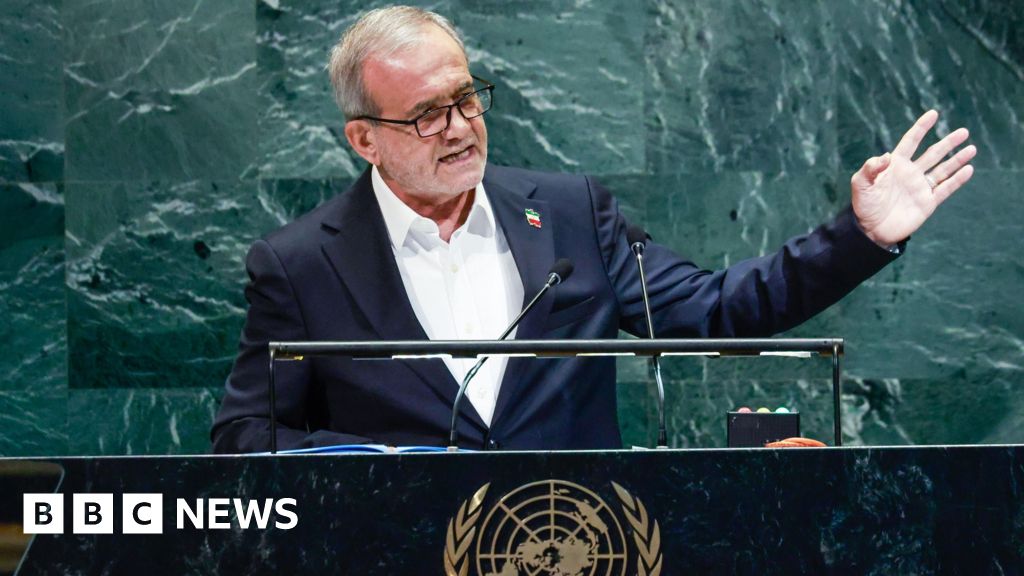
As Iran faces the looming reimposition of UN economic and military sanctions, the international community stands at a pivotal crossroads in Middle Eastern geopolitics. Nearly a decade after the landmark 2015 Joint Comprehensive Plan of Action (JCPOA) temporarily curtailed Iran’s nuclear ambitions, recent developments suggest a significant departure from diplomatic détente. The United Nations is poised to reinstate a broad set of sanctions—spanning arms embargoes, uranium enrichment bans, and asset freezes—that threaten to plunge Iran back into economic hardship, echoing the tumult of the pre-deal era. This move follows a letter from Britain, France, and Germany accusing Iran of violating its commitments—a step that has galvanised efforts by Russia and China to delay the measures, but with limited success.
Historians and analysts observe that the reimposition of sanctions is more than just about nuclear proliferation; it underscores a fundamental shift in international power dynamics. Russia and China have positioned themselves as strategic counterweights to Western influence, with Moscow signing a $25 billion deal to construct four nuclear reactors in southern Iran. Such moves are viewed by Western nations as a bid to deepen Iran’s energy independence while undermining U.S. sanctions. Meanwhile, Tehran insists that its nuclear program remains civilian, condemning any accusations of weaponization as “unfair, unjust, and illegal.” However, the International Atomic Energy Agency (IAEA) has reported a resumption of inspections, highlighting ongoing concerns about Iran’s nuclear trajectory—concerns that are unlikely to be mollified without significant diplomatic breakthroughs.
Despite Tehran’s claims of peaceful intent, the European Union and Western powers have intensified efforts to uphold the sanctions, emphasizing that Iran’s continued enrichment activities threaten regional stability. The regional tension is further exacerbated by Israel’s repeated threats to strike Iran’s nuclear facilities, threatening a broader conflict in the Middle East. Iranian Foreign Minister Abbas Aragchi’s assertion at the UN that “the negotiation with the United States is in fact a pure dead end” signals Tehran’s growing distrust of Western diplomatic motives. Nonetheless, Iran maintains it is bound by international treaty obligations to cooperate with the IAEA, even as the possibility of resumed negotiations appears increasingly fragile, and the prospect of conflict edges closer.
The geopolitical impact of these developments extends beyond the borders of Iran. The re-imposition of sanctions could further destabilize the already volatile region, prompting countries across Europe, Asia, and beyond to recalibrate their strategic calculations. International organizations warn that prolonged sanctions may push Iran closer into the embrace of authoritarian allies, reshaping alliances and intensifying the arms race. The looming sanctions serve as a stark reminder that the corridors of diplomacy are narrowing, and that the unfolding drama in Iran could be a significant chapter in a larger story—one written in the language of power, resilience, and the relentless pursuit of national sovereignty. As history continues to unfold, the question remains: will diplomacy prevail, or will this chapter usher in a new era of conflict that tests the very fabric of international peace?


