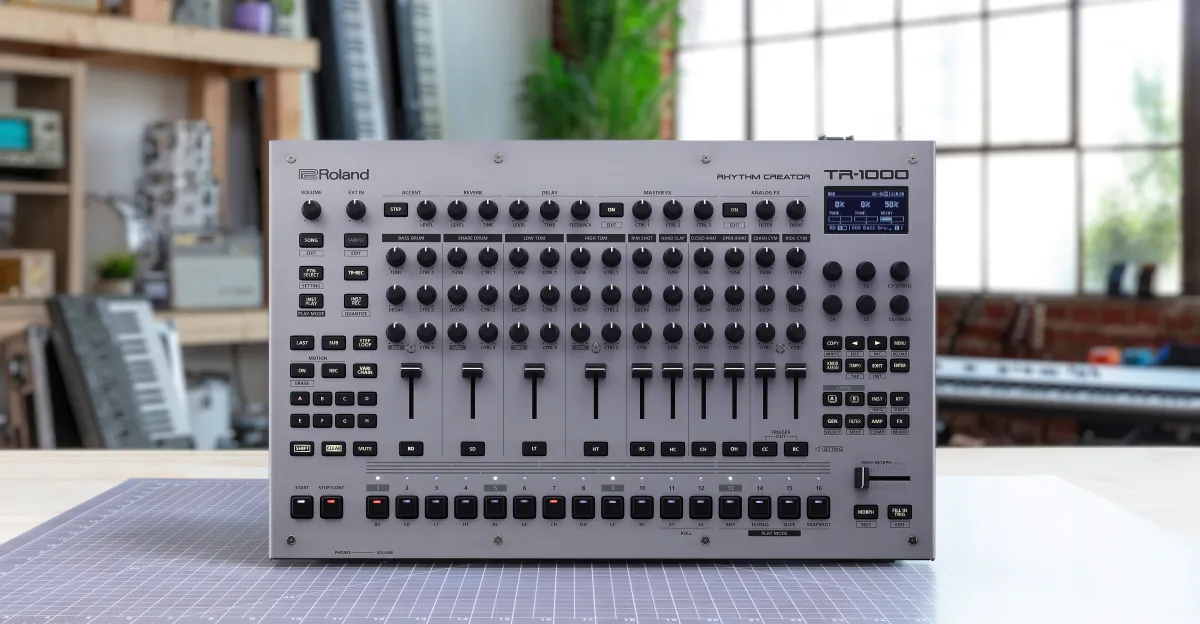
The music production landscape is witnessing yet another transformative moment as Roland unveils the TR-1000, a hybrid synthesizer that seamlessly fuses analog grit with modern digital interface. Designed with a focus on user experience and tactile control, this device features an analog filter, drive section, and a multitude of knobs, buttons, and faders—purposely built to streamline workflow and reduce reliance on complex menus. This approach signifies a notable shift toward mainstreaming tactile, hardware-based production tools, catering to both seasoned producers and studios craving authentic sound textures. Such innovations indicate an industry that increasingly valuesimmediacy and visceral engagement, crucial in a fast-evolving musical climate where raw tone often outperforms sterile digital emulation.
The debut of the TR-1000 underscores the profound disruption within the traditional analog and digital synthesis markets. Priced at $2,699.99, it challenges the common perception that high-quality analog gear is prohibitively expensive. Compared to vintage icons like the TR-808 and TR-909, which command astronomical prices on the resale market, the TR-1000 positions itself as an accessible, cost-effective alternative. Its strategic pricing could dramatically shift consumer expectations, making professional-grade sound design more attainable for emerging producers and independent studios. This innovation demonstrates Roland’s response to growing demand for hybrid instruments that bridge classic warmth with modern versatility, paving the way for a new wave of competitive products in the synthesizer industry.
Business Impact and Industry Implications
The introduction of the TR-1000 exemplifies how traditional industry giants are leveraging disruptive innovation to redefine market dynamics. Gartner analysts highlight that firms investing in tactile, high-fidelity hardware are capitalizing on shifts in consumer preference away from purely software-based solutions. This trend suggests a departure from the era of digital dominance toward a renaissance of physical interfaces that inspire creativity through sensory engagement. Consequently, smaller startups and legacy brands must innovate rapidly or risk obsolescence. The TR-1000’s appeal to a broad demographic—ranging from veteran producers to young enthusiasts—also offers a glimpse into the future of a market that prizes personalized, immediate interaction with sound.
- Enhanced workflow with minimal menu navigation
- Integration of vintage sound characteristics with modern controls
- Competitive pricing disrupting high-end analog market valuations
- Potential to democratize professional-grade music production tools
Looking Ahead: The Future of Innovation in Musical Devices
As industry leaders like Elon Musk and Peter Thiel have noted, technological innovation that disrupts established paradigms often comes from bridging seemingly incompatible worlds—digital and analog, hardware and software. The TR-1000 signals a pivotal shift that could catalyze broader industry trends towards hybrid instruments with tactile and sonic authenticity. Market analysts warn that those who fail to embrace this disruption risk becoming irrelevant as consumers increasingly demand versatile, immersive, and intuitive musical tools. If Roland’s strategy proves successful, the music tech industry may soon see a surge of affordable, high-fidelity hardware that revolutionizes how future generations create and experience sound. The clock is ticking, and the race for innovation in this space is only intensifying—marking an exciting, high-stakes epoch for producers worldwide.